Publication: Kakteenlexikon 460. 1966
Description
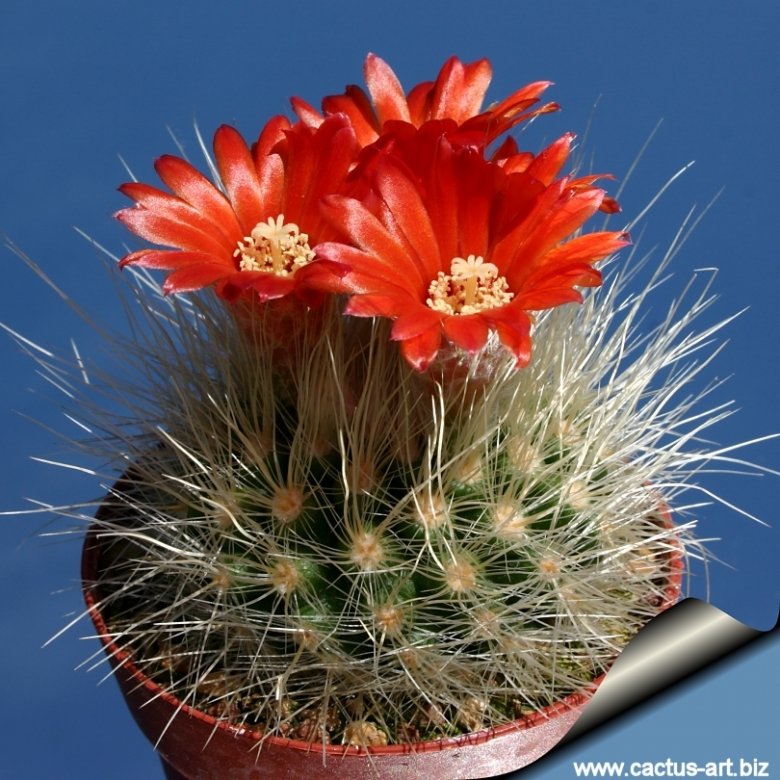
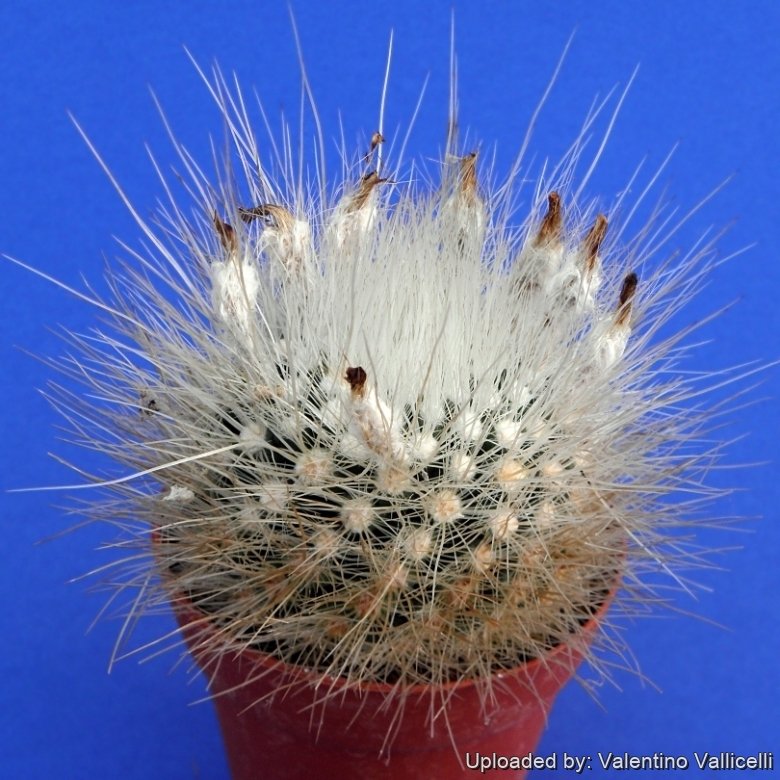
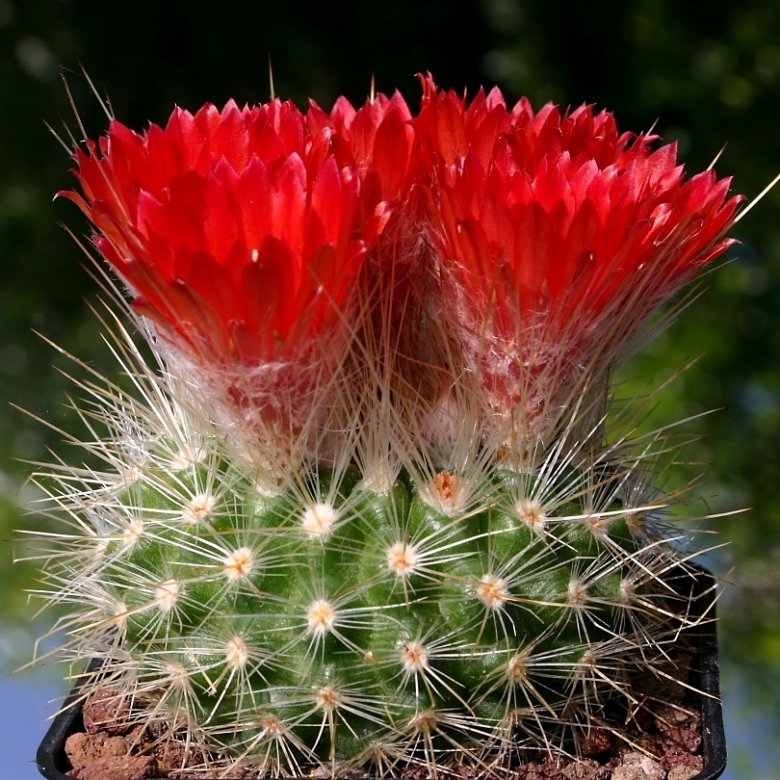
It is a usually solitary, small-growing cactus, with dense snow-white spines.
Stem: Pale green or bright green, spherical, later cylindrical, growing up to 40-5m cm tall and 9 cm wide. With dense white wool apically.
Ribs: Several, spiraling, forming distinct conical tubercles.
Areoles: White.
Spines: Glassy, finely bristled, white, becoming very dense on old specimens.
Radial spines: Up to 18, very thin, clear, and silky
Central spines: Longer (about 20 mm) and stiffer.
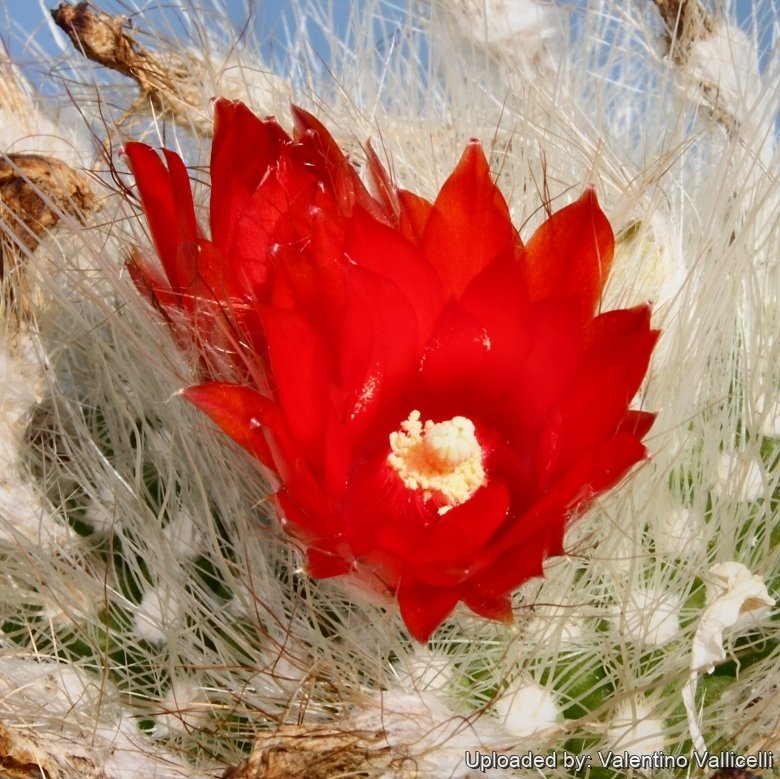
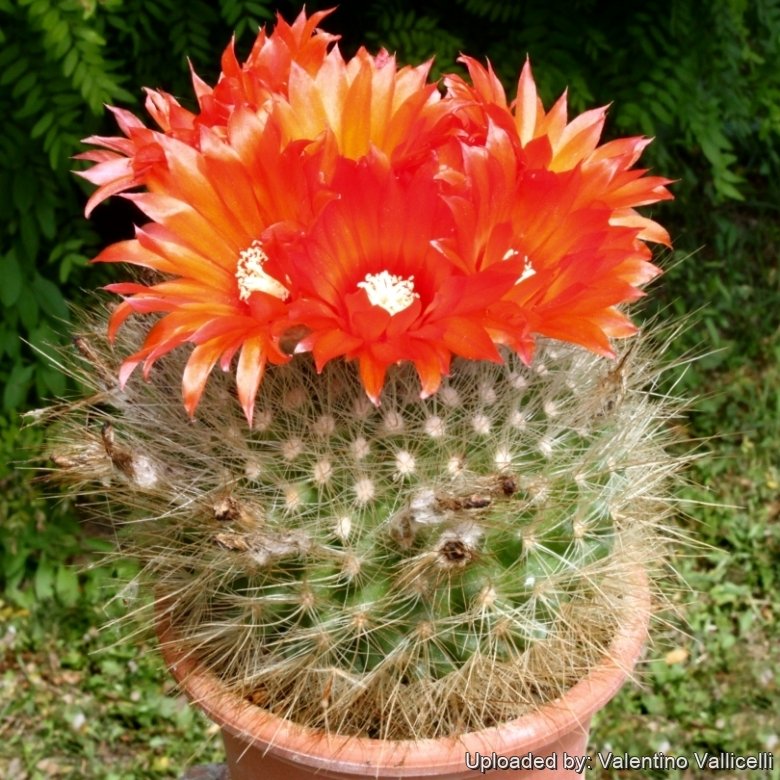
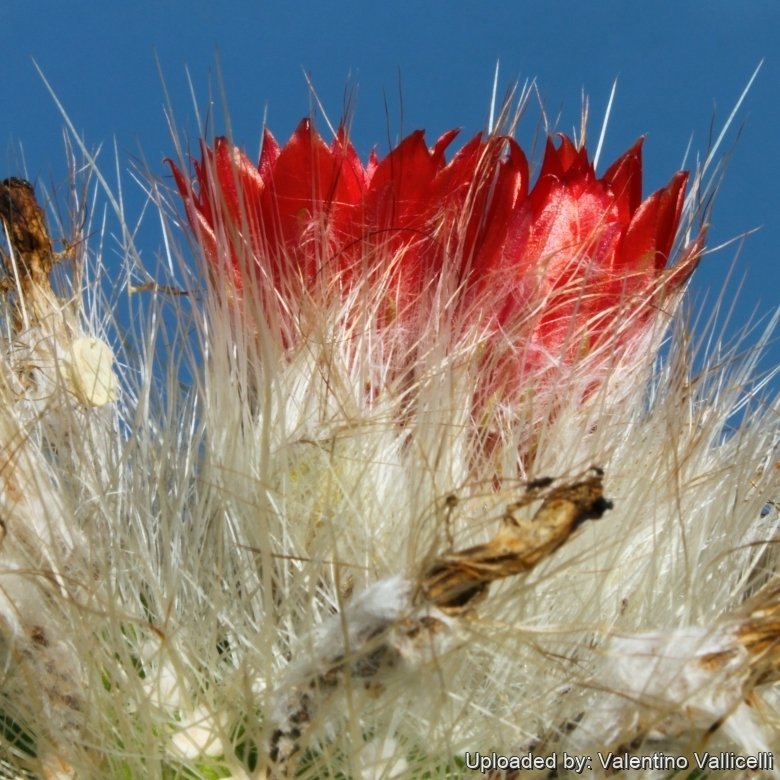
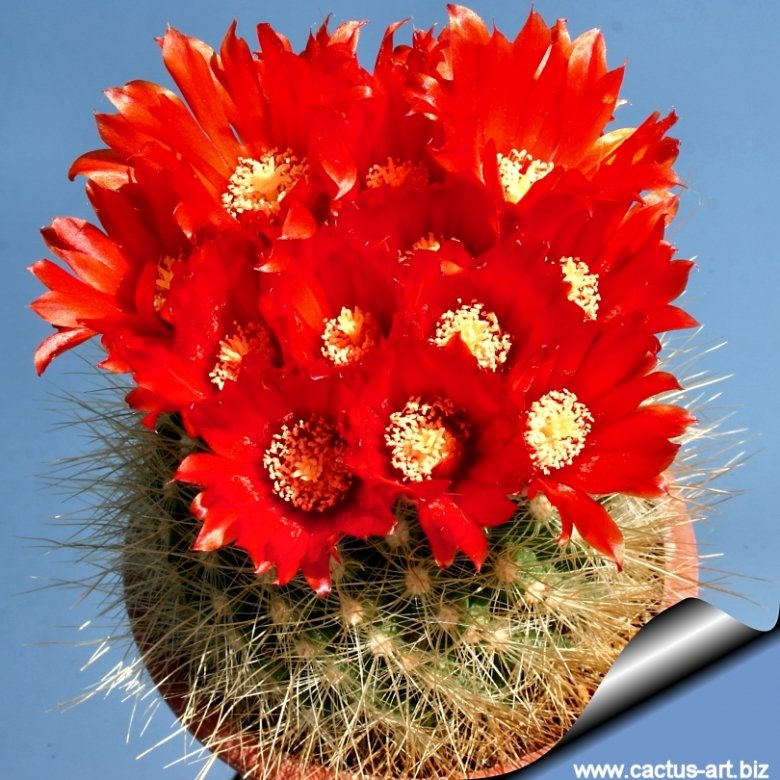
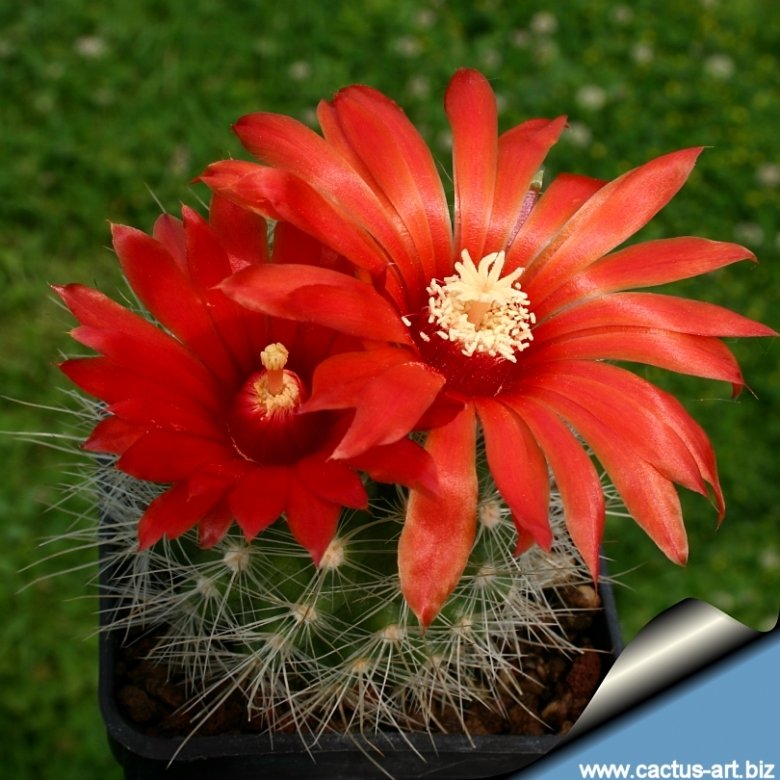
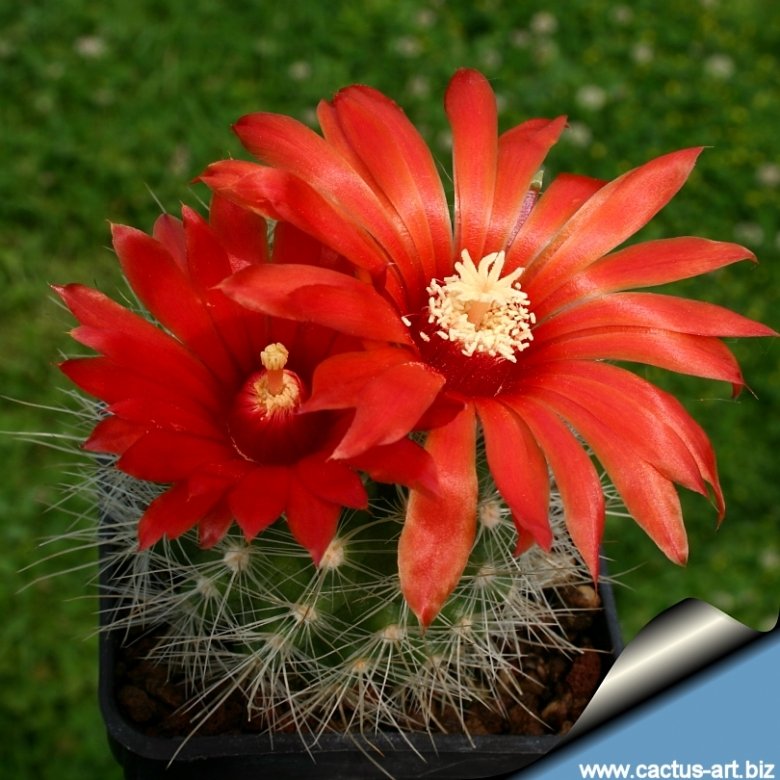
Flowers: Funnel-shaped, about 3 cm in diameter, orange-yellow or brilliant red in an apical circle. Pericarpels and floral tube covered with wool and bristles. Dried flower remains for a long time on the plant body after blooming.
Blooming time: Summer.
Fruit: Small.
Seed: Minuscule, glossy brown smooth.
Origin and Habitat
Native to the highlands of Salta (northern Argentina)
Cultivation and Propagation
Water these plants regularly, and fertilize with a low nitrogen fertilizer every 6 to 8 weeks- from mid-spring to late summer. This plant should remain rather dry at other times (especially in winter), except for a quick, periodic misting on warmer days in late winter. If it is kept absolutely dry for a long period, it tends to lose its roots in winter. It can tolerate light frost (-1C°)
If the local climate is warm enough to grow this plant outside, be sure that soil is well drained and sun if full, but with protection from strong mid-day rays.
Propagation: By Seeds that are very fine
Bibliography
Major references and further lectures
-
Edward Anderson “The Cactus family” Timber Press, Incorporated, 2001
-
David R Hunt; Nigel P Taylor; Graham Charles; International Cactaceae Systematics Group. “The New Cactus Lexicon” dh books, 2006
-
James Cullen, Sabina G. Knees, H. Suzanne Cubey “The European Garden Flora Flowering Plants: A Manual for the Identification of Plants Cultivated in Europe, Both Out-of-Doors and Under Glass” Cambridge University Press, 11/Aug/2011
Gallery