Publication: Succulenta (Netherlands) 1960: 77
Description
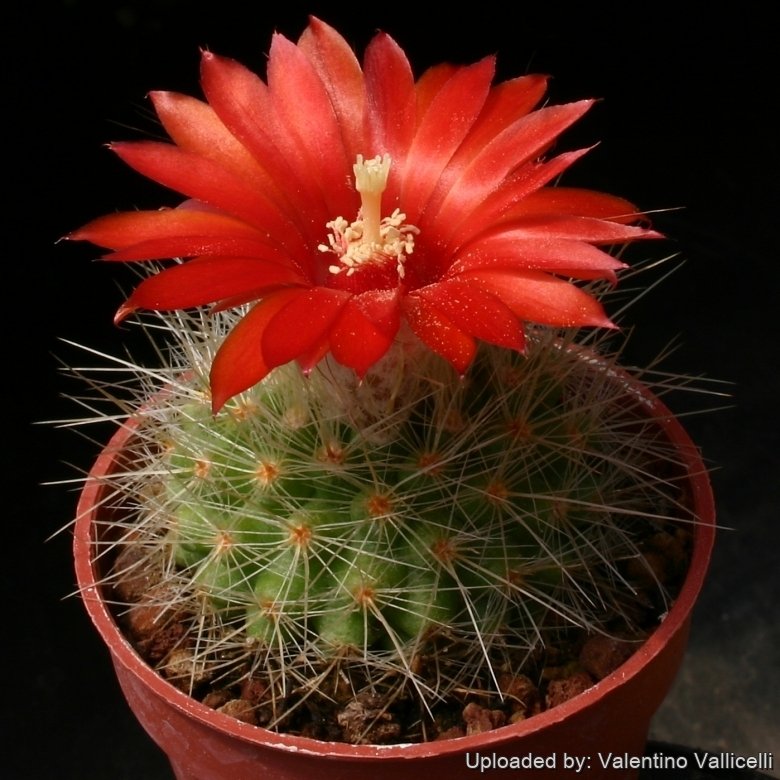
It is a usually a solitary, small- growing, cactus
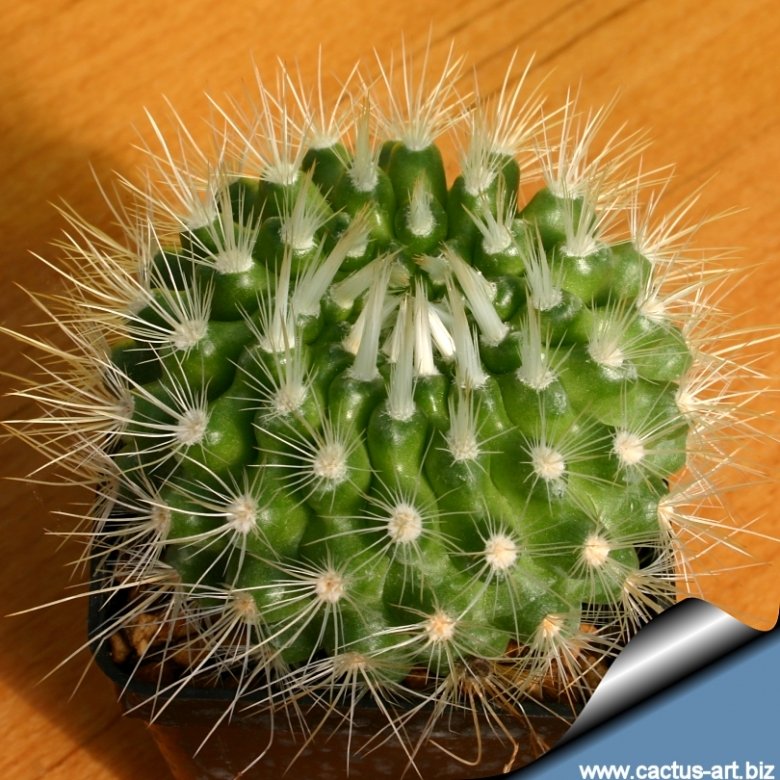
Stem: Pale green or bright green, spherical, later cylindrical, growing up to 40-5m cm tall and 9 cm wide.
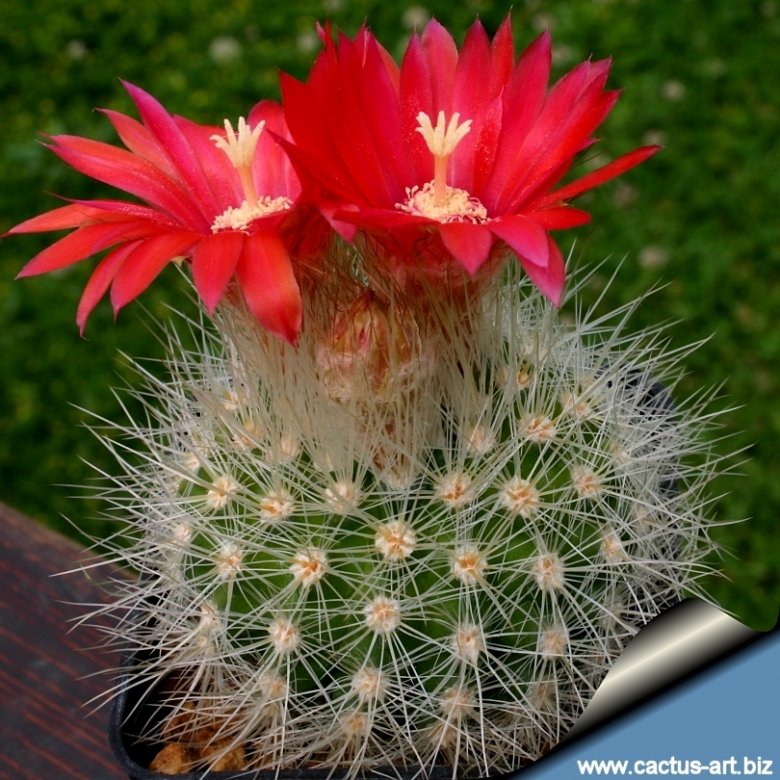
Spines: Glassy, bristly straw-coloured (but also pale yellow, or pale brown) becoming very dense on specimen. The radials are very thin, clear, and silky, while the centrals are longer, stiffer and more coloured. There is also a form (the so-called P. penicillata var. nivosa) with dense snow-white spines.
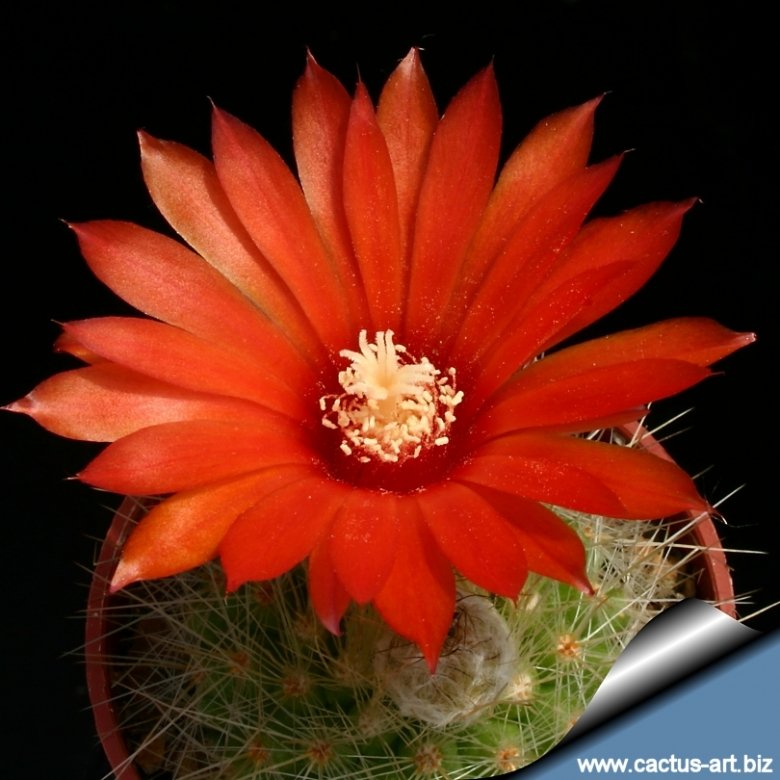
Flowers: Funnel-shaped, orange-yellow or brilliant red in an apical circle. Dried flowers remain for a long time on the plant body after blooming.
Blooming time: Summer.
Origin and Habitat
Native to the highlands of northern Argentina
Cultivation and Propagation
Water these plants regularly, and fertilize with a low nitrogen fertilizer every 6 to 8 weeks, from mid-spring to late summer. This plant should remain rather dry at other times (especially in winter) except for a quick, periodic misting on warmer days in late winter. If it is kept absolutely dry for a long period, it tends to lose its roots in winter. It can tolerate light frost (-1C°)
If the local climate is warm enough to grow this plant outside, be sure that soil is well drained and sun if full, but with protection from strong midday rays.
Propagation: By Seeds that are very fine
Notes
Frequently this specie is found with the incorrect spelling Parodia pennicillata.
Bibliography
Major references and further lectures
-
Edward Anderson “The Cactus family” Timber Press, Incorporated, 2001
-
David R Hunt; Nigel P Taylor; Graham Charles; International Cactaceae Systematics Group. “The New Cactus Lexicon” dh books, 2006
-
James Cullen, Sabina G. Knees, H. Suzanne Cubey “The European Garden Flora Flowering Plants: A Manual for the Identification of Plants Cultivated in Europe, Both Out-of-Doors and Under Glass” Cambridge University Press, 11/Aug/2011