Publication: Cactaceae Consensus Init. 6: 10. 1998
Description
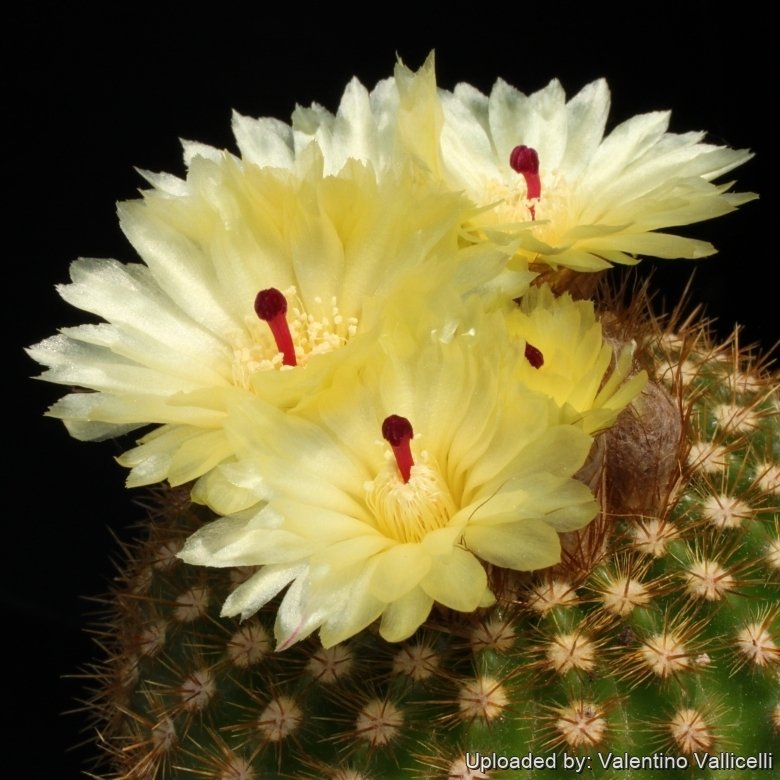
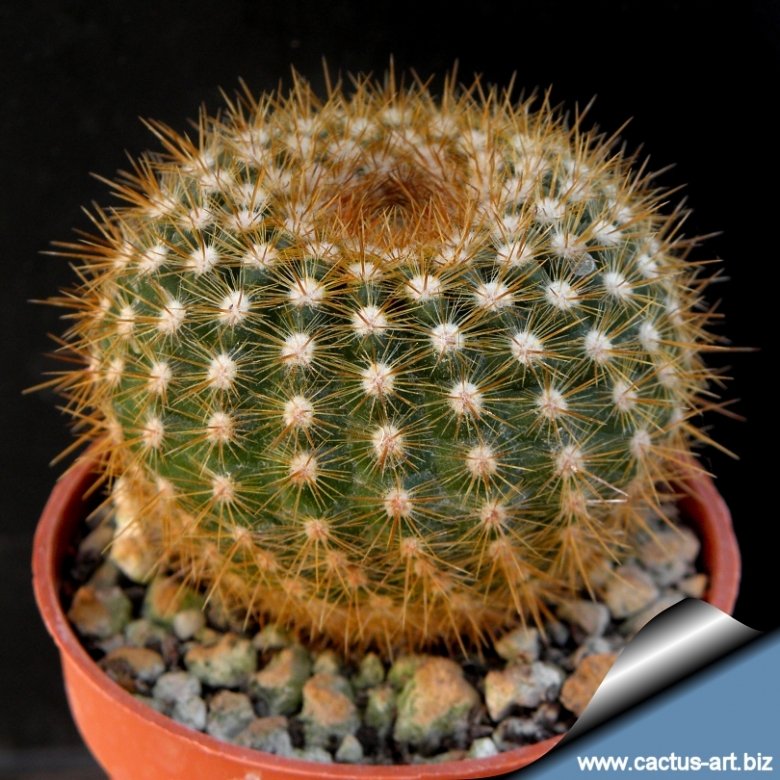
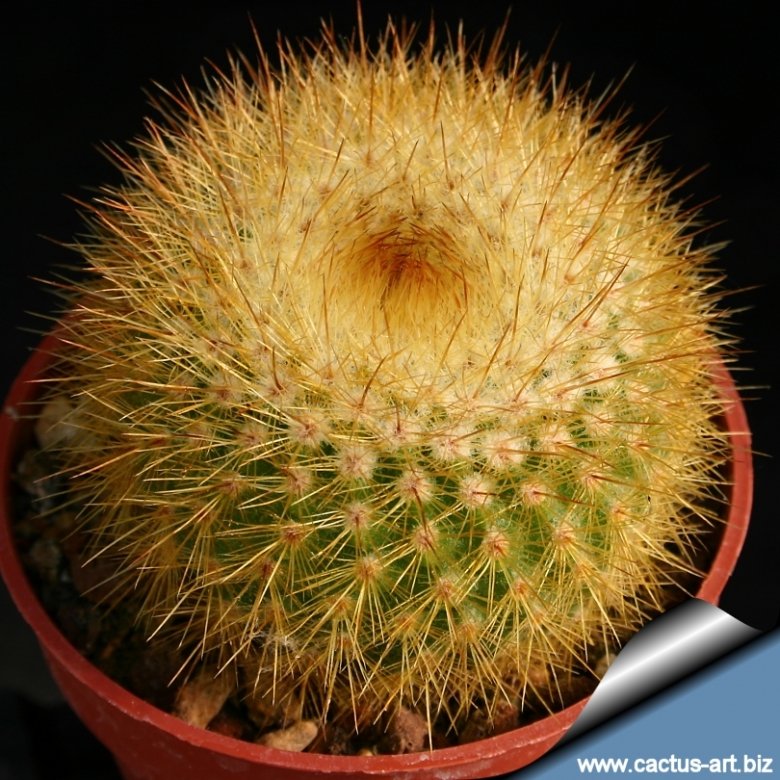
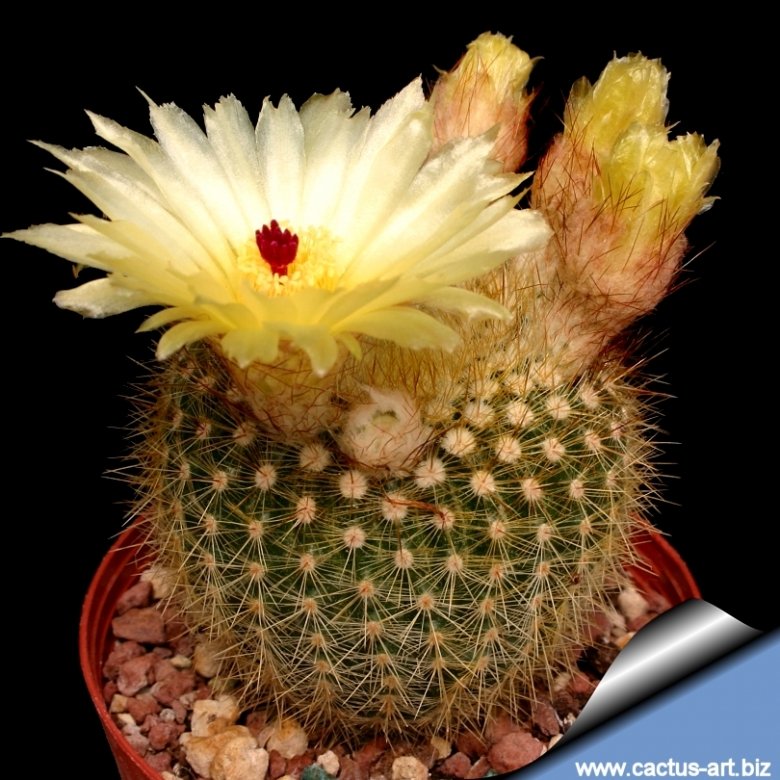
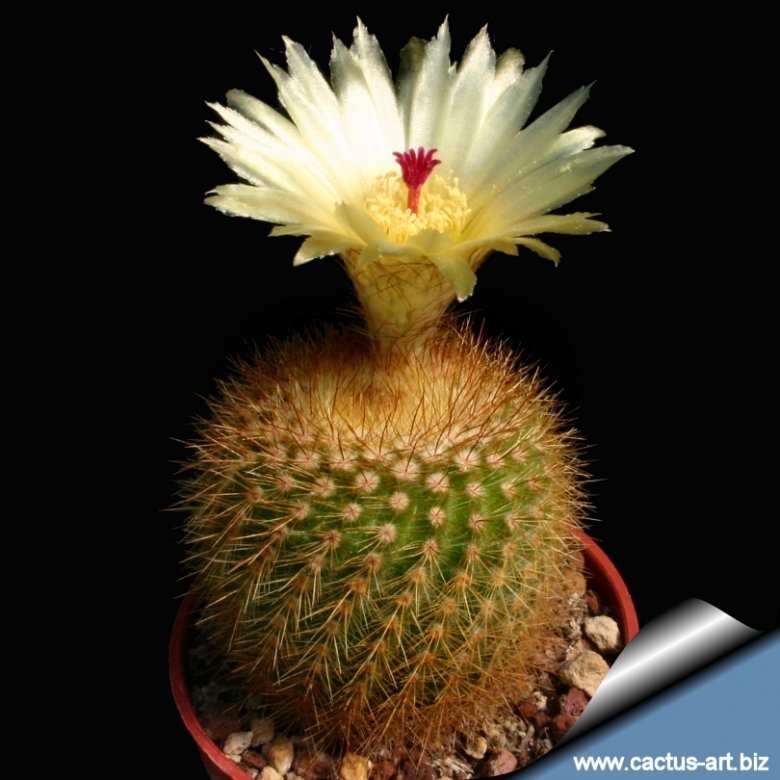
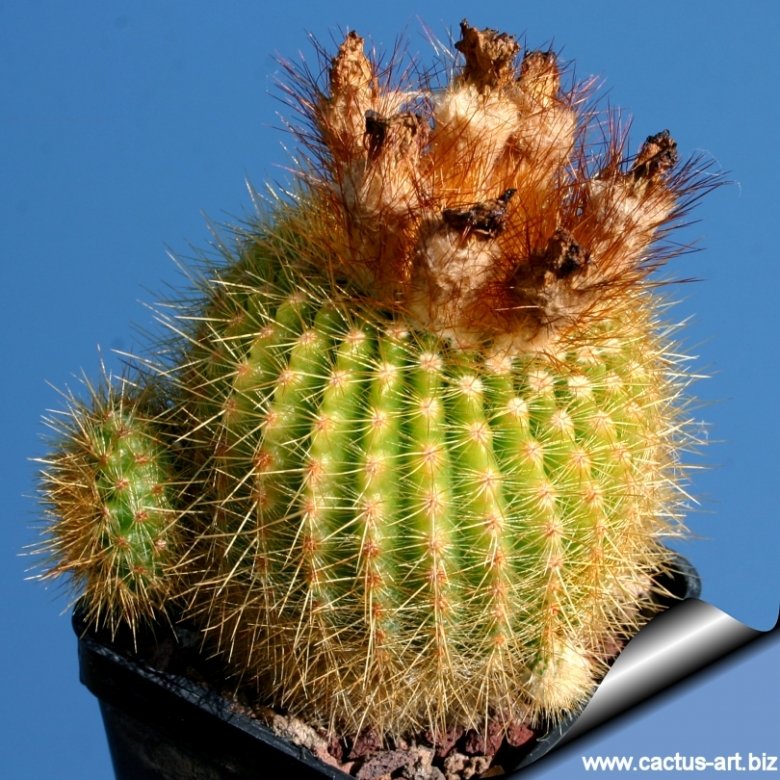
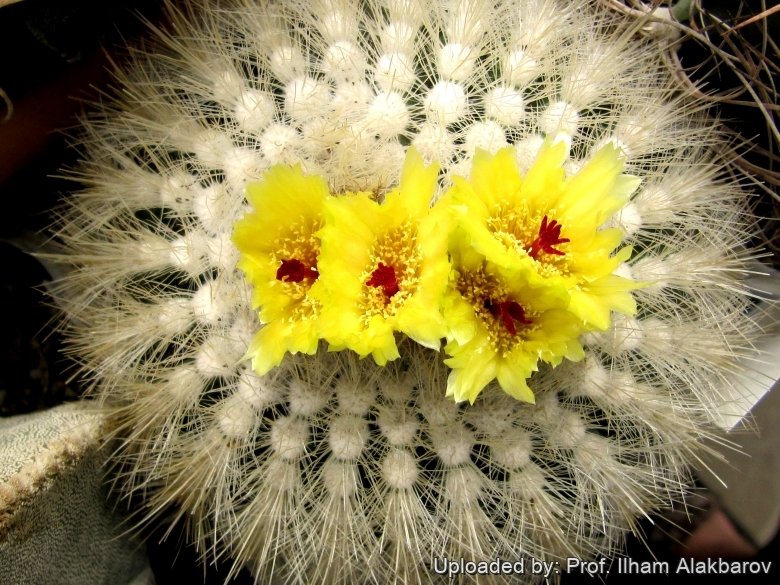
Parodia scopa subs. succinea, best known as Notocactus succineus, is one of the varieties of the wide ranging and very variable Parodia scopa distinguished for its smaller stems with abundant dark yellow central spines. It has about 18-24 ribs, 8-12 central spines, and 15-30 radials. The flowers are very showy, glossy yellow.
Habit: It is perennial stem succulent branching from the base. This variety ends up forming very big clumps when age.
Stem: Dark green, at first globular, becoming bit columnar to clavate with age, depressed apically, 2,5-7 cm in diameter.
Ribs: 18-24 (sometime up to 28 or more) low, obtuse, finely notched into low warts tipped with areoles, which may spiral slightly.
Areoles: White woolly.
Central spines: About 4 to 12 dark yellow, brownish or violet, medium length, needle-like, stouter than radials.
Radial spines: (12-)15-30(-40) shorter, fine, bristles-like, whitish, yellowish, or brownish 3-10 mm long, spreading around.
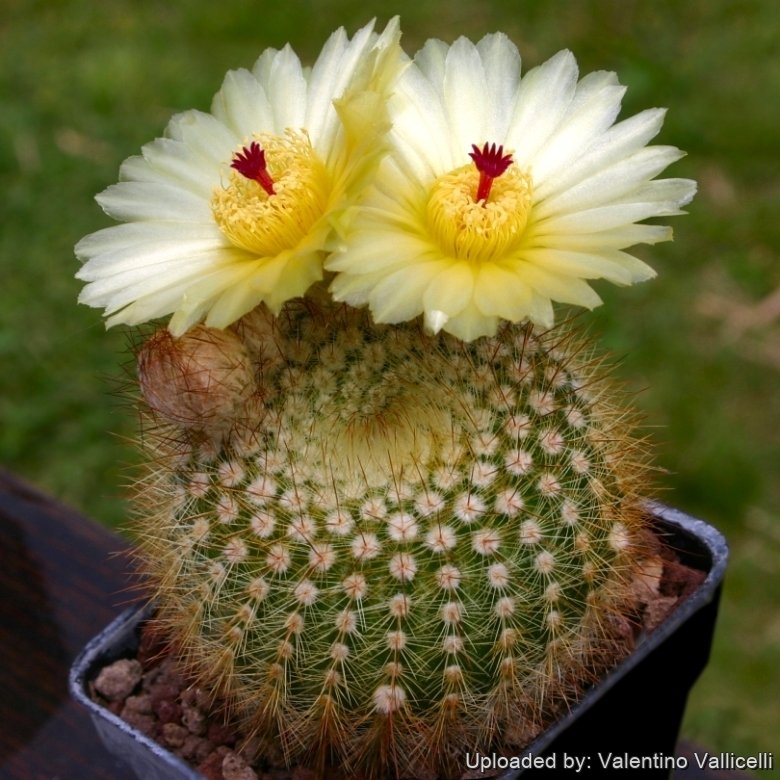
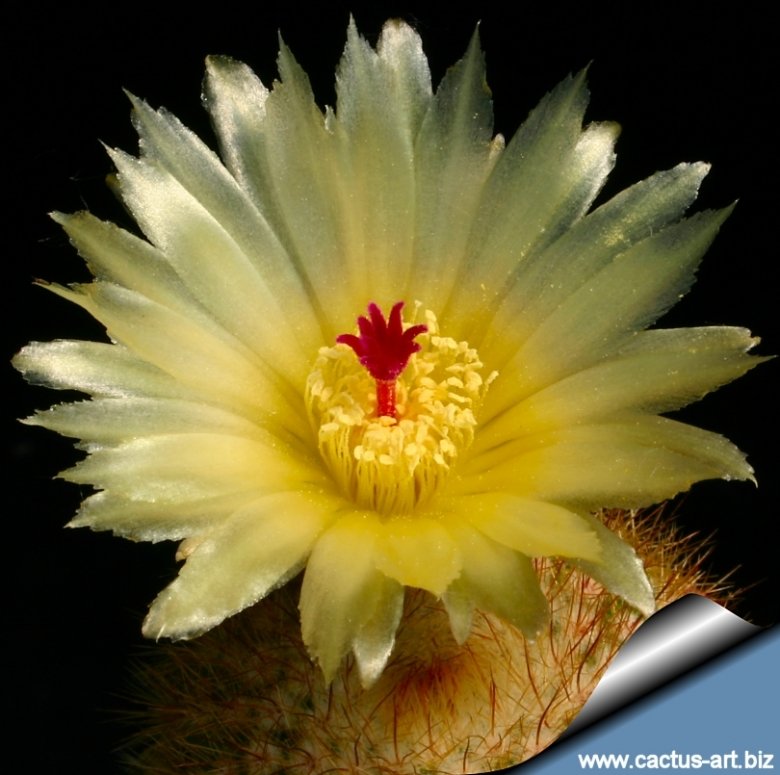
Flowers: A cluster of satiny, bright yellow flowers spring in the upper part of the stem forming a ring, The are 3-3,6 cm long and 3-4 cm in diameter. Inner perianth segments in two overlapping series, spatulate, rather wide for their length, more or less toothed above, Pistil with about 10, rayed, bright crimson stigma lobes. Tube short. Scales on the ovary woolly with brown bristles.
Blooming season: June-July.
Fruits: Globose, about 7 mm in diameter, opening at maturity, with numerous seeds.
Seeds: Dull black tuberculate 0,6-0,9 x 0,5-1 mm broad.
Origin and Habitat
Sao Gabriel, Rio Grande do Sul, Brazil.
Habitat: It occurs in grasslands. Droughts are not severe or prolonged, and the numerous low ribs provide enough expansion capacity that stems swell enough to store moderate amounts of water. Due to the large number of ribs, no rib has to expand very much after a rain.
Cultivation and Propagation
It is easy to grow. It prefers a neutral to slightly acidic mineral-based potting mix with plenty of extra grit and feed during the summer. It likes a warm bright location, does great in partial shade but doesn’t like full, hot blazing sun in the central summer month. Can support quite some water during the growing season but pot plants in winter are wet-sensitive and needs to be kept dry (rots easily if soil is wet and cold) tends to lose its roots in winter. Water Best if watered with rain water. Usually it is recommended to over-winter this plant in a bright and warm greenhouse with at least 8-10° C and rather dry (it tends to lose its roots and to rot if the substrate is wet and cold) but it has proved to tolerate temperatures as low as -5° C for short periods. It is susceptible to spider mites, so it should be check once in a while for it.
Propagation: Seeds, cuttings or root suckers (if available). Not too difficult to raise from seed.
Bibliography
Major references and further lectures
-
Edward Anderson “The Cactus family” Timber Press, Incorporated, 2001
-
James Cullen, Sabina G. Knees, H. Suzanne Cubey “The European Garden Flora Flowering Plants: A Manual for the Identification of Plants Cultivated in Europe, Both Out-of-Doors and Under Glass” Cambridge University Press, 11/Aug/2011
-
David R Hunt; Nigel P Taylor; Graham Charles; International Cactaceae Systematics Group. “The New Cactus Lexicon” dh books, 2006
-
Friedrich Ritter “Kakteen in Suedamerika: Ergebnisse Meiner 20 Jaehrigen Feldforschungen” F. Ritter Selbstverlag, 1979
-
Hiroshi Hirao “Colour encyclopaedia of cacti” Seibundo Shinkosha, 1979
-
Jan Říha, Rudolf Šubík, Gillian Beckett “The Illustrated Encyclopedia of Cacti & Other Succulents” Octopus Publishing Group, 1981
8)Mariella Pizzetti, Giuseppe Mazza “Piante grasse: le cactacee” A. Mondadori, 1985
From llifle page Notocactus scopa var. sulphureus
Description
Clumping short cactus
Stem: At first globular, becoming shortly columnar up to 45 cm tall, 10 cm in diameter.
Spines: Dense amber-yellow, the new spines are orangish.
Flower: Diurnal, opening in during the day and closing at night. Yellow with red pistil, 4cm in diameter.
Source: Notocactus scopa var. sulphureus, LLIFLE - Encyclopedia of living forms, CC-BY-SA, retrieved 2026-10-25.
From llifle page Notocactus scopa var. albispinus
Description
Parodia scopa subs. succinea f. albiseta, best known in cultivation as Notocactus succineus var. albispinus is a selected strain with pure white spines (not dark-yellow) of the wide ranging and very variable Parodia scopa ubs. succinea.The flowers are very showy, glossy yellow.
Habit: It is perennial stem succulent branching from the base. This variety ends up forming very big clumps when age.
Stem: Dark green, at first globular, becoming bit columnar to clavate with age, depressed apically, 2,5-7 cm in diameter.
Ribs: 18-24 (sometime up to 28 or more) low, obtuse, finely notched into low warts tipped with areoles, which may spiral slightly.
Areoles: White woolly.
Central spines: About 4 to 12 dwhite, medium length, needle-like, stouter than radials.
Radial spines: (12-)15-30(-40) shorter, fine, bristles-like, whitish 3-10 mm long, spreading around.
Flowers: A cluster of satiny, bright yellow flowers spring in the upper part of the stem forming a ring, The are 3-3,6 cm long and 3-4 cm in diameter. Inner perianth segments in two overlapping series, spatulate, rather wide for their length, more or less toothed above, Pistil with about 10, rayed, bright crimson stigma lobes. Tube short. Scales on the ovary woolly with brown bristles.
Blooming season: June-July.
Fruits: Globose, about 7 mm in diameter, opening at maturity, with numerous seeds.
Seeds: Dull black tuberculate 0,6-0,9 x 0,5-1 mm broad.
Origin and Habitat
It is known in cultivation only.
Bibliography
Major references and further lectures
-
Edward Anderson “The Cactus family” Timber Press, Incorporated, 2001
-
James Cullen, Sabina G. Knees, H. Suzanne Cubey “The European Garden Flora Flowering Plants: A Manual for the Identification of Plants Cultivated in Europe, Both Out-of-Doors and Under Glass” Cambridge University Press, 11/Aug/2011
-
David R Hunt; Nigel P Taylor; Graham Charles; International Cactaceae Systematics Group. “The New Cactus Lexicon” dh books, 2006
-
Friedrich Ritter “Kakteen in Suedamerika: Ergebnisse Meiner 20 Jaehrigen Feldforschungen” F. Ritter Selbstverlag, 1979
-
Hiroshi Hirao “Colour encyclopaedia of cacti” Seibundo Shinkosha, 1979
-
Jan ?íha, Rudolf Šubík, Gillian Beckett “The Illustrated Encyclopedia of Cacti & Other Succulents” Octopus Publishing Group, 1981
8)Mariella Pizzetti, Giuseppe Mazza “Piante grasse: le cactacee” A. Mondadori, 1985
Source: Notocactus scopa var. albispinus, LLIFLE - Encyclopedia of living forms, CC-BY-SA, retrieved 2026-10-25.
Gallery