Description
Notocactus werdermannianus is a (usually) simple stemmed small cactus with bright yellow flowers. This species shares some characteristics with wigginsia
Stem: Globular to slightly cylindrical, often flattened up to 13 cm tall and 10 cm in diameter, yellowish-green to green.
Ribs: up to 40, vertical, straight rounded with many small tubercles.
Areoles: White, wooly and closely set one to each other.
Radial spines: About 15-20, setaceous, more or less erected, whitish or yellowish 4-5 mm long.
Central spines: 4-partite yellowish or reddish (N. ferrugineus) acicular, sharp and flexible up to 15 mm long, the lowest of them longer and pointing downward.
Flowers: About 6 cm long, up to 7 cm in diameter, pale yellow and satiny. Tepals lanceolate darker at the tip, style quite long rich egg-yellow coloured, stigma lobes10-12 carmine red.
Seeds: With distinctive longitudinally-oriented fine striate cuticular sculpturing.
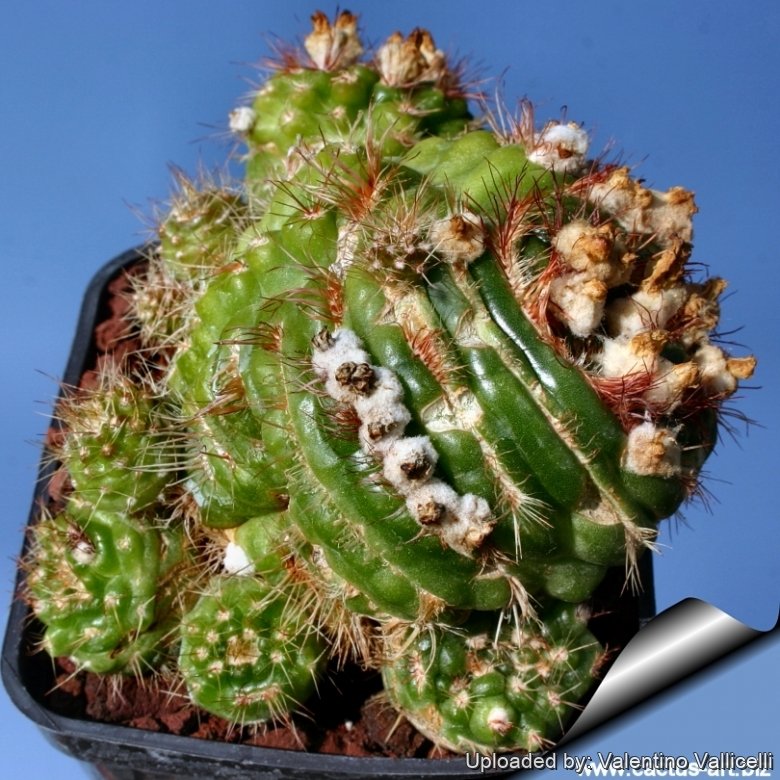
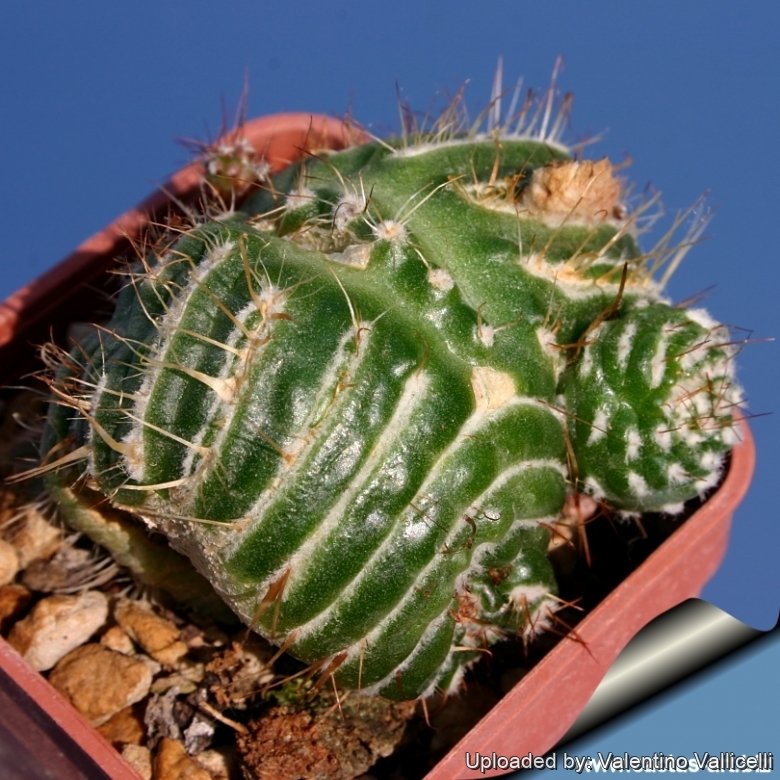
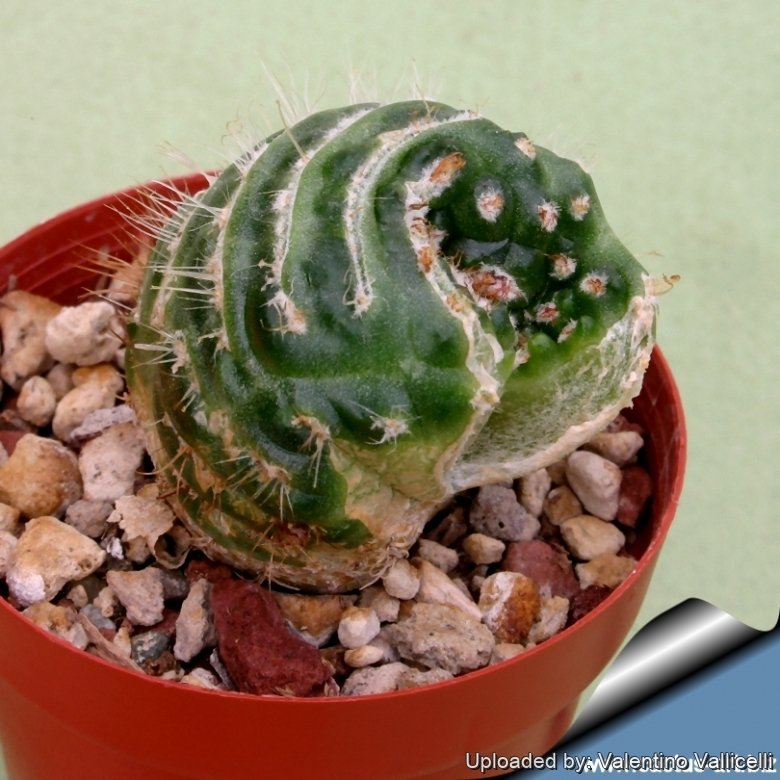
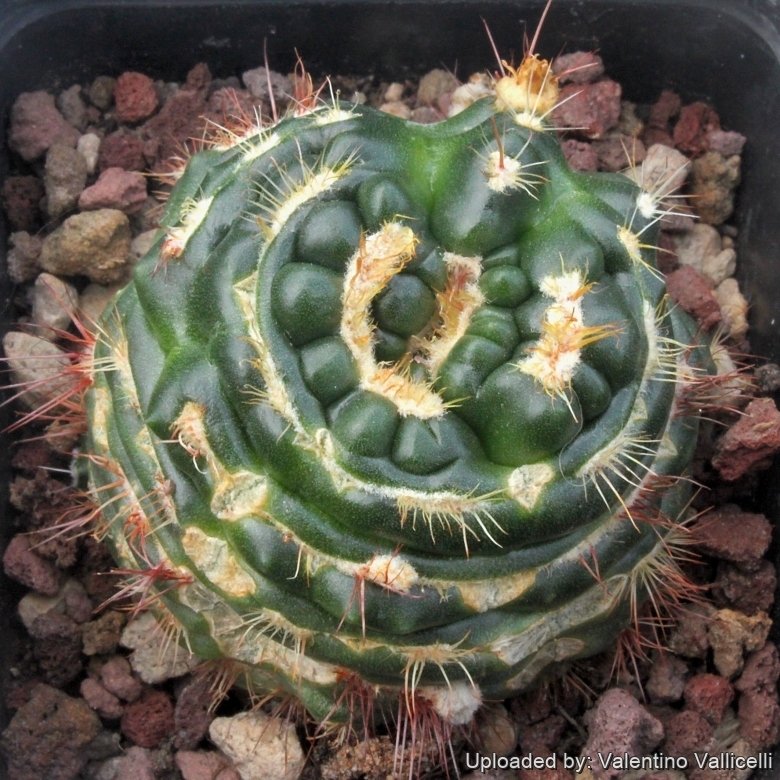
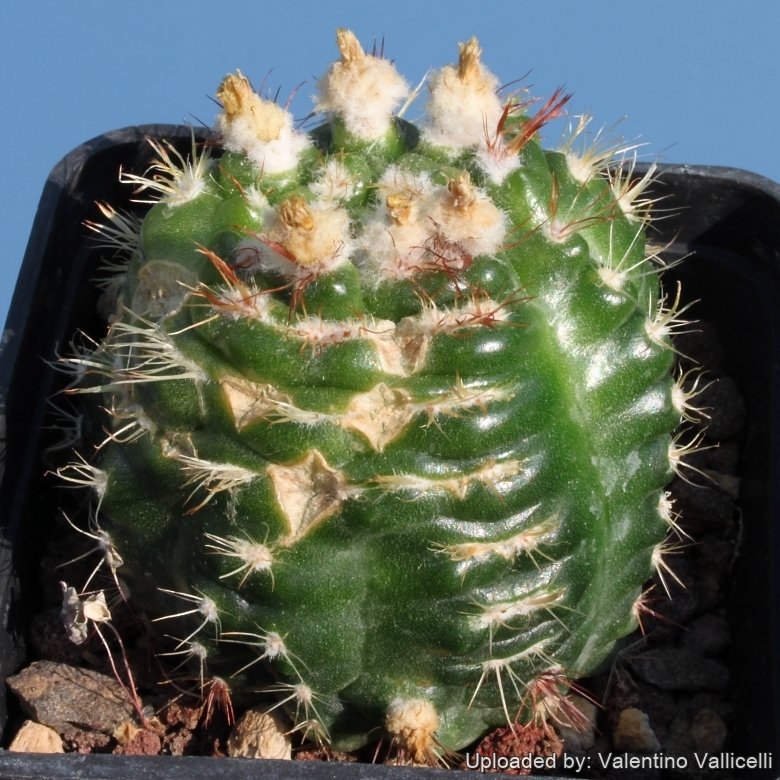
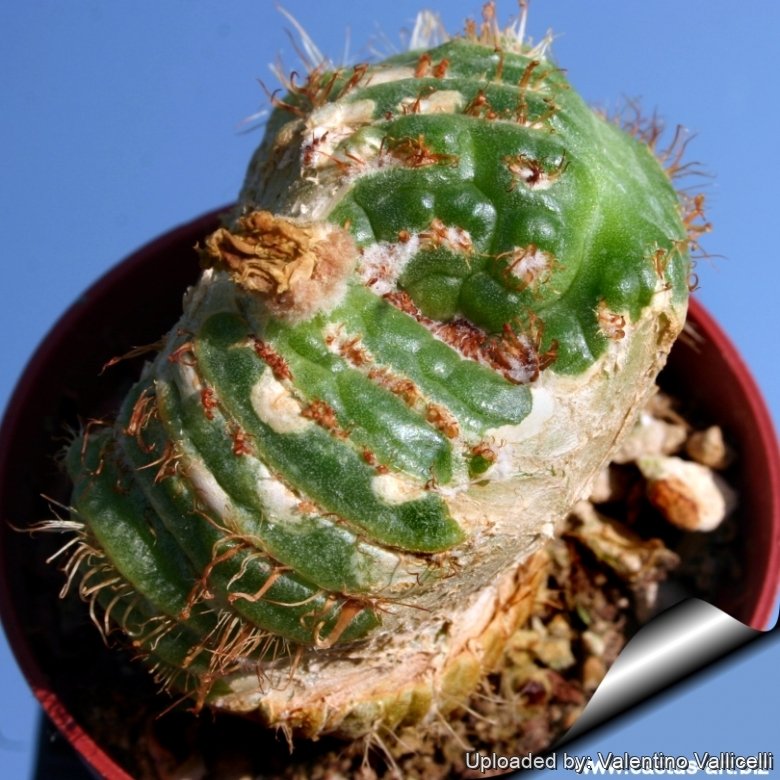
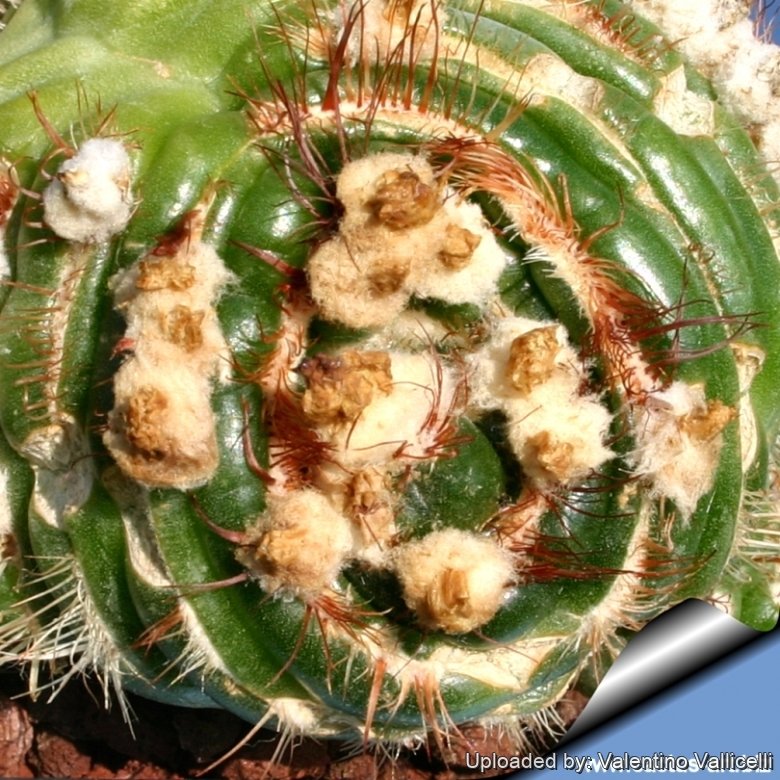
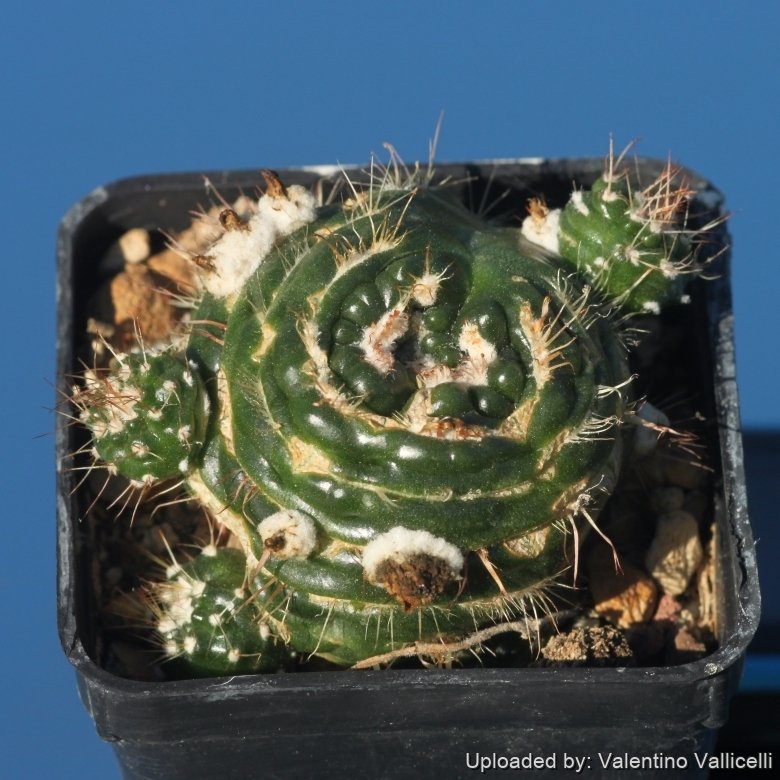
Remarks: The “forma mostruosa” (Monstous form) is a rare oddity with areoles merging to form concentric lines. The epidermis is harder than in the normal Notocactus and cracks easily, but this is not a defect and the plant will not suffer for this, and also the fact that the body splits open permits to the plant to develop original and strange shapes.
Origin and Habitat
Garden origin (Nursery produced cultivar) The standard species comes from Brazil (Rio Grande do Sul) and Uruguay (Tacuarembo)
Cultivation and Propagation
It is easy to grow. They like a warm bright location, does great in partial shade avoid full sun. They need good drainage and prefer a neutral to slightly acidic compost with plenty of extra grit. Water during the summer. Best if watered with rain water. Keep above 0°C and rather dry in winter, rot easily if the substrate is wet and cold, tends to lose its roots in winter.
Propagation: Grafting or cutting.
Gallery