Description
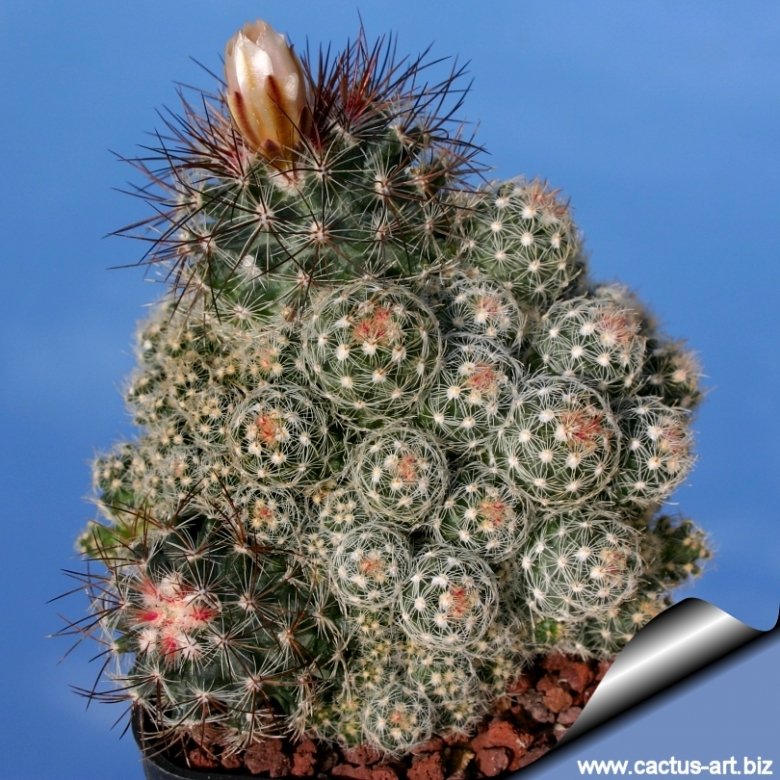
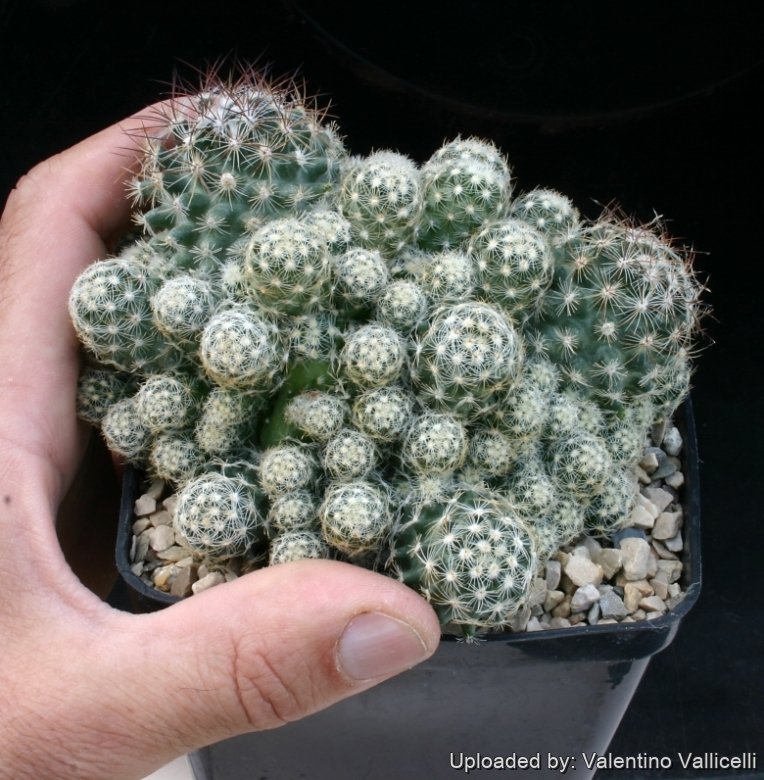
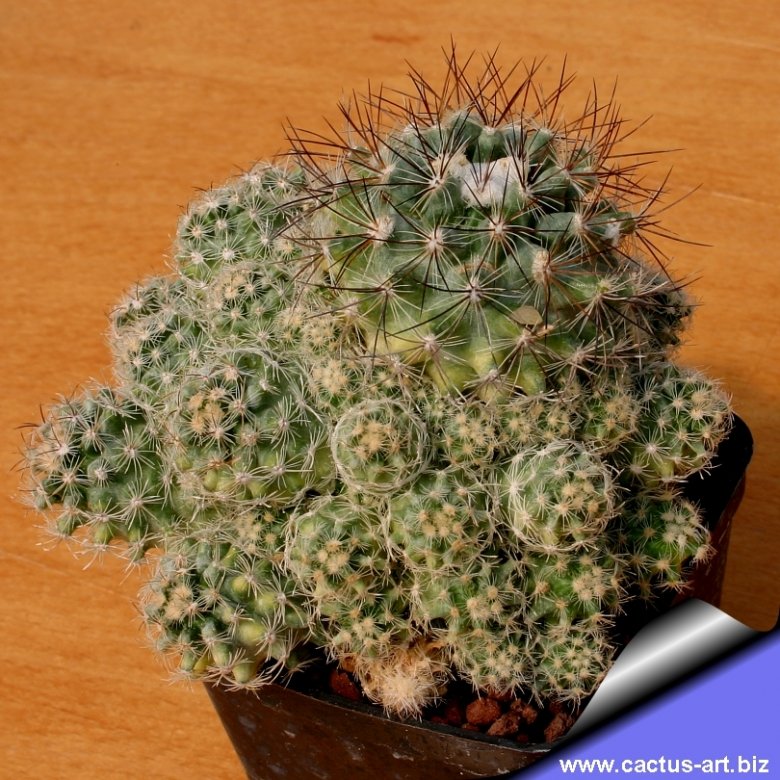
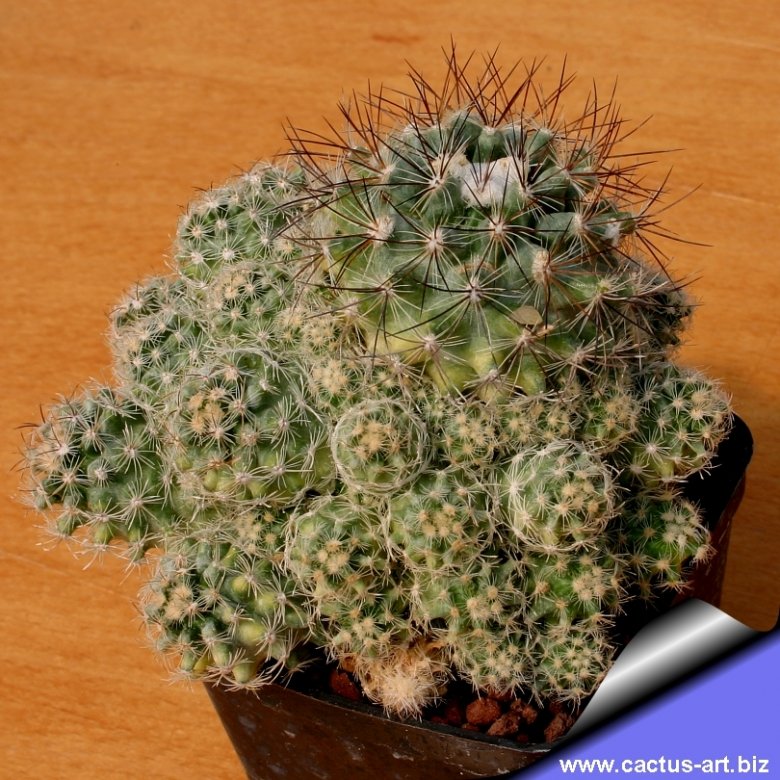
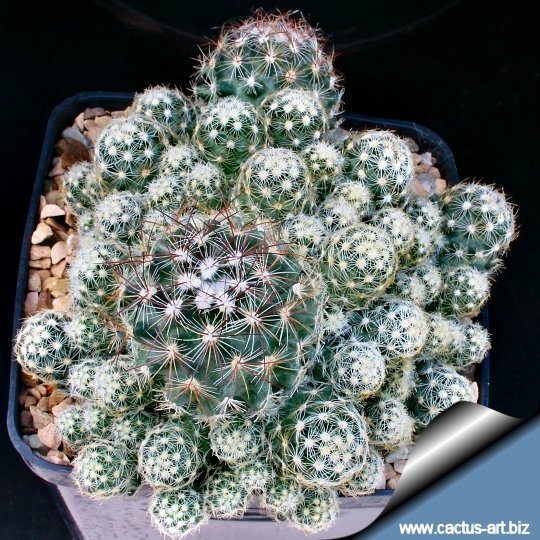
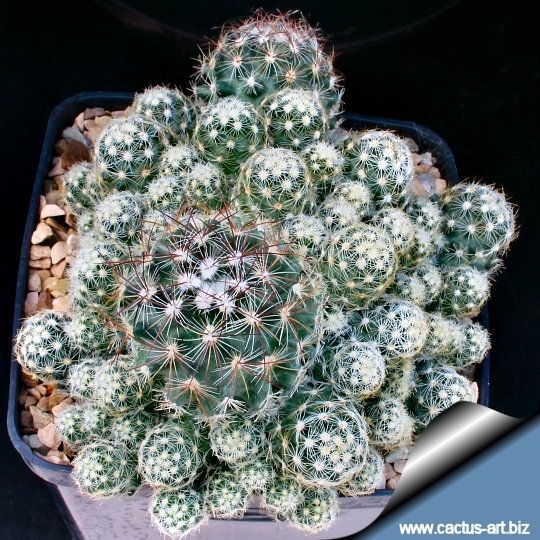
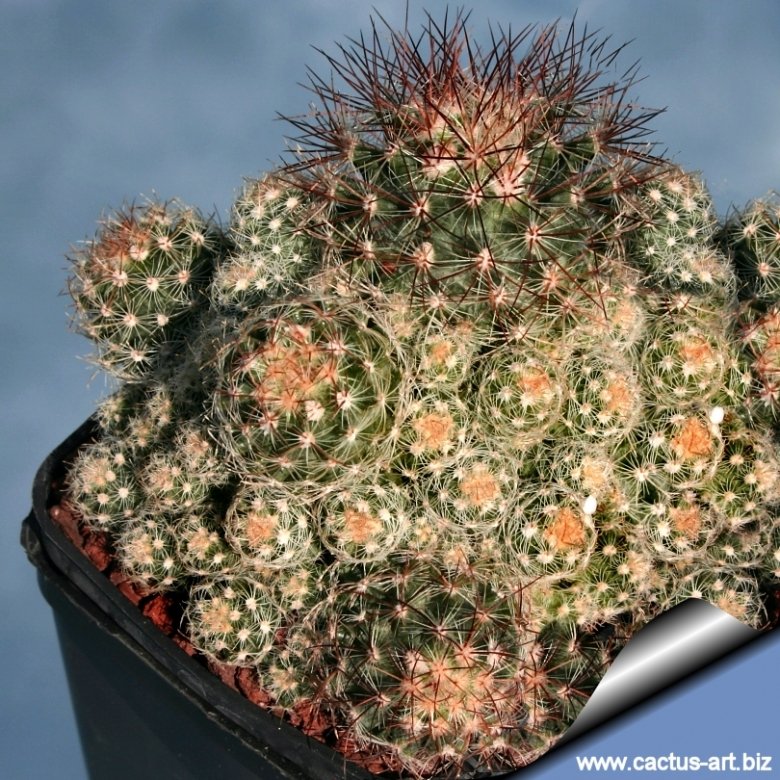
(Mutant form raised from C. caespitosus SB586 Wayne County, Utah, USA) The standard Pediocactus simpsoni is generally singular but occasionally forms small clusters, while the so called “caespitosa” form is a clone obtained in cultivation characterized by an enhanced and almost monstrous production of basal shoots. This plant forms readily large mound of stems.
Stems: Depressed-ovoid to ovoid or globular stems that are 2.5-15(-25) tall × 2.5-15 cm in diameter. Freely ofsetting from the base.
Areoles: Circular to oval, villous.
Tubercles: Spirally arranged, conicalabout 5 to 15 mm long.
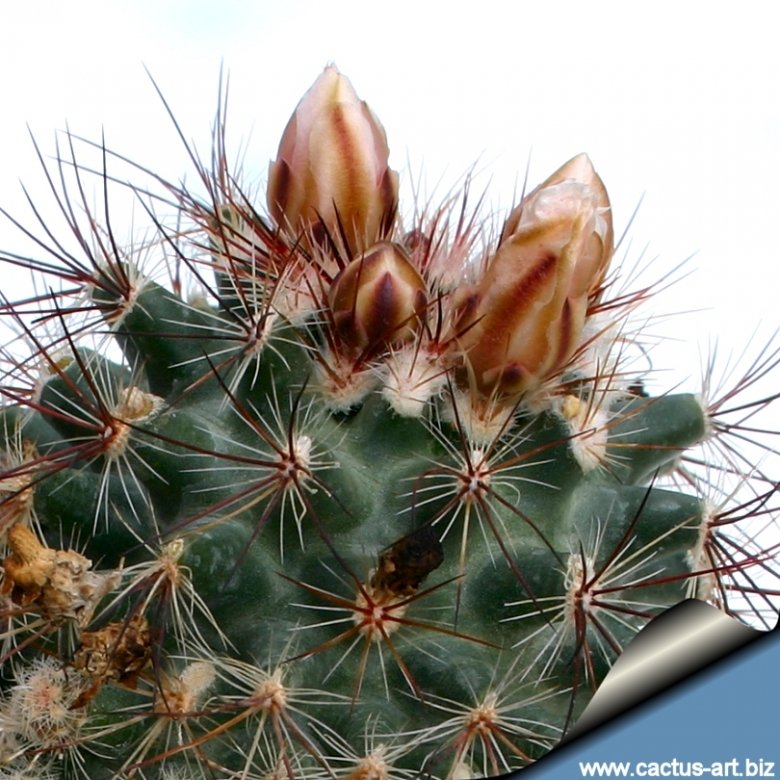
Spines: Located on the tips of the tubercles smooth, relatively hard, distinguishable as radial and central.
Radials: 15 to 35 widely spreading, white, slender, which are 3-13 mm long.
Centrals: 4 to 11 widely spreading about 1 to 2 cm long reddish brown (rarely black) with basal half cream or yellow, rigid, straight or slightly curved. Sometimes the spines almost obscure the surface of the plant.
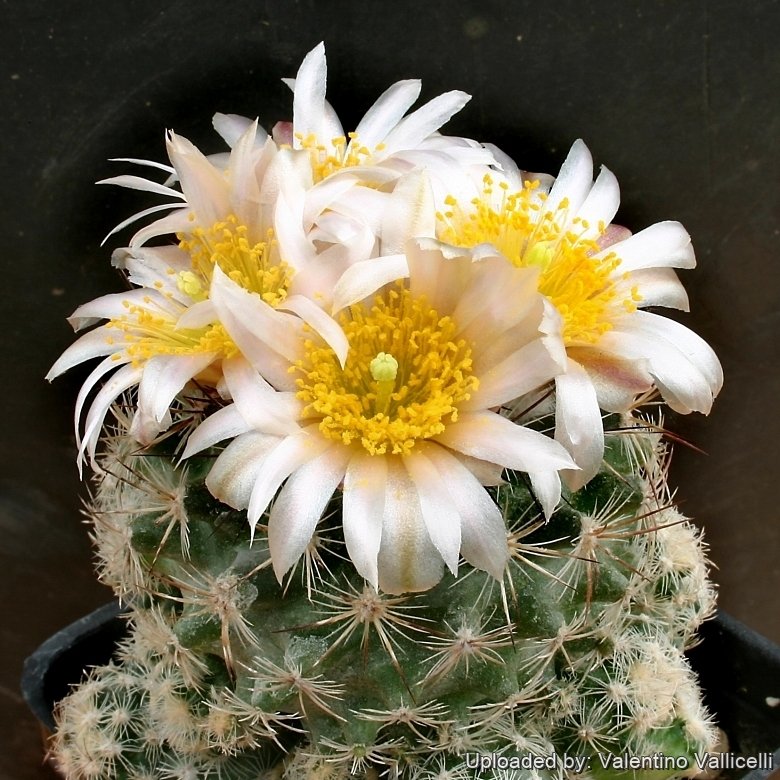
Flowers: 2 to 2,5 cm, bell shaped with scales and outer tepals minutely toothed and laciniate or entire and often undulate; ranging from magenta, pink, straw-yellow, to whitish outer tepals with greenish brown midstripes.. The buds and flowers originate in a small circle at the apex of the plant.
Blooming season: Open from mid April on into May. The flowers usually remain closed on cloudy days.
Fruits: Almost spherical to short cylindric 6-11 × 5-10 mm , green at first, turning tan, drying reddish brown and splitting along the side when mature.
Seeds: Gray to black, 2-3 × 1.5-2 mm, papillate but not rugose.
Origin and Habitat
Garden origin (Nursery produced cultivar).
Cultivation and Propagation
Rot prone and not the easiest cactusv to grow on it’s own roots in cultivation it need a well drained, porous soil is preferred. Partial shading, especially during the hottest part of the summer, is helpful. Water should be provided in late winter, early spring (the main growing season), and also in Autumn, when flower buds are produced and it starts growing again. Do not l water during the winter seasons. Problems with this plants are most likely to result from improper watering. Too much water and the plant may rot; too little water may result in poor vigor or even death. They are good for outdoor cultivation in raised beds, rock gardens, balconies, window sills etc..
Frost Tolerance: Winter hardy from -10° to -25° C (depending on origin)
Gallery