Publication: Ill. Fl. N. U.S. (Britton & Brown), ed. 2. ed. 2, 2: 570, fig. 2983. 1913
Description
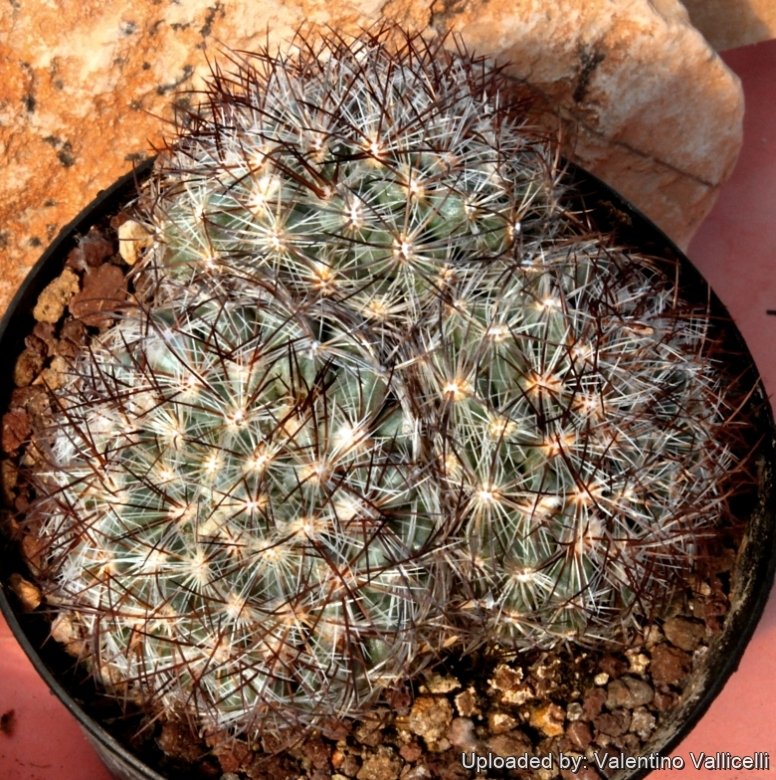
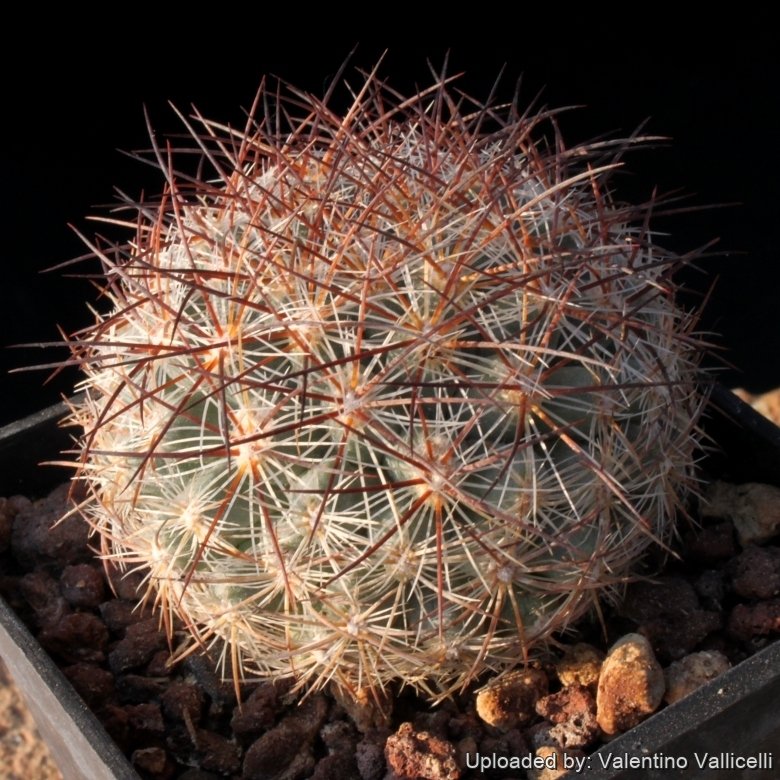
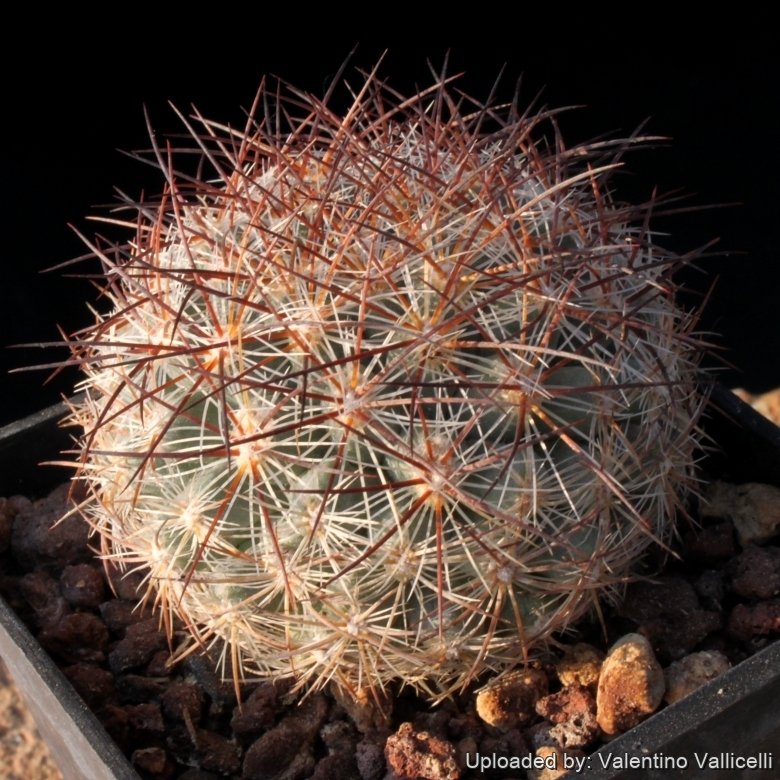
Generally singular but occasionally forming small clusters, Pediocactus simpsonii is an exceedingly variable species, a bit of variation throughout its range and some taxonomists recognize several varieties. The segregation of the many forms, varieties, and subspecies on the basis of morphology, however, is difficult to support, given the continuous range of variation in stem size and flower colour over its geographic range.
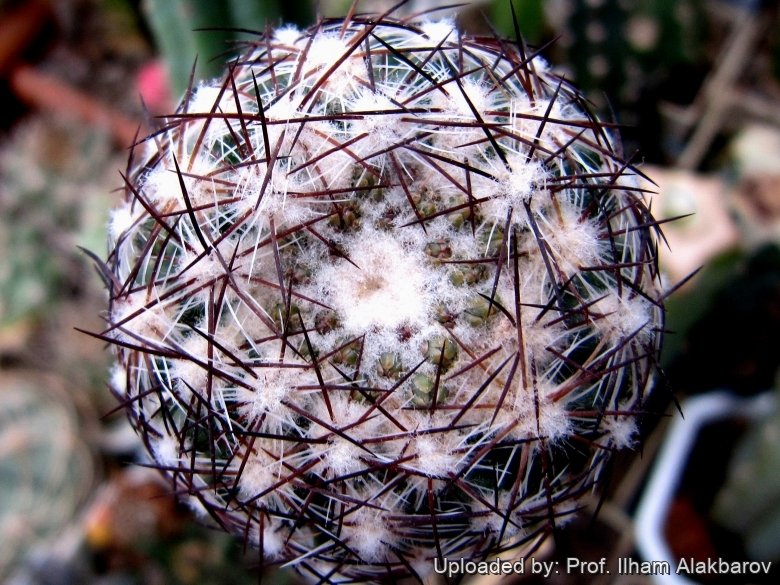
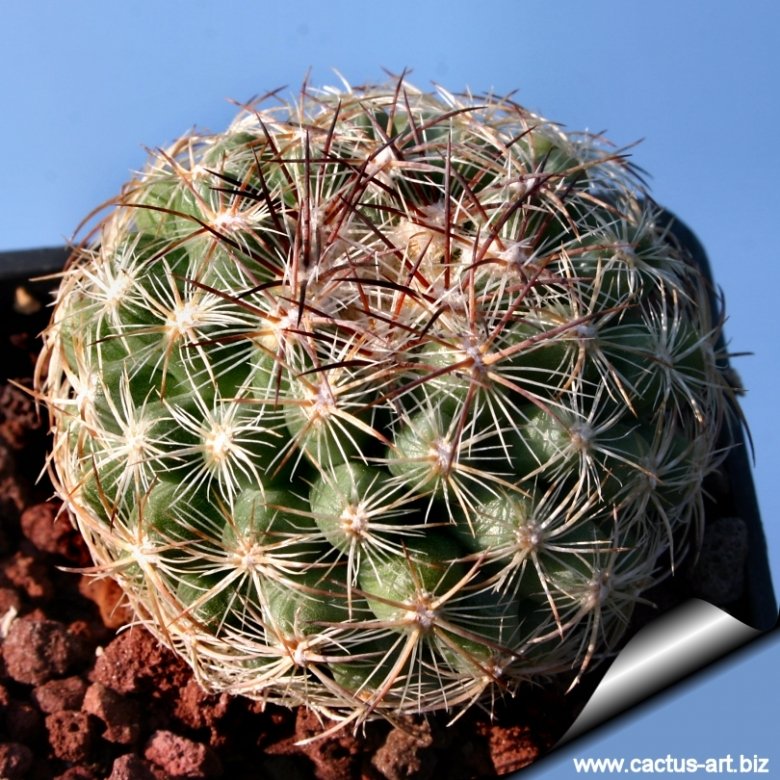
Stems: Depressed-ovoid to ovoid or globular stems that are 2.5-15(-25) tall × 2.5-15 cm in diameter.
Areoles: Circular to oval, hairy.
Tubercles: Spirally arranged, conical about 5 to 15 mm long.
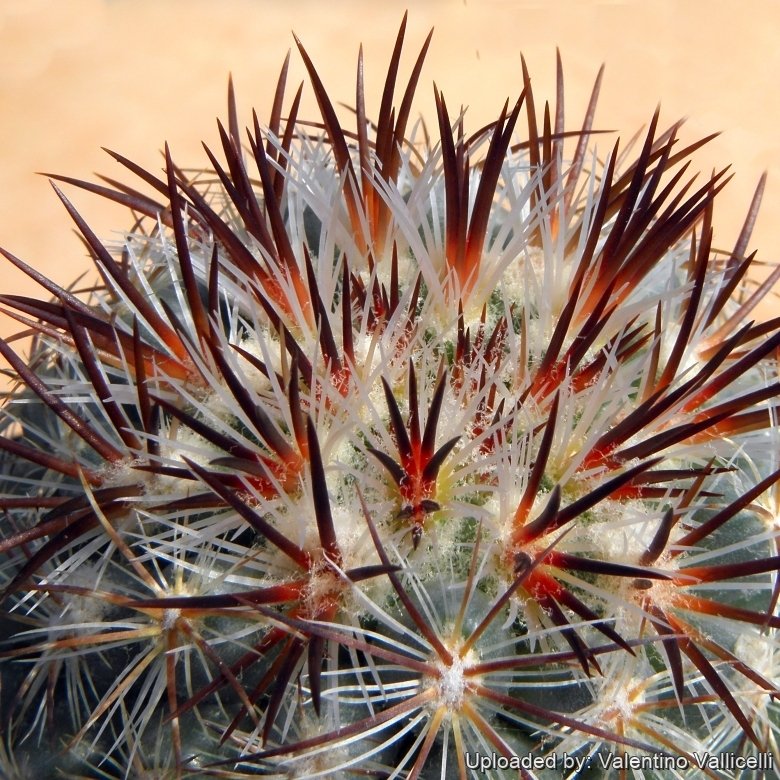
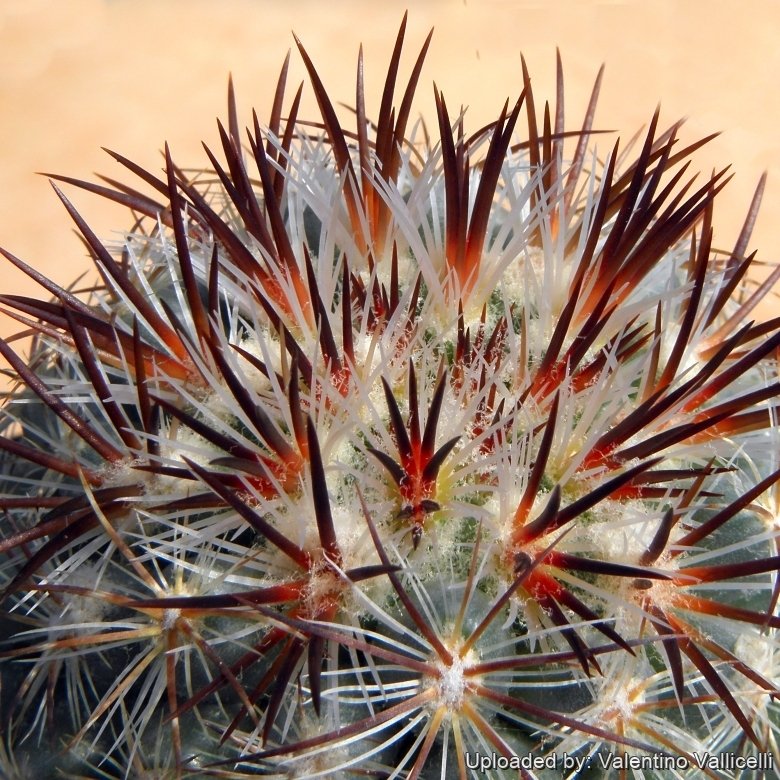
Spines: Located on the tips of the tubercles smooth, relatively hard, distinguishable as radial and central.
Radial spines: 15 to 35 widely spreading, white, slender, which are 3-13 mm long.
Central spines: 4 to 11 widely spreading about 1 to 2 cm long reddish brown (rarely black) with basal half cream or yellow, rigid, straight or slightly curved. Sometimes the spines almost obscure the surface of the plant.
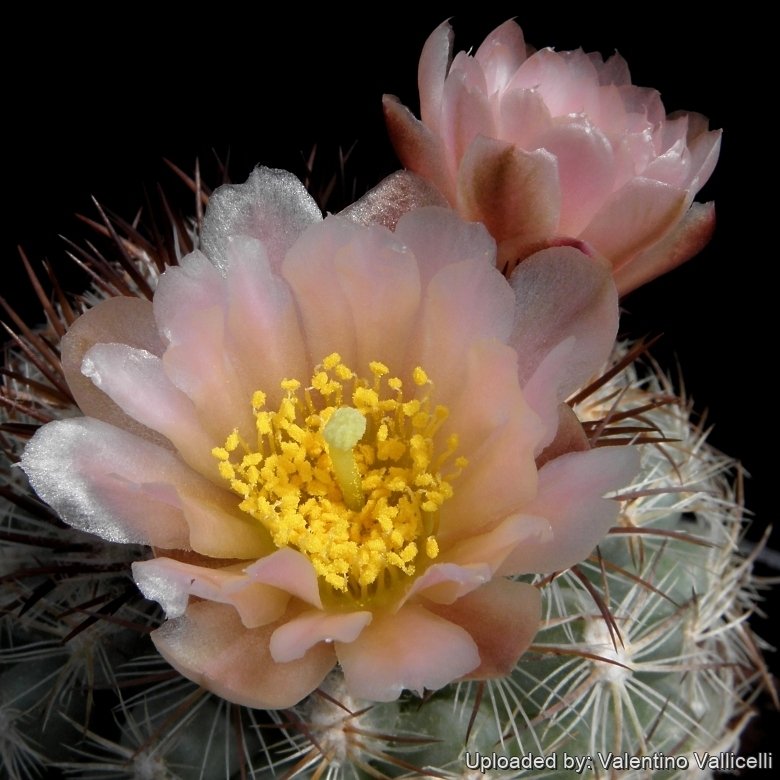
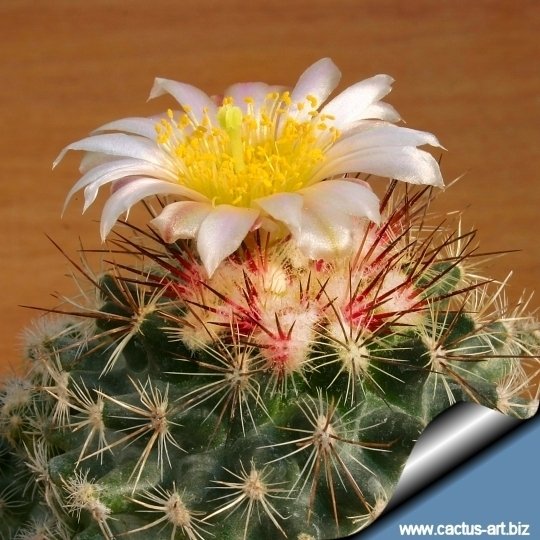
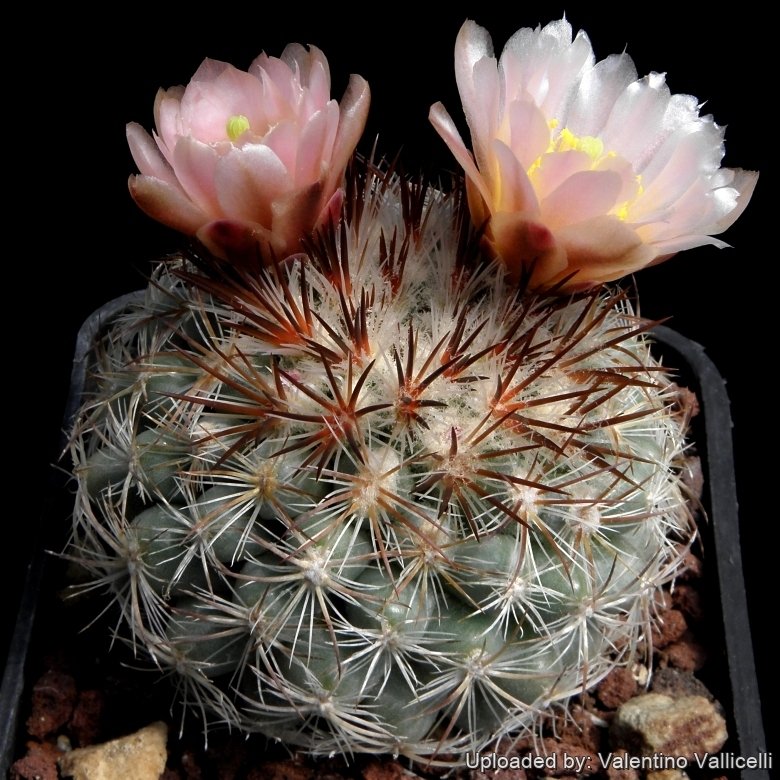
Flowers: 2 to 2,5 cm, bell shaped with scales and outer tepals minutely toothed and laciniate or entire and often undulate; ranging from magenta, pink, straw-yellow, to whitish outer tepals with greenish brown midstripes. The buds and flowers originate in a small circle at the apex of the plant.
Blooming season: Open from mid April on into May. The flowers usually remain closed on cloudy days.
Fruits: Almost spherical to short cylindric 6-11 × 5-10 mm , green at first, turning tan, drying reddish brown and splitting along the side when mature.
Seeds: Gray to black, 2-3 × 1.5-2 mm, papillate but not rugose.
Origin and Habitat
The species has the widest distribution of any Pediocactus, and is found at the highest elevation. throughout much of the mountain in west USA: Arizona, Colorado, Idaho, Nevada, New Mexico, South Dakota, Utah, Wyoming (questionably in Montana and Kansas)
Altitude: This is one of the most cold-hardy species and is found as high as 1400-3500 metres above sea level.
Habitat: Its preferred habitat is generally higher in elevation and cooler and moister than most other cacti. These plants can be found growing in a variety of, prairie grassland, in powdery soils of valleys, flats, and hillsides in dry areas, in rocky soils of high valleys, rocky steppes, sagebrush, pinyon-juniper woodland, and montane coniferous forest habitats. This cactus is frequently concealed under larger vegetation and is frequently camouflaged under plant litter and grasses. During winter dormancy it may actually shrink below the ground surface. Interestingly, the flowers are generally pink on the eastern slope and yellowish on the western slope plants. The species has a wide range, is abundant, there are no major threats affecting it and it occurs within several protected areas. Local threats are mining and land-use change.
Cultivation and Propagation
Rot prone and not the easiest cactus to grow on it’s own roots in cultivation it need a well drained, porous soil is preferred. Partial shading, especially during the hottest part of the summer, is helpful. Water should be provided in late winter, early spring (the main growing season), and also in Autumn, when flower buds are produced and it starts growing again. Do not l water during the winter seasons. Problems with this plants are most likely to result from improper watering. Too much water and the plant may rot; too little water may result in poor vigor or even death. They are good for outdoor cultivation in raised beds, rock gardens, balconies, window sills etc..
Frost Tolerance: Winter hardy from -10° to -25° C (depending on origin)
Propagation: Seeds. Temperature for optimum germination: night minimum approx 17 day maximum to near 40 C at any time of year with proper temperatures and daylength (ca.13-14 hours); it is possible to extend day-length with artificial lights. Anyway the seeds germinate slowly with difficulty and a low rate of success (But germiation is comparatively easy if compared with other Pediocactus and Sclerocactus species and often new seedling cluster spontaneously around the plant every year), scarification and stratification help, alternate freeze and thaw both wet and dry, but don’t keep wet, alternate wet and dry with changing temperature.
Germination can take several years so keep pot and try again next year. Seedlings do not do well either, and some die each year, for this reason plants are commonly grafted on hardy stocks like Opuntia humifusa in this case they are easy to grow and no special skill is required.
Bibliography
Major references and further lectures
-
Edward F. Anderson “The Cactus Family” Timber Press, 2001
-
Curt Backeberg “Cactus Lexicon” Sterling Publishing Company, Incorporated, 1978
-
David Hunt, Nigel Taylor “The New Cactus Lexicon” DH Books, 2006
-
James Cullen, Sabina G. Knees, H. Suzanne Cubey “The European Garden Flora Flowering Plants: A Manual for the Identification of Plants Cultivated in Europe, Both Out-of-Doors and Under Glass” Cambridge University Press, 11/Aug./2011
-
Butterworth, C. & Porter, J.M. 2013. Pediocactus simpsonii. In: IUCN 2013. “IUCN Red List of Threatened Species.” Version 2013.2. <www.iucnredlist.org>. Downloaded on 26 February 2014.
Cultivars and forms (15)
Forms (10)
- Pediocactus simpsonii f. acklinii
- Pediocactus simpsonii f. campestris
- Pediocactus simpsonii f. dinosauriensis
- Pediocactus simpsonii f. flaminggorgensis
- Pediocactus simpsonii f. flinspachii
- Pediocactus simpsonii f. kuenzleri
- Pediocactus simpsonii f. montanensis
- Pediocactus simpsonii f. muehlii
- Pediocactus simpsonii f. prairie
- Pediocactus simpsonii f. sandiamontanus
Cultivars (1)
Gallery