Publication: Cactaceae Consensus Init. 3: 6. 1997
Description
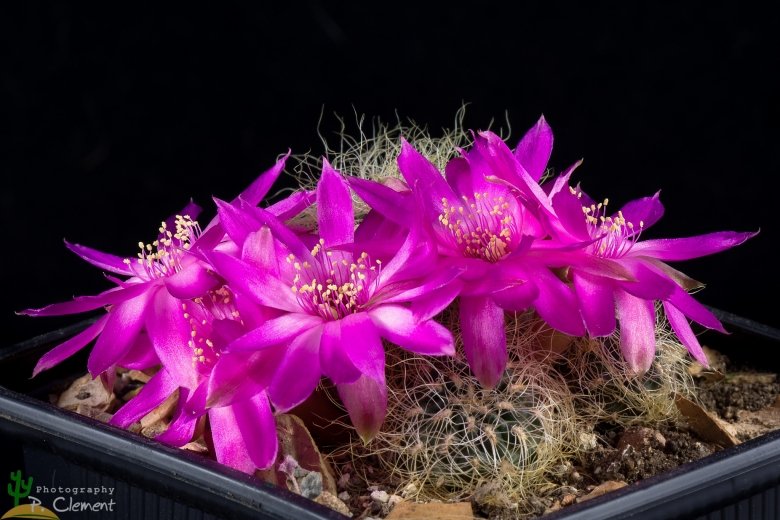
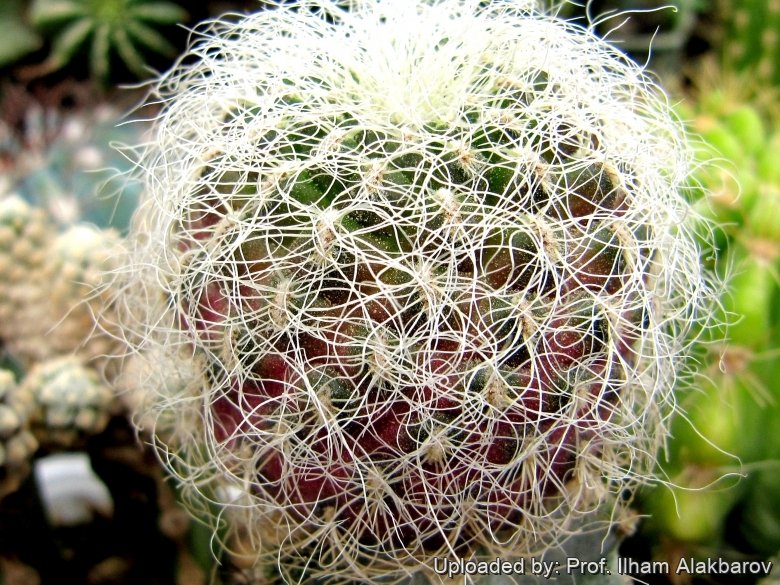
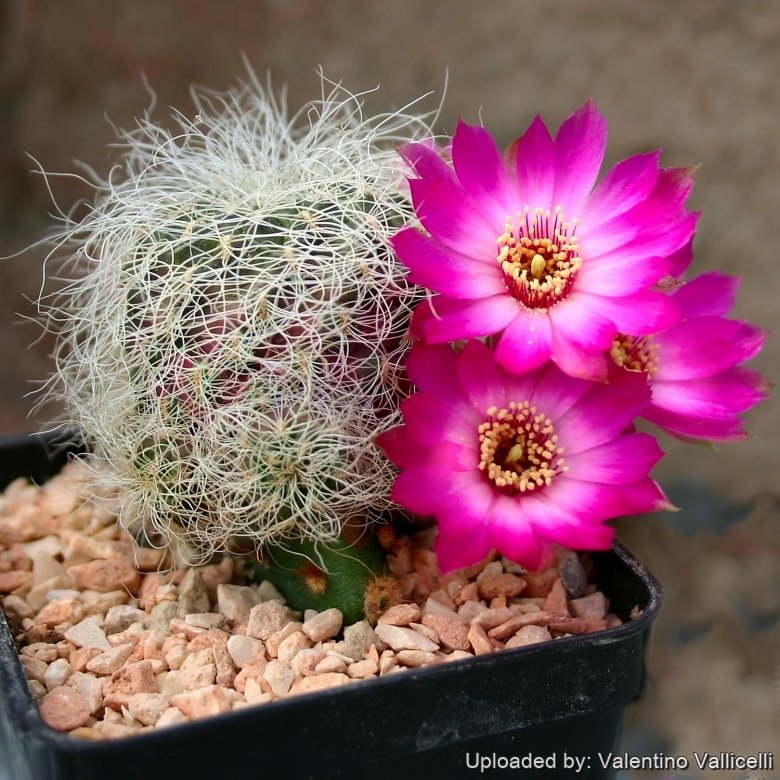
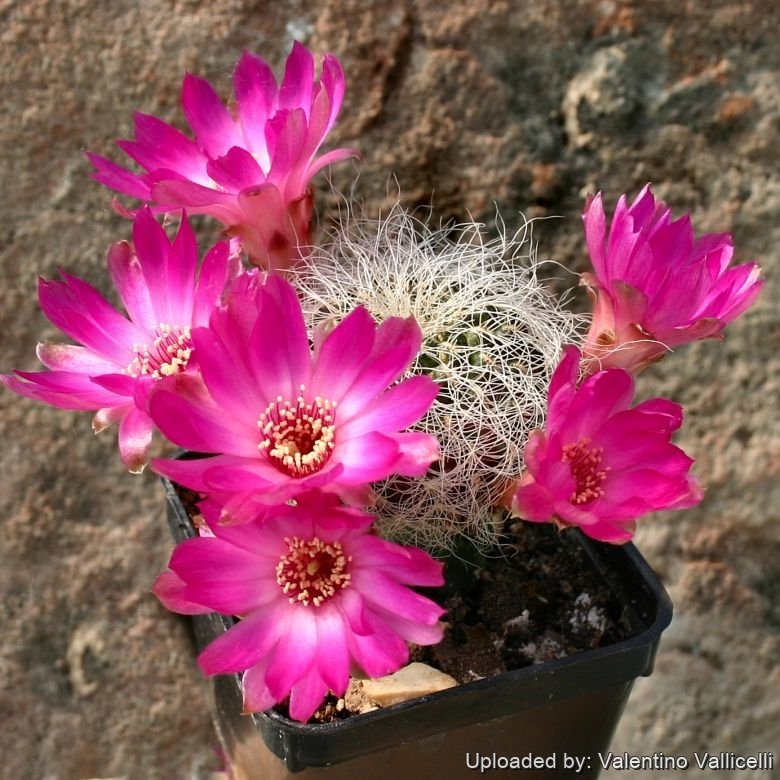
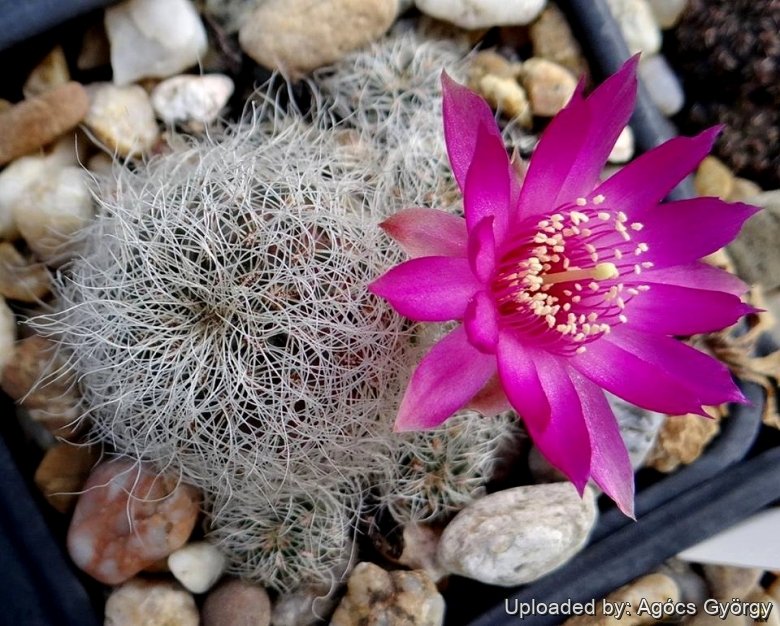
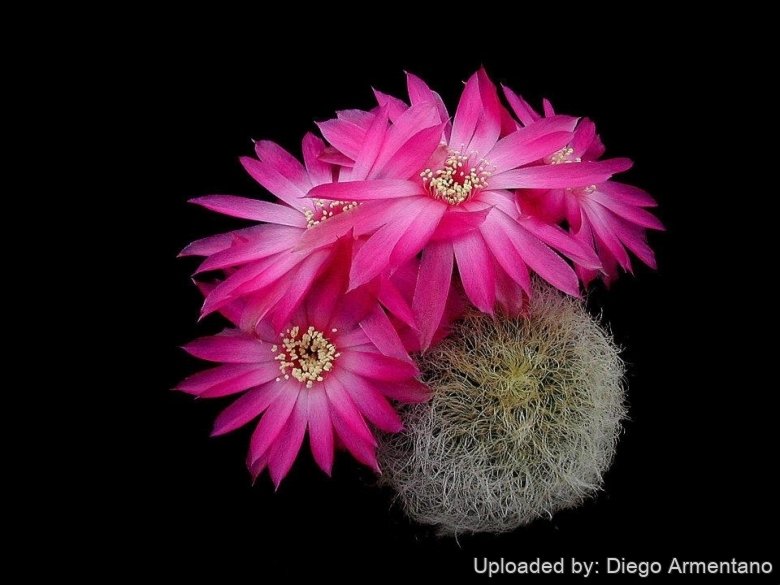
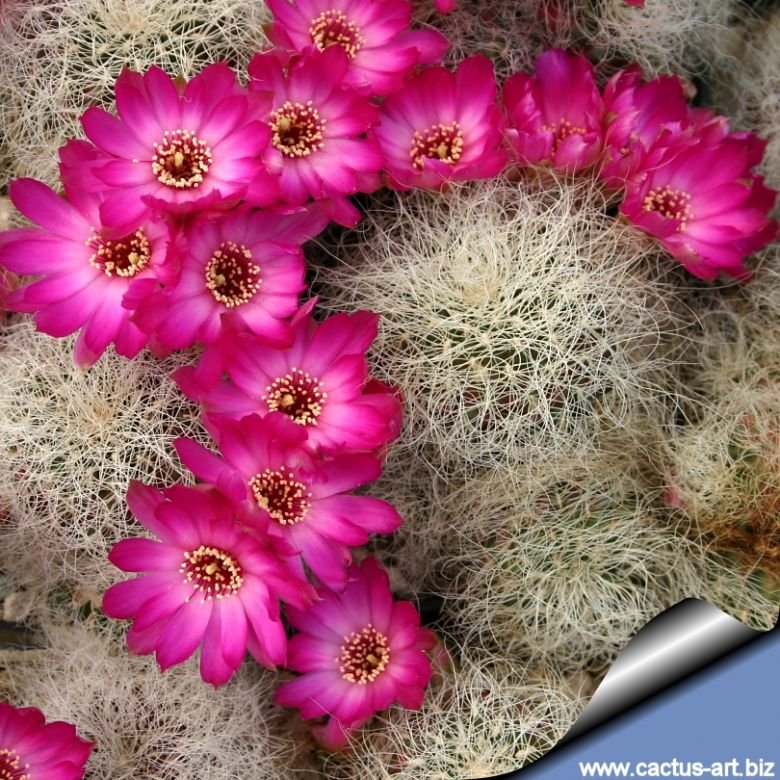
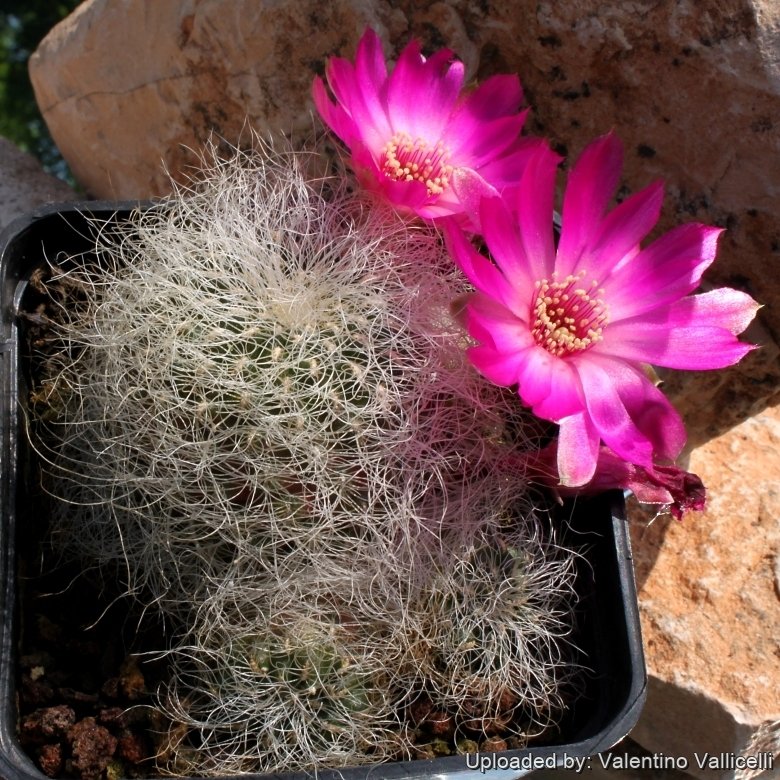
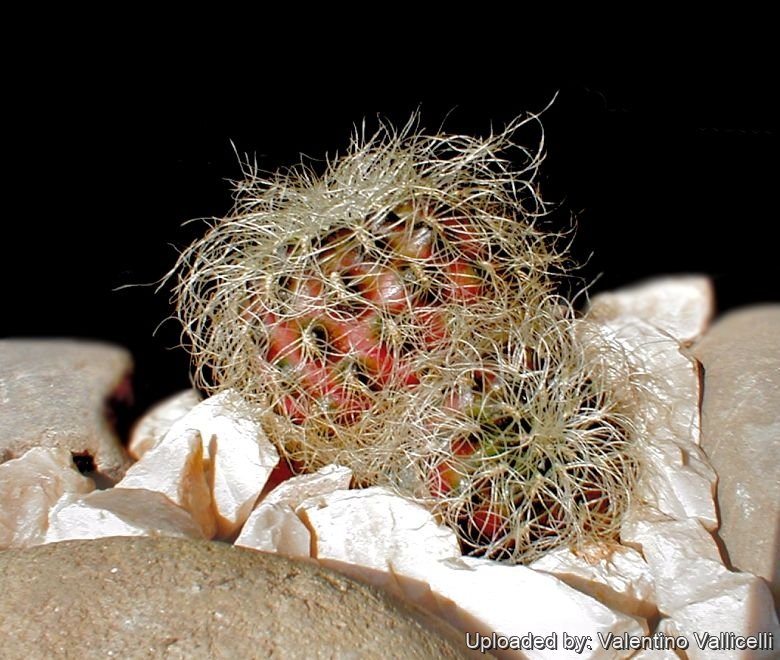
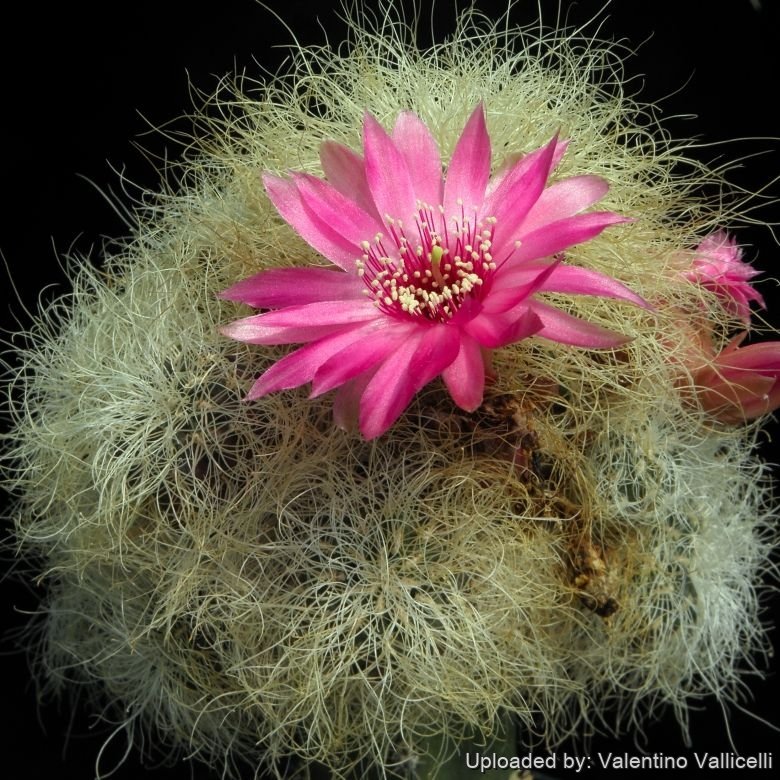
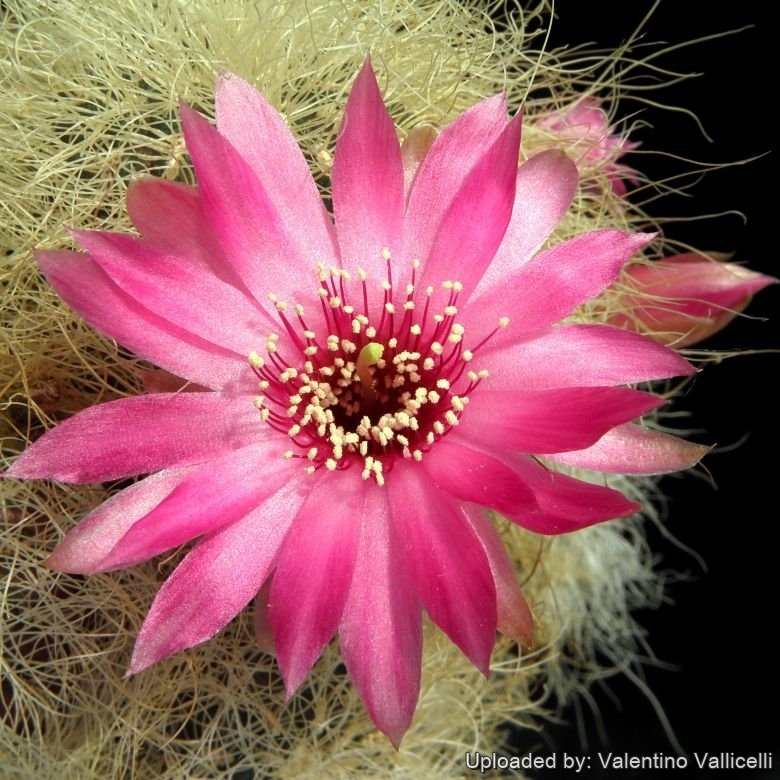
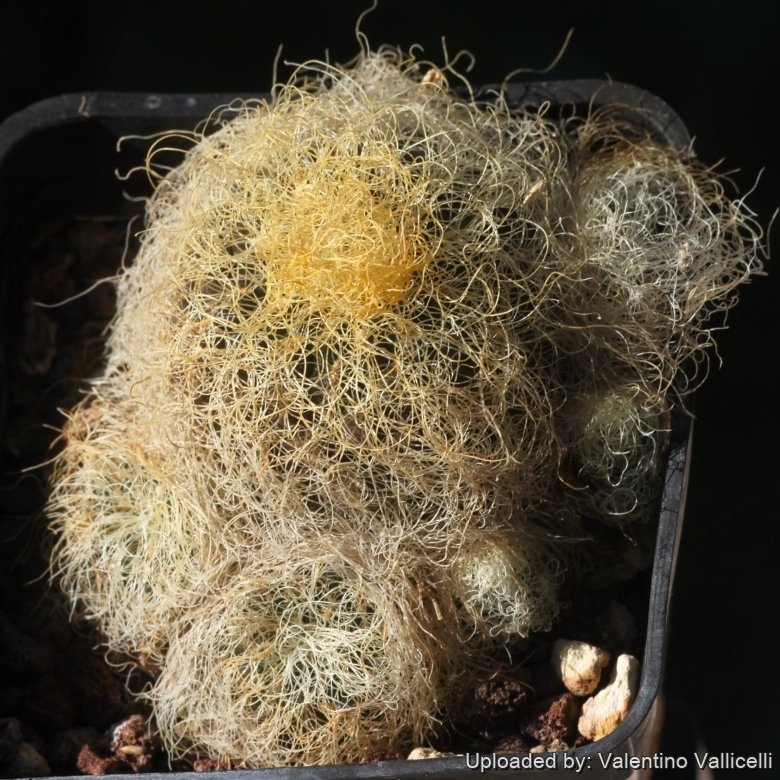
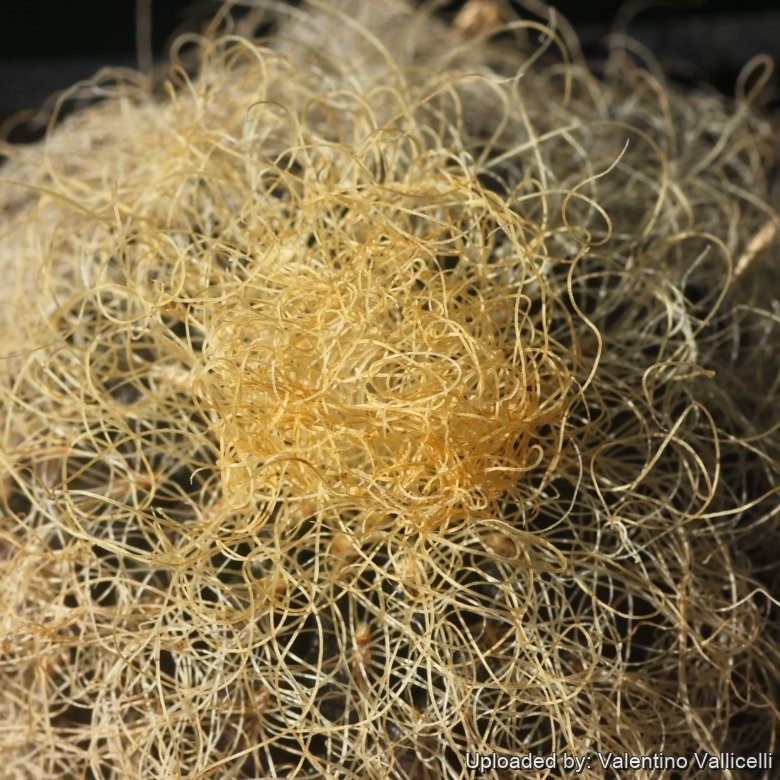
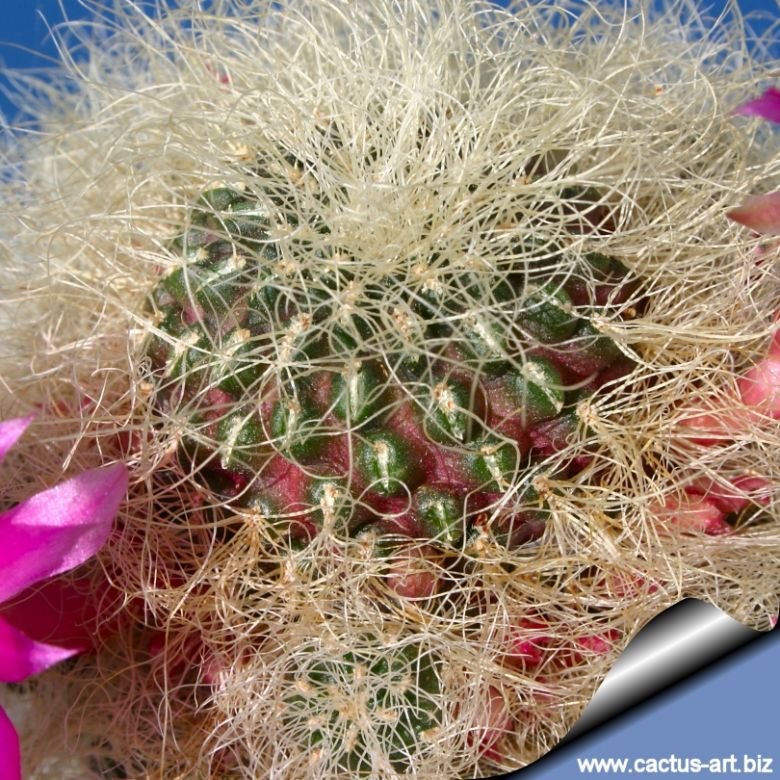
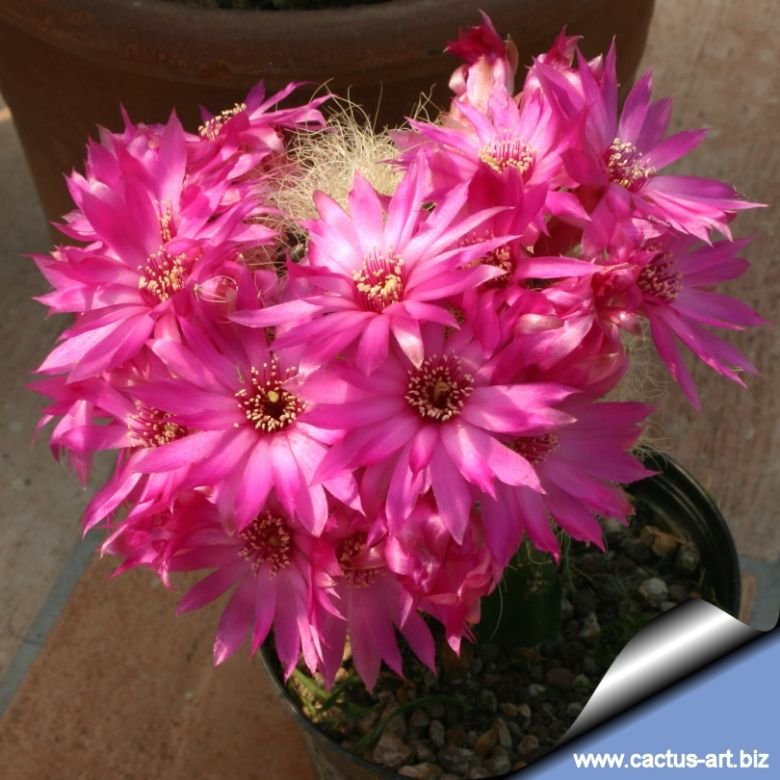
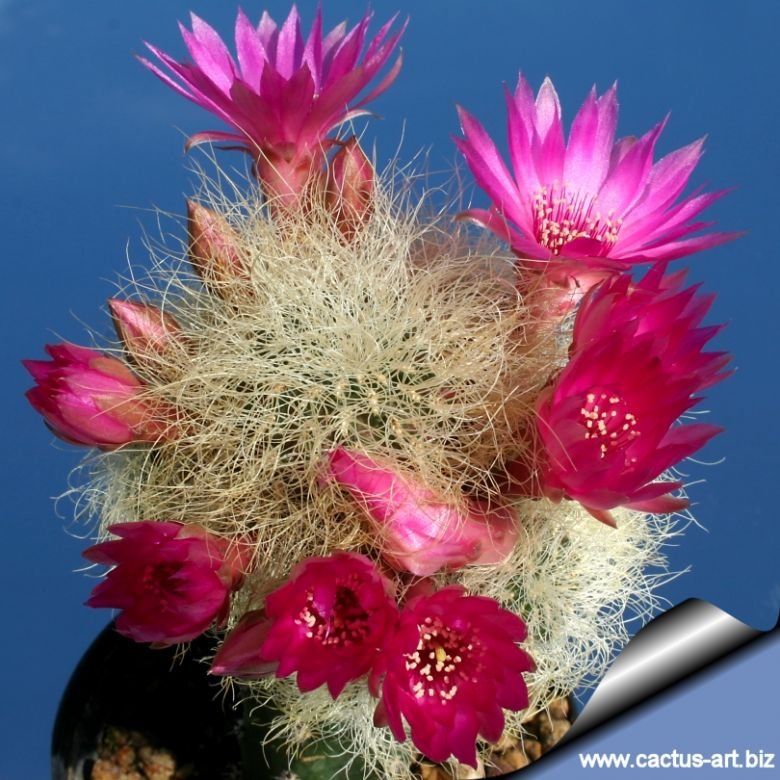
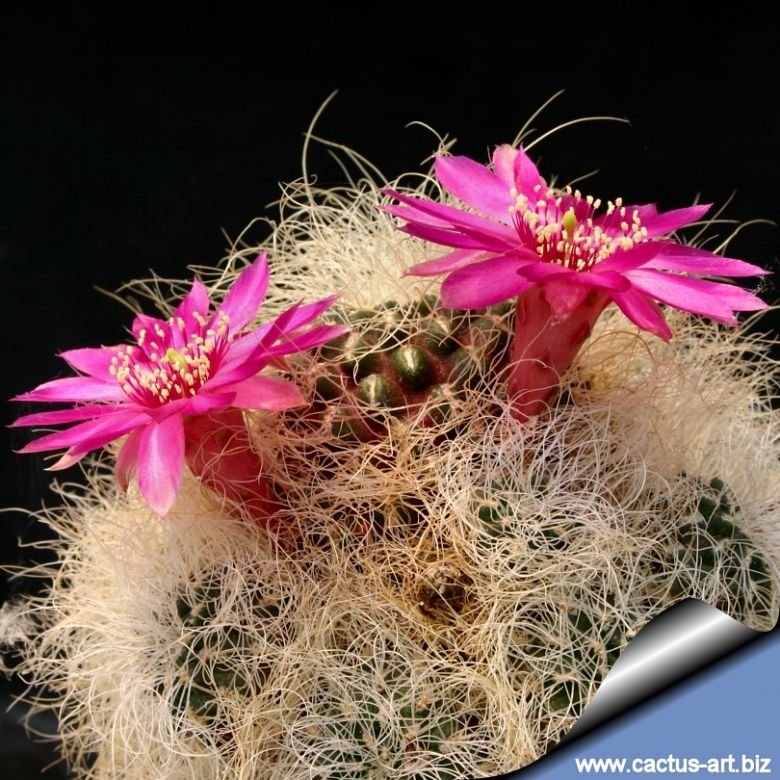
Rebutia canigueralii subs. crispata (more often known as Sulcorebutia crispata) is one of the innumerable local form of the very variable Rebutia canigueralli. It distinguishes for the small globular bodies nearly obscured by a variable ivory to golden spination. Spines are pectinated, bristly, flexible and more or less curved. This species is notable for its early flowering. It has the same variable characteristics of the species.
Habit: It is a slow growing clustering cactus that may forms large mound of many heads and these are practically level with the soil in habitat.
Stem: Rapidly offsetting from the base, small, grey-green, green to dark purple. A characteristic of this species is that the offsets often develop roots while still attached to the mother. Individual stems 2(-4) cm tall, 3(-5) cm in diameter.
Ribs: With raised tubercles (3-5 mm wide). In older plants tubercles are arranged in up to 13(-16) spiral line merging in the apex.
Areoles: 3 mm long, narrow with short white felt.
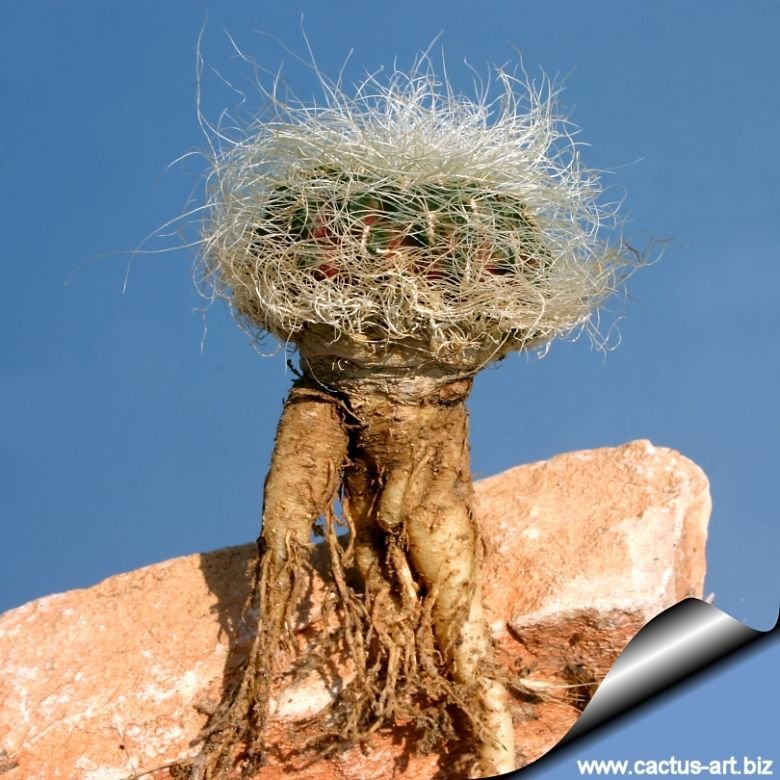
Roots: Conical.
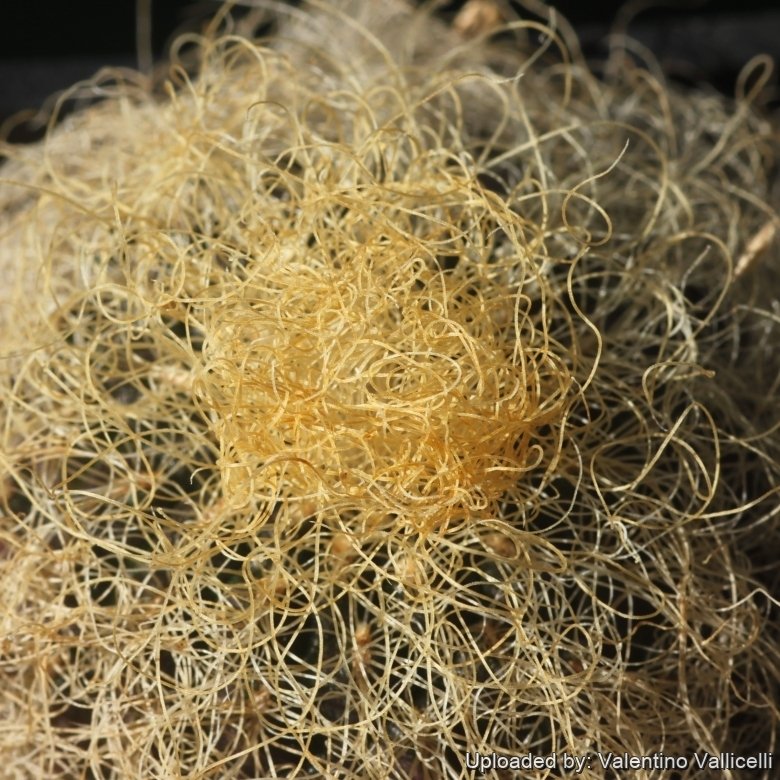
Radial spines: Hair-like, fine, bristly, 5-20 mm long pectinated, tight, more or less interlaced, white, cream-coloured, yellowish or brownish, more or less twisted.
Central spines: None.
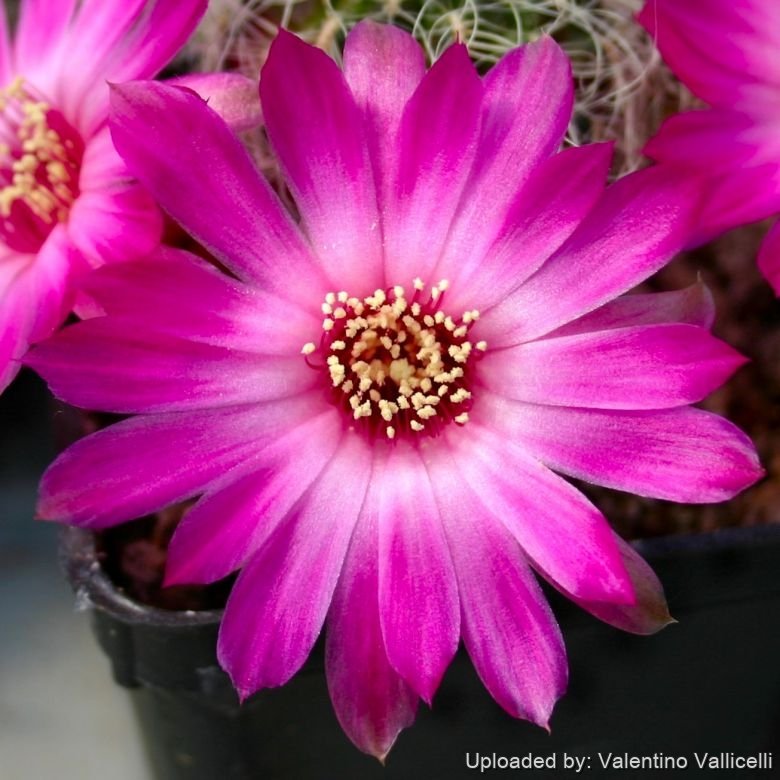
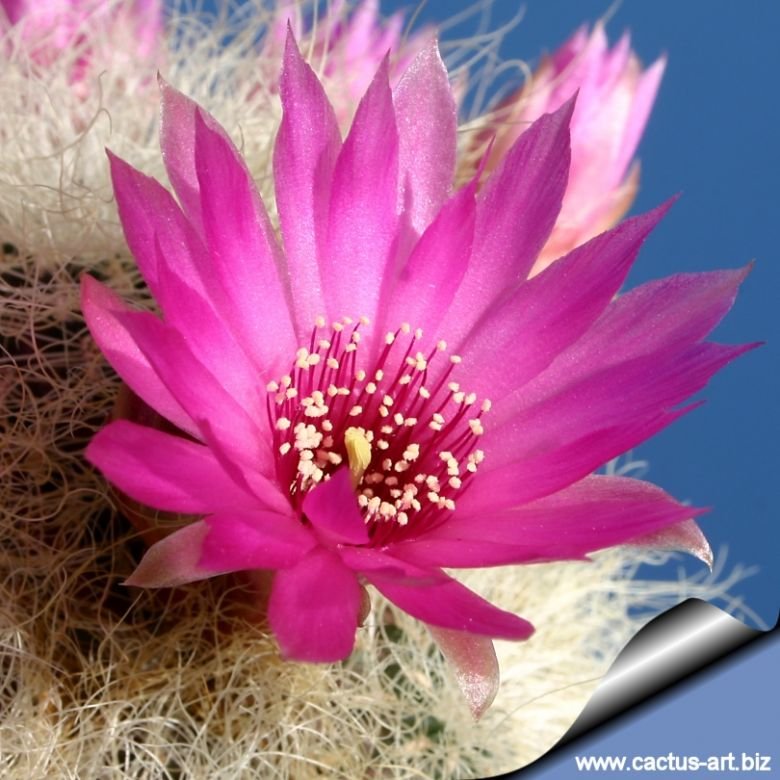
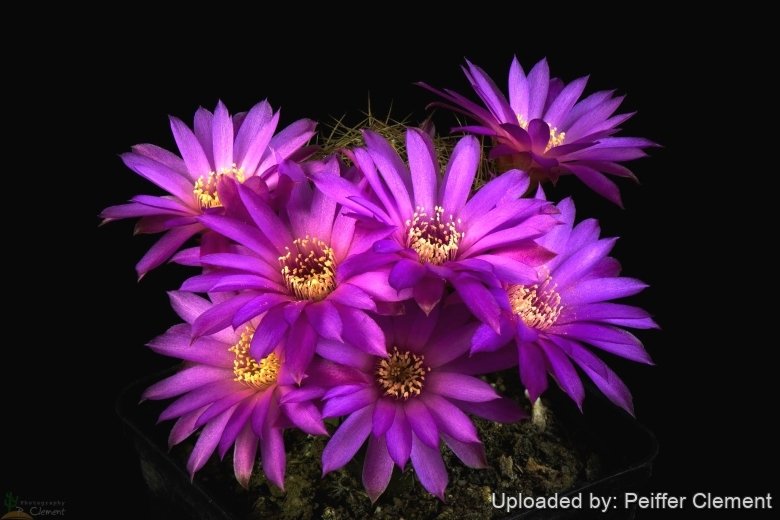
Flowers: From the basal part of the stem, 20 - 50 mm long, 35 - 50 mm wide cherry-red or dark magenta with pale centre. Floral tube funnel-shaped yellowish-green or yellowish-red with tan coloured scales.
Phenology: Flowers are produced in spring and remain open for three or four days.
Fruit: Dark brownish red approx 4-5 mm wide.
From llifle page Sulcorebutia crispata f. gerosenilis
Description
Sulcorebutia gerosenilis is one of the local form of the very variable Rebutia canigueralii subs. crispata.
Sulcorebutia gerosenilis and Sulcorebutia gerosenilis are synonyms and the two are exactly the same.
Similar species: Sulcorebutia gerosenilis is almost identical and not easily separable by any character from the standard hertusii, if not for the geographical provenance.
Habit: It is a slow growing clustering cactus that may forms large mound of many heads and these are practically level with the soil in habitat.
Stem: Rapidly offsetting from the base, small, grey-green, green to dark purple. A characteristic of this species is that the offsets often develop roots while still attached to the mother. Individual stems 2(-4) cm tall, 3(-5) cm in diameter.
Ribs: With raised tubercles (3-5 mm wide). In older plants tubercles are arranged in up to 13(-16) spiral line merging in the apex.
Areoles: 3 mm long, narrow with short white felt.
Roots: Conical.
Radial spines: Hair-like, fine, bristly, up to 20 (or more) mm long, white, cream-coloured or yellowish, tight, interlaced, and more or less twisted.
Central spines: None.
Flowers: From the basal part of the stem, 20-50 mm long, 35-50 mm wide cherry-red or dark magenta with pale centre. Floral tube funnel-shaped yellowish-green or yellowish-red with tan coloured scales.
Phenology: Flowers are produced in spring and remain open for three or four days.
Fruit: Dark brownish red approx 4-5 mm wide.
Origin and Habitat
It grows on stone slopes near Zudañez, Chuquisaca, Bolivia, altitude 2200–2750
Cultivation and Propagation
These mountainous plants have thick taproots and are susceptible to overwatering. They loves a very permeable, coarse mineral soil as well as to be strictly kept dry throughout the winter quiescent period since it is very sensitive to any moisture excesses, To prevent rottenness it is also advisable to surround its root neck by very rough sand or grit, this help a fast water drainage. They requires also an appropriate air circulation and are sometime grafted to avoid root problems. They need to be kept in a cool place during winter rest (at 0-10°C). This is important for the flowers ,as well as for their health. Without this cool winter period, they normally won’t get any buds.
Grafted plants are very easy to grow, and are quite frost hardy (-5° C) if kept dry. Needs a full sun exposure ( light shadow my be useful in the hottest summer days)
Propagation: Seed, cutting, grafting
Bibliography
Major references and further lectures
-
James Cullen, Sabina G. Knees, H. Suzanne Cubey “The European Garden Flora Flowering Plants: A Manual for the Identification of Plants Cultivated in Europe, Both Out-of-Doors and Under Glass” Cambridge University Press, 11/Aug./2011
-
David Hunt, Nigel Taylor “The New Cactus Lexicon” DH Books, 2006
-
Edward F. Anderson “The Cactus Family” Timber Press, 2001
-
Anderson E. F.: “The Cactus Family” Timber Press, Portland, Oregon, 2001
-
Ritter Fr.: “Kakteen in Südamerika” Spangenberg, 1980
-
John Pilbeam “Sulcorebutia and Weingartia: A Collector’s Guide” Timber Press, 1985
-
E Haustein “Der Kosmos Kakteenfuehrer (the Kosmos Cactus Guide)” Balogh Scientific Books 01 December 1998
-
Cullmann W., Götz E., Gröner G.”Kakteen: Kultur, Vermehrung und Pflege - Lexikon der Gattungen und Arten” Ulmer, Stuttgart, 1984
Source: Sulcorebutia crispata f. gerosenilis, LLIFLE - Encyclopedia of living forms, CC-BY-SA, retrieved 2026-10-25.
From llifle page Sulcorebutia crispata subs. hertusii
Description
Sulcorebutia gerosenilis is one of the local form of the very variable Rebutia canigueralii subs. crispata.
Distinguishing characteristics: It distinguishes from Rebutia canigueralii subs. crispata for the small globular bodies nearly obscured by longer, interlaced, ivory-white or yellowish hairlike spines, which are flexible and more or less twisted. This is a very distinctive plant even without flowers. Sulcorebutia patriciae and Sulcorebutia gerosenilis are almost identical and not easily separable by any character from the standard hertusii, if not for the geographical provenance.
Habit: It is a slow growing clustering cactus that may forms large mound of many heads and these are practically level with the soil in habitat.
Stem: Rapidly offsetting from the base, small, grey-green, green to dark purple. A characteristic of this species is that the offsets often develop roots while still attached to the mother. Individual stems 2(-4) cm tall, 3(-5) cm in diameter.
Ribs: With raised tubercles (3-5 mm wide). In older plants tubercles are arranged in up to 13(-16) spiral line merging in the apex.
Areoles: 3 mm long, narrow with short white felt.
Roots: Conical.
Radial spines: Hair-like, fine, bristly, up to 20 (or more) mm long, white, cream-coloured or yellowish, tight, interlaced, and more or less twisted
Central spines: None.
Flowers: From the basal part of the stem, 20-50 mm long, 35-50 mm wide cherry-red or dark magenta with pale centre. Floral tube funnel-shaped yellowish-green or yellowish-red with tan coloured scales.
Phenology: Flowers are produced in spring and remain open for three or four days.
Fruit: Dark brownish red approx 4-5 mm wide.
Source: Sulcorebutia crispata subs. hertusii, LLIFLE - Encyclopedia of living forms, CC-BY-SA, retrieved 2026-10-25.
From llifle page Sulcorebutia gerosenilis var. patricii
Description
Sulcorebutia patriciae is one of the local form of the variable Rebutia canigueralii subs. crispata. Sulcorebutia patriciae, Sulcorebutia gerosenilis and Sulcorebutia patriciae are synonyms and not easily separable by any character, if not for the geographical provenance (may be spines are more yellow and twisted in patriciae).
Note: var. gerosenilis and var. patriciae are definitively synonyms of Sulcorebutia patriciae.
Habit: It is a slow growing clustering cactus that may forms large mound of many heads and these are practically level with the soil in habitat.
Stem: Rapidly offsetting from the base, small, grey-green, green to dark purple. A characteristic of this species is that the offsets often develop roots while still attached to the mother. Individual stems 2(-4) cm tall, 3(-5) cm in diameter.
Ribs: With raised tubercles (3-5 mm wide). In older plants tubercles are arranged in up to 13(-16) spiral line merging in the apex.
Areoles: 3 mm long, narrow with short white felt.
Roots: Conical.
Radial spines: Hair-like, fine, bristly, up to 20 (or more) mm long, white, cream-coloured or yellowish, tight, interlaced, and more or less twisted.
Central spines: None.
Flowers: From the basal part of the stem, 20-50 mm long, 35-50 mm wide cherry-red or dark magenta with pale centre. Floral tube funnel-shaped yellowish-green or yellowish-red with tan coloured scales.
Phenology: Flowers are produced in spring and remain open for three or four days.
Fruit: Dark brownish red approx 4-5 mm wide.
Origin and Habitat
It grows on stone slopes near Cochi & Duraznillo dpt. Chuquisaca, Bolivia (A distance of about 30 km separates the locations of ssp. hertusii and ssp. patriciae and, except for Sulcorebutia rauschii and one other sulcorebutia from the northern part of Cerro Ayrampo, no other sulcorebutias are reported from this area.)
Altitude: 2500-2800 metres above sea level.
Cultivation and Propagation
These mountainous plants have thick taproots and are susceptible to overwatering. They loves a very permeable, coarse mineral soil as well as to be strictly kept dry throughout the winter quiescent period since it is very sensitive to any moisture excesses, To prevent rottenness it is also advisable to surround its root neck by very rough sand or grit, this help a fast water drainage. They requires also an appropriate air circulation and are sometime grafted to avoid root problems. They need to be kept in a cool place during winter rest (at 0-10°C). This is important for the flowers ,as well as for their health. Without this cool winter period, they normally won’t get any buds.
Grafted plants are very easy to grow, and are quite frost hardy (- 5° C) if kept dry. Needs a full sun exposure ( light shadow my be useful in the hottest summer days)
Propagation: Seed, cutting, grafting
Notes
Named after Patricia Monica Michel Mendosa wife of Brian Bates, senior lover of cacti and botanical explorer of Bolivia
Source: Sulcorebutia gerosenilis var. patricii, LLIFLE - Encyclopedia of living forms, CC-BY-SA, retrieved 2026-10-25.
From llifle page Sulcorebutia crispata var. senilis f. pectinata
Description
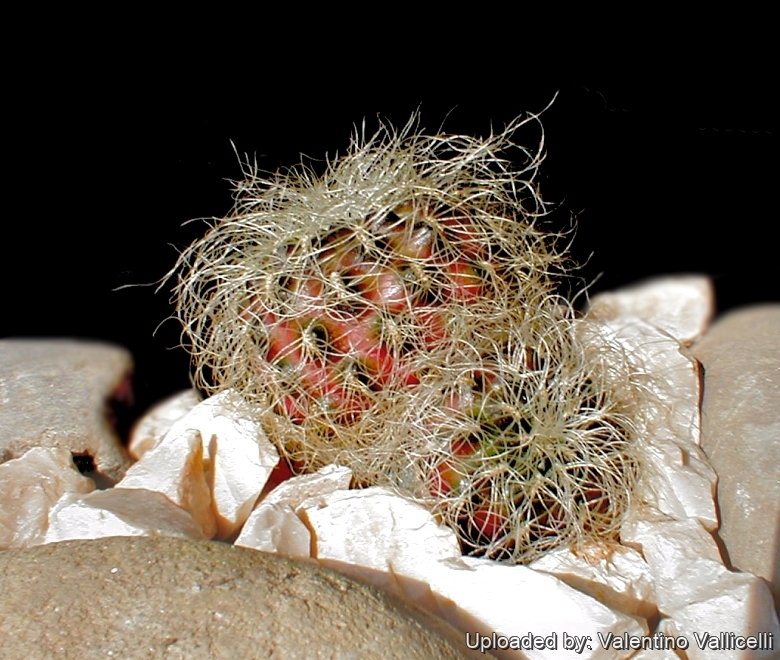
This is a very distinctive plant even without flowers. Its senile appearance is reflected in the name.
Stem: At first single, offsetting in age forming clusters or cushions, each stem 25–40 mm long and 25–40 mm wide of a bright red. Flowers are cherry-red with pale centre, and arrive in late spring.
Spines: Hair-like, white or yellowish, twisted.
Source: Sulcorebutia crispata var. senilis f. pectinata, LLIFLE - Encyclopedia of living forms, CC-BY-SA, retrieved 2026-10-25.
From llifle page Sulcorebutia roberto-vasquezii
Description
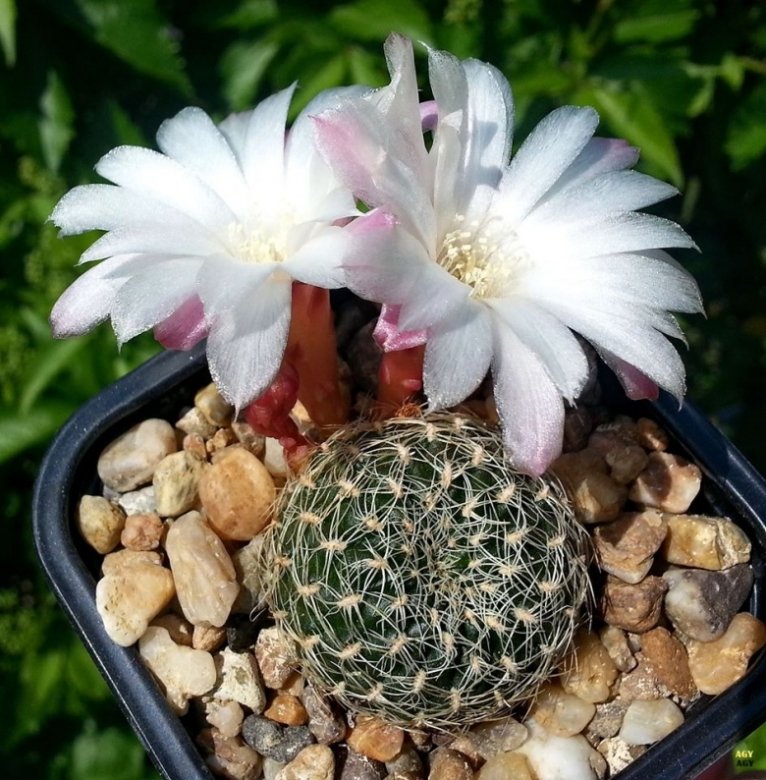
Sulcorebutia roberto-vasquezii (robertovasquezii or roberto-vasqueziana) is one of the local or morphological form of the very variable Rebutia canigueralii subs. crispata that shows a large range of natural variability, especially the colour of the flower. S. roberto-vasquezii distinguishes for its peculiar white bloom with pale creamy throat and hints of pink on the outside, and very dark green body. The spines are white adpressed, straight or slightly twisted, bristly with reddish bases. The areoles are white and narrow.
Stem: Solitary except in case of injury to the growing tip, flattened globular, up to 5 cm tall and 6 to 10 cm across.
Root: Large napiform up to 7 cm long.
Areoles: Narrow and elongated 0.5-1 mm wide and 3 to 6 mm long.
Radial spines: 14 to 24, pectinate (comb-like) pointing sideward or slightly bent upwards, 1.5-0 mm long. Usually whitish to yellowish or (rarely) brownish coloured, often darker and thickened at the base. The surface of the spines is very rough.
Flowers: Buds often numerous greenish to reddish-brownish, borne on the sides or at the base of the stems from older areoles. The flowers are fragrant up to 23-30 mm long and 35-45 mm across. They are often white to creamy, sometimes rose-violet in the outside and white inside (rarely completely rose-violet with salmon shades).
Fruits: Globular, 5.0-6.5 mm across, at first whitish to yellowish, later light-brownish
diameter and contain 25 to 60 seeds.
Origin and Habitat
Sulcorebutia roberto-vasquezii is found in the Bolivian Department of Chuquisaca
Altitude range: 1300-1400 meters above sea level.
Habitat and ecology: This species grows on stony-rocky slopes.
Cultivation and Propagation
It loves a very permeable, coarse mineral soil as well as to be strictly kept dry throughout the winter quiescent period since it is very sensitive to any moisture excesses. To prevent rottenness it is also advisable to surround its root neck by very rough sand or grit, this help a fast water drainage and an appropriate air circulation.
For its sensitive roots this species is frequently grafted to avoid root problems.
Watering Needs: Water moderately in the growing season, keep dry during the winter rest
Frost Tolerance: Plants are and quite frost hardy -5 (-15)° C but preferably overwinter in a cool place (at 0/10°C) this is important for the flowers as well as for plants health. Without this cool winter period they normally wont get any buds.
Sun Exposure: Needs a full sun exposure (light shadow my be useful in the hottest summer days).
Propagation: Seed, cutting, grafting.
Bibliography
Major references and further lectures
-
Lothar Diers, Wolfgang Krahn “Sulcorebutia roberto-vasquezii (Cactaceae) – eine neue Art aus Bolivien”. In: Kakteen und andere Sukkulenten. 56(8): 211–217 2005.
-
Willi Gertel, Wolfgang Latin “Sulcorebutien – Kleinode aus Bolivien”. Sonderausgabe der Deutschen Kakteengesellschaft, Pforzheim 2010, page 264.
-
Sulcorebutia roberto-vasquezii in: Wikipedia, Die freie Enzyklopädie. Wikipedia-Autoren, siehe Versionsgeschichte. 30. Januar 2017, 22:44 UTC Versions-ID: 162159253 https://de.wikipedia.org/w/index.php?title=Sulcorebutia\_roberto-vasquezii&oldid=162159253 29. April 2017, 15:19 UTC
Source: Sulcorebutia roberto-vasquezii, LLIFLE - Encyclopedia of living forms, CC-BY-SA, retrieved 2026-10-25.
Gallery