Description
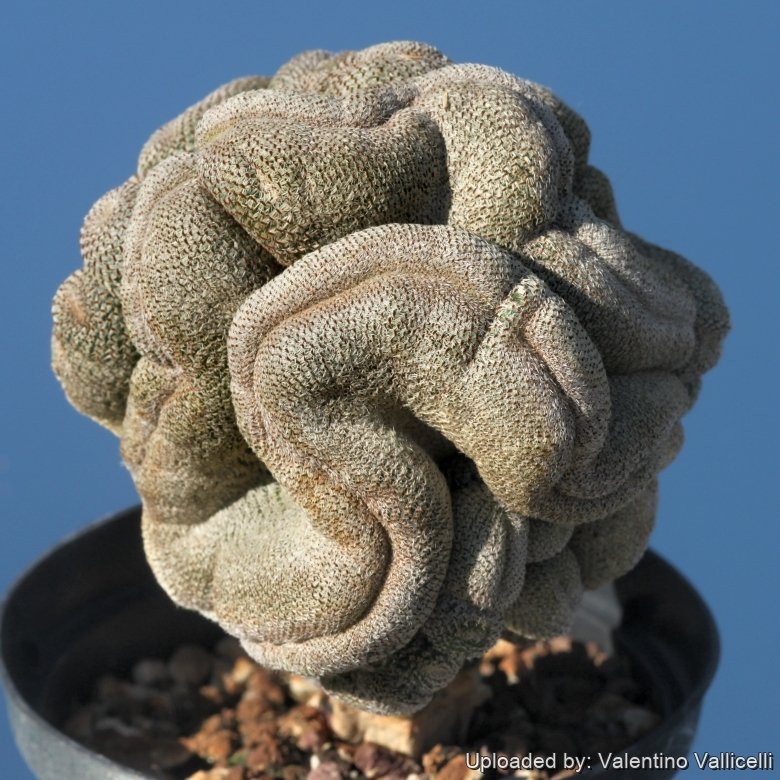
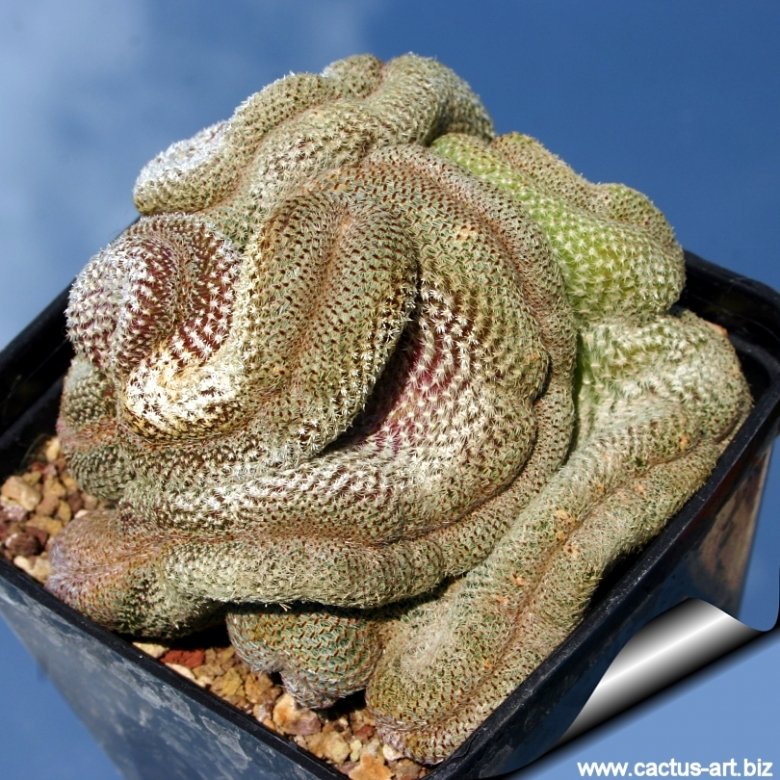
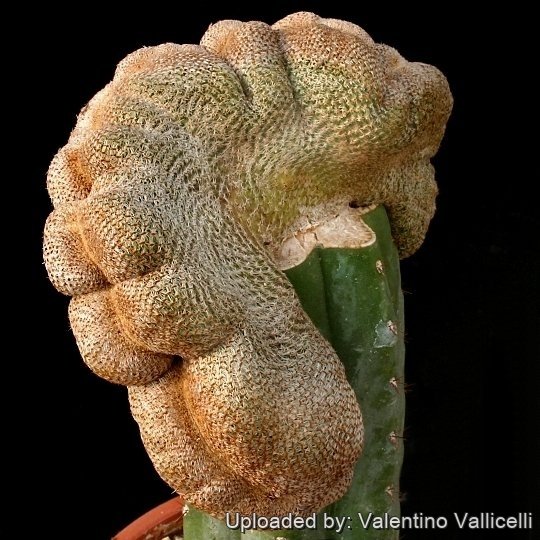
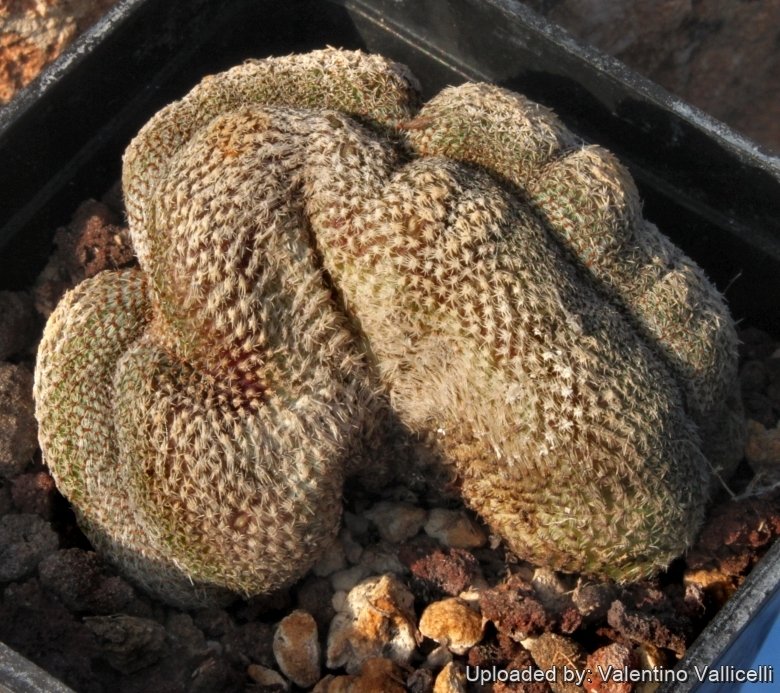
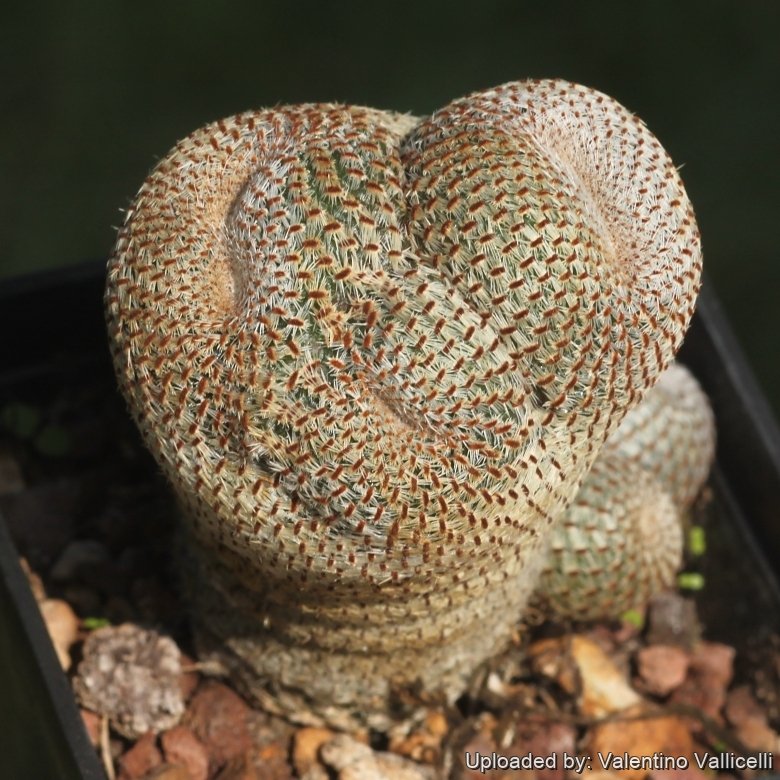
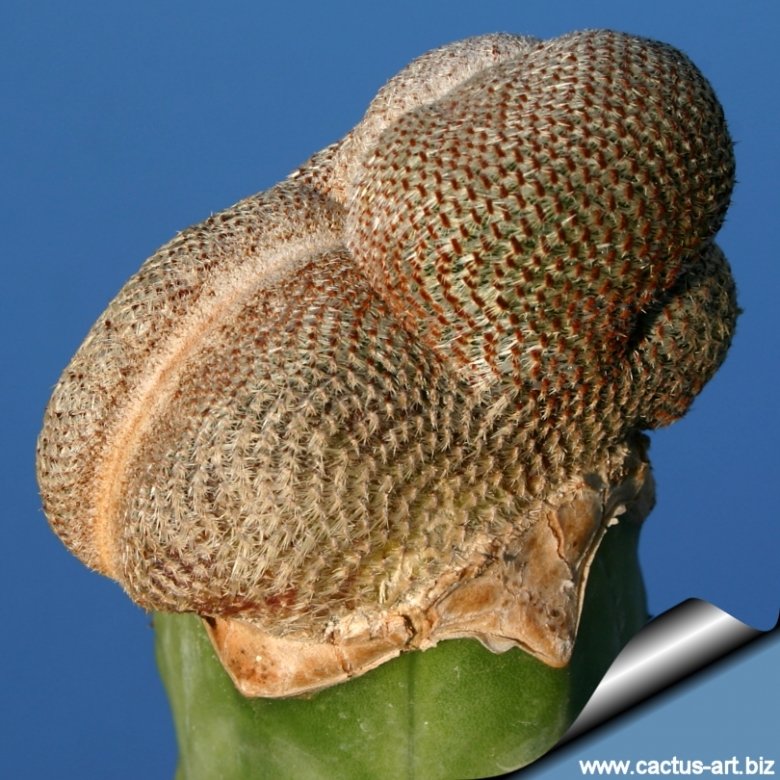
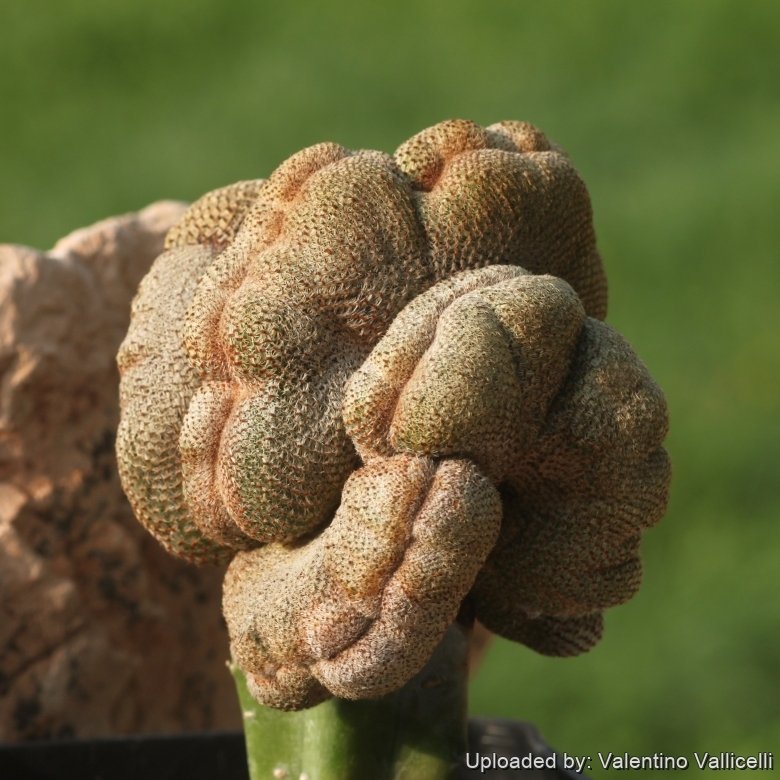
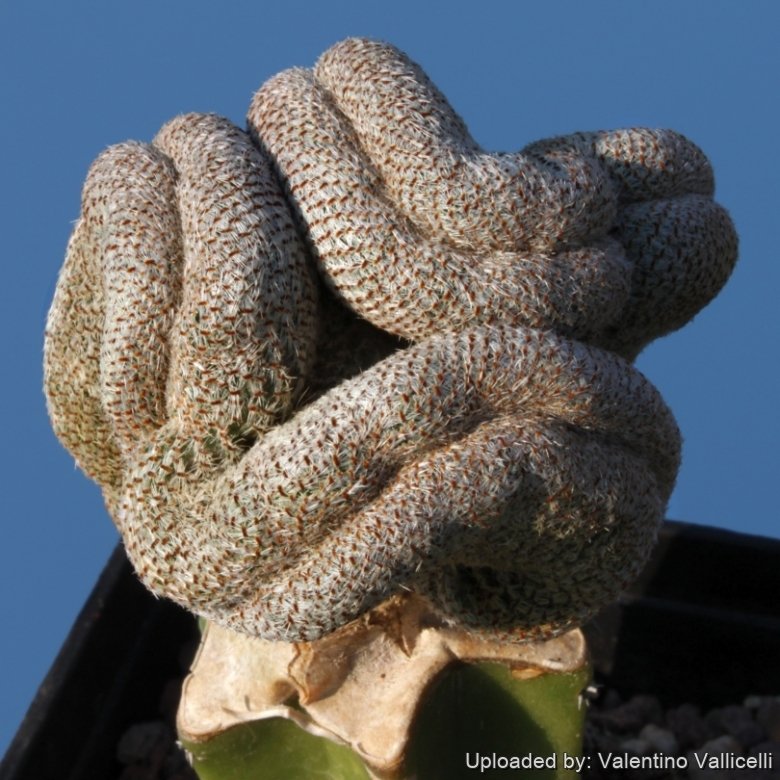
Rebutia heliosa is a small cactus with heads densely covered covered in brown areoles with white short pectinate spines, giving it a silvery appearance. The crested form Rebutia heliosa f. cristata is very rare and sought after by collectors, for its unique features. It is considered by many one of the nicest crested species.
Stem: Fan shaped, depressed centrally along the line meristem amd forming with time tangled brain like mounds.
Areoles: Small, brown and narrow, elongated 1-2 mm long, less than 0,5 mm broad.
Spines: 24-26 all radials, short, about 1 mm long, distinctively silvery-white, dense, speading laterally and pectinate, covering almost completely the small stems.
Roots: Fleshy tap root.
Flower: Large, funnel-shaped, long-necked, 4 cm in diameter, 4,5-5,5 cm long, orange-red. Tube up to 3 cm long 2-3 mm across, solid for more than half its length, deep rose to orange pink. Tepals orange with lilac mid-stripe.
Phenology: It flowers profusely in spring.
Fruit: 4 mm in diameter, deep crimson to purple.
Seeds: Hemispheric to helmet-shaped. black, papillate.
Origin and Habitat
Garden origin (Nursery produced cultivar)
Cultivation and Propagation
Although regarded as a choice and difficult plant is not too difficult in a greenhouse, although grows quite slowly. It is usually seen as a grafted plant but grows very well on its own roots too.
Soil: Use mineral well permeable mineral soil with little organic matter (peat, humus).
Exposure: They need a good amount of light shade to full sun this help to keep the plants healthy, although slow growth.
Watering: Water sparingly from March till October (weekly during summertime, if the weather is sunny enough) , with a little fertilizer added. Less or no water during cold winter months, or when night temperatures remain below 10° to prevent root loss. It is sensitive to overwatering (rot prone).
Fertilization: Feeding may not be necessary at all if the compost is fresh then, feed in summer only if the plant hasn’t been repotted recently. Do not feed the plants from September onwards as this can cause lush growth which can be fatal during the darker cold months.
Hardiness: Keep perfectly dry in winter at temperatures from 5 to 15 degrees centigrade. (but it is relatively cold resistant and hardy to -5° C, or possibly colder for short periods) In the rest period no high atmospheric humidity!! (Temperature Zone: USDA 9-11)
Propagation: Grafting or cuttings. Plants are usually grafted onto column-shaped cacti but proved to be able to produce their own roots if degrafted. Cuttings will root better in hot weather. Cuttings must be kept quite dry to root. Large crested piece must be placed on the soil surface without burying the plant base down in the soil.
Bibliography
Major references and further lectures
-
James Cullen, Sabina G. Knees, H. Suzanne Cubey “The European Garden Flora Flowering Plants: A Manual for the Identification of Plants Cultivated in Europe, Both Out-of-Doors and Under Glass” Cambridge University Press, 11/Aug./2011
-
David Hunt, Nigel Taylor “The New Cactus Lexicon” DH Books, 2006
-
Edward F. Anderson “The Cactus Family” Timber Press, 2001
-
Willy Cullmann; Gerhard Groner; Erich Gotz “The Encyclopedia of Cacti” Alpha Books 1986
-
Roger Spencer “Horticultural Flora of South-Eastern Australia: Flowering Plants” UNSW Press, 01/gen/1995
Gallery