Publication: Kakteen Sukk. 21: 30, figs. 1970
Description
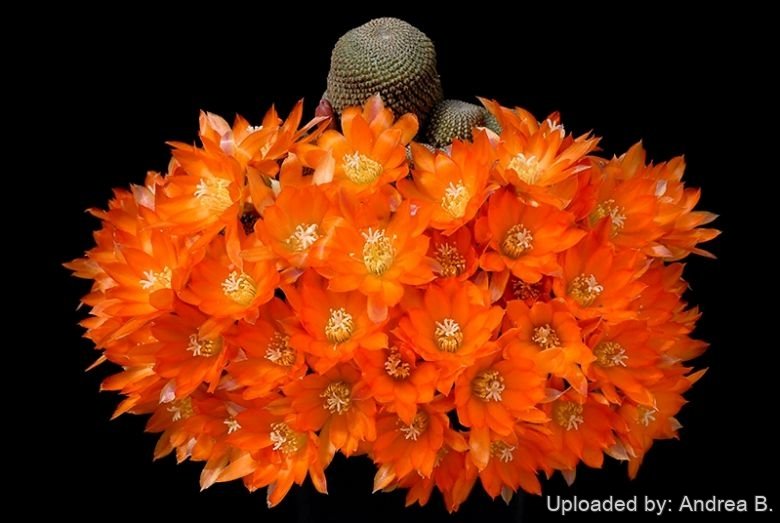
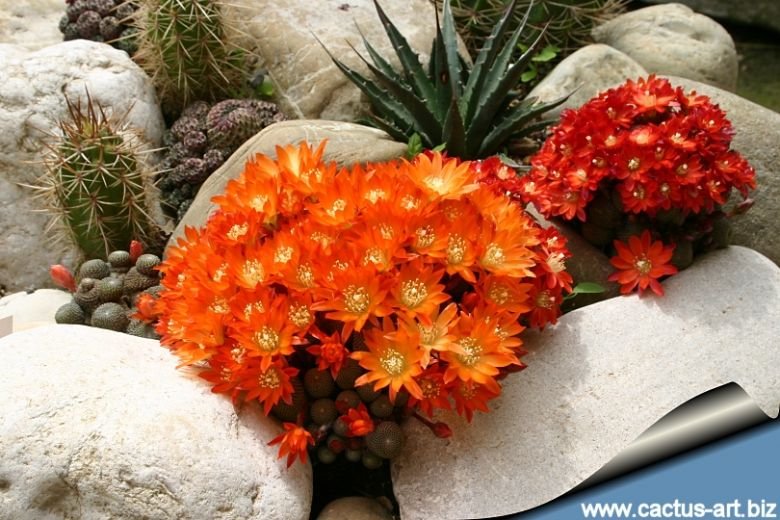
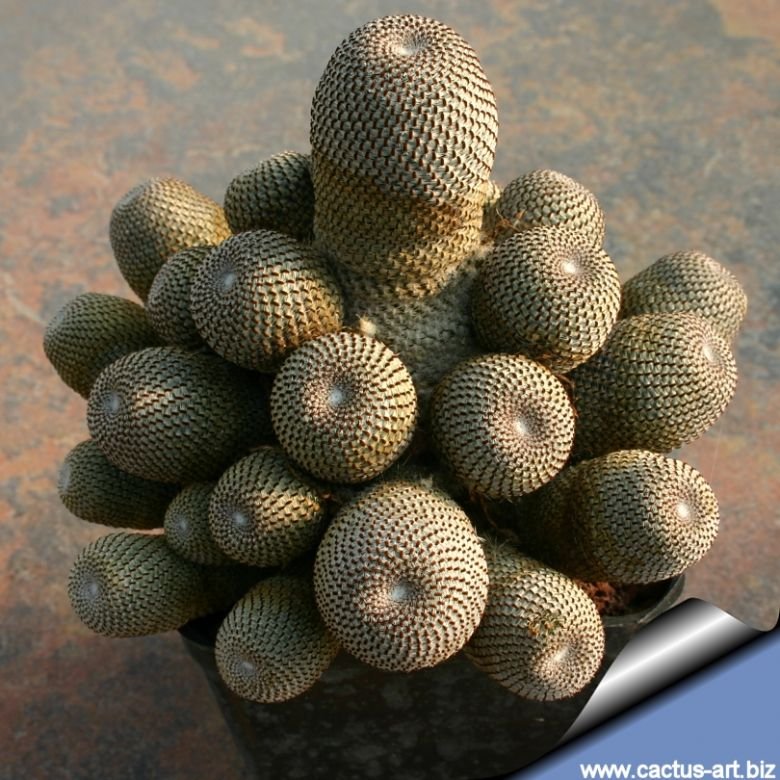
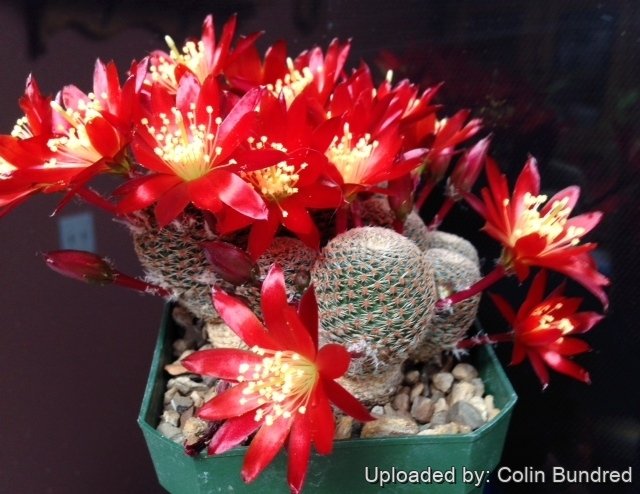
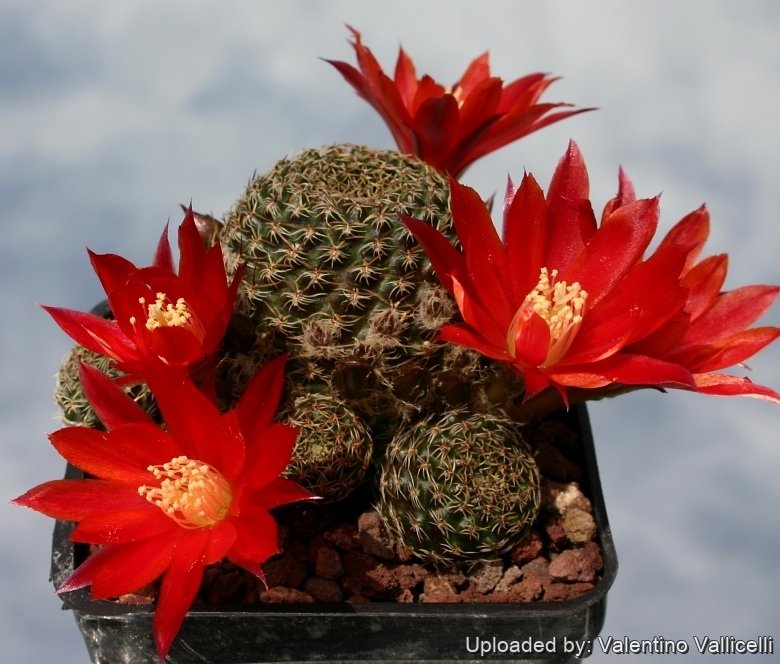
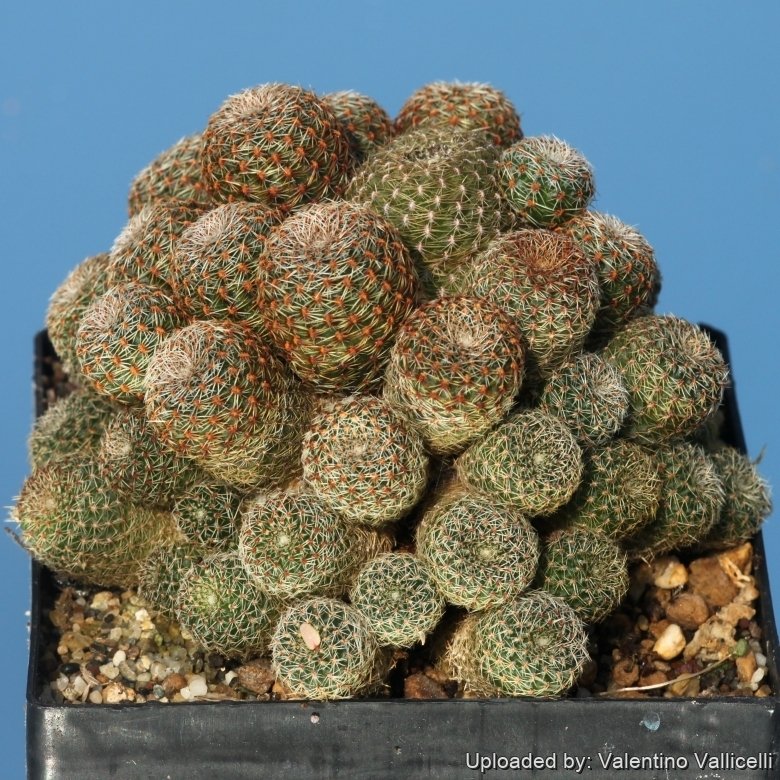
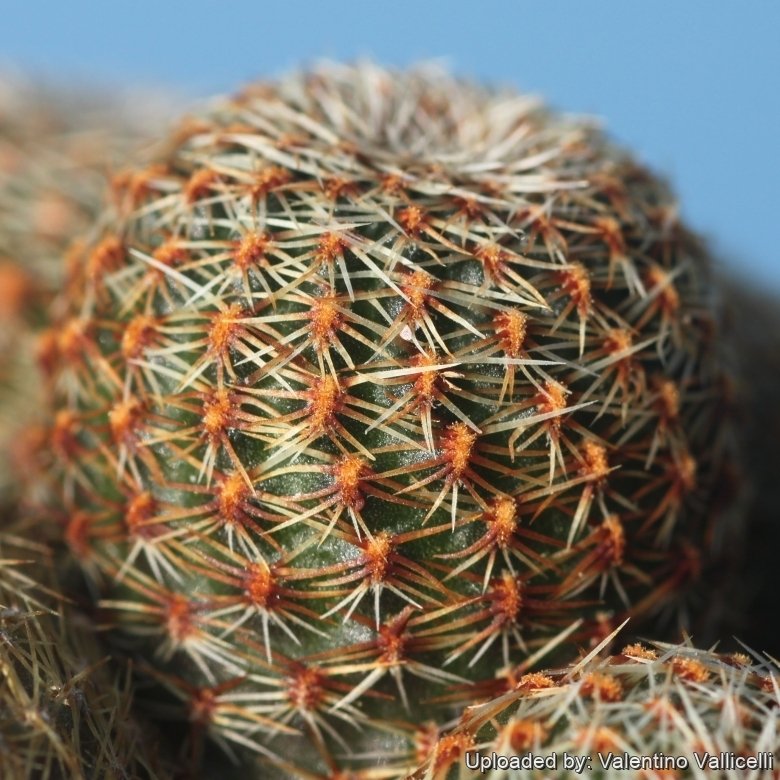
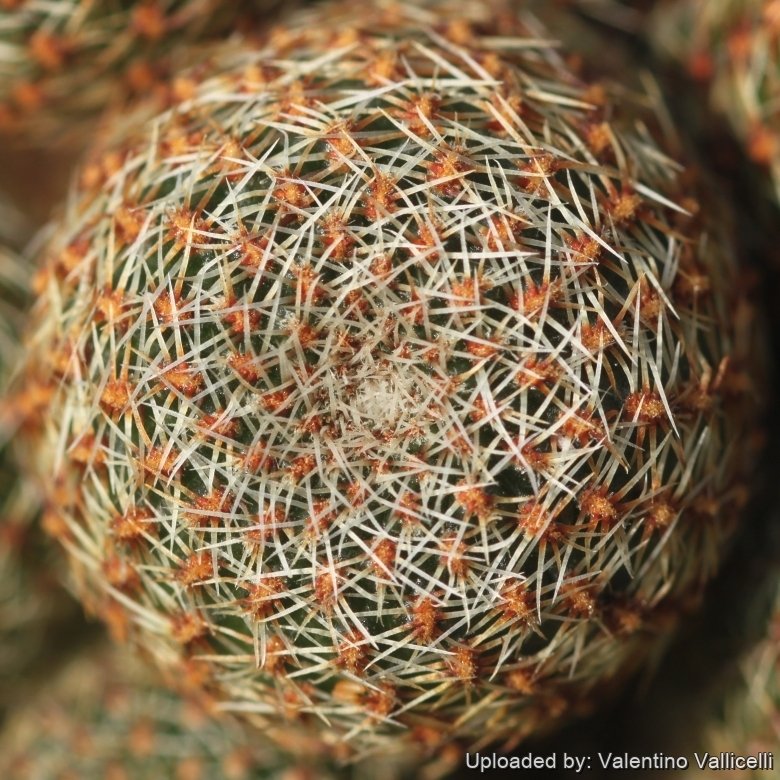
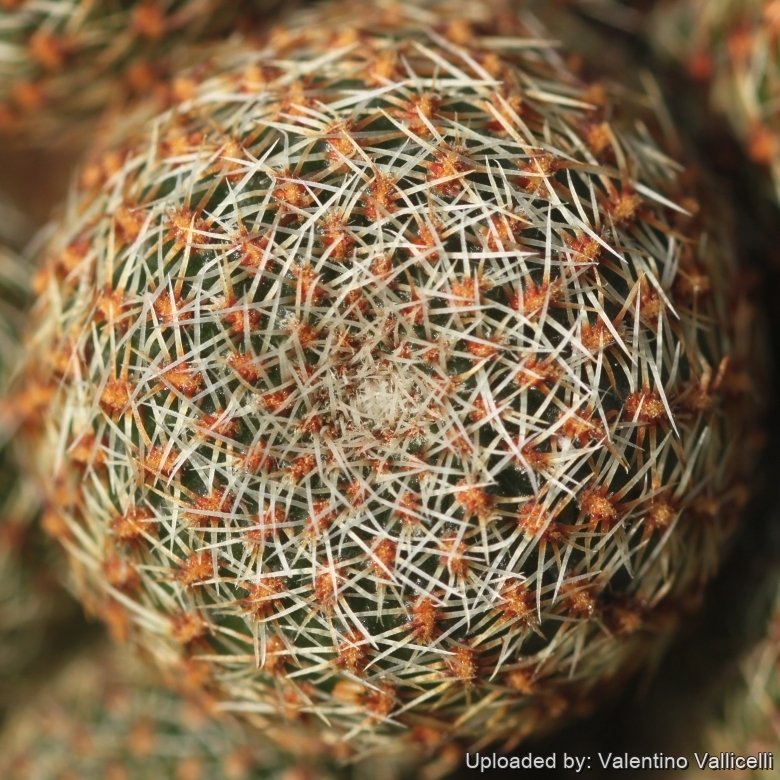
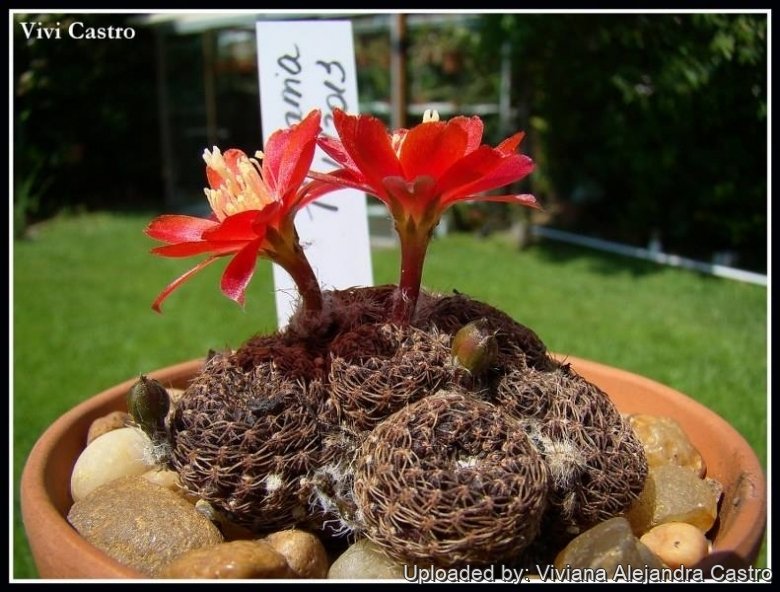
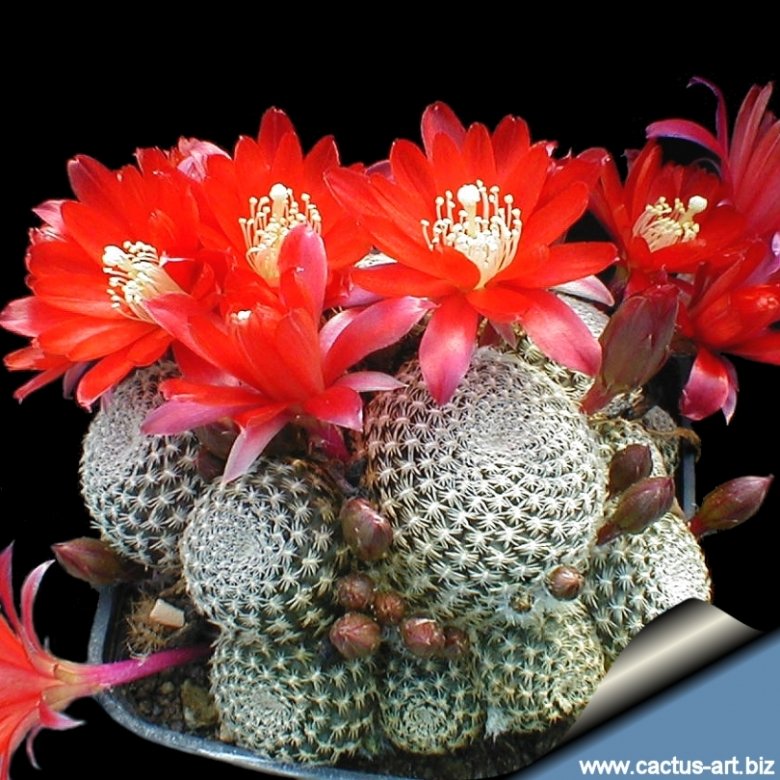
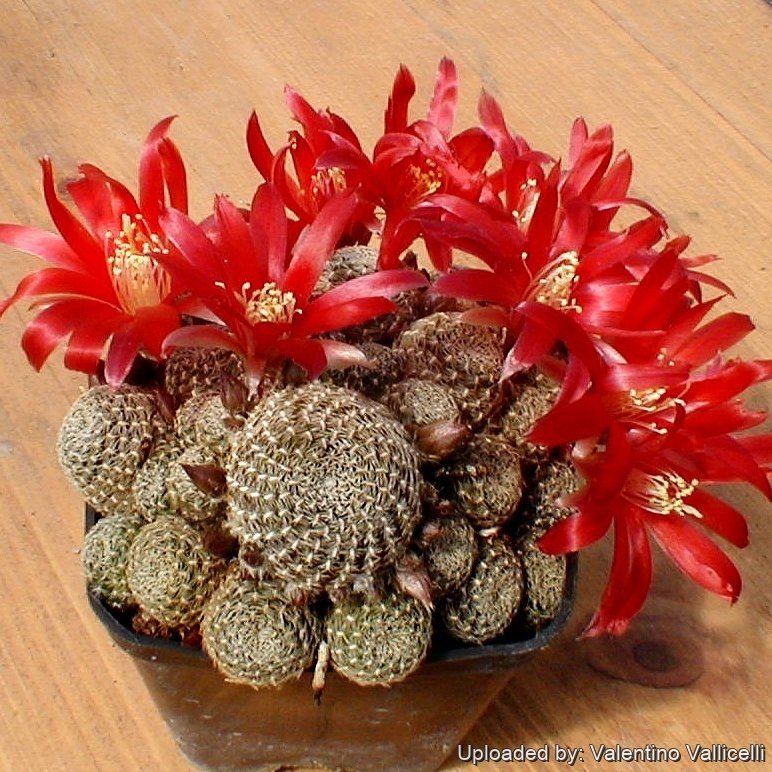
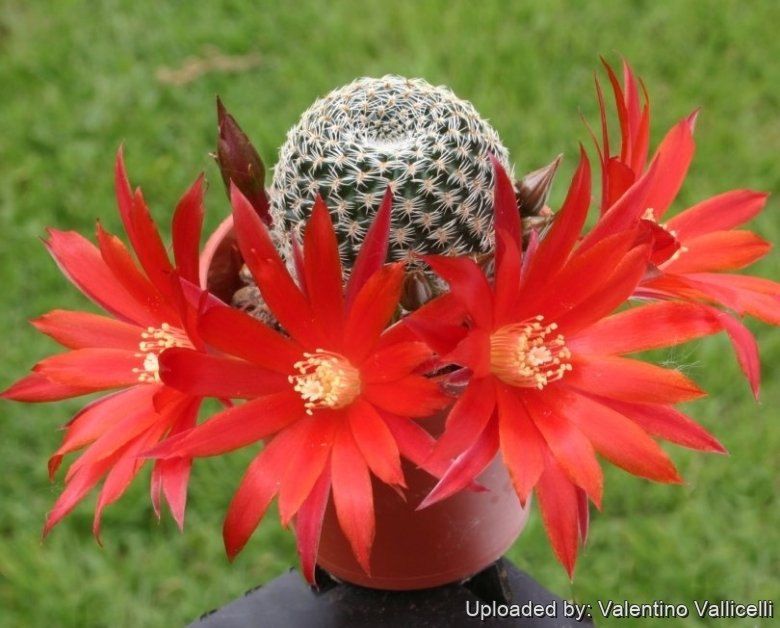
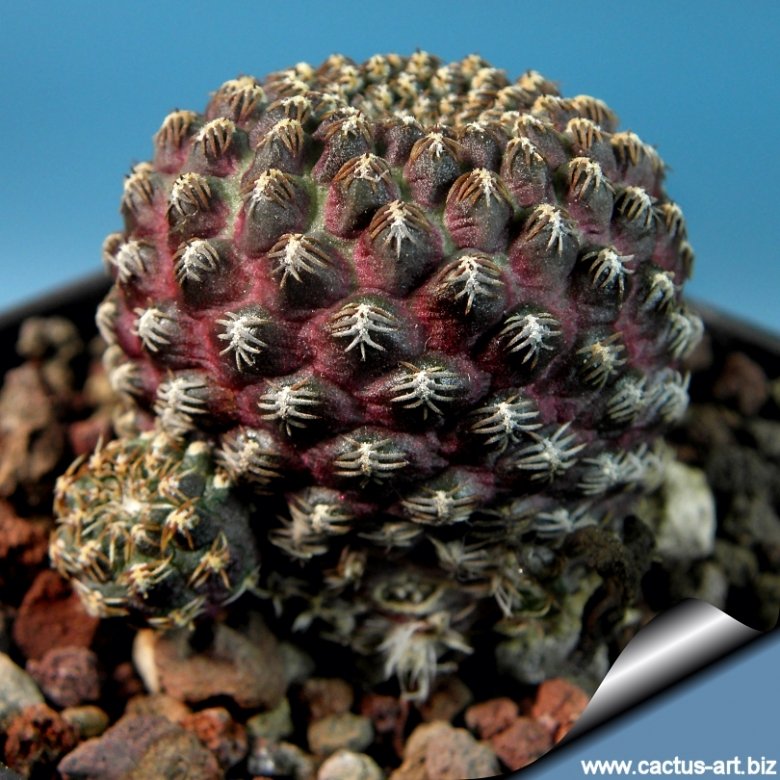
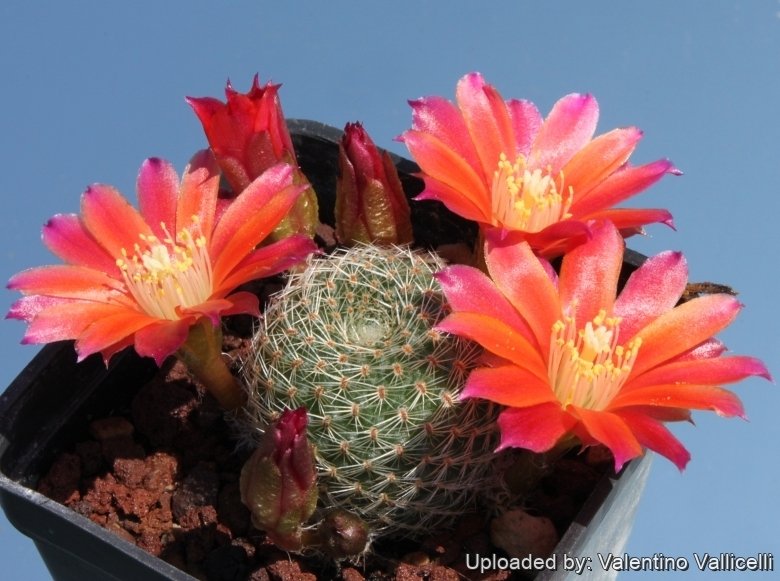
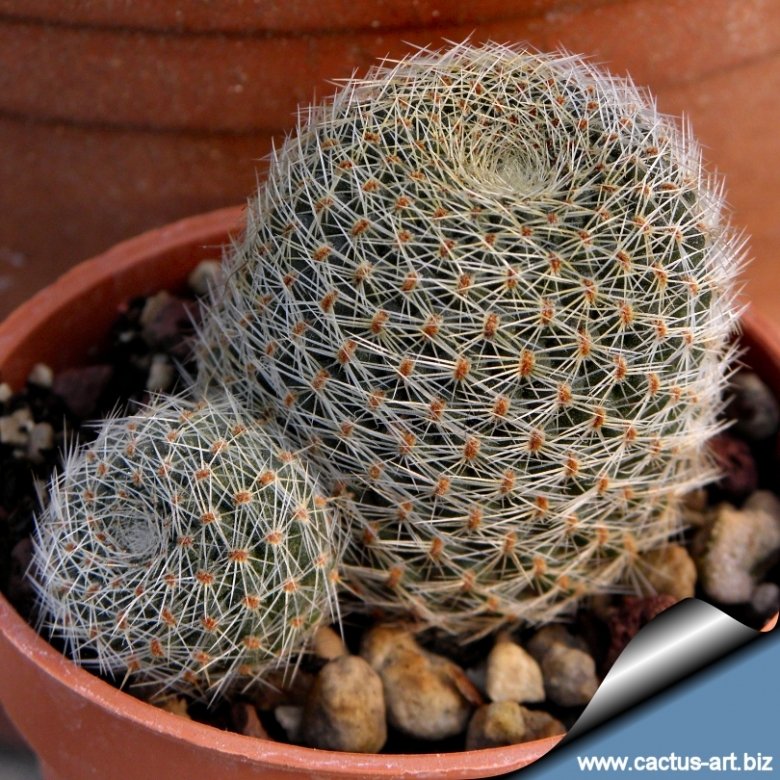
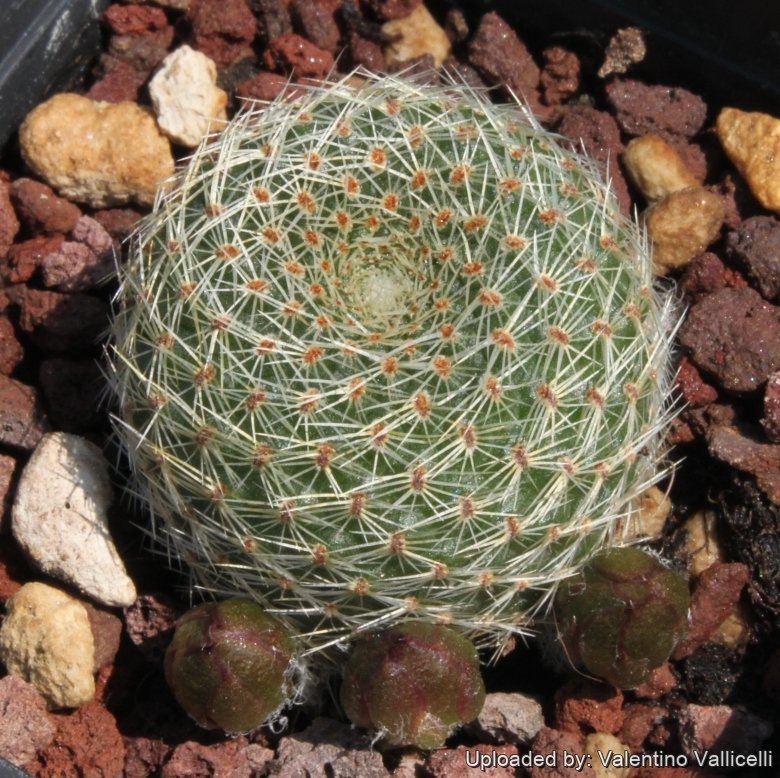
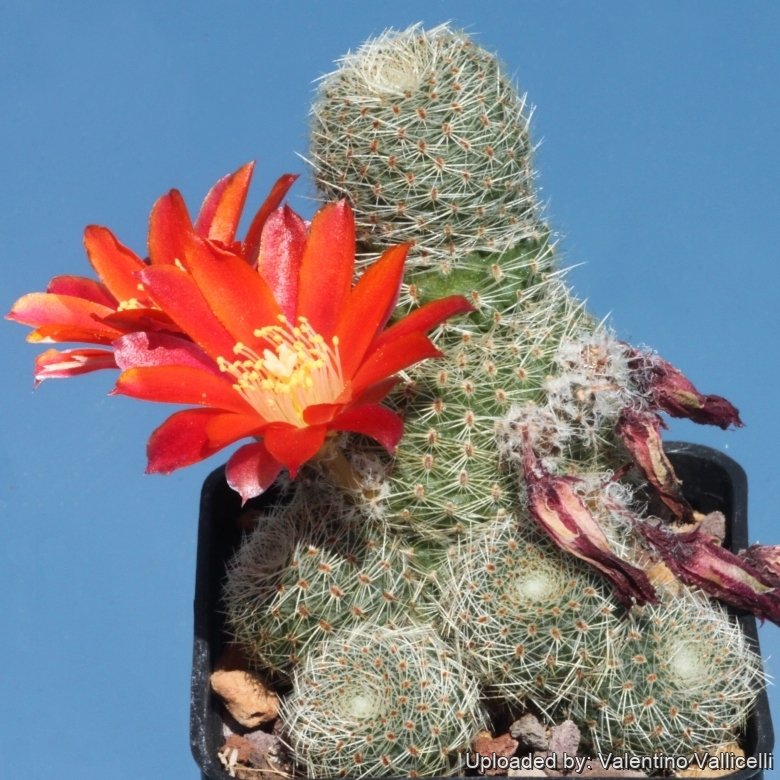
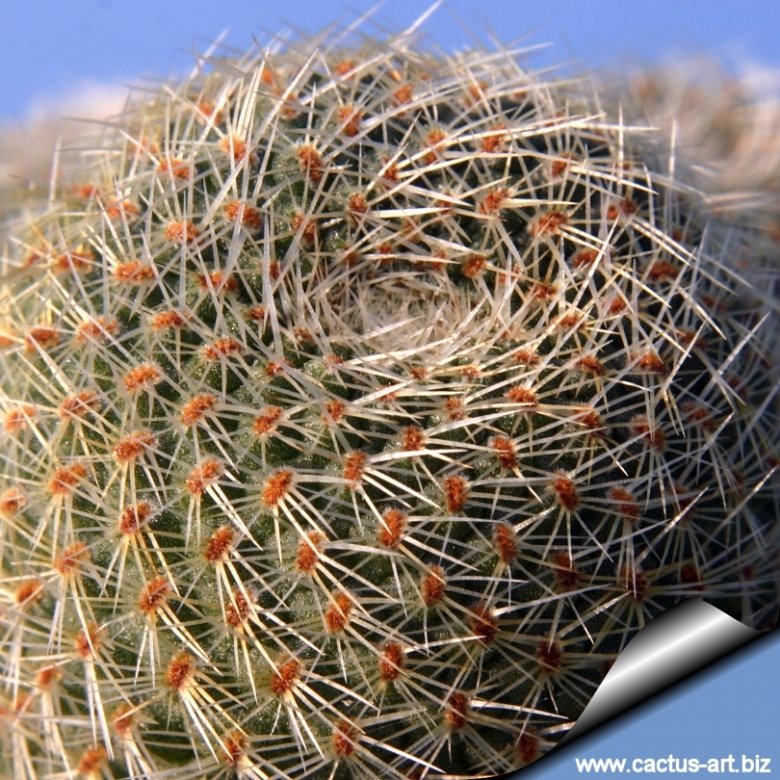
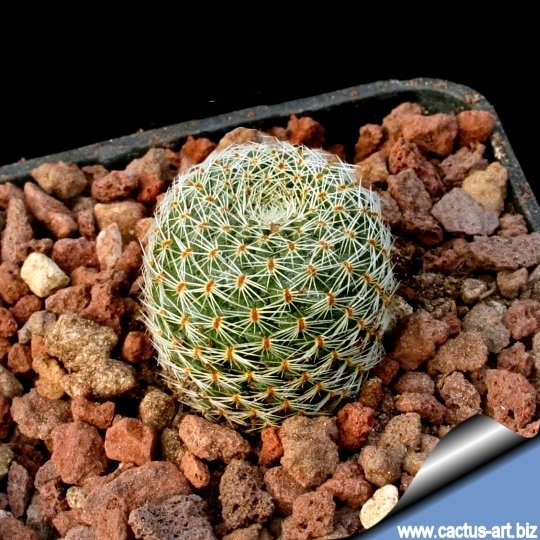
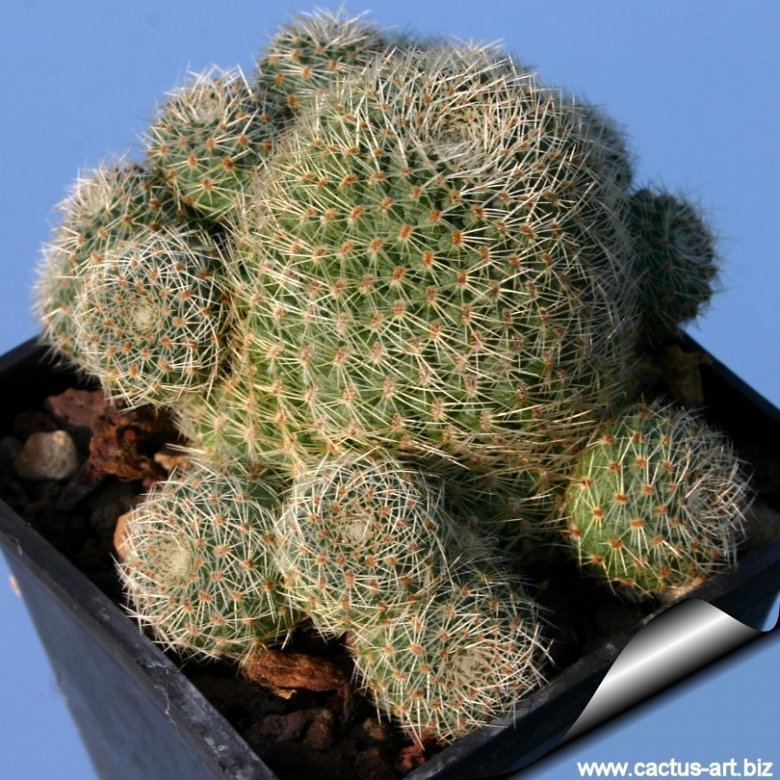
Rebutia heliosa (Aylostera heliosa) is a small cactus with heads densely covered covered in brown areoles with white short pectinate spines, giving it a silvery appearance. This odd cactus is unmistakable and very distinctive. It is considered by many one of the nicest species.
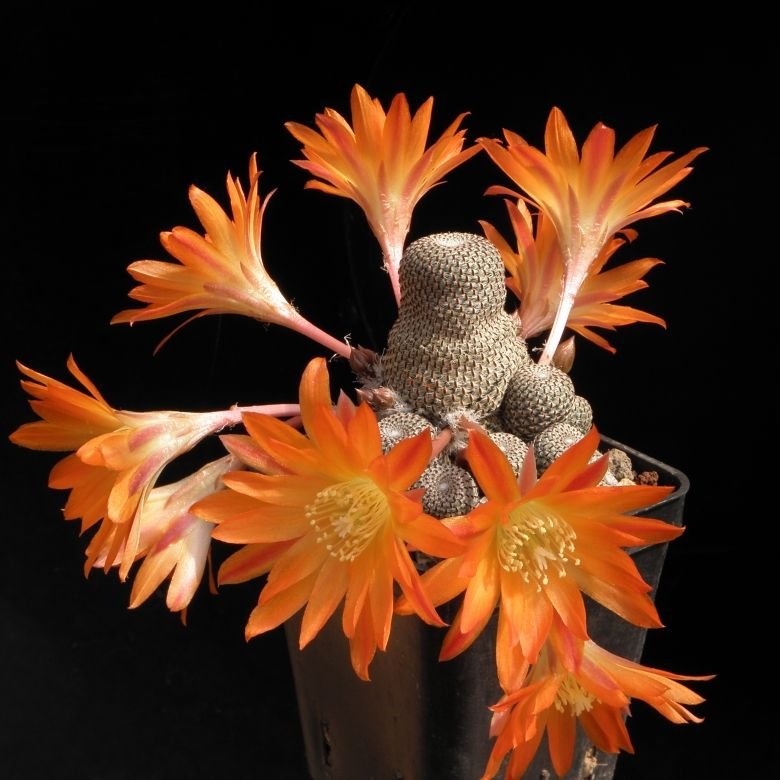
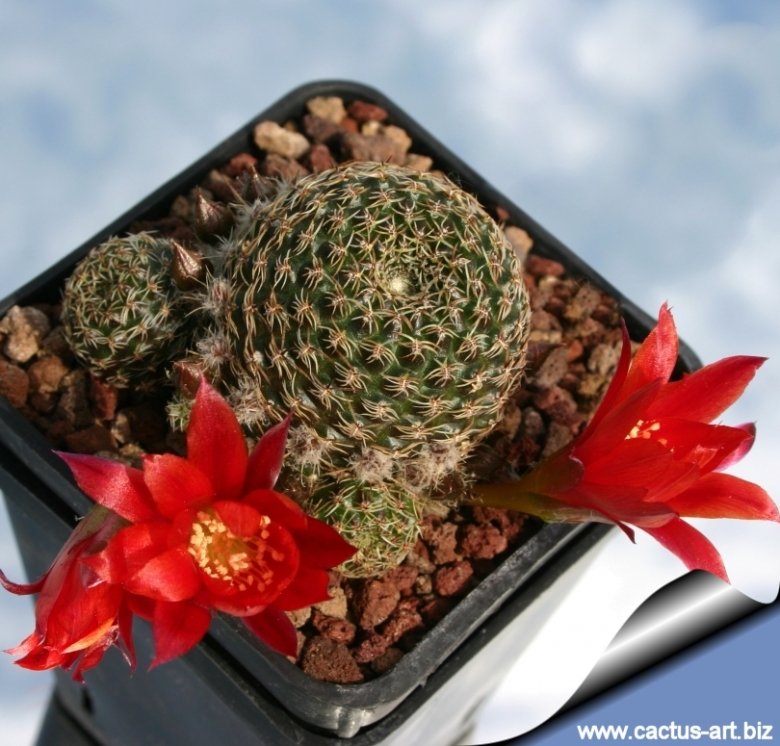
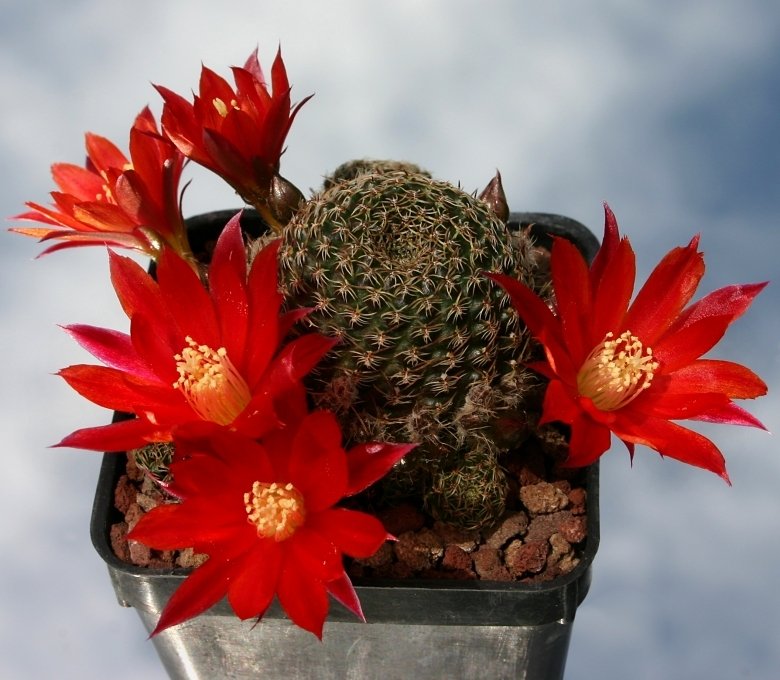
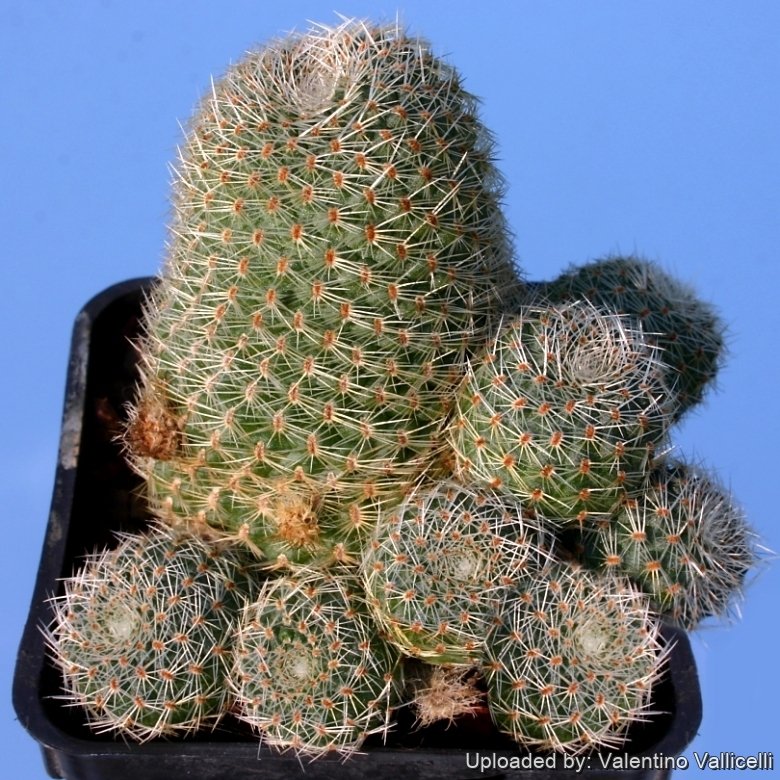
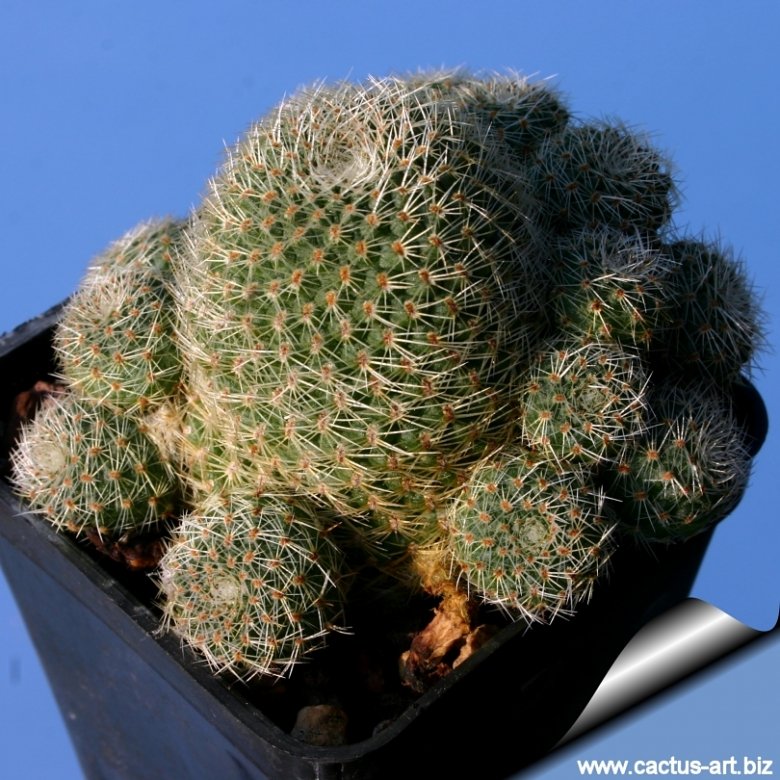
Habit:It is essentially a miniature plant simple at first, that readily forms a clustering mound of tiny heads.
Stem: Heads compressed spherical to shortly cylindrical 2,5 cm wide, rarely higher than 3 cm or more.
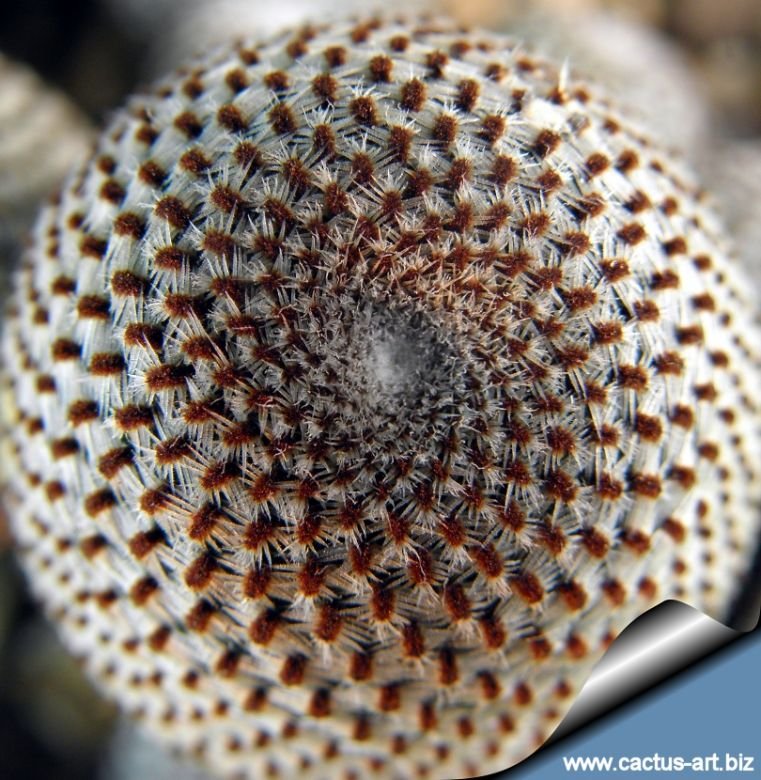
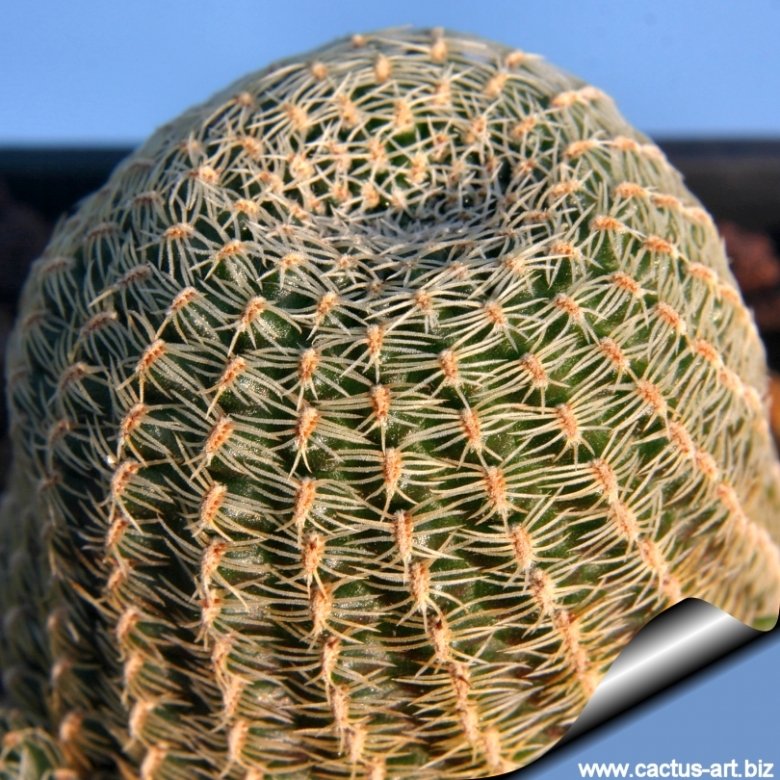
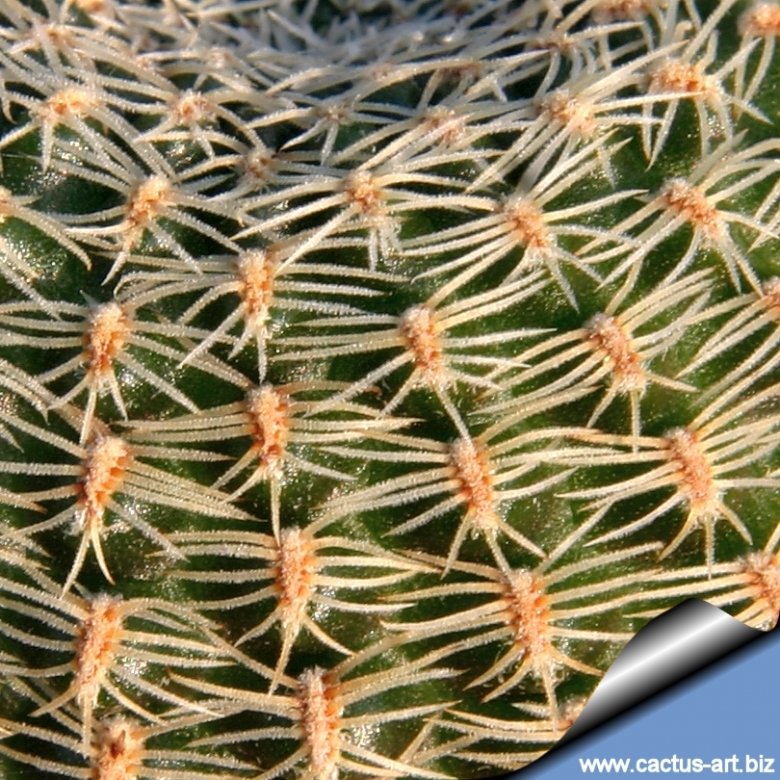
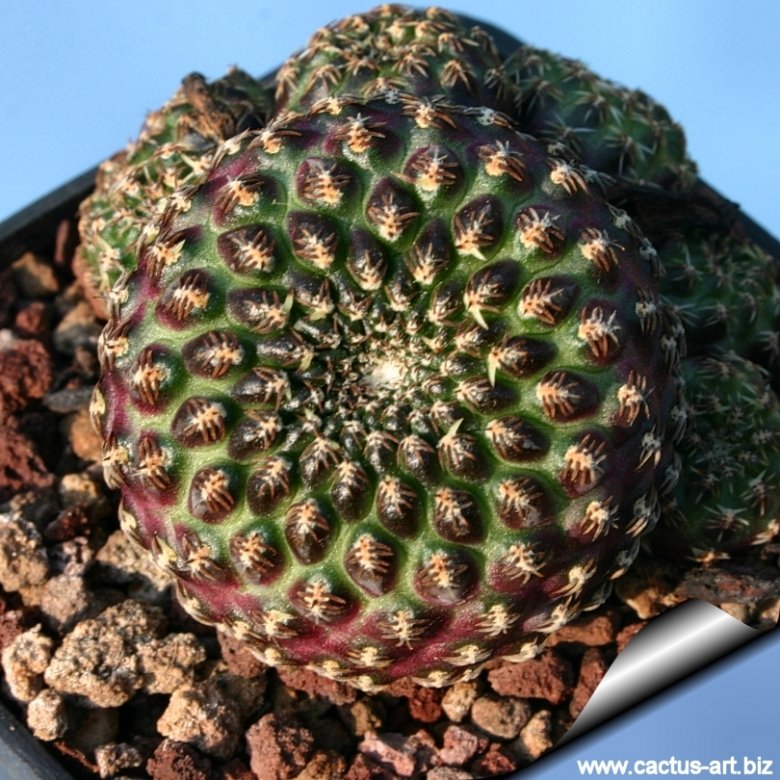
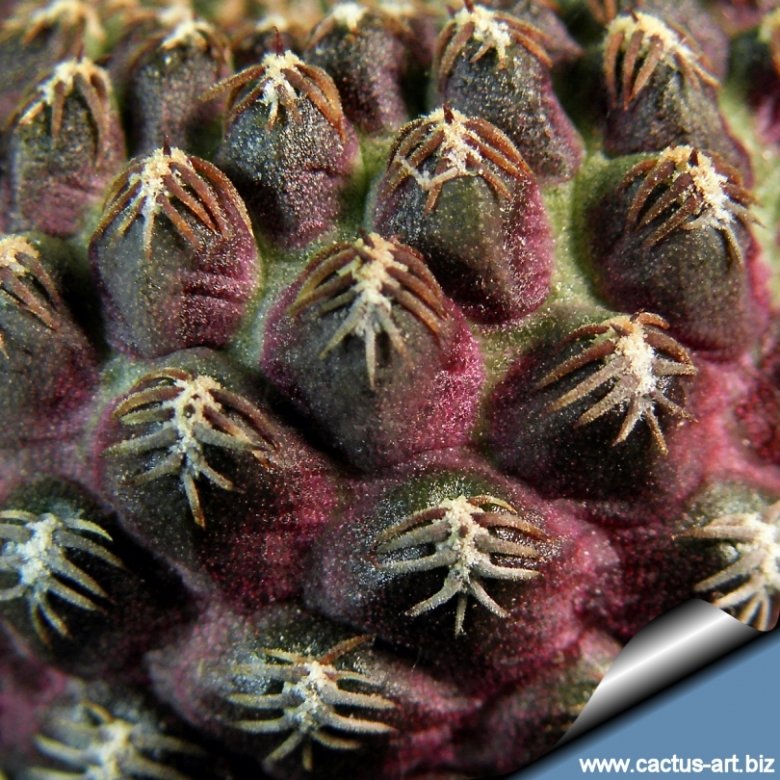
Areoles: Small, brown and narrow, elongated 1-2 mm long, less than 0,5 mm broad, forming 35-40 spirals.
Spines: 24-26 all radials, short, about 1 mm long, distinctively silvery-white, dense, spreading laterally and pectinate, covering almost completely the small stems in a spiral pattern.
Roots: Fleshy tap root.
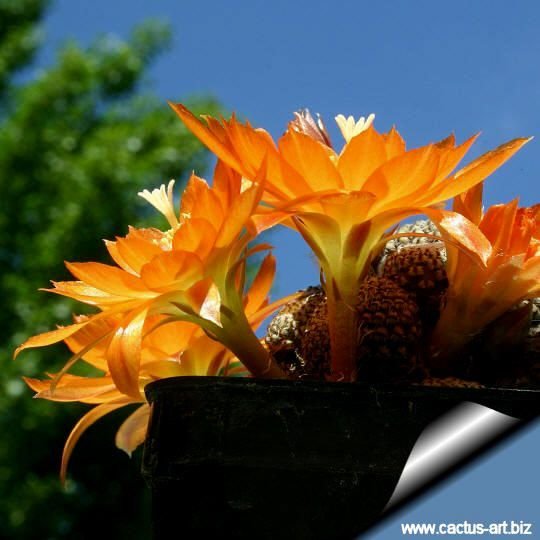
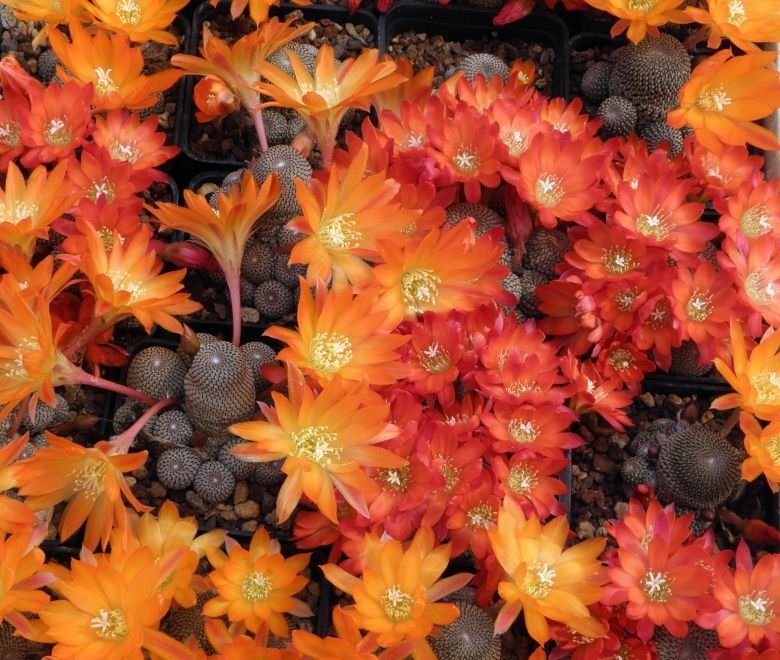
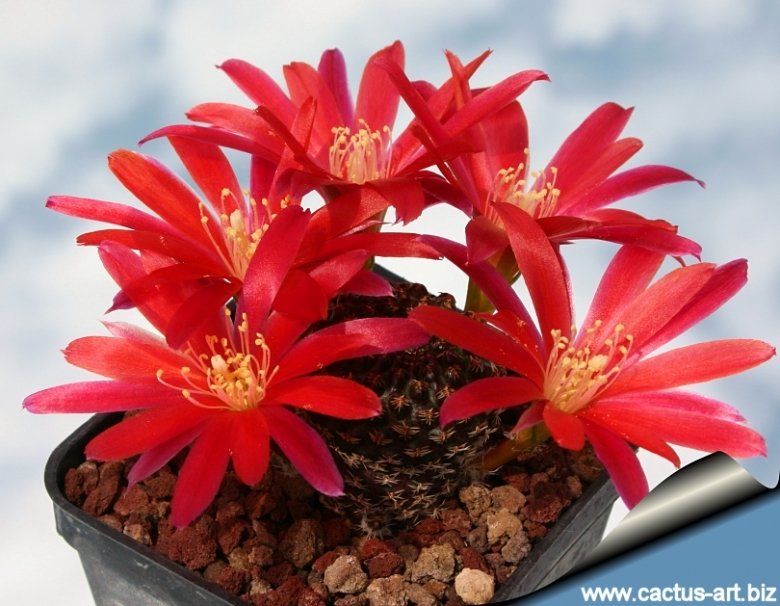
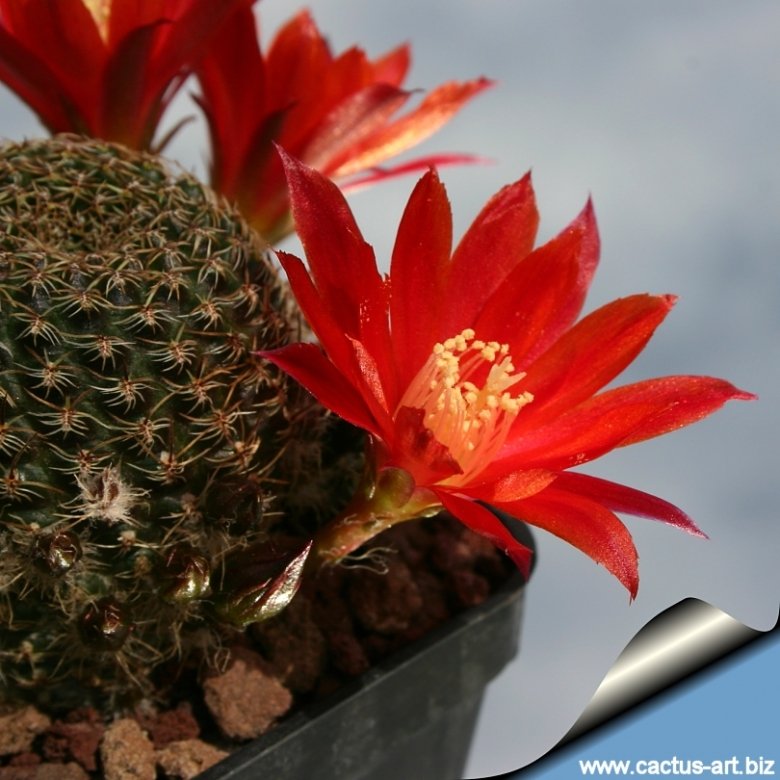
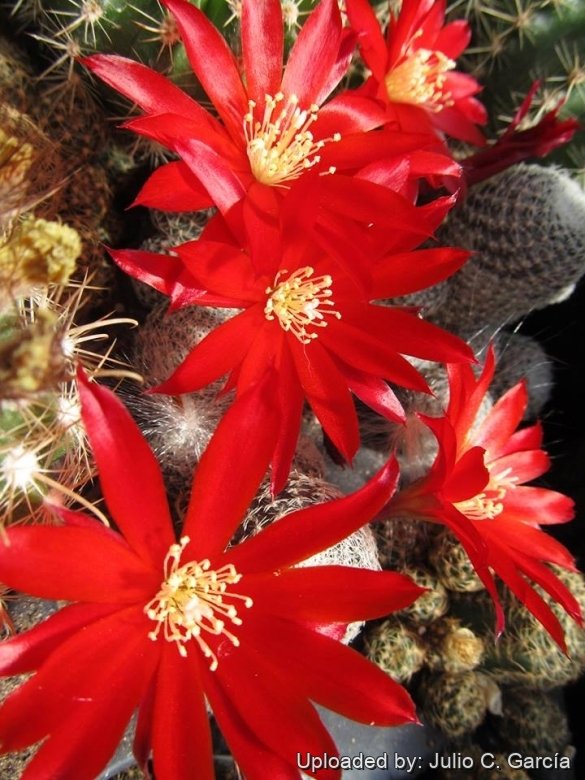
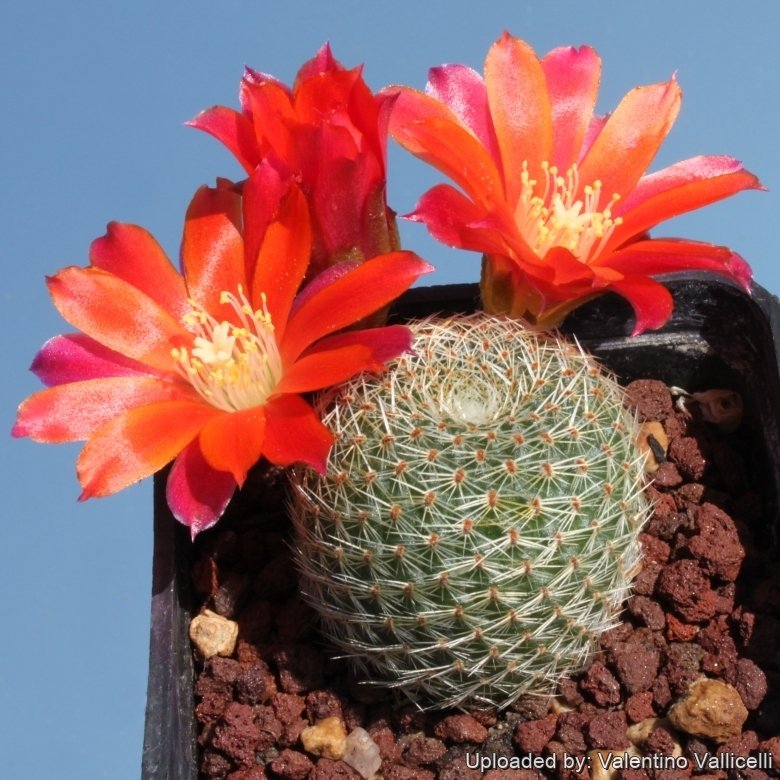
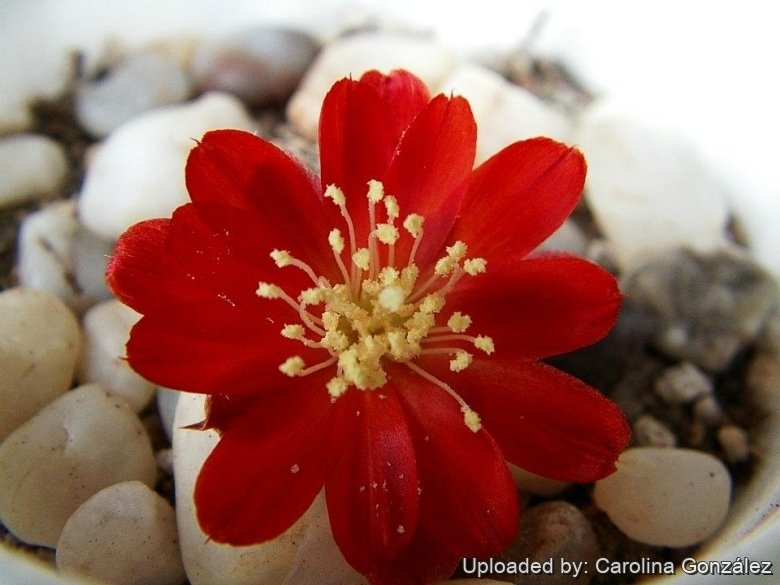
Flower: Large, funnel-shaped, long-necked, 4 cm in diameter, 4,5-5,5 cm long, orange-red. Tube up to 3 cm long 2-3 mm across, solid for more than half its length, deep rose to orange pink. Tepals orange with lilac mid-stripe.
Phenology: It flowers profusely in spring. (Rebutias are self-fertilizing but aylosteras are not, and the latter can be fooled by introducing foreign pollen and then re-pollinating with its own pollen.)
Fruit: 4 mm in diameter, deep crimson to purple.
Seeds: Hemispheric to helmet-shaped. black, papillate.
Origin and Habitat
Bolivia (Near Tarija (Jucanas) on the road to Narvaez)
Habitat: It grows in mountainous areas at an altitude around 2500 m 3000 m over sea level
Cultivation and Propagation
These plants come from mountainous areas, so like bright light, cool and dry conditions in the winter; this is important for the flowers as well as for their health. Without this cool winter period (0-10° C) they normally won’t get many buds. They have a thick taproot and are of difficult cultivation and rot prone because of a great sensitivity to the excess of watering, not easy to get to any large size on their own roots really a challenge to grow into a large clump. They are commonly grafted to avoid root problems and to make easier to grow. Sun Exposure: Suited for sunny-brightly exposure; can tolerate light shade.
Cultural Practices: Suited for airy exposures. Needs deep pot and good drainage to accommodate its tap root.
It is very cold resistant as low as to -10° C or less for short periods of time. It is a fine plant for a rock garden or container, contrasts well with agaves, yuccas, and low-growing flowering plants.
Pests & diseases: Rebutia heliosa is especially prone to root rot, therefore, underpot in a smaller container filled with very porous compost.
Propagation: Cutting as it branches freely from the base; Also can be grown from seeds or graft. Seeds can be sown in the spring or summer. The seedlings should not be disturbed until they are well rooted, after which they can be planted separately in small pots.
Bibliography
Major references and further lectures
-
James Cullen, Sabina G. Knees, H. Suzanne Cubey “The European Garden Flora Flowering Plants: A Manual for the Identification of Plants Cultivated in Europe, Both Out-of-Doors and Under Glass” Cambridge University Press, 11/Aug./2011
-
David Hunt, Nigel Taylor “The New Cactus Lexicon” DH Books, 2006
-
Edward F. Anderson “The Cactus Family” Timber Press, 2001
-
Willy Cullmann; Gerhard Groner; Erich Gotz “The Encyclopedia of Cacti” Alpha Books 1986
-
Roger Spencer “Horticultural Flora of South-Eastern Australia: Flowering Plants” UNSW Press, 01/gen/1995
From llifle page Aylostera condorensis
Description
Rebutia heliosa var. condorensis is a small clumping cactus with very short spines arranged on globes so that it looks like orbs covered with small, white spiders. It readily forms a clustering mound.
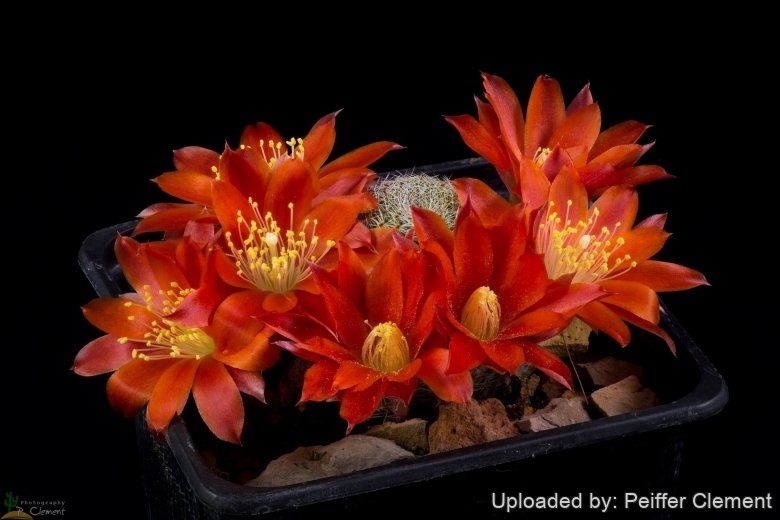
The variety “condorensis” specifically describes the clones of the species with dark red flowers, and larger heads.
Stem: Deep green to brown , 3(-4) cm wide, rarely higher than 4 cm.
Spines: Very short, whitish to pale brown, spider-like.
Flower: Large dark-red, funnel-shaped, long-necked, 4 cm in diameter, 5 cm long.
Blossoming time: Rebutia heliosa var. condorensis flowers profusely in spring.
Origin and Habitat
Bolivia (Tarija, Condor pass)
Habitat: It is found in mountainous areas at an altitude around 2500 m 3000 m over sea level.
Cultivation and Propagation
These small growing plants come from mountainous areas, so they like bright light, and cool and dry conditions in the winter. This is important for the flowers as well as for their health. Without this cool winter period (0-10° C) they normally won’t get many buds. They have thick taproot and are of difficult cultivation, and rot prone because of a great sensitivity to excessive watering. It isn’t easy to get them to grow to a large size on their own roots, and it’s really a challenge to get them to grow into a large clump. They are commonly grafted to avoid root problems, and to make easier to grow. Suited for bright exposure; but they can tolerate sunny exposure.
Suited for airy exposures. It is a small container-size plant and prefers a deep pot and good drainage to accommodate its tap root.. It will occupy a small pot comfortably and eventually remain a manageable sized house plant. It is very cold resistant to as low as to -10° C or less, for short periods of time. It is a fine plant for a rock garden or container, and contrasts well with agaves, yuccas, and low-growing flowering plants. This variety is also likely to flower as a house plant, but results will depend on a variety of growing conditions.
Pests & diseases: R. heliosa It is especially prone to root rot, therefore, underpot in a smaller container filled with very porous compost.
Propagation: By cuttings as it branches freely from the base; Also can be grown from seeds or graft. Seeds can be sown in the spring or summer. The seedlings should not be disturbed until they are well rooted, after which they can be planted separately in small pots.
Notes
The R. helosa v. condorensis is very similar if not the same as Rebutia heliosa var. albopectinata. The only difference is the stigma colour, that is white in condorensis and pale green in albopectinata.
Source: Aylostera condorensis, LLIFLE - Encyclopedia of living forms, CC-BY-SA, retrieved 2026-10-25.
From llifle page Aylostera densipectinata KK489 Jucanas, Tarija, Bolivia 2800m (3000m)
Description
Rebutia densipectinata is essentially a miniature plant similar (if not the same) to Rebutia heliosa var. condorensis. It readily forms a clustering mound of tiny heads with white to tan coloured pectinated spines and dark red flowers.
Remarks: Rebutia densipectinata is very often confused with Rebutia albopectinata a “Mediolobivia” not related with Rebutia heliosa, and most of the plants labelled “albopectinata” are indeed “densipectinata” (syn: Rebutia heliosa var. condorensis).
Stem: Heads 2.5 cm wide, rarely higher than 3 cm or more.
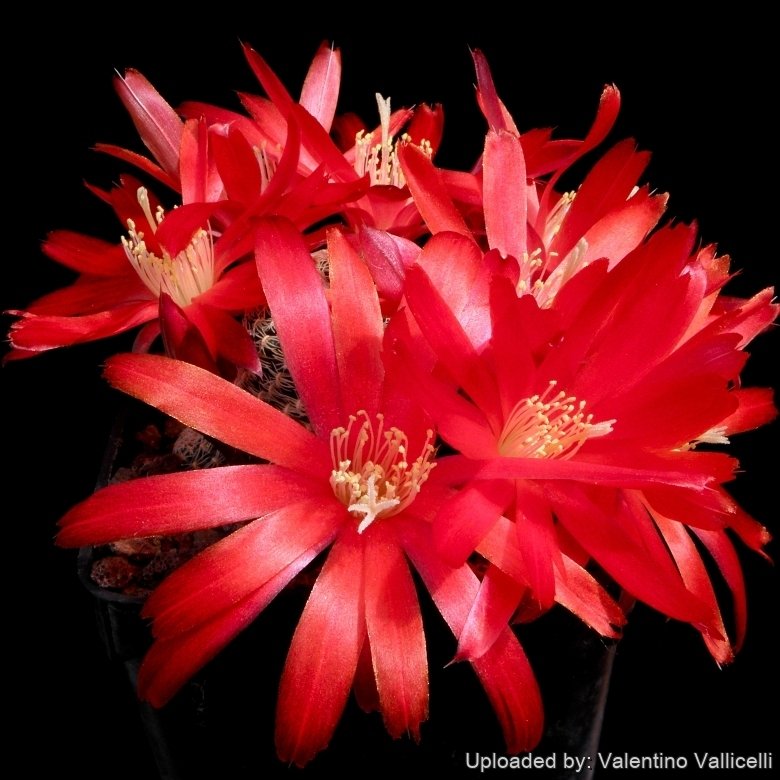
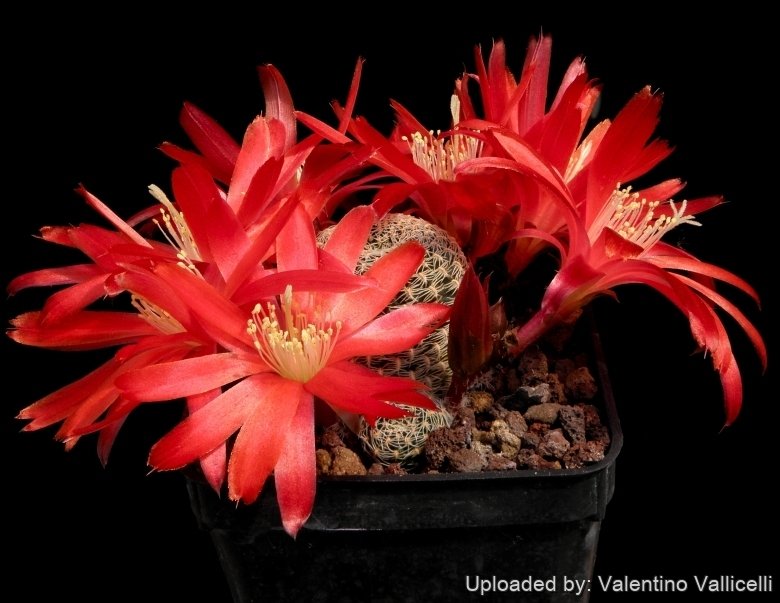
Flower: Large dark-red, funnel-shaped, long-necked, 4 cm in diameter, 5 cm long.
Blossoming time: Profusely flowering in spring.
Cultivation and Propagation
These plants come from mountainous areas, so like bright light, cool and dry conditions in the winter; this is important for the flowers as well as for their health. Without this cool winter period (0-10° C) they normally wont get many buds. They have thick taproot and are of difficult cultivation and rot prone because of a great sensitivity to the excess of watering, not easy to get to any large size on their own roots really a challenge to grow into a large clump. They are commonly grafted to avoid root problems and to make easier to grow. Sun Exposure: Suited for sunny-brightly exposure; can tolerate light shade.
Cultural Practices: Suited for airy exposures. Needs deep pot and good drainage to accommodate its tap root.
It is very cold resistant as low as to -10° C or less for short periods of time. It is a fine plant for a rock garden or container, contrasts well with agaves, yuccas, and low-growing flowering plants.
Pests & diseases: R. heliosa is especially prone to root rot, therefore, underpot in a smaller container filled with very porous compost.
Propagation: Cutting as it branches freely from the base; Also can be grown from seeds or graft. Seeds can be sown in the spring or summer. The seedlings should not be disturbed until they are well rooted after which they can be planted separately in small pots.
Bibliography
Major references and further lectures
-
James Cullen, Sabina G. Knees, H. Suzanne Cubey “The European Garden Flora Flowering Plants: A Manual for the Identification of Plants Cultivated in Europe, Both Out-of-Doors and Under Glass” Cambridge University Press, 11/Aug./2011
-
David Hunt, Nigel Taylor “The New Cactus Lexicon” DH Books, 2006
-
Edward F. Anderson “The Cactus Family” Timber Press, 2001
Source: Aylostera densipectinata KK489 Jucanas, Tarija, Bolivia 2800m (3000m), LLIFLE - Encyclopedia of living forms, CC-BY-SA, retrieved 2026-10-25.
From llifle page Rebutia densipectinata KK849 f.ma brevispina
Description
It is essentially a miniature plant that readily forms a clustering mound of tiny heads.
Stem: Heads 2.5 cm wide, rarely higher than 3 cm or more.
Flower: Large dark-red, funnel-shaped, long -necked, 4 cm in diameter, 5 cm long.
Phenology: Blossoming time: Profusely flowering in spring.
Cultivation and Propagation
These plants come from mountainous areas, so like bright light, cool and dry conditions in the winter; this is important for the flowers as well as for their health. Without this cool winter period (0-10° C) they normally wont get many buds. They have thick taproot and are of difficult cultivation and rot prone because of a great sensitivity to the excess of watering, not easy to get to any large size on their own roots really a challenge to grow into a large clump. They are commonly grafted to avoid root problems and to make easier to grow. Sun Exposure: Suited for sunny-brightly exposure; can tolerate light shade.
Cultural Practices: Suited for airy exposures. Needs deep pot and good drainage to accommodate its tap root.
It is very cold resistant as low as to -10° C or less for short periods of time. It is a fine plant for a rock garden or container, contrasts well with agaves, yuccas, and low-growing flowering plants.
Pests & diseases: It is especially prone to root rot, therefore, underpot in a smaller container filled with very porous compost.
Propagation: Cutting as it branches freely from the base; Also can be grown from seeds or graft. Seeds can be sown in the spring or summer. The seedlings should not be disturbed until they are well rooted after which they can be planted separately in small pots.
Source: Rebutia densipectinata KK849 f.ma brevispina, LLIFLE - Encyclopedia of living forms, CC-BY-SA, retrieved 2026-10-25.
From llifle page Aylostera heliosa subs. theresae
Description
Rebutia heliosa subs. teresae| (a.k.a. Rebutia teresae) is merely a long-spined form of Rebutia heliosa (somewhat intermediate with respect to certain traits with Rebutia fiebrigii?). The spines are not quite as appressed as in the typical subspecies and the areoles are not as elongated, but the broader bodies are nevertheless covered in glassy, pectinate spination emerging from brown to coppery-coloured areoles. The flowers are more intensely red-orange with a pinkish blush to the outer tepals. White spines & brown areoles make this plant very attractive even when not in bloom.
Habit: It is a dwarf, low-growing cactus, usually solitary in nature, but in cultivation it offsets rapidly to form a clump with many heads densely covered in brown areoles with white pectinate spines, giving it a silvery appearance.
Habit:It is essentially a miniature plant simple at first, that readily forms a clustering mound of tiny heads.
Stem: Heads compressed spherical to shortly cylindrical 2,5 cm wide, rarely higher than 3 cm or more.
Areoles: Small, brown and elongated 1-2 mm long, forming 35-40 spirals.
Spines: 24-26 all radials, about 5 mm long, distinctively silvery-white, dense, spreading and somewhat pectinate, covering almost completely the small stems in a spiral pattern.
Roots: Fleshy tap root.
Flower: Large, funnel-shaped, long-necked, 4 cm in diameter, 4,5-5,5 cm long, orange-red. Tube up to 3 cm long 2-3 mm across, solid for more than half its length, red-orange with a pinkish or lilac blush to the outer tepals.
Phenology: It flowers profusely in spring.
Fruit: 4 mm in diameter, deep crimson to purple.
Seeds: Hemispheric to helmet-shaped. black, papillate.
Origin and Habitat
Cajas Pass, near Nogales, about 35 km North West of Tarija, Bolivia (Western South America, Southern America).
Altitude: 2200-2800 metres elevation.
Type locality: Las Cajas, about 35 km north east of Tarija, about 2280 metres above sea level.
Notes
Fied numbers:
colls. Kníže: KK 1724 (teresae n. n., v. flavida), KK 1925 (teresae n. n.);
colls. Hillmann: RH 259 (?, heliosa v. theresae n. n.), RH 1021 (?, heliosa v. theresae), RH 1028 (?, heliosa v. theresae);
colls. Šeda: SE 227 (teresae typ);
colls. Kasperski: KAS 332 (?, heliosa v. theresae);
colls. Blaczkowski: TB 204.3 (?, heliosa v. theresae), TB 206.3 (?, heliosa v. theresae);
Bibliography
Major references and further lectures
-
James Cullen, Sabina G. Knees, H. Suzanne Cubey “The European Garden Flora Flowering Plants: A Manual for the Identification of Plants Cultivated in Europe, Both Out-of-Doors and Under Glass” Cambridge University Press, 11/Aug./2011
-
David Hunt, Nigel Taylor “The New Cactus Lexicon” DH Books, 2006
-
Edward F. Anderson “The Cactus Family” Timber Press, 2001
-
Cactus and Succulent Journal, Vol. 81 (2), March - April, 2010
Source: Aylostera heliosa subs. theresae, LLIFLE - Encyclopedia of living forms, CC-BY-SA, retrieved 2026-10-25.
From llifle page Aylostera heliosa subs. cajasensis
Description
Small clumping cactus with fine silvery spines arranged on globes so that it looks like orbs covered with small, white spiders. It readily forms a clustering mound.
The variety “Cajasensis” specifically describes the population from the Desfiladero de Cajas (altitude 2500 m) with orange-red or red flowers, larger heads with silvery pectinated spines. Some books state that Rebutia heliosa v. cajasensis looks pretty much like many of the forms of Rebutia heliosa v. condorensis but lighter spined. Indeed, some books make both these varieties synonymous, whereas.
Root: Tap root.
Stem: Grey green, 2-3(-4) cm wide, rarely higher than 4 cm.
Ribs: Spiraling with very tiny tubercles.
Areoles: Small, with brown felt and elongated.
Spines: only radials 2-4(-5) mm long, silvery white, pectinated, spider-like, covering almost completely the small stems in a spiral pattern.
Flower: Large dark-orange to red, funnel-shaped, long -necked, 4 cm in diameter, 5 cm long.
Blossoming time: Profusely flowering in spring.
Origin and Habitat
Cajas, Alto Cajas and Yesera, Mendez, Tarija, Bolivia.
Habitat: It grows in mountainous areas at an altitude around 2500 m 2800 m over sea level
Cultivation and Propagation
These plants come from mountainous areas, so like bright light, cool and dry conditions in the winter; this is important for the flowers as well as for their health. Without this cool winter period (0-10° C) they normally won’t get many buds. They have a thick taproot and are of difficult cultivation and rot prone because of a great sensitivity to the excess of watering, not easy to get to any large size on their own roots really a challenge to grow into a large clump. They are commonly grafted to avoid root problems and to make easier to grow. Sun Exposure: Suited for sunny-brightly exposure; can tolerate light shade.
Cultural Practices: Suited for airy exposures. Needs deep pot and good drainage to accommodate its tap root. It is very cold resistant as low as to -10° C or less for short periods of time. It is a fine plant for a rock garden or container, contrasts well with agaves, yuccas, and low-growing flowering plants.
Pests & diseases: R. heliosa is especially prone to root rot, therefore, underpot in a smaller container filled with very porous compost.
Propagation: Cutting as it branches freely from the base; Also can be grown from seeds or graft. Seeds can be sown in the spring or summer. The seedlings should not be disturbed until they are well rooted, after which they can be planted separately in small pots.
Source: Aylostera heliosa subs. cajasensis, LLIFLE - Encyclopedia of living forms, CC-BY-SA, retrieved 2026-10-25.
Cultivars and forms (11)
Varieties (4)
Forms (3)
Gallery