Description
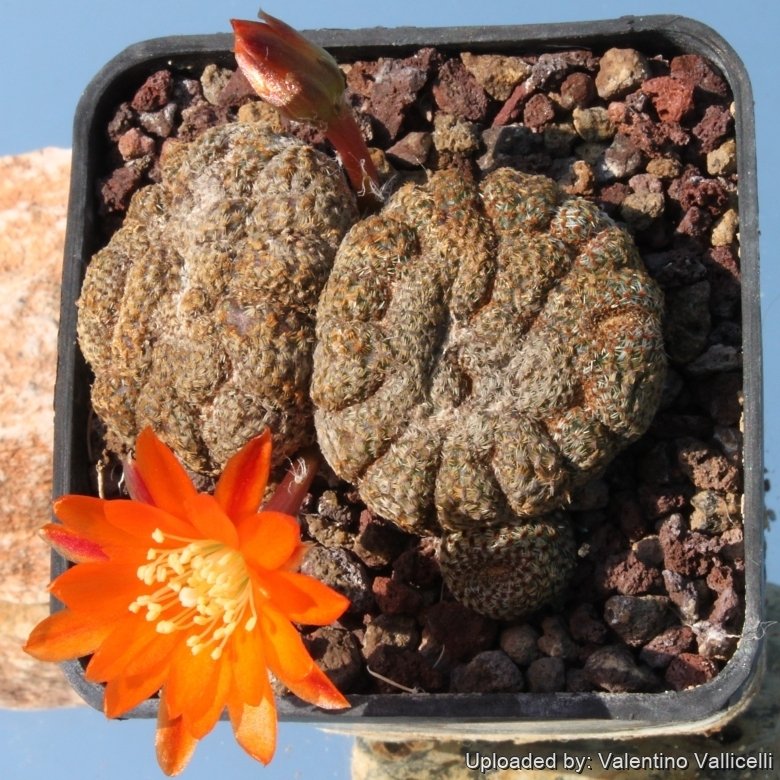
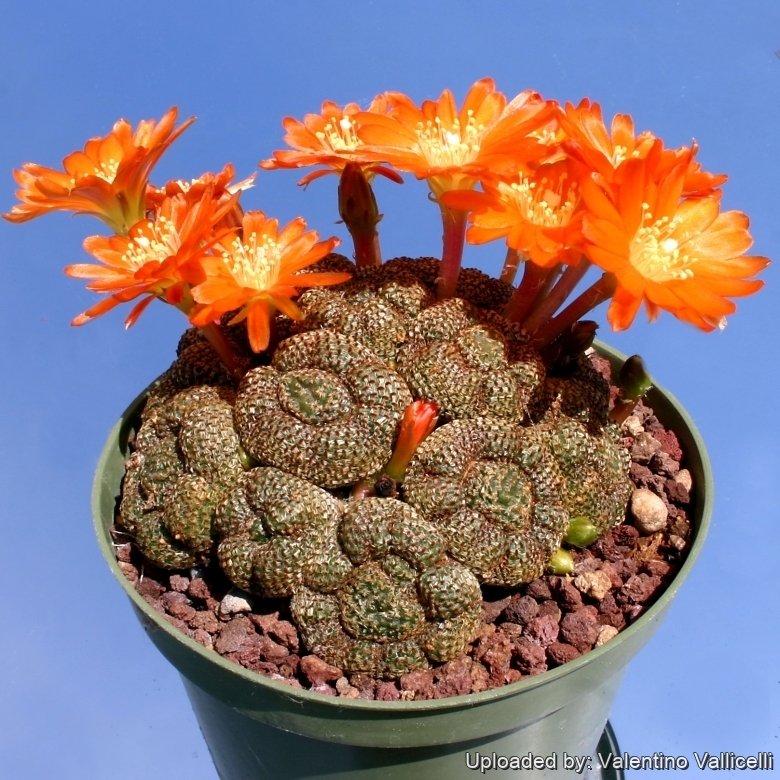
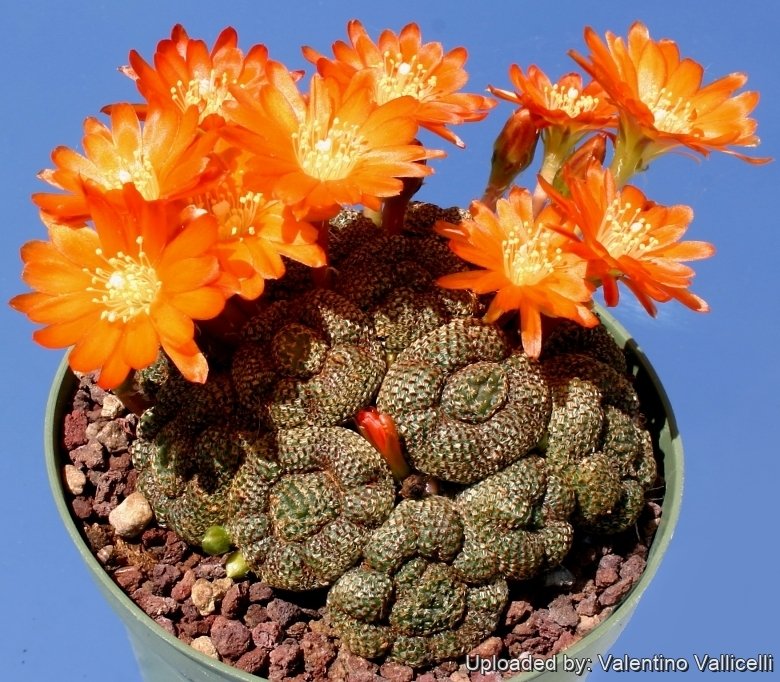
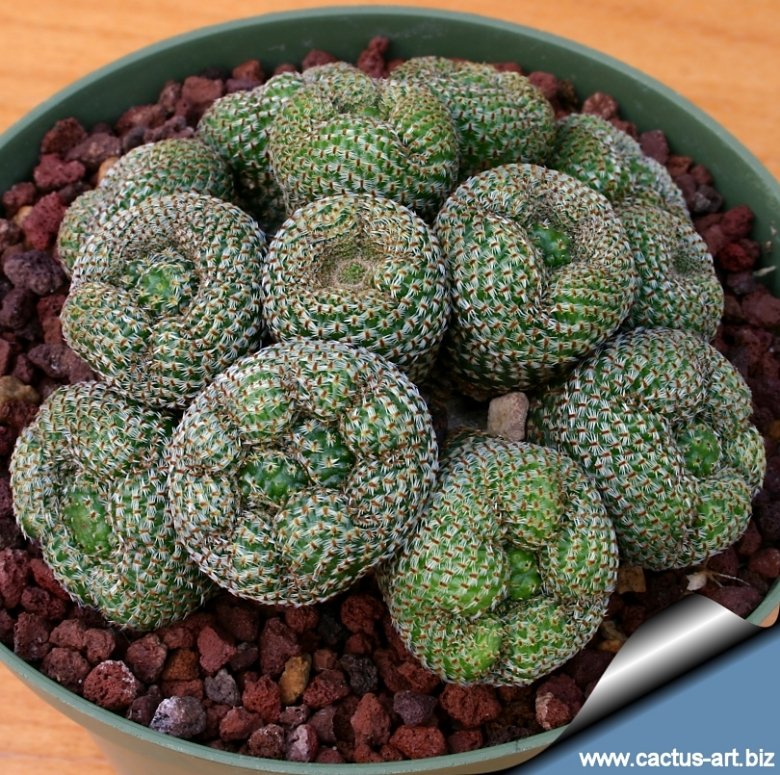
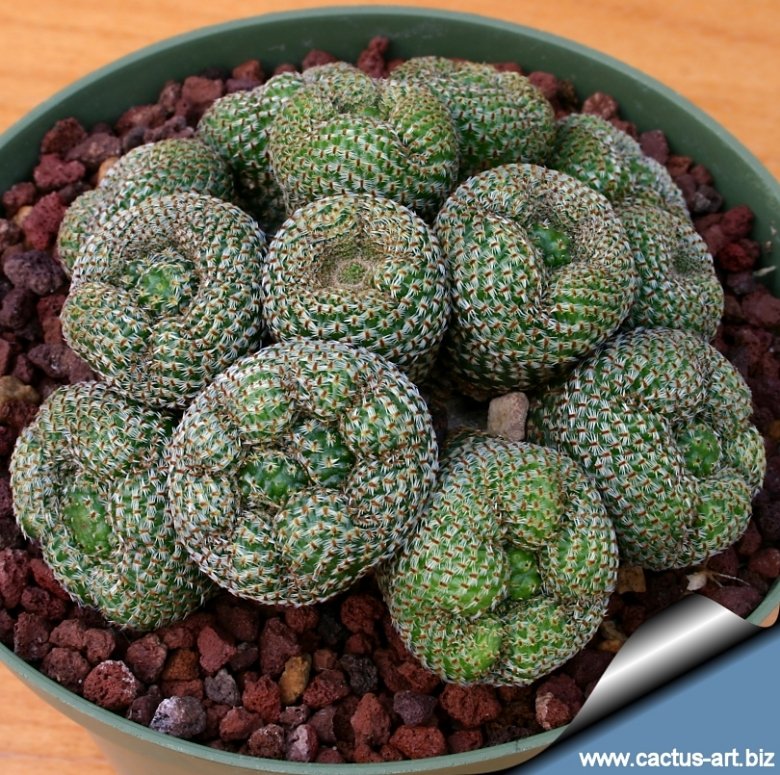
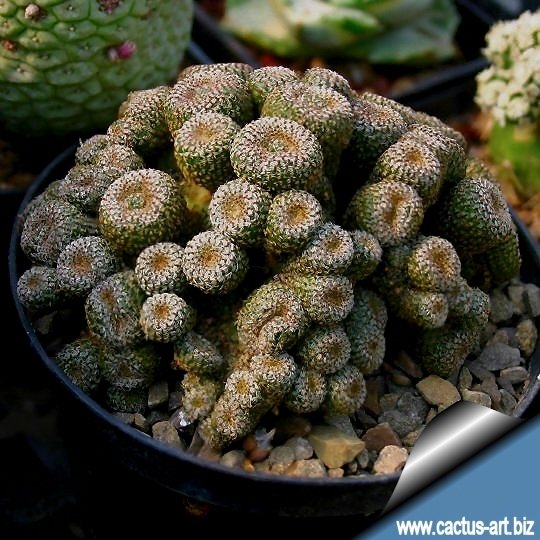
The Rebutia heliosa f. monstruosa| is a strange clustering cactus that forms a low growing mound of flattened stems. The apex of each branch, after an initial normal growth, go crazy and starts to produce bumped structures or even dichotomize funnily.
This odd cactus is very distinctive.
Habit:It is essentially a miniature plant simple at first, that readily forms a clustering mound of tiny heads.
Stem: Heads compressed spherical to shortly cylindrical approx 2-3 cm wide, 1-3 cm tall.
Areoles: Small, brown and narrow, elongated 1-2 mm long, less than 0,5 mm broad, forming 35-40 spirals.
Spines: Less than 20 all radials, short, about 1 mm long, distinctively silvery-white, dense, speading laterally and pectinate
Roots: Fleshy tap root.
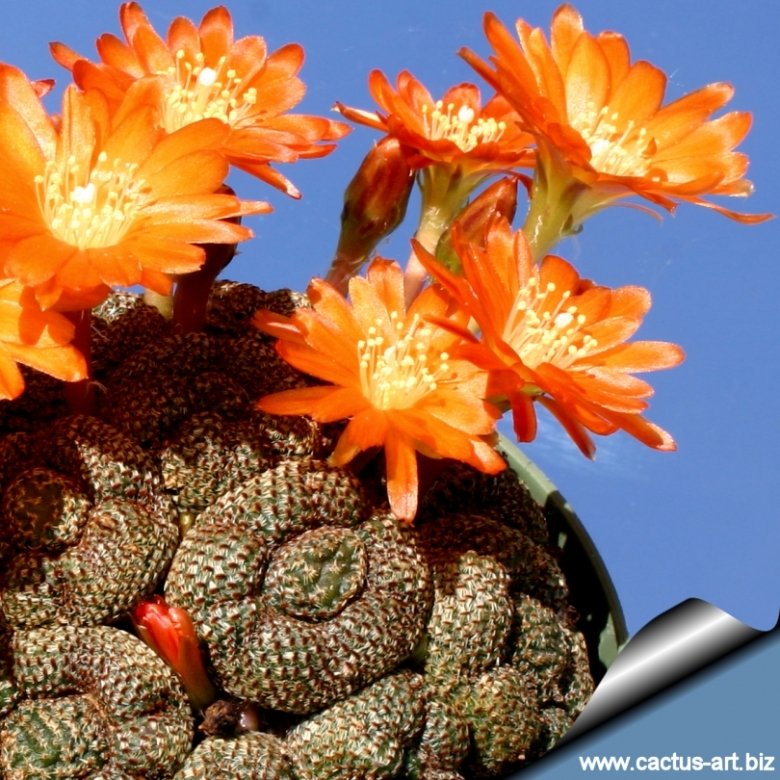
Flower: Large, funnel-shaped, long-necked, 4 cm in diameter, 4,5-5,5 cm long, orange-red. Tube up to 3 cm long 2-3 mm across, solid for more than half its length, deep rose to orange pink. Tepals orange with lilac mid-stripe.
Phenology: It flowers in spring.
Origin and Habitat
Garden origin (Nursery produced cultivar)
Cultivation and Propagation
These plants come from mountainous areas, so like bright light, cool and dry conditions in the winter; this is important for the flowers as well as for their health. Without this cool winter period (0-10° C) they normally won’t get many buds. They have a thick taproot and are of difficult cultivation and rot prone because of a great sensitivity to the excess of watering, not easy to get to any large size on their own roots really a challenge to grow into a large clump. They are commonly grafted to avoid root problems and to make easier to grow. It is very cold resistant as low as to -5° C or less for short periods of time. It is a fine plant for a rock garden or container, contrasts well with agaves, yuccas, and low-growing flowering plants.
Sun Exposure: Suited for sunny-brightly exposure; can tolerate light shade.
Cultural Practices: Suited for airy exposures. Needs deep pot and good drainage to accommodate its tap root.
Pests & diseases: It is especially prone to root rot, therefore, underpot in a smaller container filled with very porous compost.
Propagation: Usually grafted but the offsets can be used as cuttings which will take root in a minimum temperature of 20° C. Cuttings of healthy shoots can be taken in the spring and summer. Cut the stem with a sharp, sterile knife, leave the cutting in a warm, dry place for a week or weeks (depending on how thick the cutting is) until a callus forms over the wound. Once the callus forms, the cutting may be inserted in a container filled with firmed cactus potting mix topped with a surface layer of coarse grit. They should be placed in the coarse grit only; this prevents the cut end from becoming too wet and allows the roots to penetrate the rich compost underneath. The cuttings should root in 2 to 6 weeks. They grow slowly.
Gallery