Description
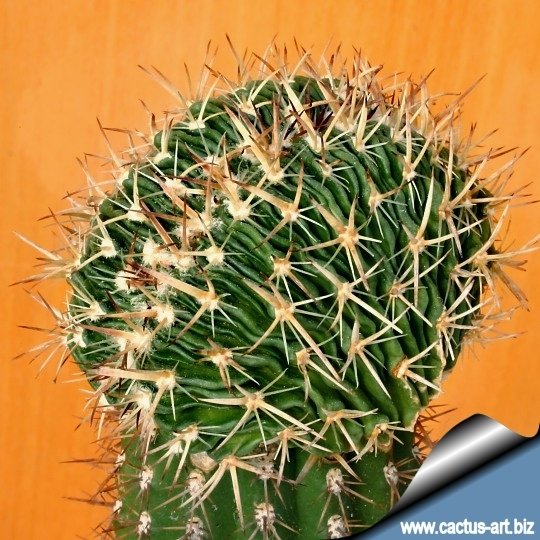
The standard Echinofossulocactus multicostatus is a vivid green rounded cactus with many curved, tight, thin and wavy ribs. The beautiful crested form is very rare in collection and highly priced. Even though there are some different clones this plant remain quite rare and looked for by collectors.
Areoles: There are only 2 or 3 areoles in each rib, witch are covered with white felt in young plants.
Spines: 6 to 9 radial spines, the upper ones are longer whit a central stout and flat erected spine, while the lower ones are shorter and point downwards. The spines are different lengths.
Flowers: The blooms are white with a violet to purple midvein in early spring.
Origin and Habitat
Garden origin ( produced cultivar)
Cultivation and Propagation
It is a fairly easy plant to grow both grafted or in its own roots. Because of it’s small size makes a great potted plant specimen.
Growth rate: It is a slow growing species.
Soil: It grows well in a very draining mineral potting substrate, but it isn’t picky about soil.
Repotting: Use pot with good drainage. Eventually, as they become mature, they attain a maximum size of 8-10 cm (20) cm. However, old plants become senile and have a tendency to succumb to disease and a weak root system. At this stage, as is well known, they die suddenly. So, after they reach 10 cm in diameter grow them slowly, and adopt a new repotting period, using intervals of every 2 - 3 years. Additionally grow them under drier conditions or with stronger sunlight.
Watering: Water regularly during the summer so long as the plant pot is allowed to drain and not sit in a tray of water (It rots easily, especially if over wet). Let dry between watering. During hot weather you may need to water the plants more frequently so long as the plant is actively growing. From late September watering should be reduced to force the plant to go in to a state of semi dormancy, by October you should be back in to the winter watering regime. If the soil is allowed to be dry for too long root loss could follow but equally the same result would occur if the plants are both wet and cold. From March onwards the plant will begin to grow and watering should be increased gradually until late May when the plant should be in full growth.
Fertilization: Feed with a high potassium fertilizer in summer. Feeding may not be necessary at all if the compost is fresh then, feed in summer only if the plant hasn’t been repotted recently. Do not feed the plants from September onwards as this can cause lush growth which can be fatal during the darker cold months.
Hardiness: When dormant, the plant is very cold tolerant (down to nearly -5° C or less), but when left out it is more sensitive to frost. During the summer it is best to keep the plants outside where the temperature can rise to over 30 C with no harm to the plant.
Exposure: They do need a lot of light to develop their typical spination, but different clones vary in their tolerance of full sunshine. However some protection in light shade is recommended during the hottest hours in summer. If kept too dark they may become overly lush and greener and could be prone to rotting due to over watering.
Uses: It is an excellent plant for container growing. It always looks good and stays small. It looks fine in a cold greenhouse and frame.
Rot: Rot it is only a minor problem with cacti if the plants are watered and “aired” correctly. If they are not, fungicides won’t help all that much.
Propagation: By vegetative propagation grafting or stem cuttings from adult plants. If you make a cutting, remember to let it dry for some days, letting the wound heal (cuttings planted too soon easily rot before they can grow roots). Lay it on the soil and insert the stem end partially into the substrate. Try to keep the cutting somewhat upright so that the roots are able to grow downward.
Gallery