Publication: Kakteen (Berger) 346. 1929
Description
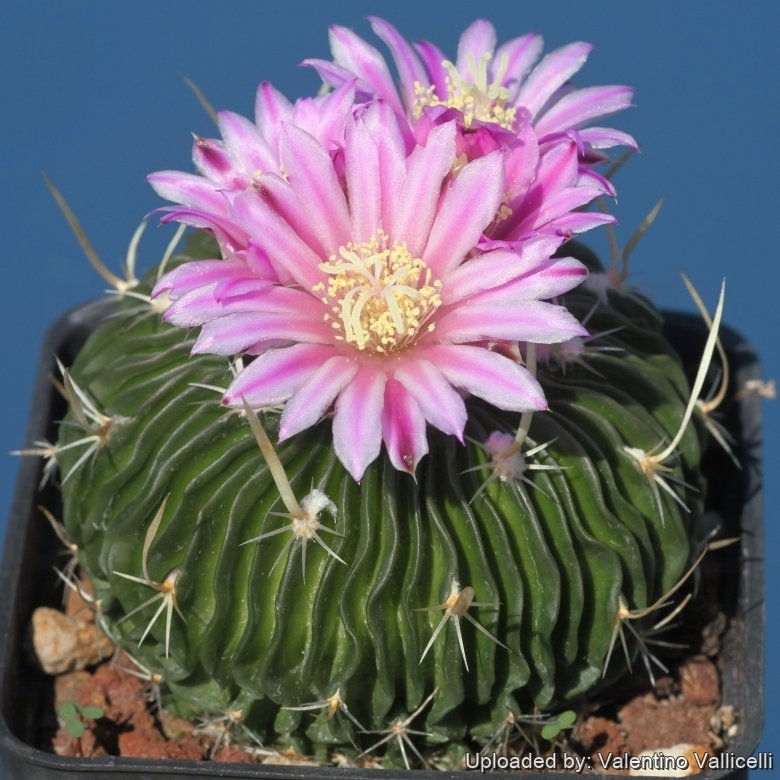
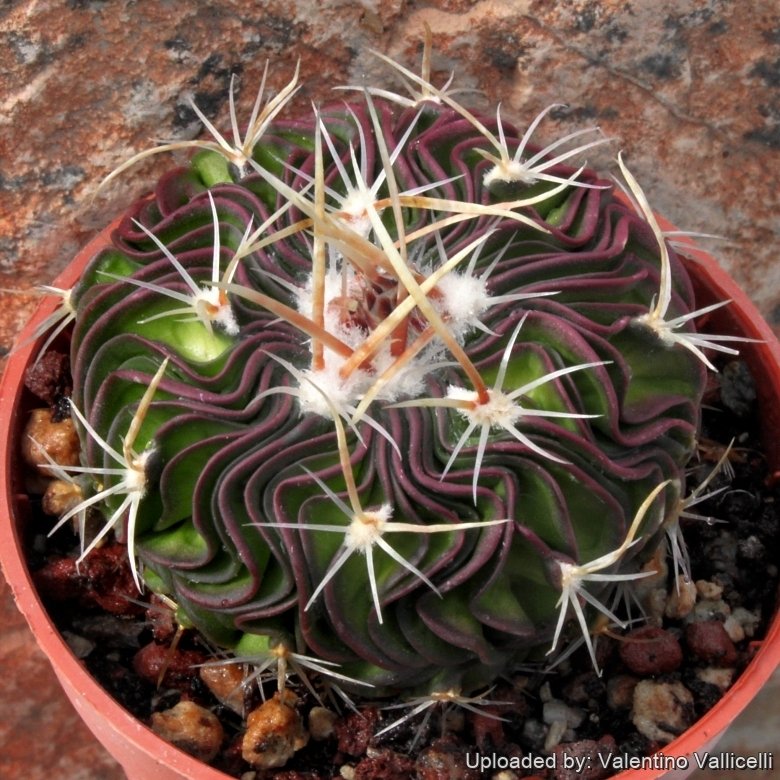
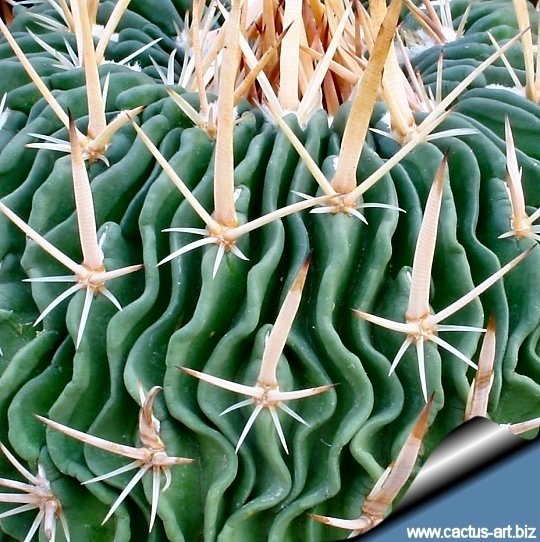
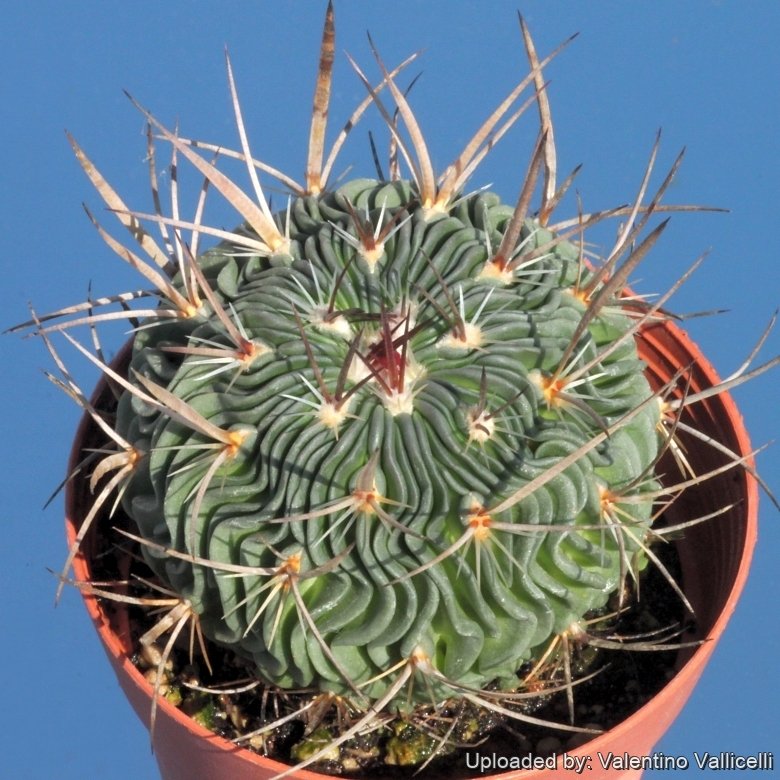
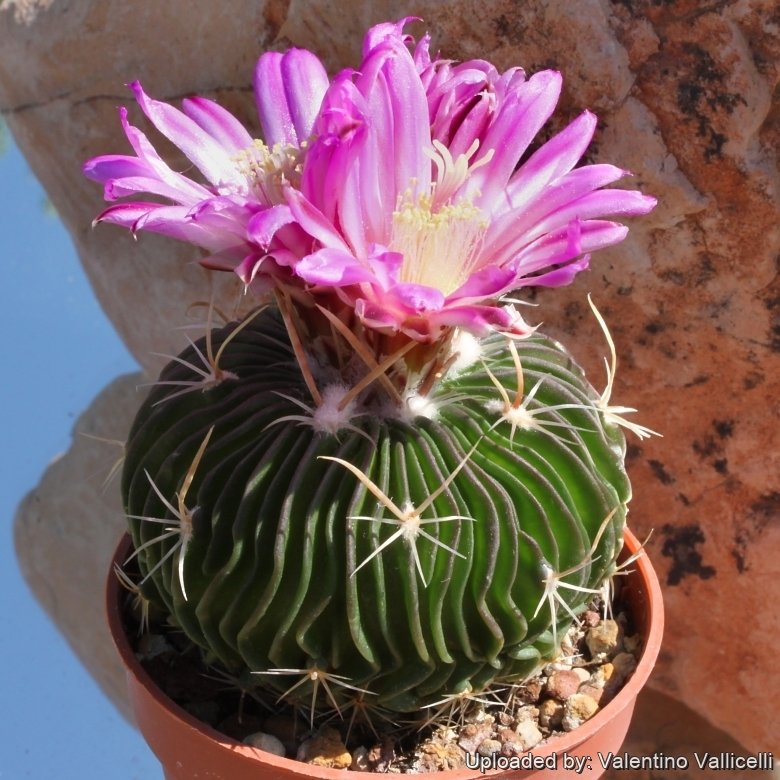
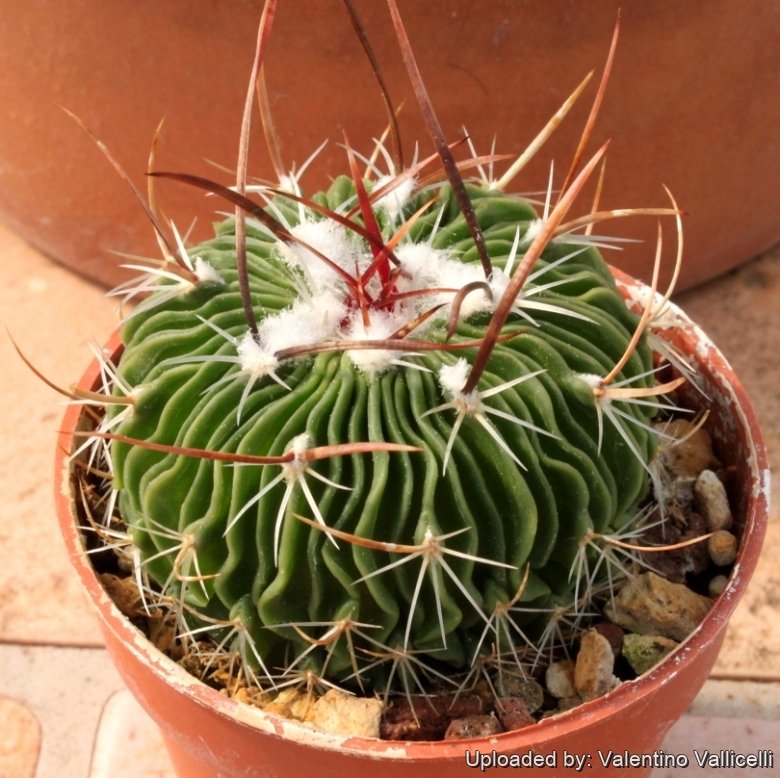
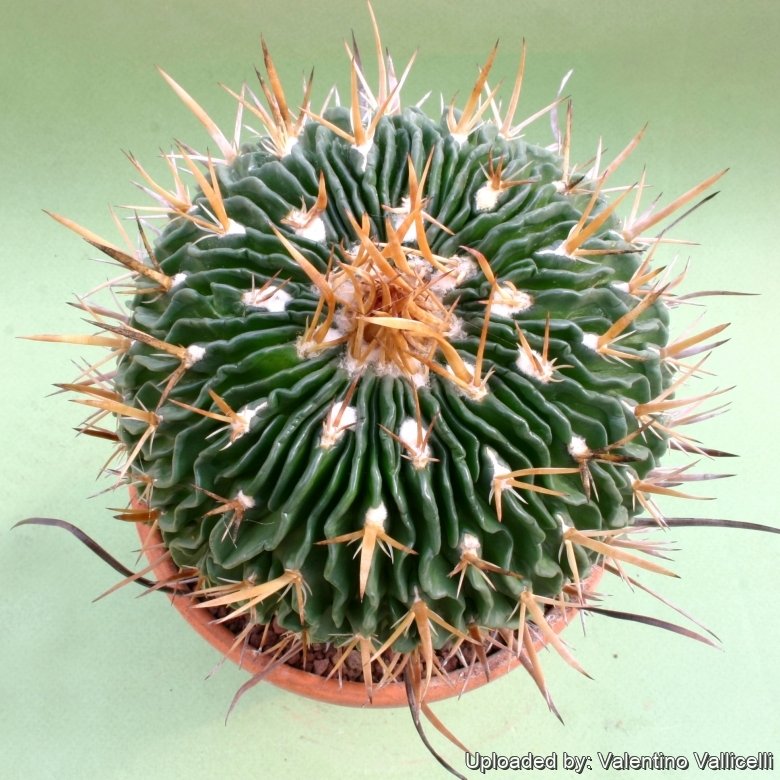
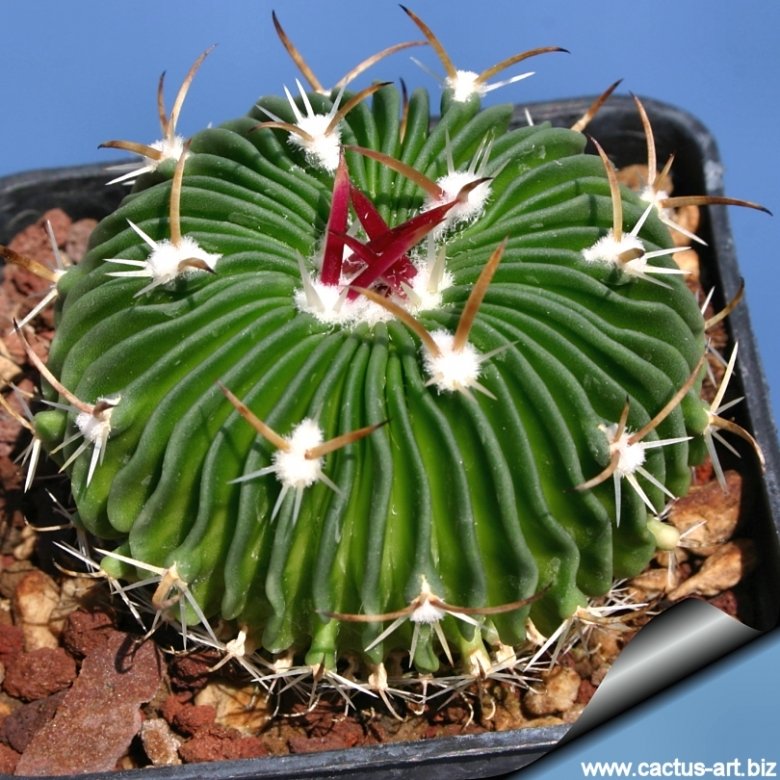
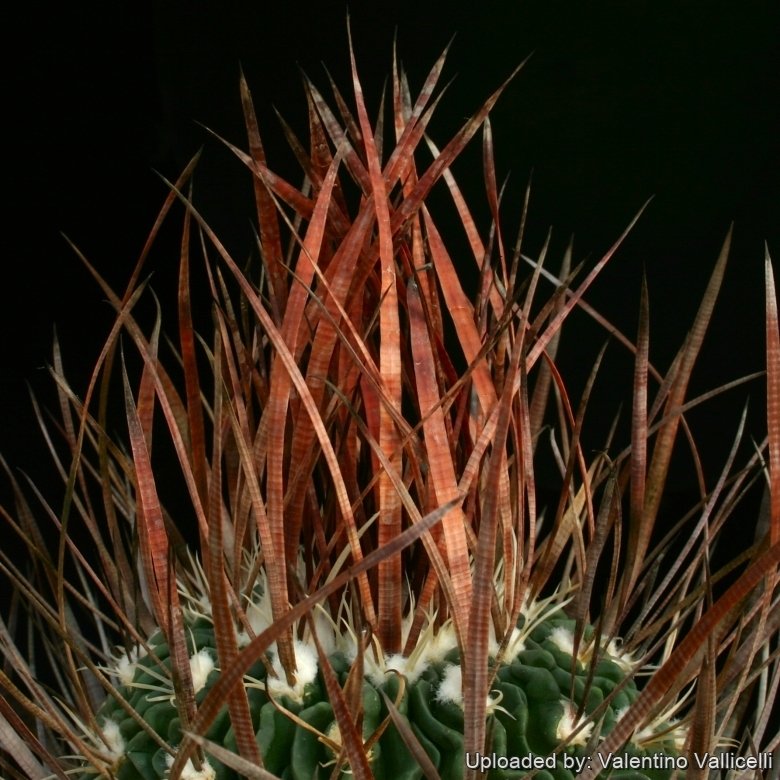
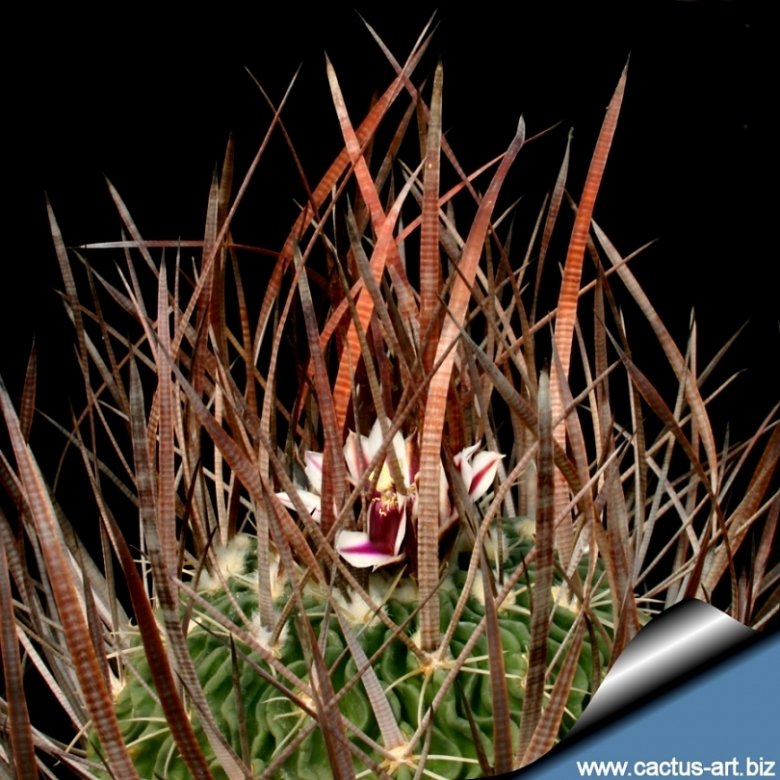
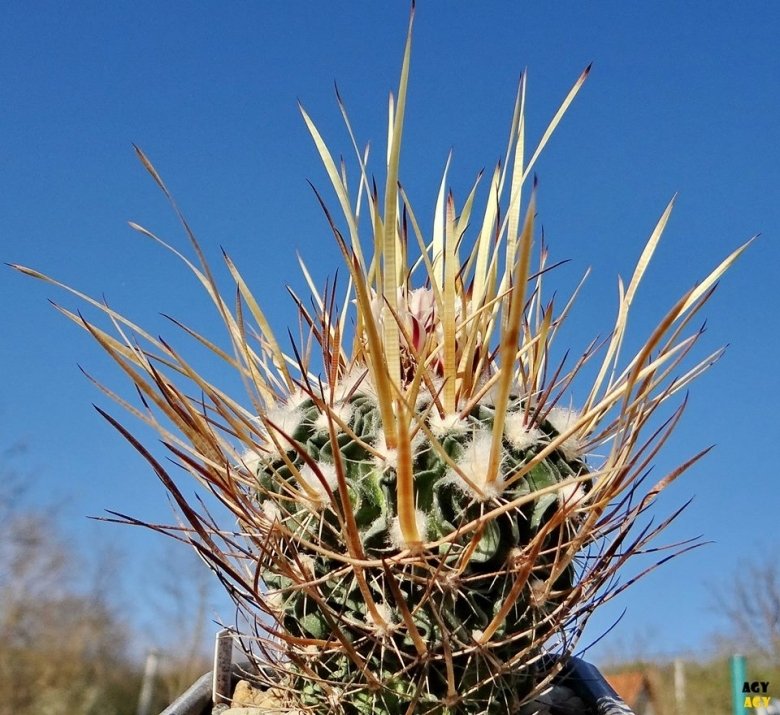
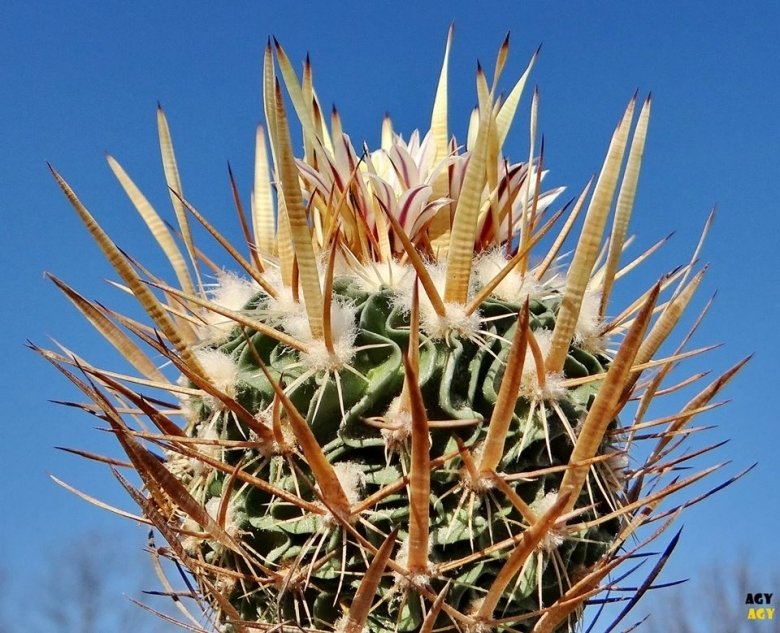
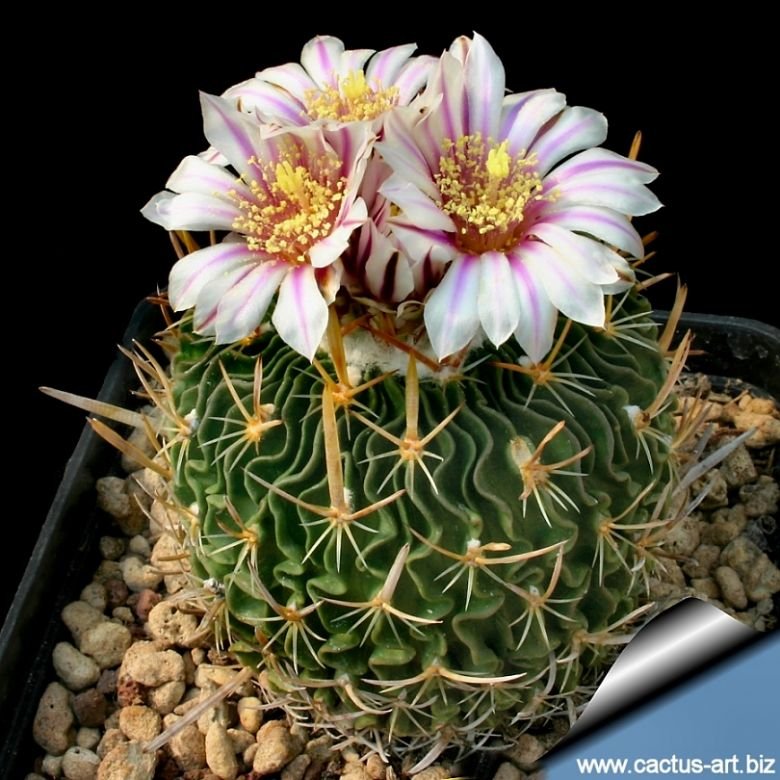
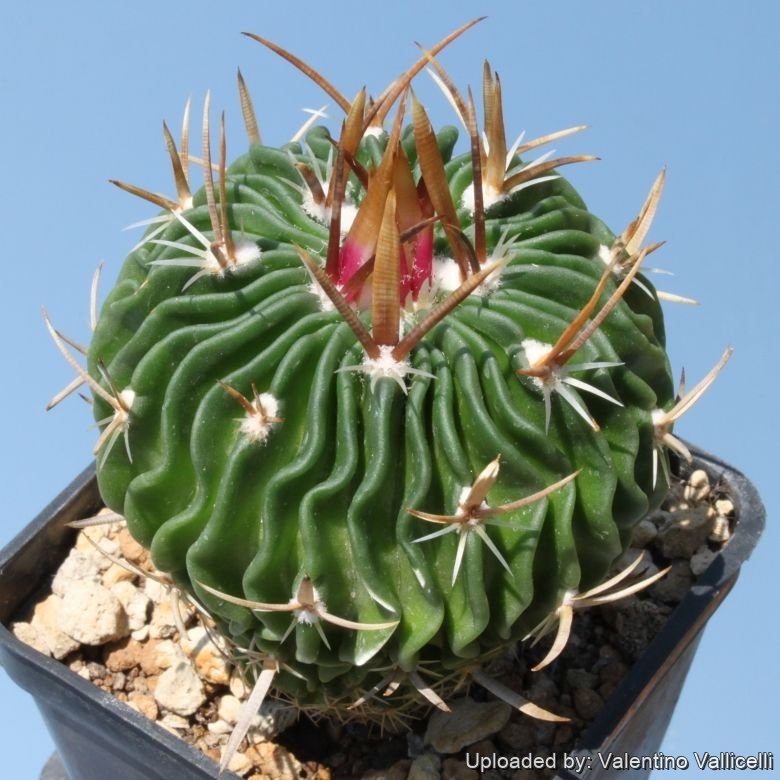
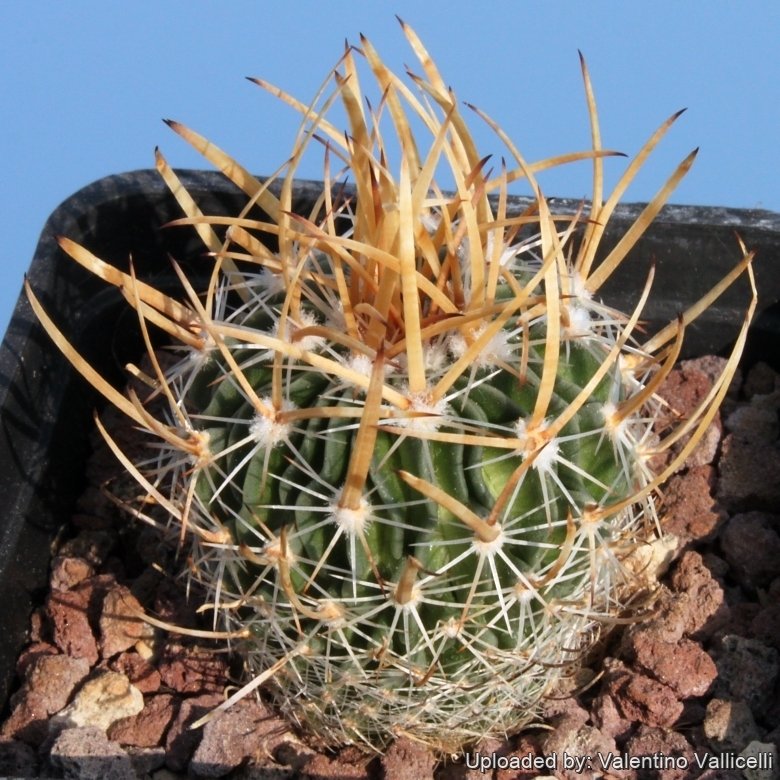
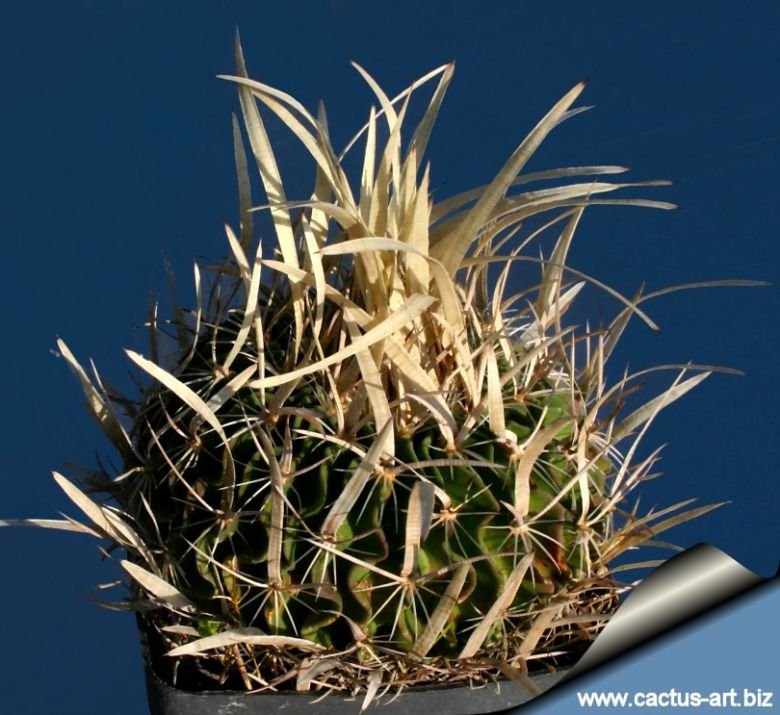
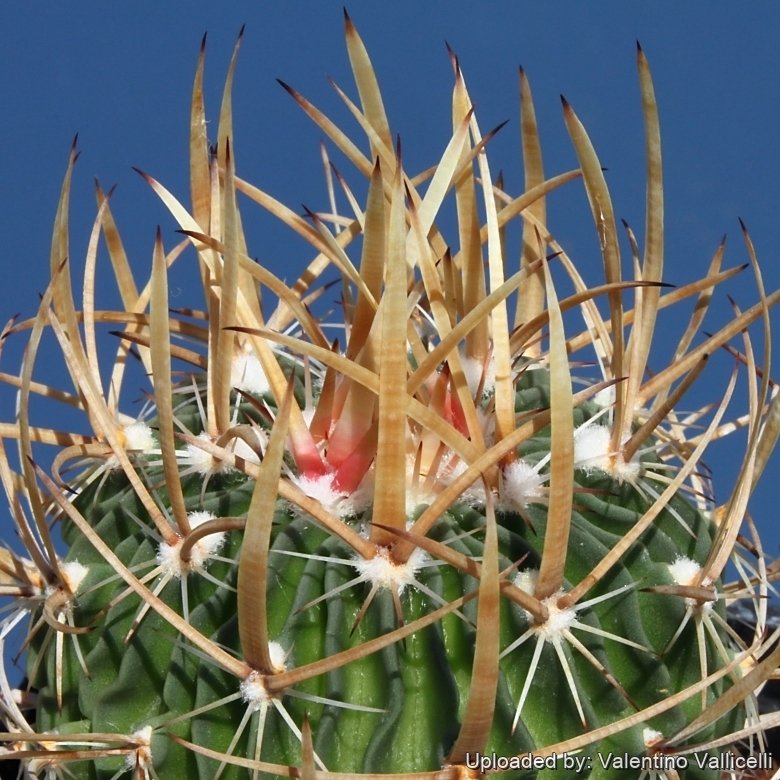
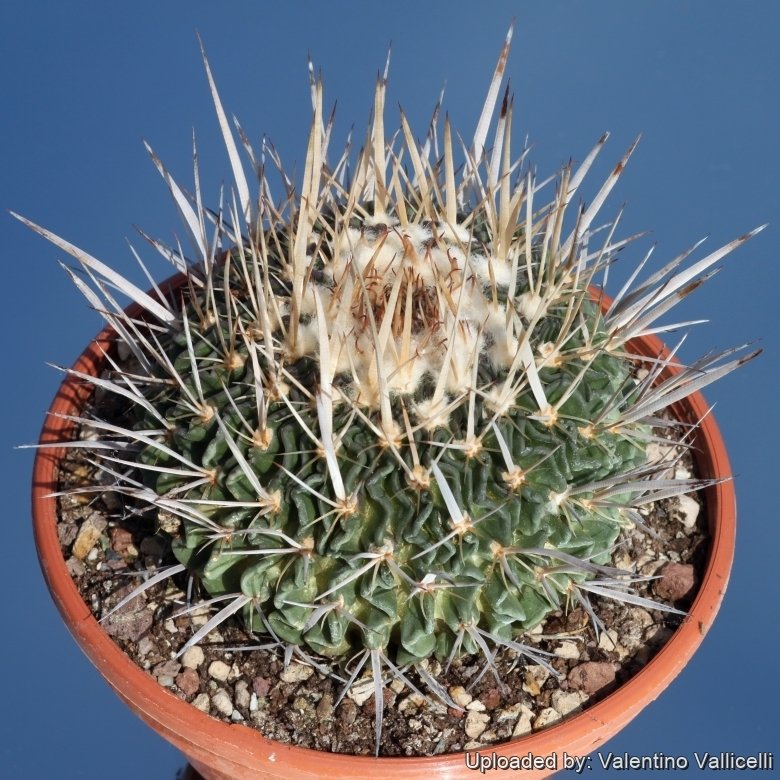
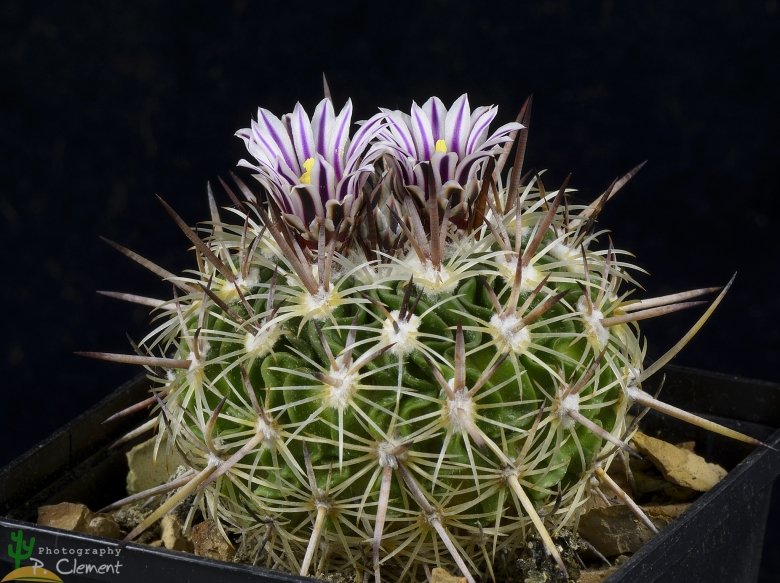
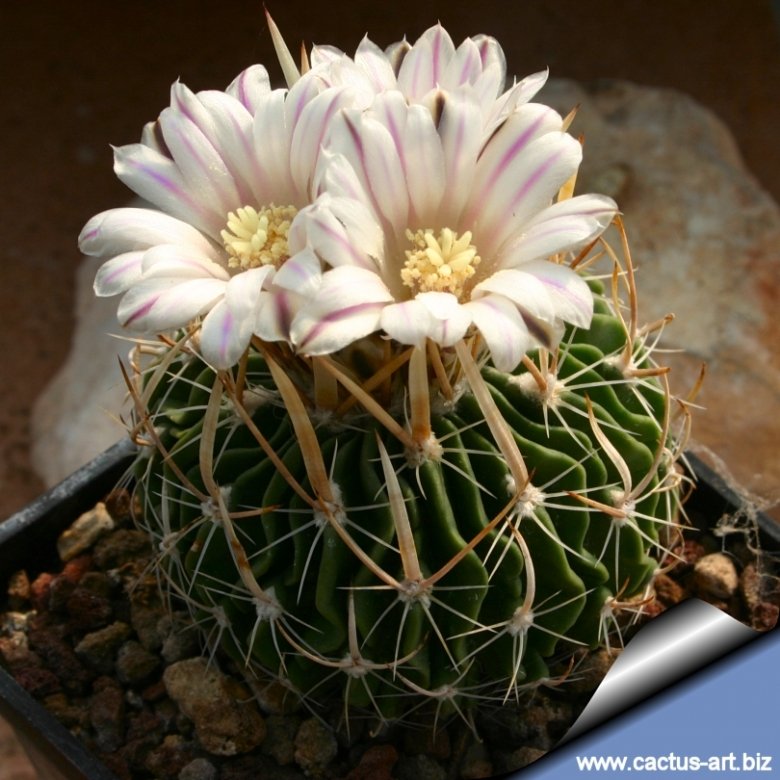
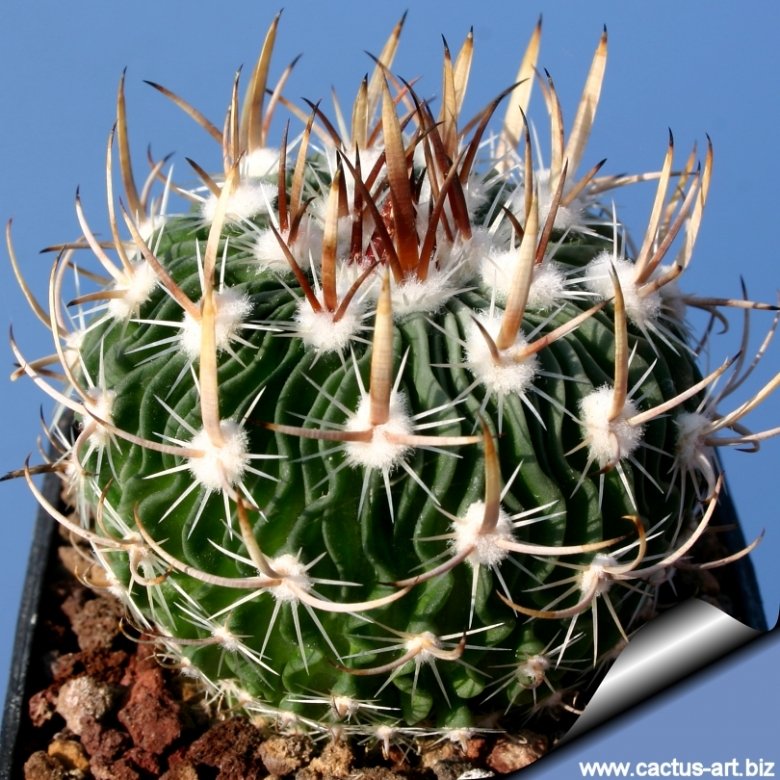
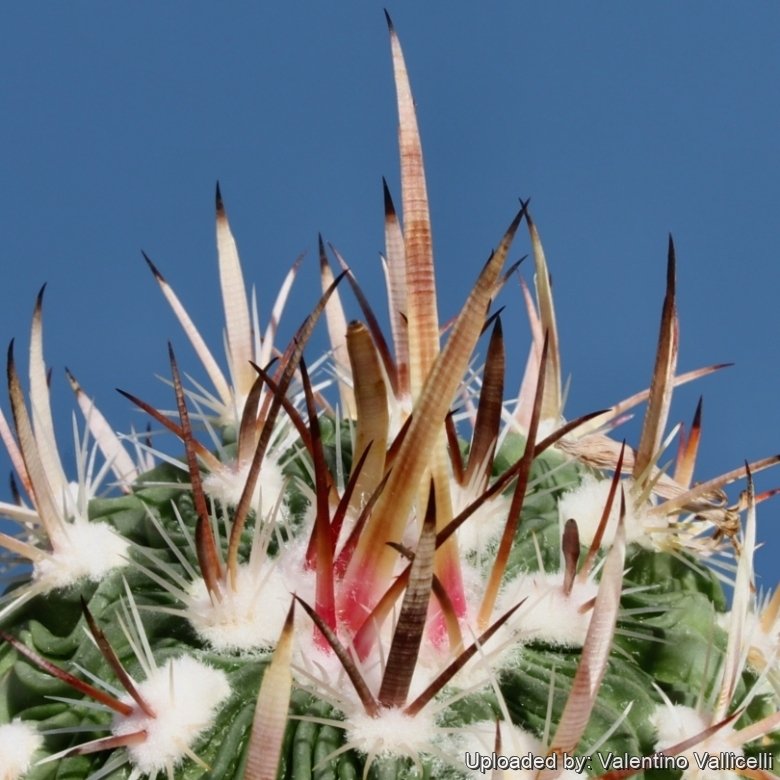
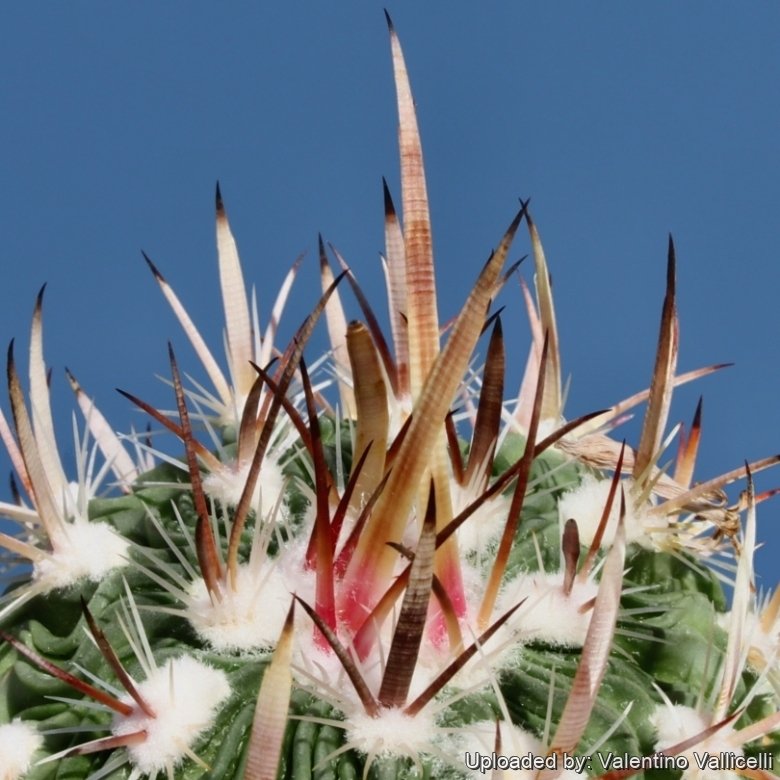
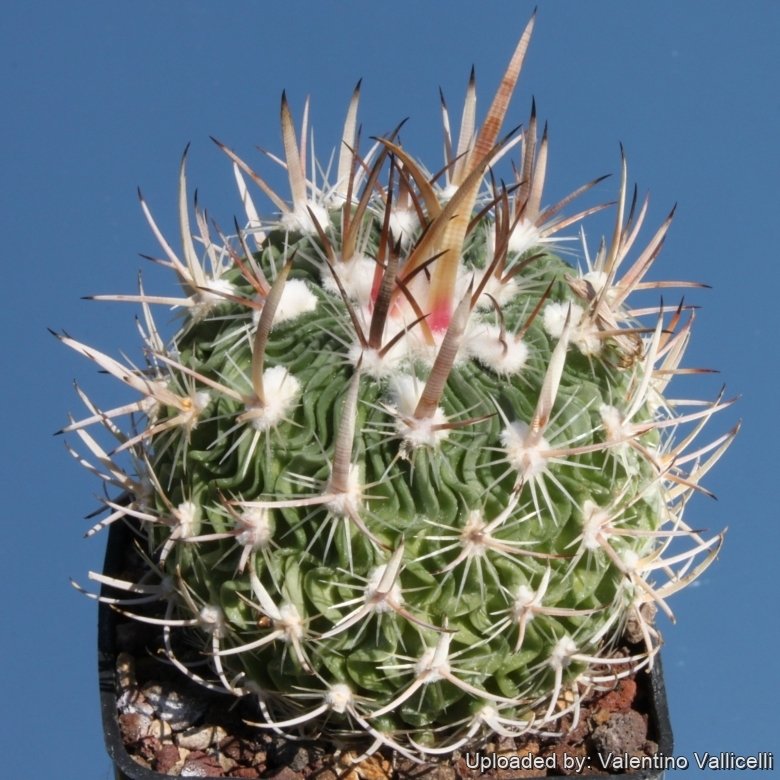
Stenocactus multicostatus more often known as Echinofossulocactus multicostatus is a low-growing cactus with a lot of narrow, very acute and straight or wavy ribs, densely pleated together giving a wrinkled look to its near globular shape, with short 6 to 18 soft flattened brownish spines, arranged crosswise, but there is a great variation among plants of different origin both in spination, body shape and number of ribs. Since the various forms are connected by intermediates it is extremely difficult to recognize infraspecific taxa.
Habit: It is simple, but sometimes forms two or more stems.
Stem: 6-15 cm wide and up to 6-12 cm tall, depressed spherical, spherical to short-cylindrical usually many-ribbed, grey-green to deep green with a flat tops .
Ribs: Many as the name implies, typically 50 to 100 (but occasionally up to 150 or more) very tight, thin, acute, wavy, very broad at the areoles.
Areoles: There are only 2 or 3 (-4) areoles in each rib, witch are covered with white felt in young plants
Radial spines: 4-6 to 9 of different lengths.
Central spines: (2-)4, upper one flattened and wide, creamy white to copper-brown, up to 5 cm long, 3-4 mm wide, lateral 2 even wider, angular, spreading, while the lower ones are shorter and point downwards.
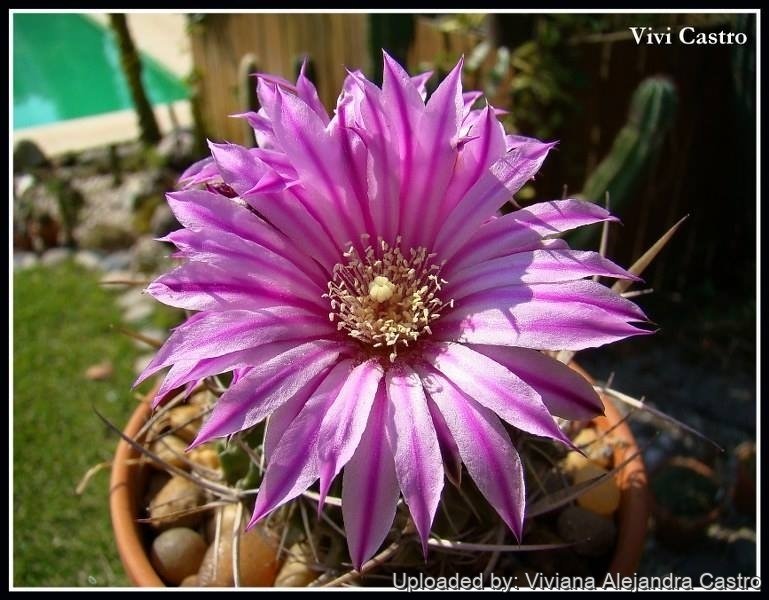
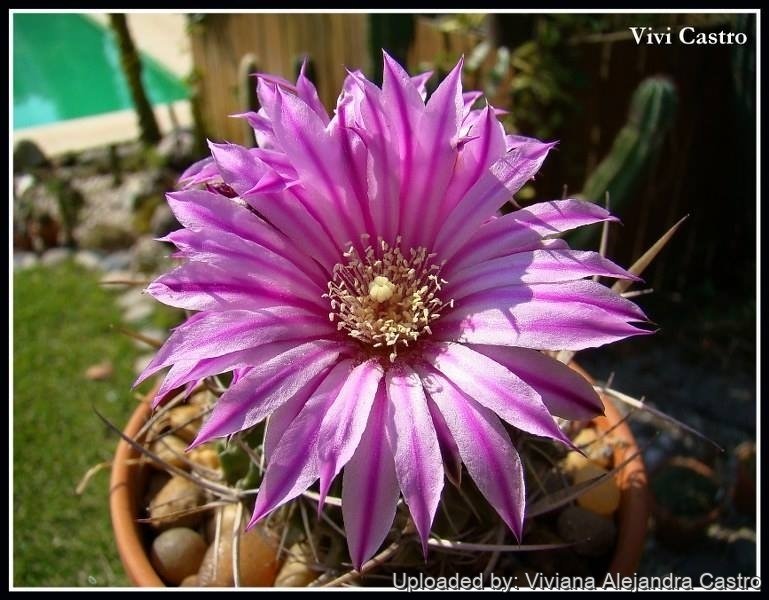
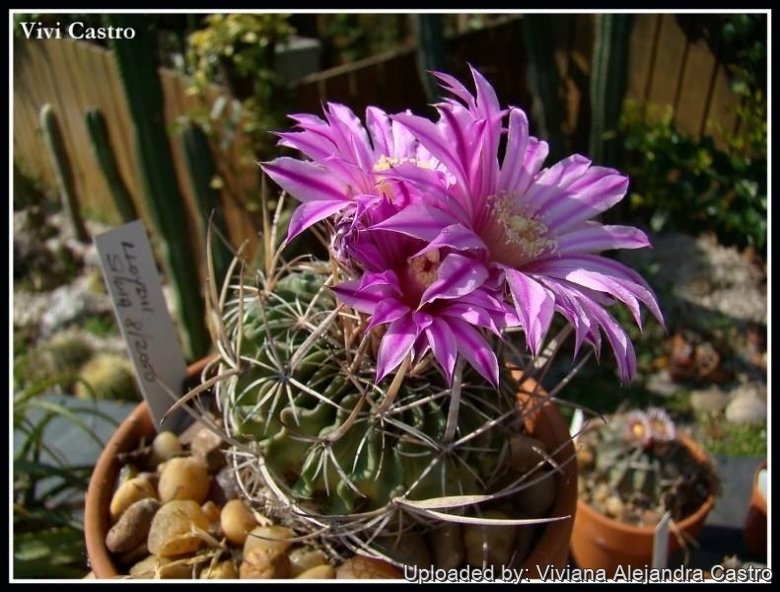
Flowers: From the plant crown, about 2,5 cm, wide, with a short tube, white, pinkish purple or violet (or rarely yellowish) with a darker violet to purple midvein in early spring.
Blooming season: Spring and summer.
Origin and Habitat
Mexico (Coahuila, Chihuahua, Durango).
Habitat: This species is native to high, dry, grassy meadowlands, during times of drought it often hides in the rocky soil.
Cultivation and Propagation
Small growing and easy to to care and flower. Because of it’s small size makes a great potted plant specimen, great for beginning collectors.
Growth rate: It is a slow growing species.
Soil: It grows well in a very draining mineral potting substrate, but it isn’t picky about soil.
Repotting: Use pot with good drainage. Eventually, as they become mature, they attain a maximum size of 20 cm. However, old plants become senile and have a tendency to succumb to disease and a weak root system. At this stage, as is well known, they die suddenly. So, after they reach 10 cm in diameter grow them slowly, and adopt a new repotting period, using intervals of every 2 - 3 years. Additionally grow them under drier conditions or with stronger sunlight.
Watering: Water regularly during the summer so long as the plant pot is allowed to drain and not sit in a tray of water (It rots easily, especially if over wet). Let dry between watering. During hot weather you may need to water the plants more frequently so long as the plant is actively growing. From late September watering should be reduced to force the plant to go in to a state of semi dormancy, by October you should be back in to the winter watering regime. If the soil is allowed to be dry for too long root loss could follow but equally the same result would occur if the plants are both wet and cold. From March onwards the plant will begin to grow and watering should be increased gradually until late May when the plant should be in full growth.
Fertilization: Feed with a high potassium fertilizer in summer. Feeding may not be necessary at all if the compost is fresh then, feed in summer only if the plant hasn’t been repotted recently. Do not feed the plants from September onwards as this can cause lush growth which can be fatal during the darker cold months.
Hardiness: When dormant, the plant is very cold tolerant (down to nearly -5° C or less), but when left out it is more sensitive to frost. During the summer it is best to keep the plants outside where the temperature can rise to over 30 C with no harm to the plant.
Exposure: They do need a lot of light to develop their typical spination, but different clones vary in their tolerance of full sunshine. However some protection in light shade is recommended during the hottest hours in summer. If kept too dark they may become overly lush and greener and could be prone to rotting due to over watering.
Uses: It is an excellent plant for container growing. It always looks good and stays small. It looks fine in a cold greenhouse and frame.
Rot: Rot it is only a minor problem with cacti if the plants are watered and “aired” correctly. If they are not, fungicides won’t help all that much.
Propagation: Seeds (usually), remembering that seedlings dislike strong light and dry conditions and need to be repotted frequently, or by the shoots of adult plants (if available). If you remove an offset, remember to let it dry for some days, letting the wound heal (cuttings planted too soon easily rot before they can grow roots). Lay it on the soil and insert the stem end partially into the substrate. Try to keep the cutting somewhat upright so that the roots are able to grow downward.
Notes
The plant of this species found in cultivation are quite variable, and the dissimilarity among seedlings spination and ribs shape may be considerable.
Bibliography
Major references and further lectures
-
Edward Anderson “The Cactus family” Timber Press, Incorporated, 2001
-
James Cullen, Sabina G. Knees, H. Suzanne Cubey “The European Garden Flora Flowering Plants: A Manual for the Identification of Plants Cultivated in Europe, Both Out-of-Doors and Under Glass” Cambridge University Press, 11/Aug/2011
-
David R Hunt; Nigel P Taylor; Graham Charles; International Cactaceae Systematics Group. “The New Cactus Lexicon” dh books, 2006Jackie M. Poole, William R. Carr, Dana M. Price, Jason R. Singhurst “Rare plants of Texas: a field guide” Texas A&M University Press, 30/Dec/2007
-
John Borg “Cacti: a gardener’s handbook for their identification and cultivation” Blandford P., 1970
-
Nathaniel Lord Britton, Joseph Nelson Rose “Cactaceae: Descriptions and Illustrations of Plants of the Cactus Family” Copertina anteriore Courier Dover Publications, 1963
-
Willy Cullmann “Kakteen: Einführung in die Kakteenkunde und Anleitung zu erfolgreicher Kakteenkultur” E. Ulmer, 1972
-
Philip Perl “Cacti and Succulents” Time-Life, Incorporated, 01/Jun/1978
From llifle page Brittonrosea lloydii
Description
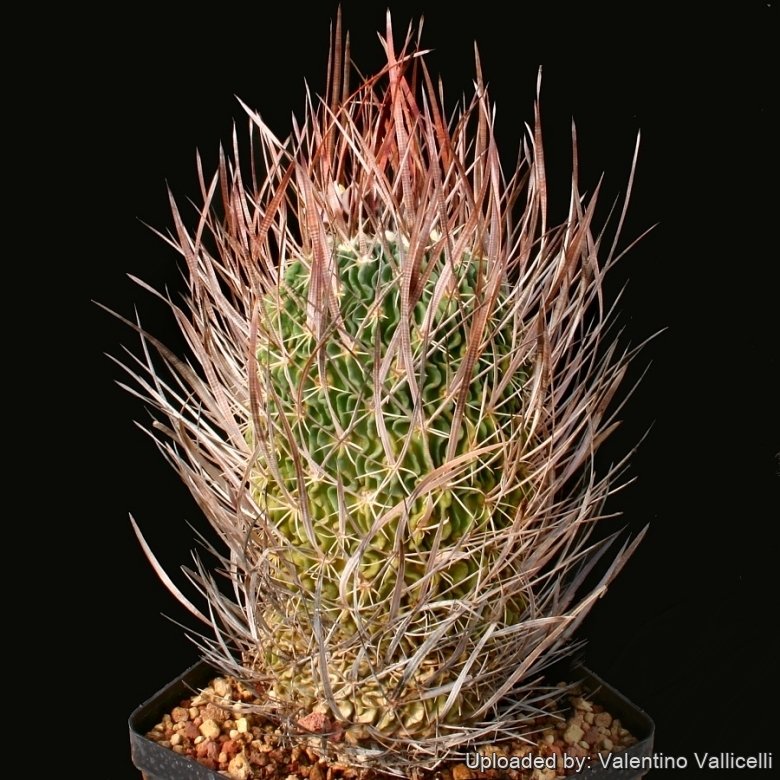
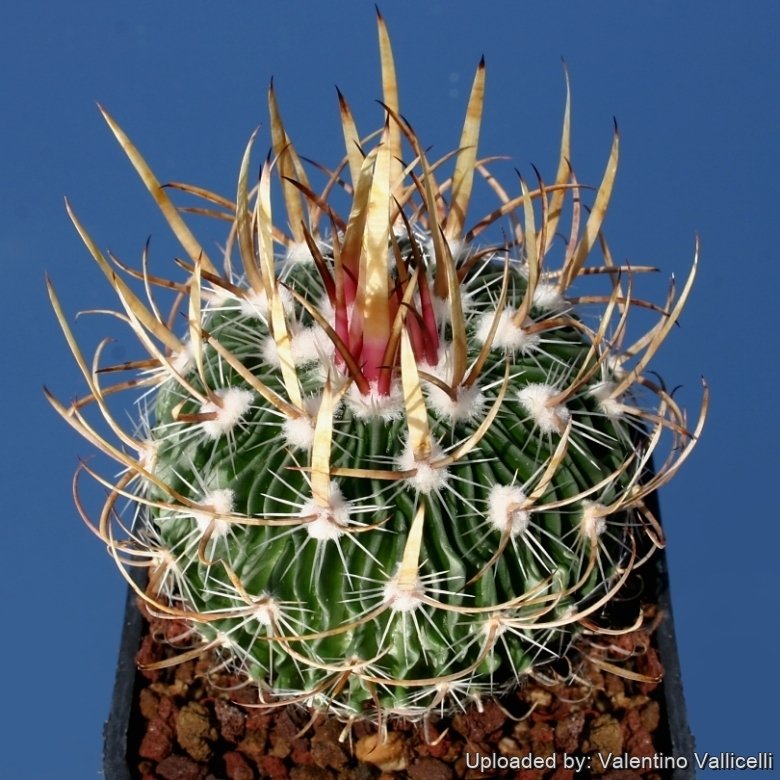
Stenocactus lloydii (Echinofossulocactus lloydii) is one of the many forms of the extremely variable Stenocactus multicostatus with (usually) characteristic long white to dark red papery spines and multiple, very tight, thin and wavy ribs. Flowers varies from white to purple and are almost concealed among the spines, however “lloydii” and “multicostatus” are considered part of a multiform species, where each form is linked to others by populations of plants with intermediate characteristics. In accordance with the variability of the species the “lloydii” subspecies is invalid and nowadays considered as a synonym.
Stems: Solitary, globose, vivid green with a flat tops 8-15 cm wide and up to 7-20 cm tall, typically with 50 to 100 multiple, very tight, thin, wavy ribs
Areoles: Areoles are covered with white felt in young plants,
Spines: 6 to 9 radial spines, the upper ones are longer whit a central stout and flat erected spine up to 7cm long, while the lower ones are shorter and point downwards. The spines are different lengths.
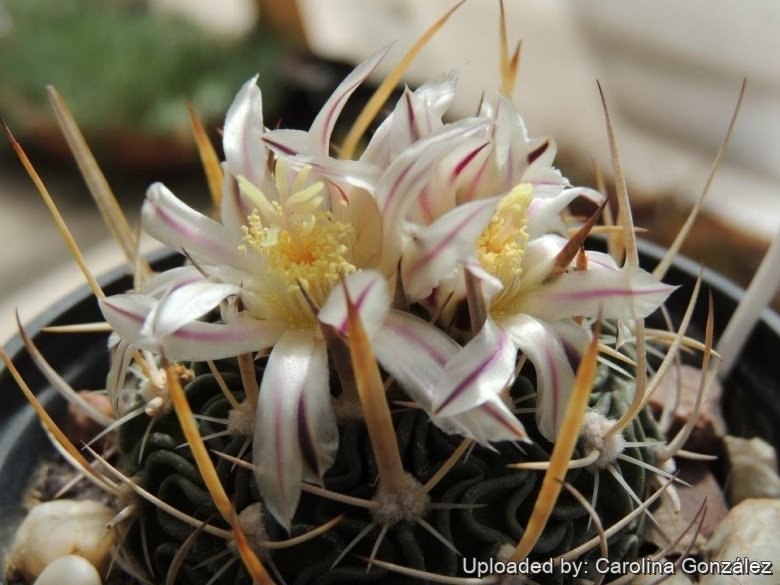
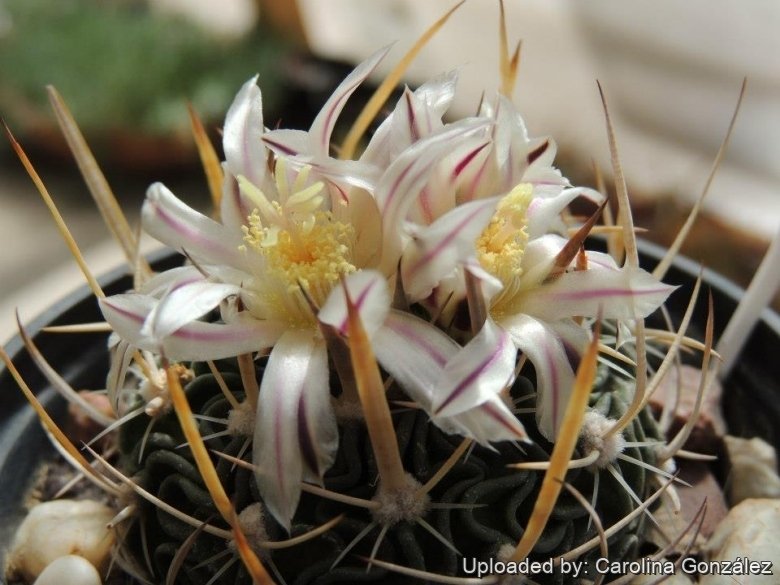
Flowers: The blooms are white, pink or purple with a violet to darker purple midvien.
Blooming season: Early spring, and occasionally during the growing season through autumn.
Remarks: They are commonly called wave or brain cacti because of their crinkly appearance.
Origin and Habitat
Mexico (Coahuila, Chihuahua, Durango).
Cultivation and Propagation
Small growing and easy to to care and flower. Because of it’s small size makes a great potted plant specimen, great for beginning collectors.
Growth rate: It is a slow growing species.
Soil: It grows well in a very draining mineral potting substrate, but it isn’t picky about soil.
Repotting: Use pot with good drainage. Eventually, as they become mature, they attain a maximum size of 8-10 cm (20) cm. However, old plants become senile and have a tendency to succumb to disease and a weak root system. At this stage, as is well known, they die suddenly. So, after they reach 10 cm in diameter grow them slowly, and adopt a new repotting period, using intervals of every 2 - 3 years. Additionally grow them under drier conditions or with stronger sunlight.
Watering: During the summer it enjoys average watering, but do not overwater (It rots easily, especially if over wet) allow to dry between watering. Watering should be curtailed during the winter months..
Fertilization: Feed with a high potassium fertilizer in summer.
Hardiness: When dormant, the plant is very cold tolerant (down to nearly -5° C or less), but when left out it is more sensitive to frost.
Exposure: They do need a lot of light to develop their typical spination, but different clones vary in their tolerance of full sunshine. However some protection in light shade is recommended during the hottest hours in summer.
Uses: It is an excellent plant for container growing. It always looks good and stays small. It looks fine in a cold greenhouse and frame.
Rot: Rot it is only a minor problem with cacti if the plants are watered and “aired” correctly. If they are not, fungicides won’t help all that much.
Propagation: Seeds (usually), remembering that seedlings dislike strong light and dry conditions and need to be repotted frequently, or by the shoots of adult plants (if available). If you remove an offset, remember to let it dry for some days, letting the wound heal (cuttings planted too soon easily rot before they can grow roots). Lay it on the soil and insert the stem end partially into the substrate. Try to keep the cutting somewhat upright so that the roots are able to grow downward.
Bibliography
Major references and further lectures
-
Edward Anderson “The Cactus family” Timber Press, Incorporated, 2001
-
James Cullen, Sabina G. Knees, H. Suzanne Cubey “The European Garden Flora Flowering Plants: A Manual for the Identification of Plants Cultivated in Europe, Both Out-of-Doors and Under Glass”} Cambridge University Press, 11/Aug/2011
-
David R Hunt; Nigel P Taylor; Graham Charles; International Cactaceae Systematics Group. “The New Cactus Lexicon” dh books, 2006
Source: Brittonrosea lloydii, LLIFLE - Encyclopedia of living forms, CC-BY-SA, retrieved 2026-10-25.
From llifle page Echinofossulocactus erectocentrus
Description
Echinofossulocactus erectocentrus (Stenocactus) is a quite variable plant and the dissimilarity among seedlings spination and ribs shape may be considerable. According to Anderson, E. erectocentrus was not a validly published name,
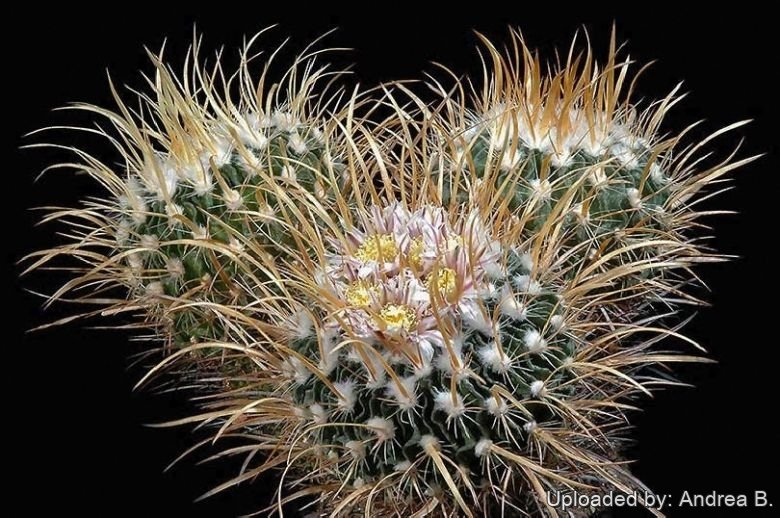
nom.nud. (not a name at all although it keeps cropping up on labels), and he refers plants with this name under the Stenocactus multicostatus group-complex. However the two are easy to tell apart. S. multicostatus plants have short (no more than 3 cm) or very thin and flimsy spines, and the plants have few areoles and many ribs (as many as 120) where E. erectocentrus typically has 43 or fewer. On E. erectocentrus the long, flexible spines (to 13 cm) come up and close over the top of the plant. It produces whitish flowers with purple midvien in early spring.
Stems: Solitary, globose, vivid green with a flat tops 8-15cm wide and up to 7-12 cm tall, typically with less than 43, very tight, thin, wavy ribs
Areoles: There are only 2 or 3 areoles in each rib, witch are covered with white felt in young plants.
Spines: 6 to 9 radial spines, the upper ones are longer with a stout, flat, erected central spine sometime up to 13 cm long, while the lower ones are shorter and point downwards. The spines are different lengths.
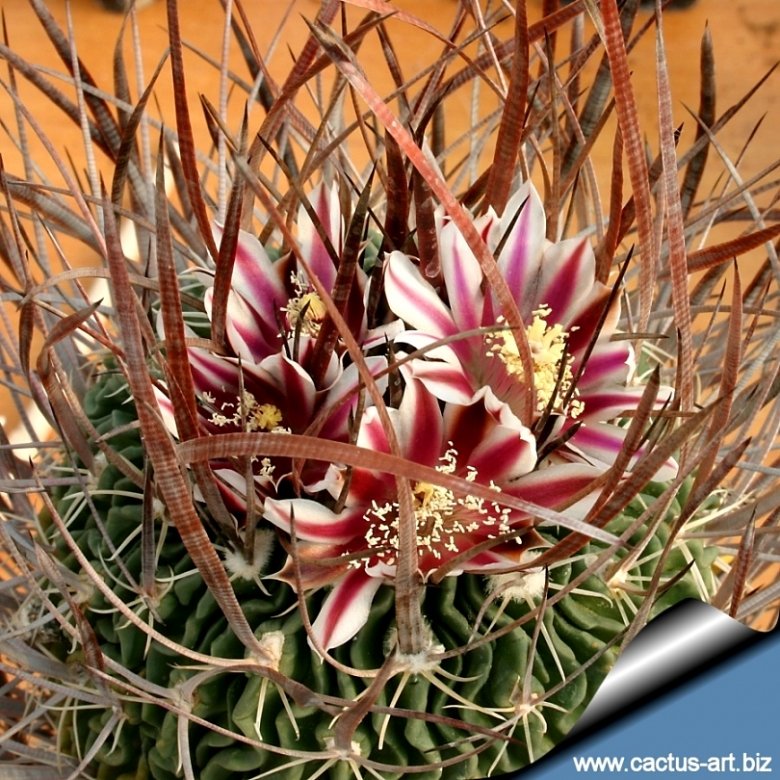
Flowers: Flower buds are set in late fall and are held in the dense wool of the stem’s apex, often with just the tips visible until mid-winter, when some sunny days come along and both the buds and plant start to grow. The plant will throw quite a few buds in early spring and open several 3 cm flowers at a time over the course of a month. If the conditions are right it can bloom again later in the year. And once flowering is complete the spines close up over the stem tip again. The blooms are white with a violet to purple midvien.
Echinofossulotattus erectocentrus SB116 Emilio Zapata, Nuevo Leon, Mexico: This form of E. erectocentrus has central spines that are all about 3 cm long, but still they want to close over the growing point of the plant.
Origin and Habitat
Mexico (Coahuila, Chihuahua, Durango ? )
Cultivation and Propagation
Small growing and easy to to care and flower. Because of it’s small size makes a great potted plant specimen, great for beginning collectors.
Growth rate: It is a slow growing species.
Soil: It grows well in a very draining mineral potting substrate, but it isn’t picky about soil.
Repotting: Use pot with good drainage.
Watering: During the summer it enjoys average watering, but do not overwater (It rots easily, especially if over wet) allow to dry between watering. Watering should be curtailed during the winter months..
Fertilization: Feed with a high potassium fertilizer in summer.
Hardiness: When dormant, the plant is very cold tolerant (down to nearly -5° C or less), but when left out it is more sensitive to frost.
Exposure: They do need a lot of light to develop their typical spination, but different clones vary in their tolerance of full sunshine. However some protection in light shade is recommended during the hottest hours in summer.
Uses: It is an excellent plant for container growing. It always looks good and stays small. It looks fine in a cold greenhouse and frame.
Rot: Rot it is only a minor problem with cacti if the plants are watered and “aired” correctly. If they are not, fungicides won’t help all that much.
Propagation: Seeds (usually) or by the shoots of adult plants (if available). If you remove an offset, remember to let it dry for some days, letting the wound heal (cuttings planted too soon easily rot before they can grow roots). Lay it on the soil and insert the stem end partially into the substrate. Try to keep the cutting somewhat upright so that the roots are able to grow downward.
Notes
The stenocati are commonly called wave or brain cacti because of their crinkly appearance. Because the undulating ribs on this small, spherical cactus are so numerous (and so closely spaced most of what you see is the wavy brain-like.
Bibliography
Major references and further lectures
-
Edward F. Anderson “The Cactus Family” Timber Press, 2001
-
Echinofossulocactus erectocentrus in: Cactus and Succulent Journal, Volume 80(1-6): 258, 2008
Source: Echinofossulocactus erectocentrus, LLIFLE - Encyclopedia of living forms, CC-BY-SA, retrieved 2026-10-25.
From llifle page Brittonrosea zacatecasensis
Description
Stenocactus multicostatus subs. zacatecasensis (Echinofossulocactus zacatecasensis), is a globular cactus with several densely packed, sharp, wavy ribs and three brownish, not annulate central spines of which the middle one is flat. It is generally included within (as a synonym of) Stenocactus multicostatus, suggesting that there is not really a fundamental difference between the two. It has flowers nearly white or with a pink mid-vein and the apex of the plant umbilicate. However the distinguishing characteristics of this plant, appear to fall within the natural variation of Stenocactus multicostatus and most authors have dismissed it as perhaps not worthy of even varietal status, but it still has a value for a collector because they identify plants with particular characters.
Derivation of specific name: “zacatecasensis” for the occurrence in the State of Zacatecas, Mexico.
Stem: Solitary, globose, pale green with an umbilicate top, 8-10 cm wide and tall.
Ribs: About 55, wavy, tight and very thin.
Areoles: Covered with white felt in young plants.
Radial spines: 10 to 12,acicular, white, 8-10 mm long radiating usually cream-white.
Central spines: 3, brownish, 2 of them terete, but the middle one flattened, erect or connivent, longer than the other 2, sometimes 3 to 4 cm (or more) long, never annulate.
Flowers: 3-4 centimetres broad, nearly white or with a pink mid-vein. Inner perianth-segments linear-oblong, with an ovate apiculate tip, slightly tinged with lavender, 15 mm long. Style slender. Stigma-lobes bifid. Scales on the ovary broadly ovate, apiculate, scarious.
Blooming season: Early spring.
Origin and Habitat
Mexico (north Zacatecas).
Cultivation and Propagation
Small growing and easy to to care and flower. Because of it’s small size makes a great potted plant specimen, great for beginning collectors. It needs regular cacti soil with good drainage. Propagation: Seeds (usually) or by the shoots of adult plants (if available). Exposure: need some direct sun but is tolerant and prefers light shade during the hot Summer months, allow to dry between watering. Watering should be curtailed during the winter months. Frost Tolerance (-6 to -4°C) depending on the form.
Propagation: By seeds, remembering that seedlings dislike strong light and dry conditions and need to be repotted frequently. Eventually, as they become mature, they attain a maximum size of 8-10 cm (20) cm. However, old plants become senile and have a tendency to succumb to disease and a weak root system. At this stage, as is well known, they die suddenly. So, after they reach 10 cm in diameter grow them slowly, and adopt a new repotting period, using intervals of every 2 - 3 years. Additionally grow them under drier conditions or with stronger sunlight.
Bibliography
Major references and further lectures
-
Nathaniel Lord Britton, Joseph Nelson Rose “The Cactaceae: Descriptions and Illustrations of Plants of the Cactus Family” Volume 3, 1922
-
Rob Herwig “2850 house and garden plants” Crescent Books, 1986
Source: Brittonrosea zacatecasensis, LLIFLE - Encyclopedia of living forms, CC-BY-SA, retrieved 2026-10-25.
Cultivars and forms (4)
Subspecies (1)
Other names (1)
Gallery