Description
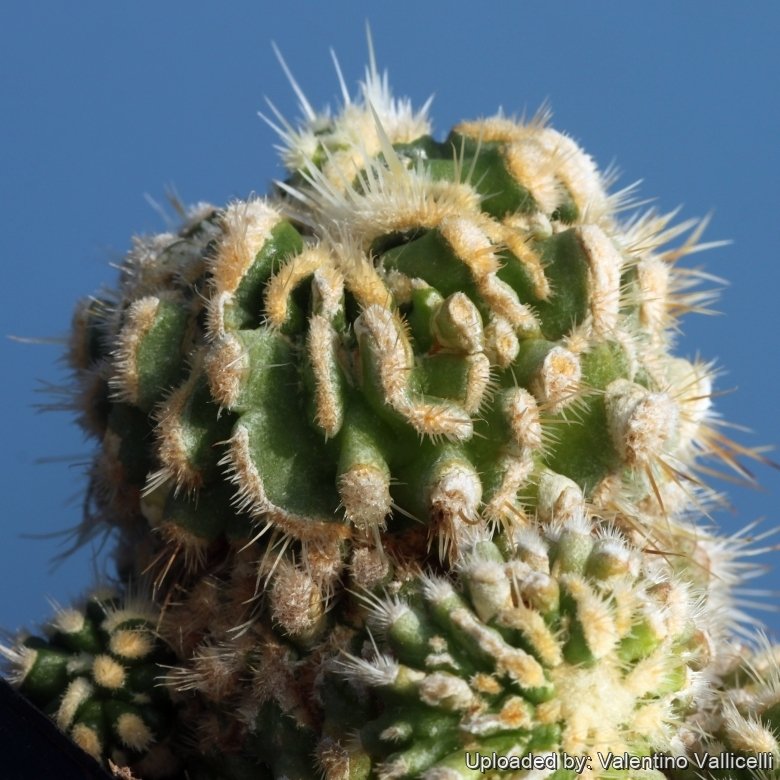
This is a special monstrous form of Stenocactus multicostatus that cluster profusely forming dense succulent groups up to 20 cm tall and in diameter.
Stem: Fresh green, compact with concave woolly apex, up to 20 cm tall, 4-7 cm in diameter, branching freely from the base and on the sides.
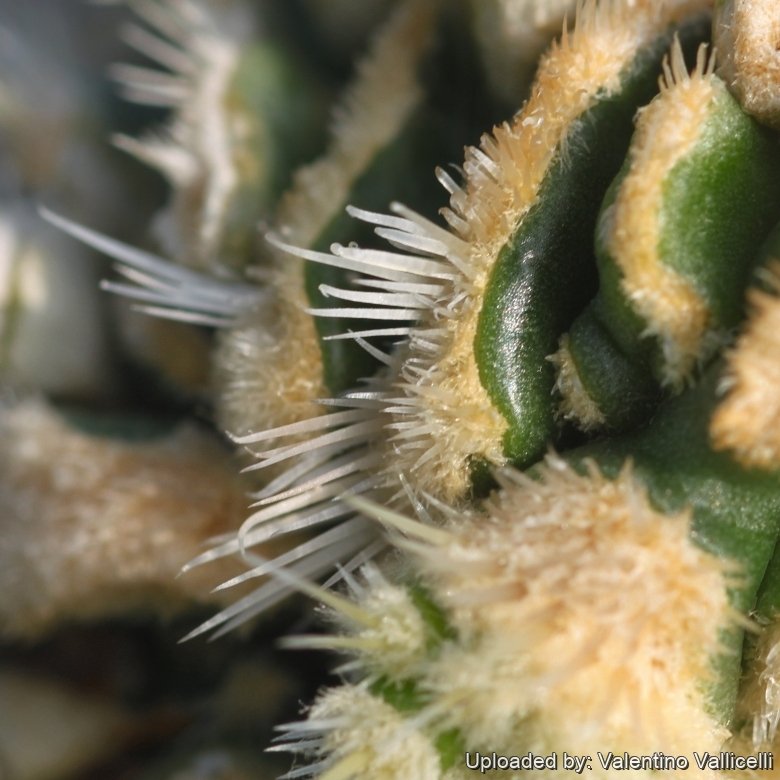
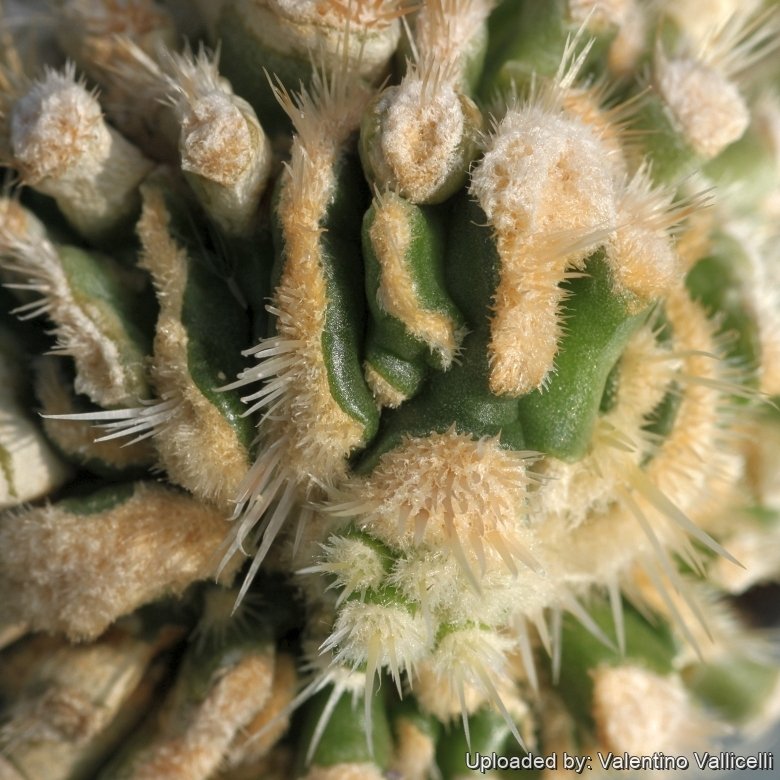
Ribs: Divided in 3-25 long, thin, laterally flattened tubercles, elongated and irregularly arranged in vertical rows.
Areoles: Variable in shape, more or less fused forming vertical lines 0,5-2 cm long, with abundant creamy felt.
Spines: Forming vertical comb-like lines following the areoles shape or more or less irregularly spreading, 1-8 mm long, fine, subulate, straight or contorted, glassy-white when young turning pale-brownish colour as they ages.
Flowers & fruits Not known.
Origin and Habitat
Garden origin (Nursery produced cultivar)
Cultivation and Propagation
It is a fairly easy plant to grow both grafted or in its own roots.
Soil: Furnish good drainage and use a an open and free draining mineral compost that allows therefore roots to breath.
Water: They like only a short winter’s rest and should be kept almost completely dry during the winter months, If the soil is allowed to be dry for too long root loss could follow but equally the same result would occur if the plants are both wet and cold. From March onwards the plant will begin to grow and watering should be increased gradually until late May when the plant should be in full growth. Water regularly during the summer so long as the plant pot is allowed to drain and not sit in a tray of water. During hot weather you may need to water the plants more frequently so long as the plant is actively growing. From late September watering should be reduced to force the plant to go in to a state of semi dormancy, by October you should be back in to the winter watering regime.
Exposure: It needs full sun avoiding only the harshest summer sun, if kept too dark it may become overly lush and greener and could be prone to rotting due to over watering.
Fertilization: Feeding may not be necessary at all if the compost is fresh then, feed in summer only if the plant hasn’t been repotted recently. Do not feed the plants from September onwards as this can cause lush growth which can be fatal during the darker cold months.
Hardiness: It is hardy to light frost for very short periods, but if temperatures regularly fall below 2° C, the plant should be grown in a container for moving into a cold protected area. As an indoor plant ensures a minimum temperature in winter of 5 °C.
Maintenance: They should be re-potted frequently until they attain their desired size.
Pests & diseases: It is especially susceptible to spider mite mealybugs and scales infestation.
Propagation: By vegetative propagation grafting or stem cuttings from adult plants. The best time for either method is in the late spring to summer.