Publication: Cactus (Paris) no. 38: 250. 1953
Description
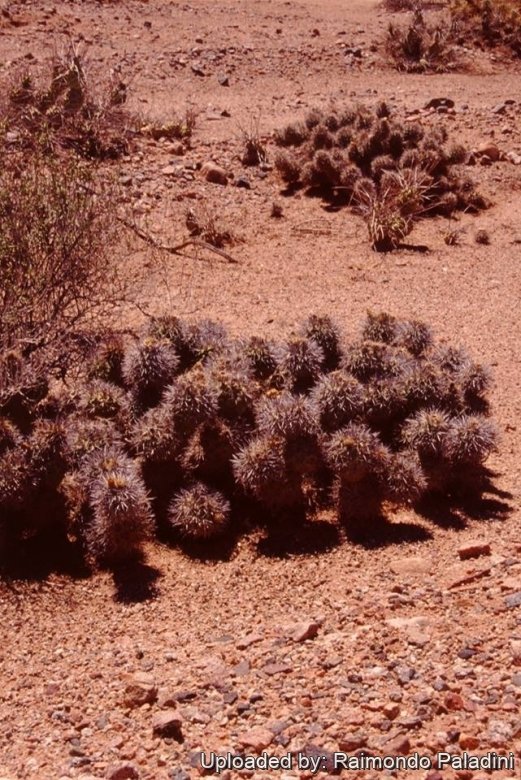
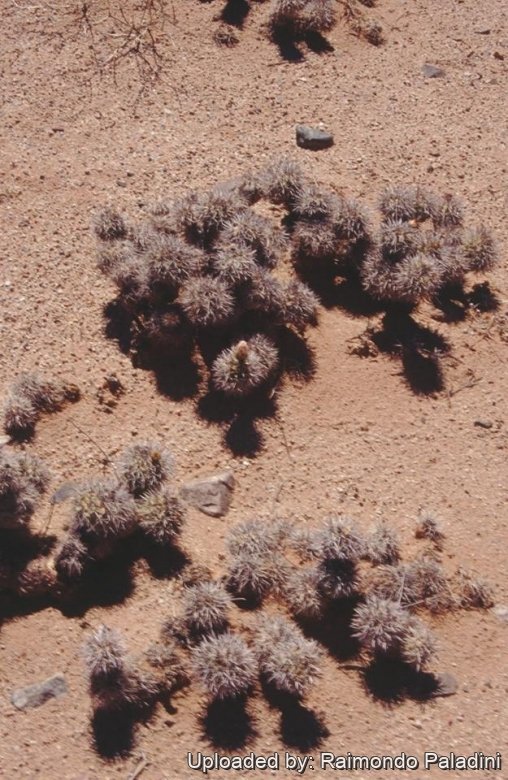
Tephrocactus alexanderi var. bruchii is generally included within (as a synonym of) Tephrocactus alexanderi, suggesting that there is not really a fundamental difference between the two, and hard to name accurately without knowing where they come from, and there remains a considerable confusion surrounding the true identity of this this plant. Tephrocactus alexanderi var. bruchii has roundish joints the size of a tennis ball, dark spreading-spines and beautiful white flowers, sometimes a well-defined pink-blue tint. The seeds are quite characteristic about 5,9-8.5 x 5.6 to 7.1 mm yellowish-white, sponge-like, highly irregular in shape and gnarled. Seeds vary considerably in size. However the distinguishing characteristics of var. bruchii , appear to fall within the natural variation of Tephrocactus alexanderi. Most authors have dismissed Tephrocactus alexanderi var. bruchii as perhaps not worthy of even varietal status, but it still has a value for a collector because they identify plants with particular characters.
For more details see: Tephrocactus alexanderi.
Origin and Habitat
Argentina (San Juan and La Rioja)
Altitude range: 600-2250 metres above sea level.
Habitat and ecology: This species grows and blooms in a very dry environment on rocky soil, where few other plants can survive. Tephrocactus alexanderi var. bruchii and Trichocereus pasacana often grew nearby.
Cultivation and Propagation
Tephrocactus alexanderi var. bruchii is susceptible to overwatering, but need enough water during the growing season. This mountain cactus - because of the elongated fat taproot - necessitate deep pots and a well drained mineral potting mix. It prefers a full sun exposure, but should be protected from excessive heat and sun in summer.
Frost Tolerance: They tolerate light frost -5 (-10) °C.
Remarks: Need to be kept in a cool place during winter rest this is important for the flowers as well as for their health. Without this cool winter period they normally wont get many buds. Keep dry in winter to avoid rot. Need a sufficient amount of air.
Propagation: Seeds are extremely difficult to germinate. Best reproduced from rooted cuttings. Grafting is often used to speed growth rate and to create a back-up for plants in collection.