Publication: Sukkulenty 1(2): 30. 1999
Description
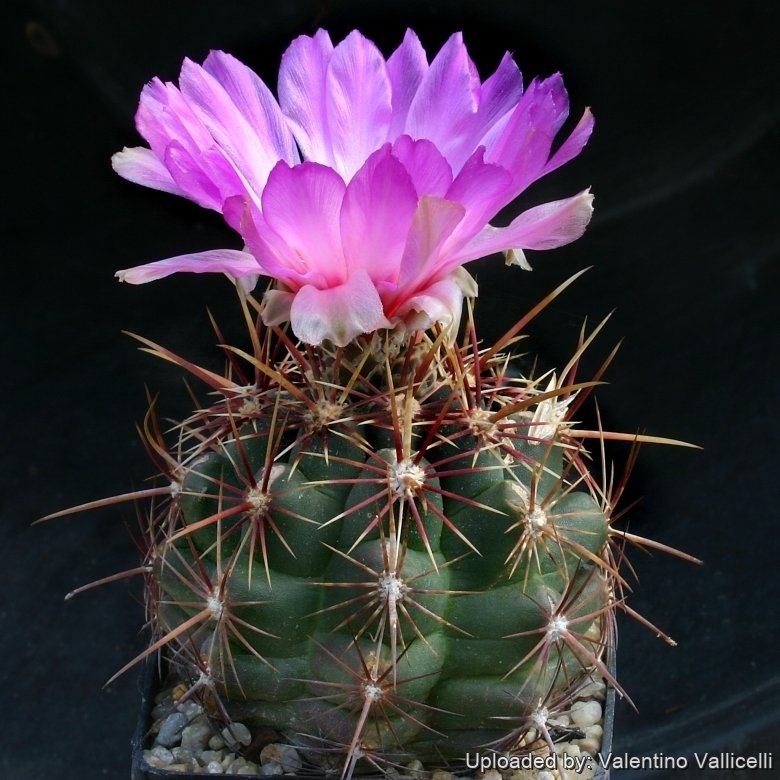
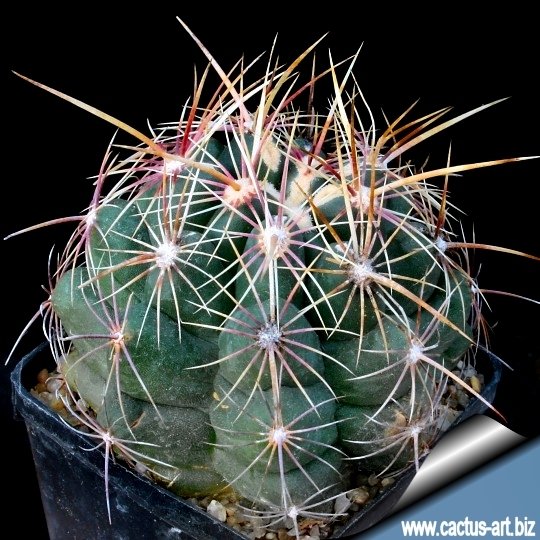
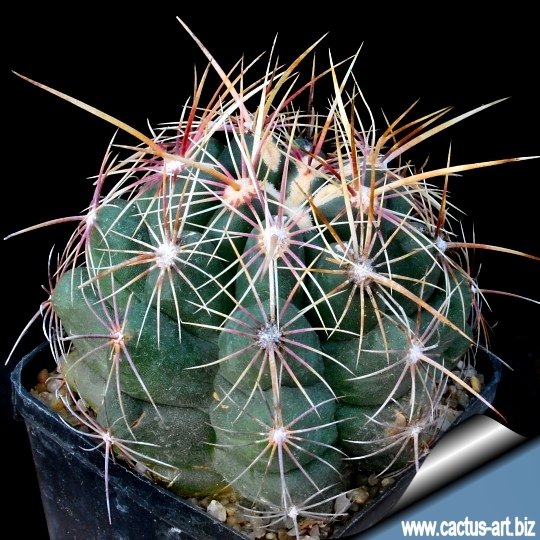
Globular usually solitary cacti up to 10 cm in diameter .
Stem: ovoidal, 8-20 cm tall, 5-12 cm wide.
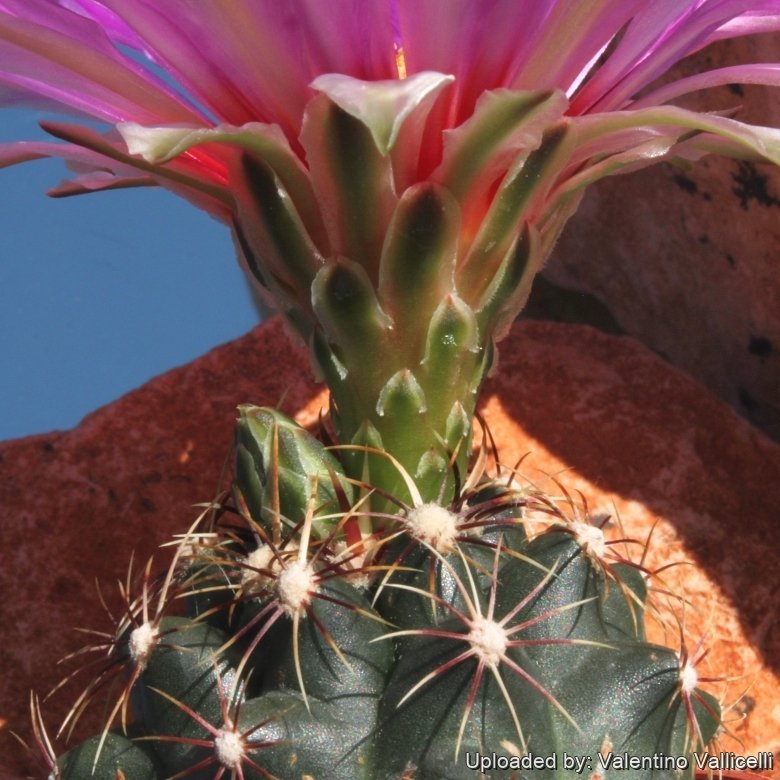
Ribs: 8, distinct. Tubercles rounded. Areoles with glands.
Spines: Centrals 3, 15-75 mm long, ochre to reddish. It has been described as having only one, porrect, central spine, but with a careful observation it is possible to notice that the upper central spines are so appressed to the stem that they can be easily mistaken for radials. Therefore commodus has three central spines, as does the type species. Radials 8-18, 10-30 mm long, ochre to reddish, straight, acicular.
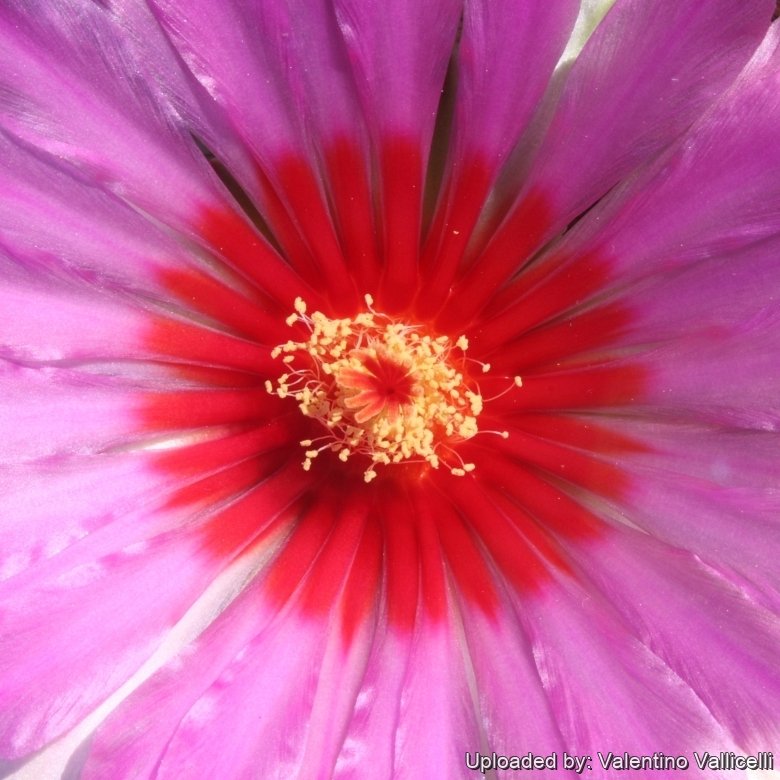
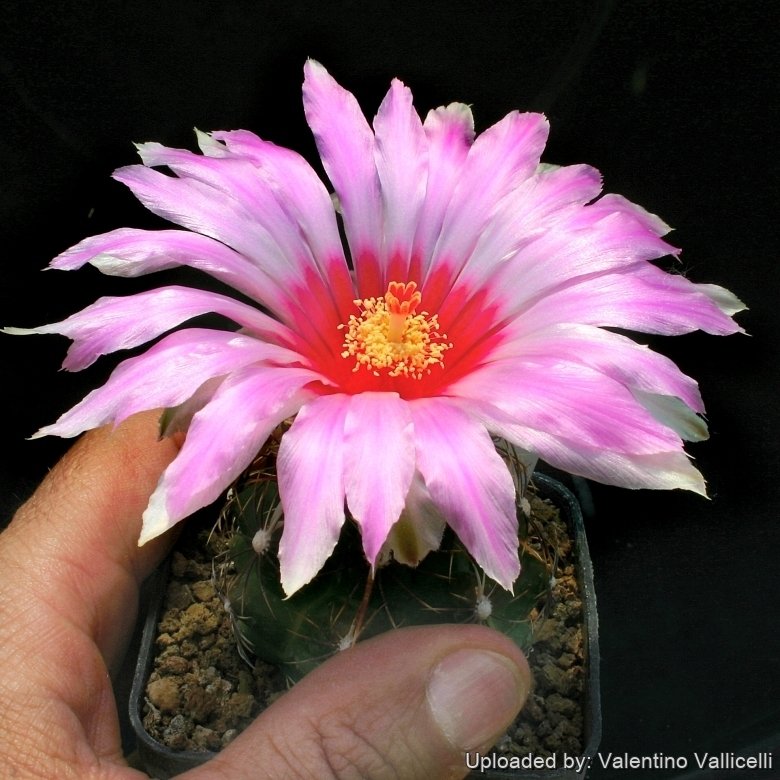
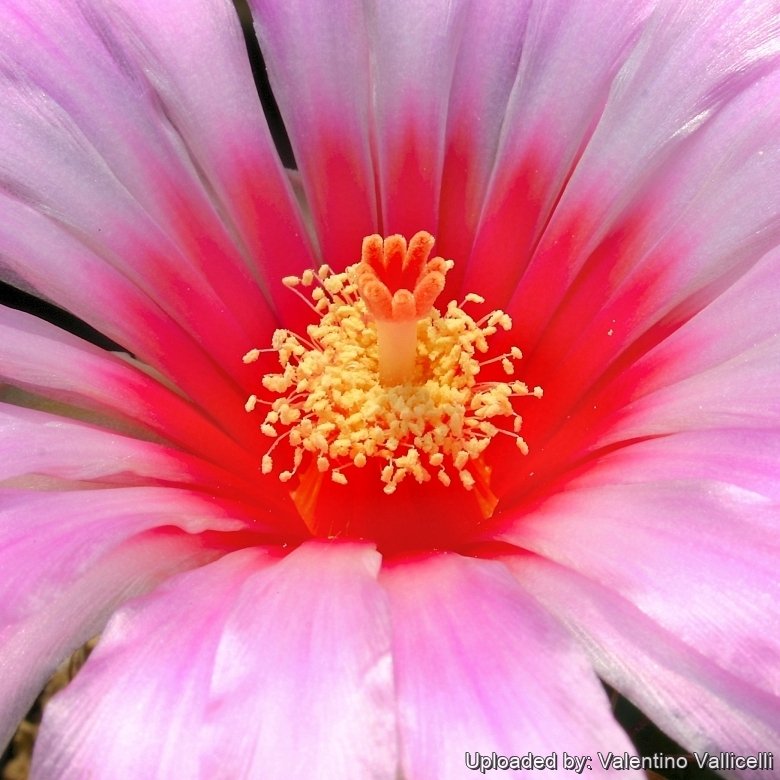
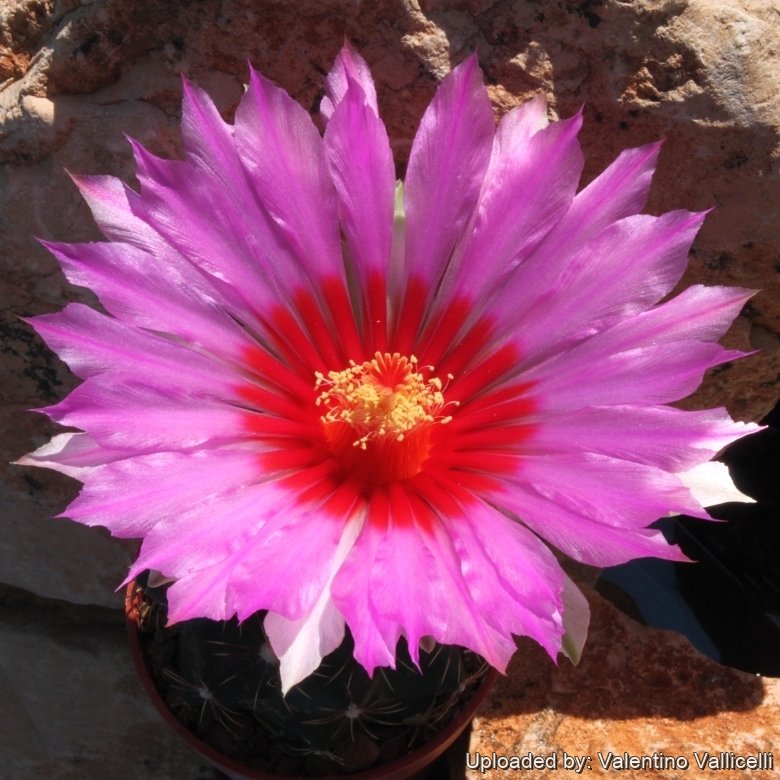
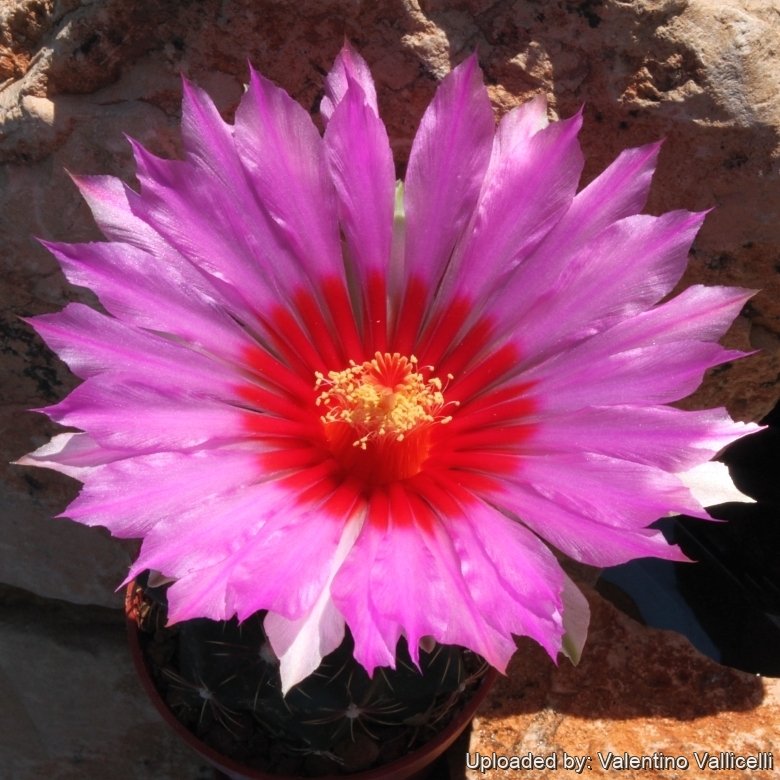
Flowers: 55-110 mm wide, magenta with a red throat from early spring to autumn.
Origin and Habitat
It occurs from an area near Montemorelos, Tamaulipas, outside the limits of the Chihuahuan Desert.
Cultivation and Propagation
Thelocactus bicolor is a summer grower species easy to cultivate, more cold tolerant than most and less fussy regarding soil conditions.
Growth rate: It is a relatively rapidly growing and easily flowering species that will make clumps given the best conditions.
Soils: It likes very porous standard cactus mix soil, but can become too elongated if compost is too rich.
Repotting: Use pot with good drainage.
Watering: Water regularly from Spring to Autumn, but do not overwater(Rot prone), keep dry in winter.
Fertilization: Feed with a high potassium fertilizer in summer.
Hardiness: Reputedly somewhat resistant to frost if kept on the dry side prior to, and during, cold weather (hardy to -7 C ° C, or less for short periods).
Exposition: Requires full sun or light shade and careful watering to keep plant compact with strong coloured spines. Tends to bronze in strong light, which encourages flowering and heavy spine production.
Uses: It is an excellent plant for container growing. It always looks good and stays small. It look fine in a cold greenhouse and frame or outdoor in a rockery.
Pests & diseases: It may be attractive to a variety of insects, but plants in good condition should be nearly pest-free, particularly if they are grown in a mineral potting-mix, with good exposure and ventilation. Nonetheless, there are several pests to watch for:
- Red spiders: Red sopiders may be effectively rubbed up by watering the infested plants from above.
- Mealy bugs: Mealy bugs occasionally develop aerial into the new growth among the wool with disfiguring results, but the worst types develop underground on the roots and are invisible except by their effects.
- Sciara Flies: Sciara flies are one of the major problems for seedlings. It is a good practice to mulch your seedlings with a layer of grit, which will strongly discourage the flies.
- Scales: Scales are rarely a problem.
It is wise to treat your whole collection with a systemic insecticide twice a year in spring and autumn.
- Rot: Rot is only a minor problem with cacti if the plants are watered and “aired” correctly. If they are not, fungicides won’t help all that much.
Propagation: From seed, since the plant rarely produces plantlets. Seeds germinate in 7-14 days at 21-27° C in spring, remove gradually the glass cover as soon the plants will be well rooted (ca 1-2 weeks) and keep ventilated, no full sun for young plants!
Notes
The maintenance at variety or subspecies of this taxon rank is not justified and now it is considered synonymous with: Thelocactus bicolor ssp. bicolor (Galeotti ex Pfeiffer) Britton & Rose
Bibliography
Major references and further lectures
-
Edward F. Anderson “The Cactus Family” Timber Press, 2001
-
Curt Backeberg “Cactus Lexicon” Sterling Publishing Company, Incorporated, 1978
-
David Hunt, Nigel Taylor “The New Cactus Lexicon” DH Books, 2006 ISBN 0953813444, 9780953813445
-
James Cullen, Sabina G. Knees, H. Suzanne Cubey “The European Garden Flora Flowering Plants: A Manual for the Identification of Plants Cultivated in Europe, Both Out-of-Doors and Under Glass” Cambridge University Press, 11/Aug./2011
Gallery