Publication: ( = cristata )
Description
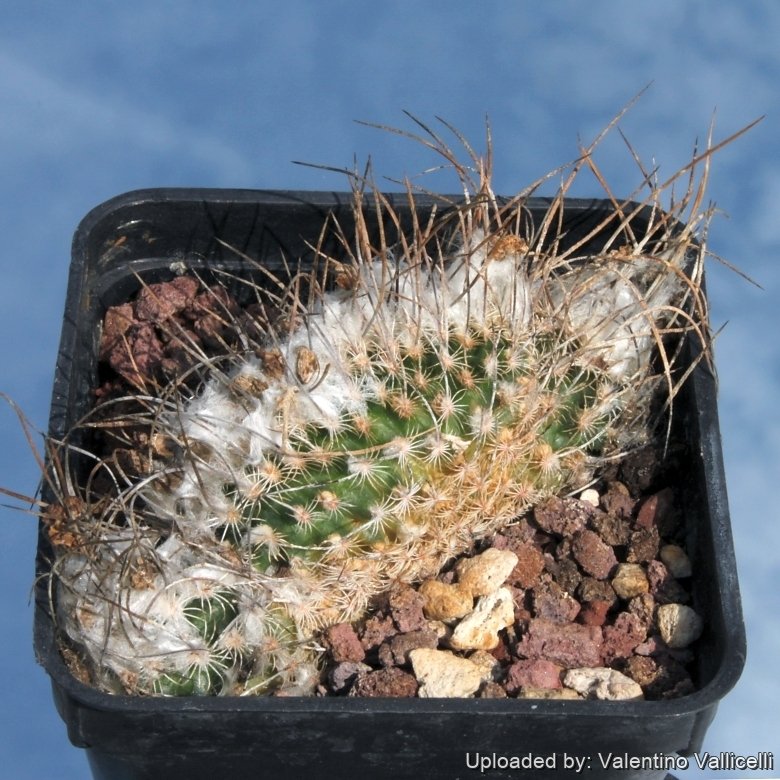
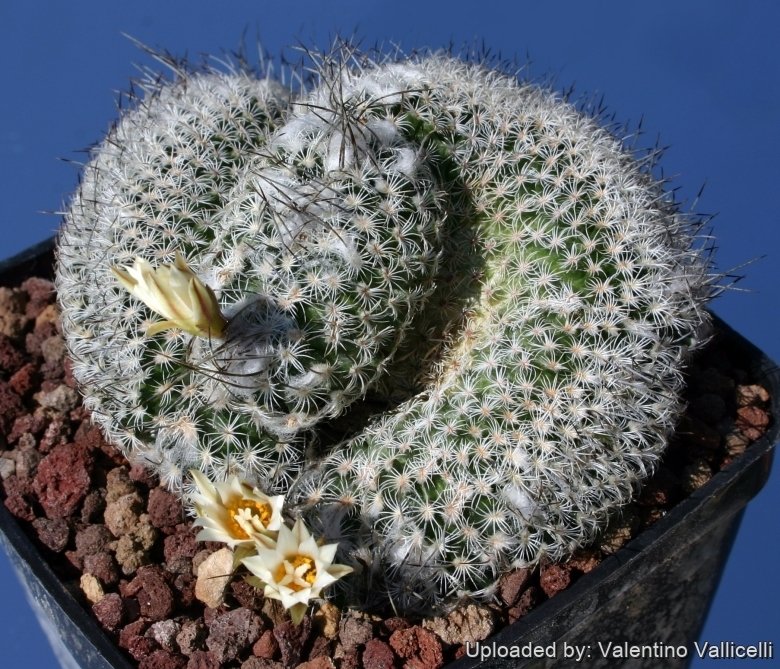
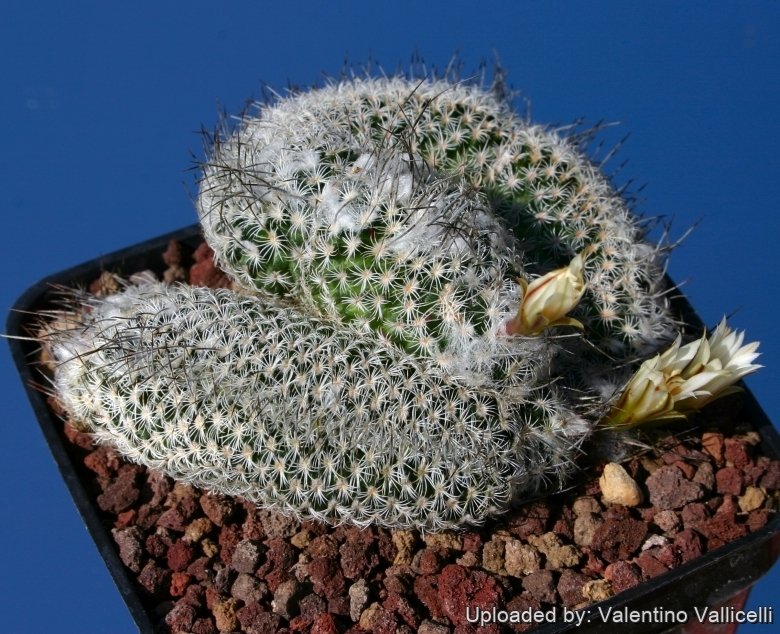
Turbinicarpus pseudomacrochele ssp. krainzianus is a small geophytic cactus forming brain shaped mouns with age. The crested form is particularly priced by cactus impassioned.
Stem: , with fan like 5-12 mm thick, dark green. Apex white wooled almost concealed by the spines.
Tubercles: Rhomboidal at the base, tapering at the top, about 2-4 mm tall.
Areole: On the apex of the tubercle, white woolly becoming bare with age.
Root: Deep napiform.
Spines: Usually the crested form has only juvenile pectinated spines, however sometime produces mature curved wiry spines 12-30 mm long. The spines are flexible, not piercing, in new growth yellowish-brown later becoming grey with dark tips, dropping off from older areoles.
Flowers: Usually not produced in the crested parts, but from areas reverting to the normal growth form. Diurnal, apical up to 2 cm long, with about 12-16 narrow yellow cream or greenish yellow tepals, but other flower colour varieties exist. Styles white, with 4 white stigma lobes. Anthers lying below the stigma, yellow.
Blooming season: Summer.
Fruit: Spherical to oval, mostly from the top, 3-5 mm long, bare with remnants of dried flower. Green turning red at maturity, with persistent dried up flowers remains. They open split vertically when ripe and contains 20-25 seeds.
Seeds: Black, egg to pear-shaped, 1 mm long with very small tubercles.
Remarks: this species is one of those turbinicarpus which pass a purely radial-spined youth stage in which they are already floriferous. Most of the plants after several years develop the long curled central spines, giving the plant its fuzzy appearance.
Origin and Habitat
Garden origin (Nursery selected form)
Cultivation and Propagation
Although regarded as a choice and difficult plant is not too difficult in a greenhouse, although grows quite slowly. It is sometime seen as a grafted plant but grows very well on its own roots too.
Soil: Use mineral well permeable mineral soil with little organic matter (peat, humus).
Exposure: They need a good amount of light shade to full sun this help to keep the plants healthy, although slow growth.
Watering: Water sparingly from March till October (weekly during summertime, if the weather is sunny enough), with a little fertilizer added. Less or no water during cold winter months to prevent root loss. It is sensitive to overwatering (rot prone).
Hardiness: Keep perfectly dry in winter at temperatures from 5 to 15 degrees centigrade. (but it is relatively cold resistant and hardy to -5° C for short periods) In the rest period no high atmospheric humidity!! (Temperature Zone: USDA 9-11)
Propagation: Grafting or cuttings. Plants are usually grafted onto column-shaped cacti but proved to be able to produce their own roots if degrafted.
Bibliography
Major references and further lectures
-
Edward Anderson “The Cactus family” Timber Press, Incorporated, 2001
-
James Cullen, Sabina G. Knees, H. Suzanne Cubey “The European Garden Flora Flowering Plants: A Manual for the Identification of Plants Cultivated in Europe, Both Out-of-Doors and Under Glass” Cambridge University Press, 11/Aug/2011
-
David R Hunt; Nigel P Taylor; Graham Charles; International Cactaceae Systematics Group. “The New Cactus Lexicon” dh books, 2006Jackie M. Poole, William R. Carr, Dana M. Price, Jason R. Singhurst “Rare plants of Texas: a field guide” Texas A&M University Press, 30/Dec/2007
-
Milan Zachar, Roman Staník, Alexander Lux, Igor Dráb “Rod Turbinicarpus (Gattung Turbinicarpus)” Vydavateľstvo Roman Staník, 1996
Gallery