Publication: Cactaceae (Berlin) 1937(1): Blatt 27. [25 Mai 1937] et: Jahrb. Deutsch. Kakteen-Ges. 1937, 1st Teil, 27.
Description
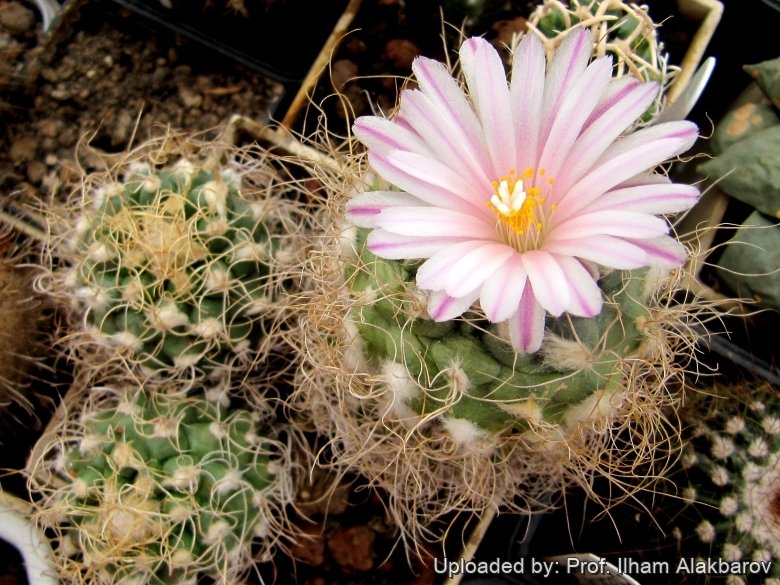
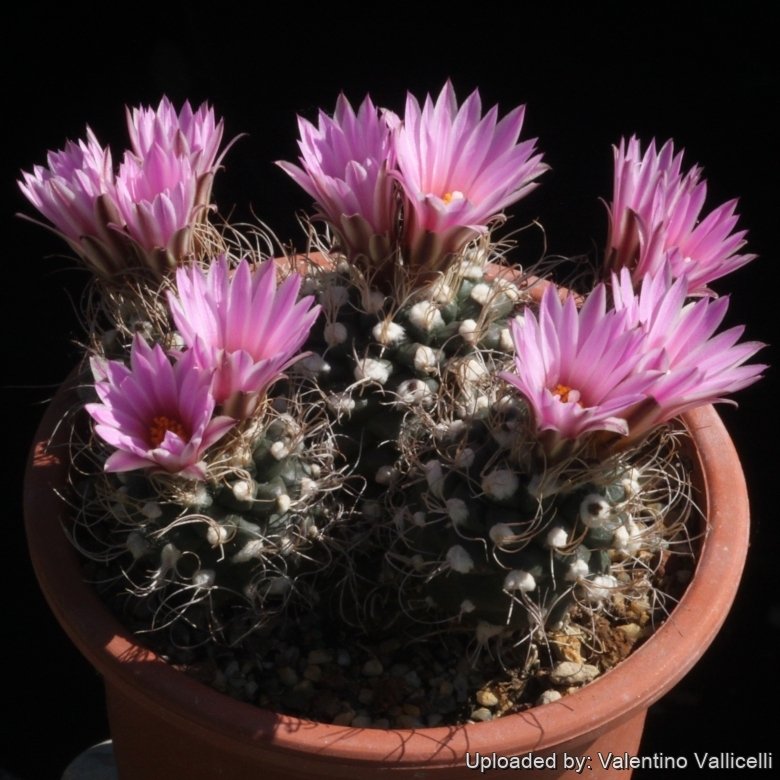
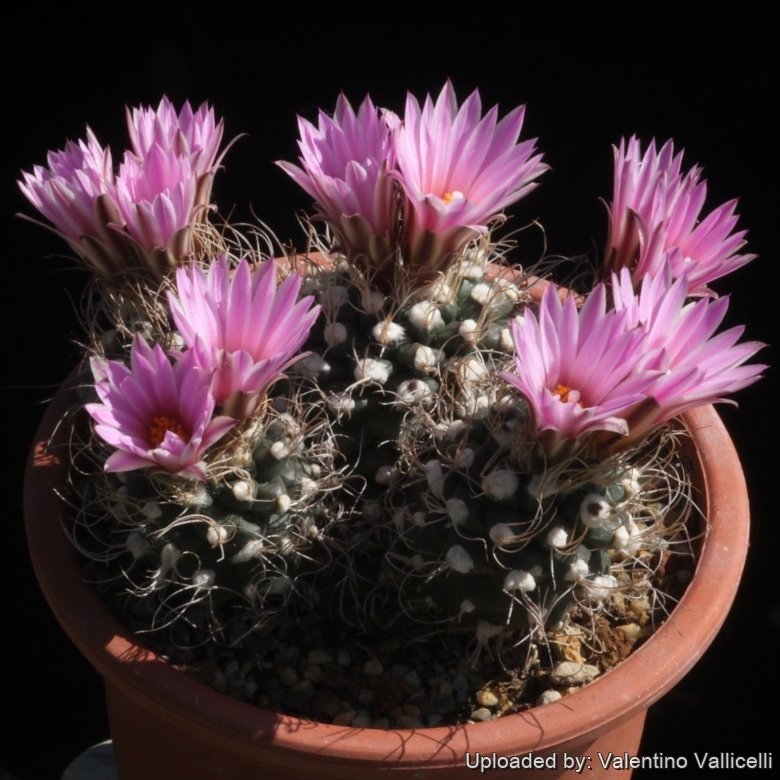
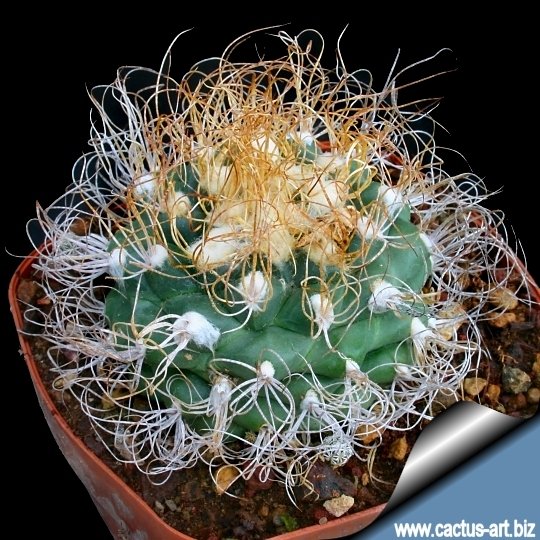
Turbinicarpus pseudomacrochele is a minuscule solitary (usually) or slowly clumping cactus. Four subspecies are recognized, the nominate form, subsp. krainzianus (Gerhart Frank) Glass, subsp. lausseri (Diers & Gerhart Frank) Glass and subsp. minimus (Gerhart Frank) Lüthy & A.Hofer .
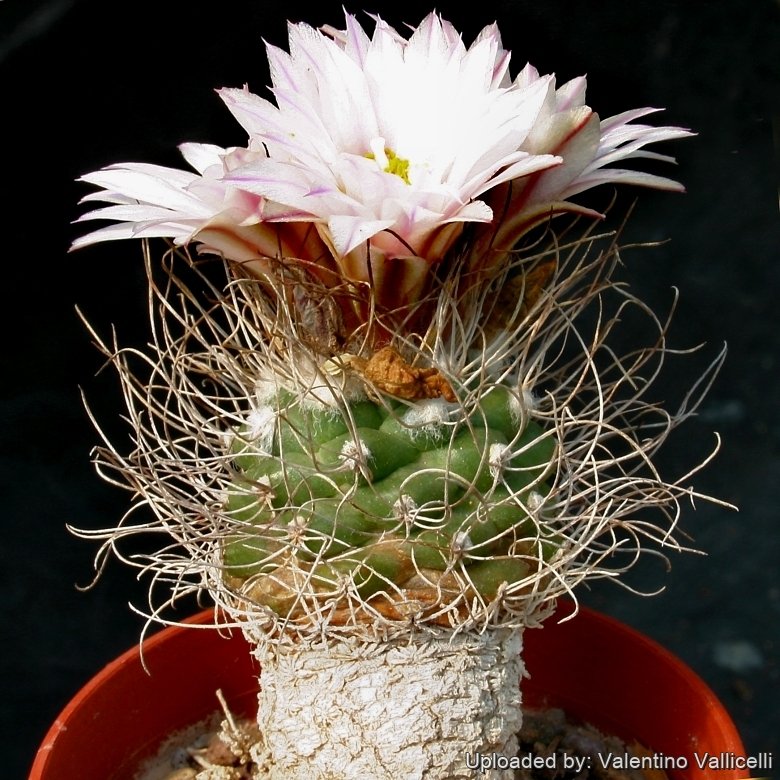
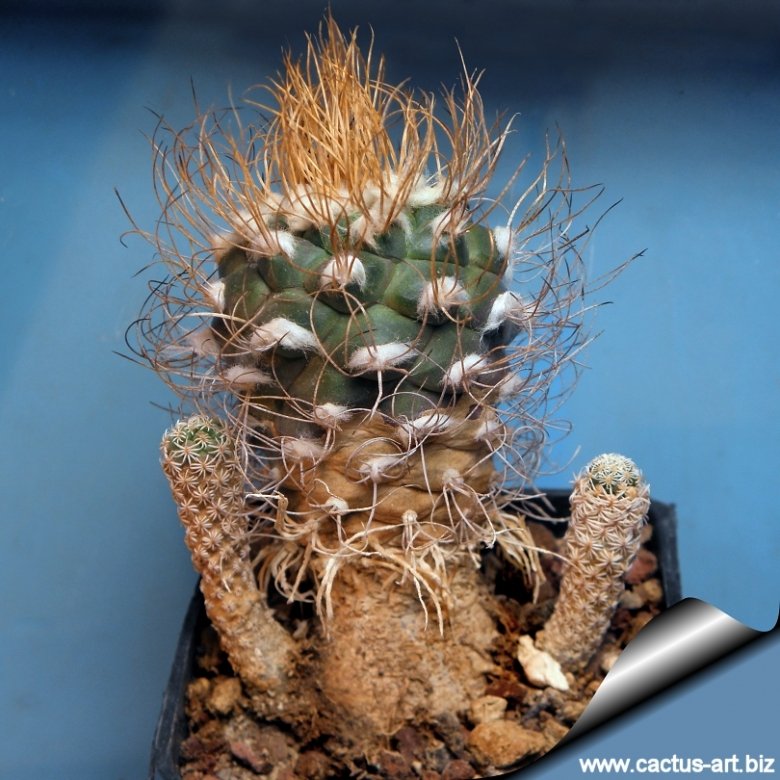
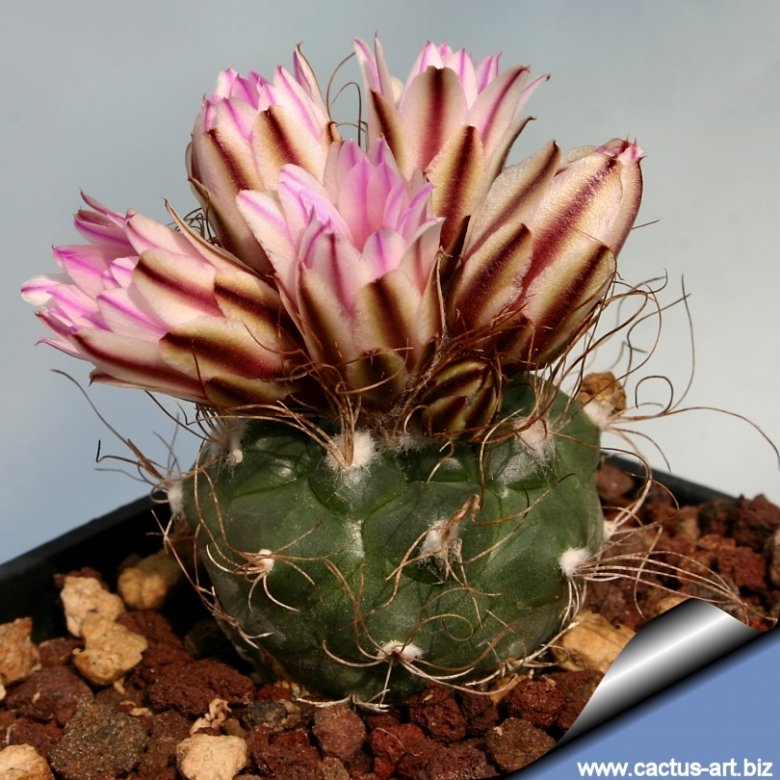
Stems: Globular pale green to darker green with woolly top up to 2,5-4 cm tall, 2-4 cm in diameter.
Areoles: White at the tip of the tubercles.
Tubercles: Low and rounded, conical, 3-5mm long.
Spines: 6 to 8 thin, flexible, bristly, and twisted, 15-30mm long. The colour is white to yellow-brownish.
Root: Taproot.
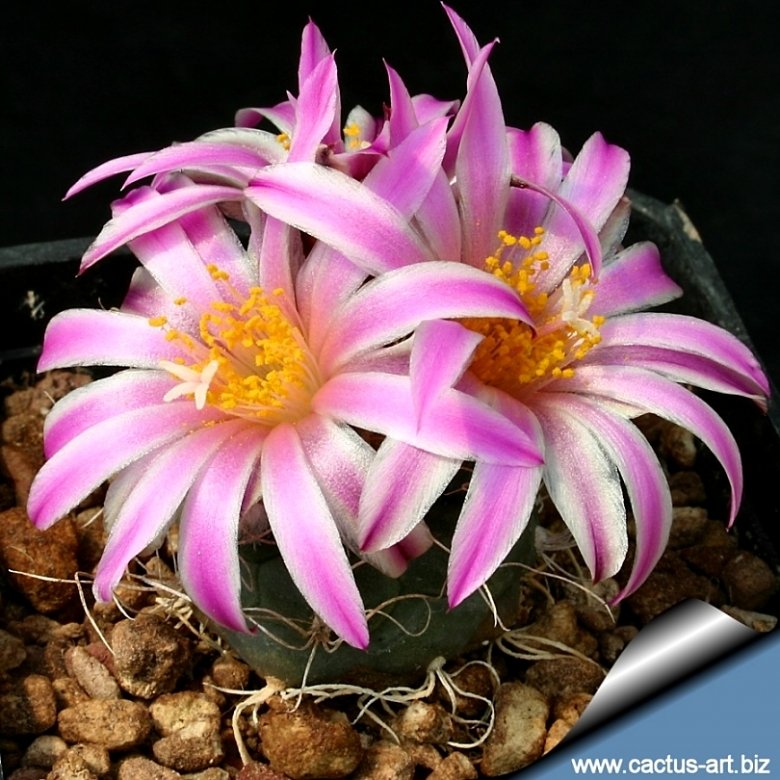
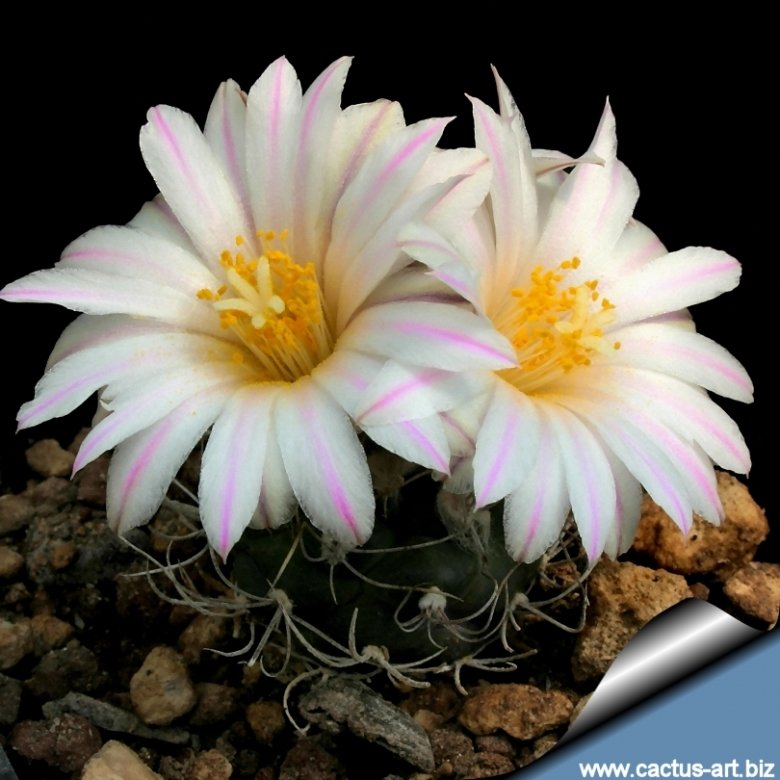
Flowers: Diurnal, very pale pink to bright, yellowish green, to purple with darker mid-stripe, up to 2 cm long , up to 3,5 cm. in diameter.
Fruits: Green nearly round 4-6 mm long.
Origin and Habitat
Hidalgo, Queretaro, Mexico. It is known from 11 subpopulation in less than five locations (extent of occurrence 450 km²)
Altitude: 1100-2160
Habitat and Ecology: Turbinicarpus pseudomacrochele grows in semi-desert (matorral) in limestone hills among calcareous rocks together with Mammillaria elongata, Agave ferox, Echinocactus platyacanthus, Coryphantha radians, Opuntia rastrera. The population is declining due to the ongoing removal of plants by collectors both for human consumption (narcotic) and for ornamental purposes. The total population size is less than 2,500 mature individuals. Mining of limestone for cement production is also a threat in some places
Cultivation and Propagation
It’s a fairly easy and robust species to cultivate, but very slow growing. It needs a very well-drained soil, and requires strong sun to part sun to keep the plant compact and low and to develop a good spinal growth. Waterings should be rather infrequent to keep the plant compact, and avoid its becoming excessively elongated and unnatural in appearance. Furthermore it has a tap root, and watering it properly is often difficult, because it tends to crack open or rot if over-watered. Careful watering away from the body of the plant will allow the areoles to keep their wool. Keep dry in winter, or when night temperatures remain below 10° C. It is hardy to -4°C for a short period. Assure a good ventilation.
Reproduction: From seed, since the plant rarely produces plantlets, or grafted.
Bibliography
Major references and further lectures
-
Edward Anderson “The Cactus family” Timber Press, Incorporated, 2001
-
James Cullen, Sabina G. Knees, H. Suzanne Cubey “The European Garden Flora Flowering Plants: A Manual for the Identification of Plants Cultivated in Europe, Both Out-of-Doors and Under Glass” Cambridge University Press, 11/Aug/2011
-
David R Hunt; Nigel P Taylor; Graham Charles; International Cactaceae Systematics Group. “The New Cactus Lexicon” dh books, 2006Jackie M. Poole, William R. Carr, Dana M. Price, Jason R. Singhurst “Rare plants of Texas: a field guide” Texas A&M University Press, 30/Dec/2007
-
Milan Zachar, Roman Staník, Alexander Lux, Igor Dráb “Rod Turbinicarpus (Gattung Turbinicarpus)” Vydavateľstvo Roman Staník, 1996
-
Gómez-Hinostrosa, C., Sánchez , E. & Guadalupe Martínez, J. 2013. Turbinicarpus pseudomacrochele. In: IUCN 2013. “IUCN Red List of Threatened Species.” Version 2013.2. <www.iucnredlist.org>. Downloaded on 07 March 2014.
Cultivars and forms (12)
Subspecies (3)
Varieties (3)
Forms (5)
Gallery