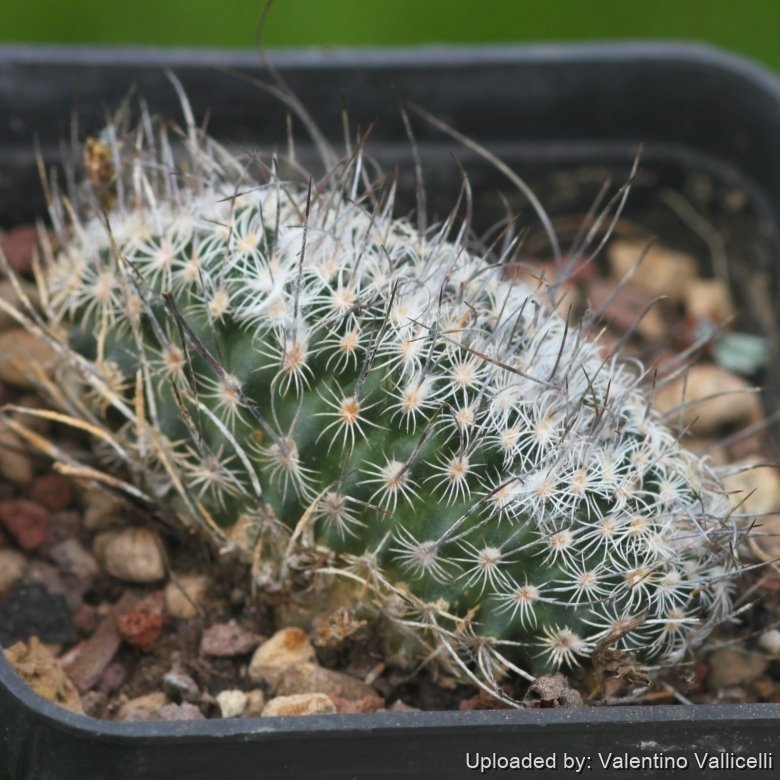
Publication: “forma cristata”
Description
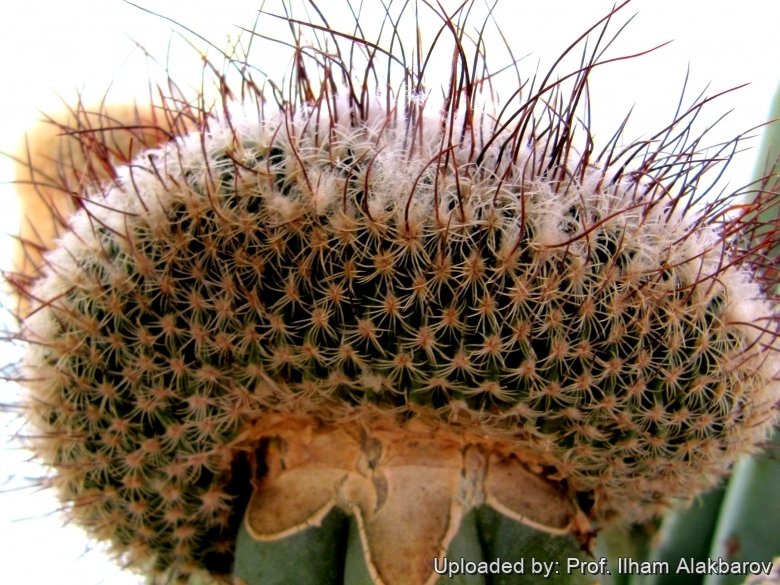
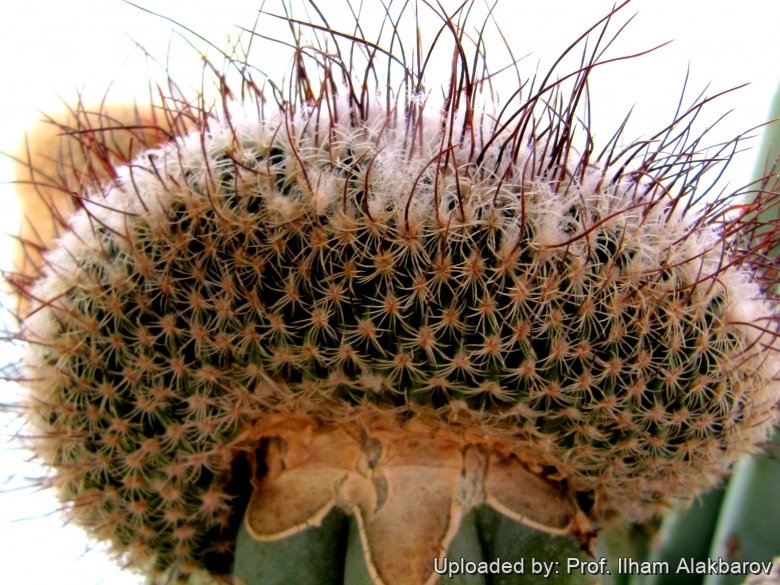
This plant is recognizable for the tubercles about 7 mm long by 1,8 mm in diameter at tip, and 3-5 mm broad at base, slender, somewhat angled, bright greyish green;
Central spines: Thin and papyraceous ca. 18-23 mm long, 1 mm wide, grey, erect but flexible and curved;
Radials spines: Few short, 2 mm long, white deflexed in lower portion of areole, perpendicular to axis of tubercle; occasionally present also in adult specimens but deciduous.
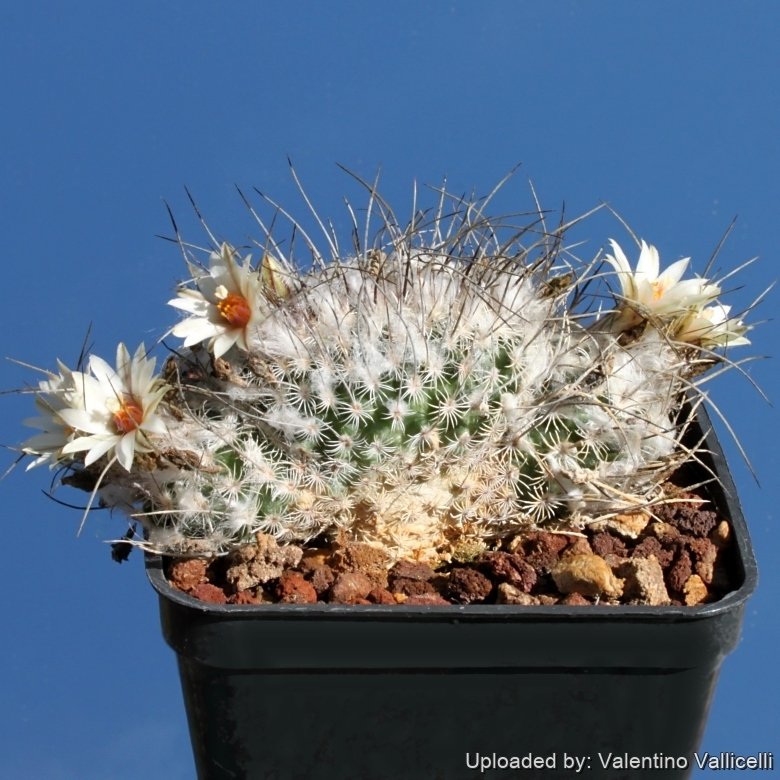
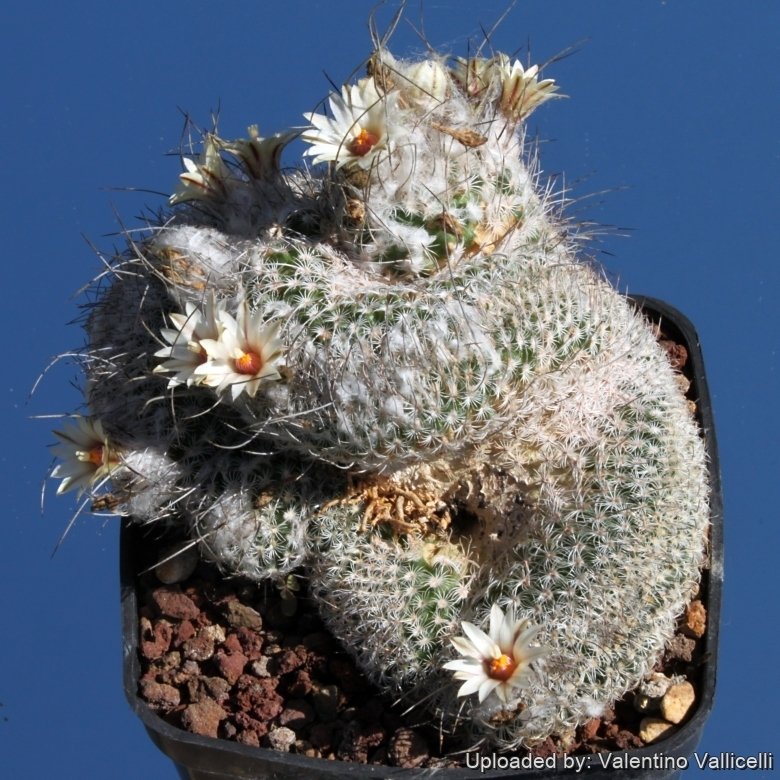
Crested form: There are some different crested clones available in the trade.
Origin and Habitat
Garden origin (Nursery produced cultivar)
Cultivation and Propagation
Turbinicarpus schmiedickeanus subs. gracilis is a fairly easy species to cultivate. Need a very well drained soil. Requires strong sun to part sun to develop good spinal growth and waterings should be rather infrequent to keep the plant compact and not to become excessively elongated and unnatural in appearance. keep dry in winter or when night temperatures remain below 10° C, it is hardy to -4°C for a short period. Assure a good ventilation.
Propagation: Vegetative propagation, usually by grafting or by stem cuttings that root easily.
Notes
The cause of cresting is not fully explained, biologists disagree as to why some cacti grow in this unusual form. Some speculate that it is a genetic mutation. Others say it is the result of a lightning strike or freeze damage, but whatever the stimulus, the growth point of the stem has switched from a geometric point, to a line, which folds and undulates as the crest expands. Crested Turbinicarpus are quite rare, cresting occurs naturally and can be encountered in many other cactus species.
Bibliography
Major references and further lectures
-
Edward Anderson “The Cactus family” Timber Press, Incorporated, 2001
-
James Cullen, Sabina G. Knees, H. Suzanne Cubey “The European Garden Flora Flowering Plants: A Manual for the Identification of Plants Cultivated in Europe, Both Out-of-Doors and Under Glass” Cambridge University Press, 11/Aug/2011
-
David R Hunt; Nigel P Taylor; Graham Charles; International Cactaceae Systematics Group. “The New Cactus Lexicon” dh books, 2006
-
Davide Donati, Carlo Zanovello “Conoscere, capire, coltivare i Turbinicarpus-Rapicactus” Cactus Trentino Sudtirol, 2004
Gallery