Description
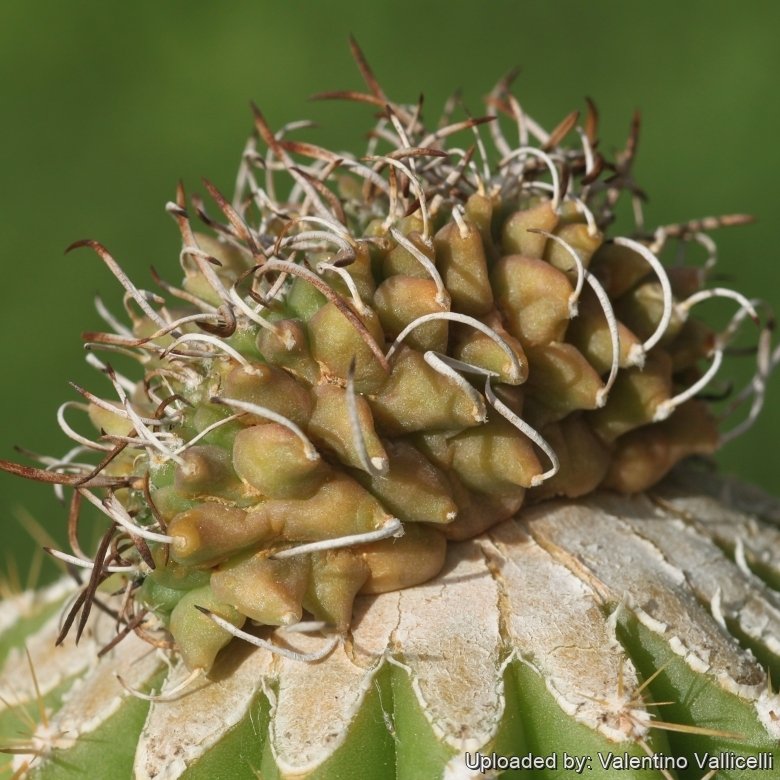
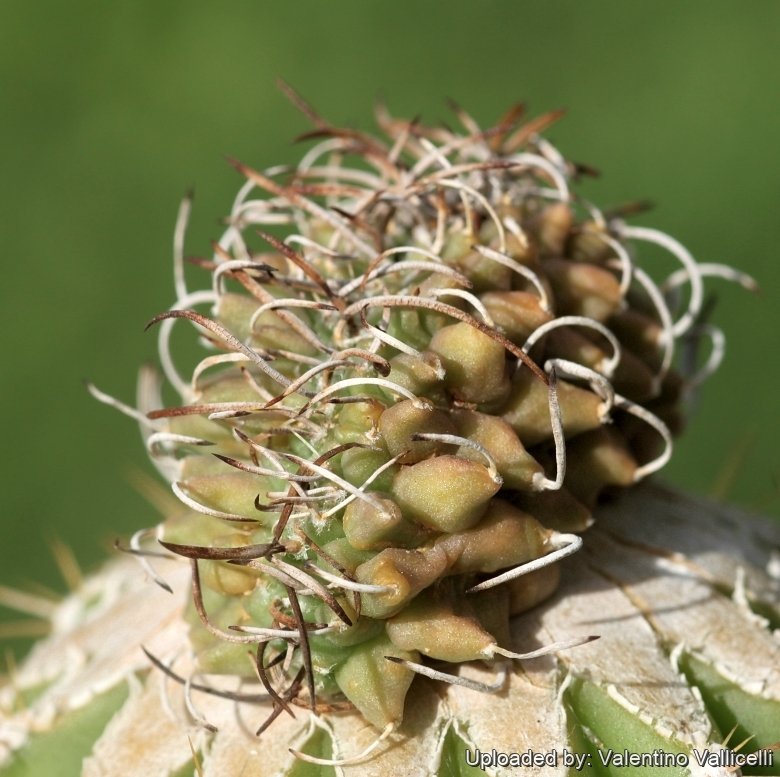
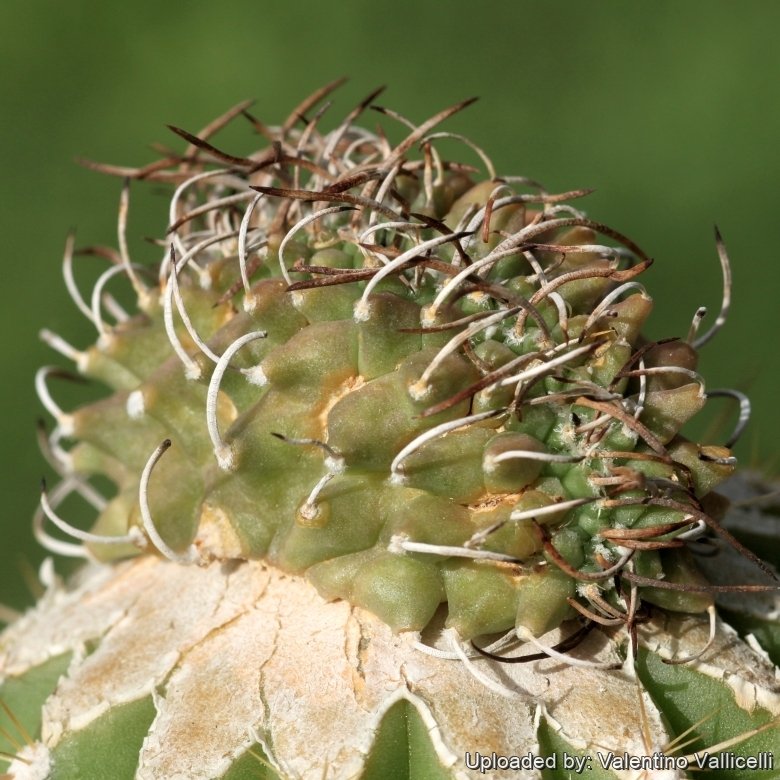
This plant is recognizable without problems for the pyramidal tubercles and areoles with few greysh-white wool (when young), soon becoming bare. Typically this plant has 3 spines with only one persisting; the lower one longer, up to 1 cm, the 2 upper ones only on young areoles, soon caducous, flattened below, curved towards the apex, grey with dark tip, corky, rather soft, with transverse fissures. There are some different crested clones available in the trade.
Origin and Habitat
Garden origin (Nursery produced cultivar)
Cultivation and Propagation
Turbinicarpus schmiedickeanus subs. klinkerianus is a plant adapted to a specific type of soil and quite prone to rot especially after the first flowering. A 10 -30% of natural gypsum could be added to a very well drained soil. keep dry in winter or when night temperatures remain below 10° C, it is hardy to -4°C for a short period. Assure a good ventilation.
Exposures: Full sun is useful to obtains a natural looking and for flowering, but some shadow is recommended during the hottest hours in summer.
Propagation: Vegetative propagation, usually by grafting or rarely by stem cuttings, but cutting root hardly.
Notes
The cause of cresting is not fully explained, biologists disagree as to why some cacti grow in this unusual form. Some speculate that it is a genetic mutation. Others say it is the result of a lightning strike or freeze damage, but whatever the stimulus, the growth point of the stem has switched from a geometric point, to a line, which folds and undulates as the crest expands. Crested Turbinicarpus are quite rare, cresting occurs naturally and can be encountered in many other cactus species.
Gallery