Publication: Cact. Succ. J. (Los Angeles) 49: 168. 1977
Description
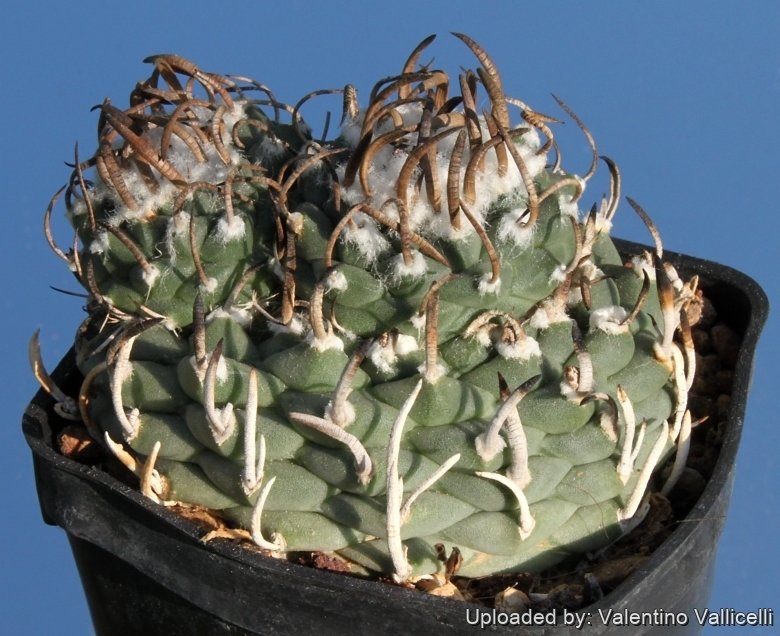
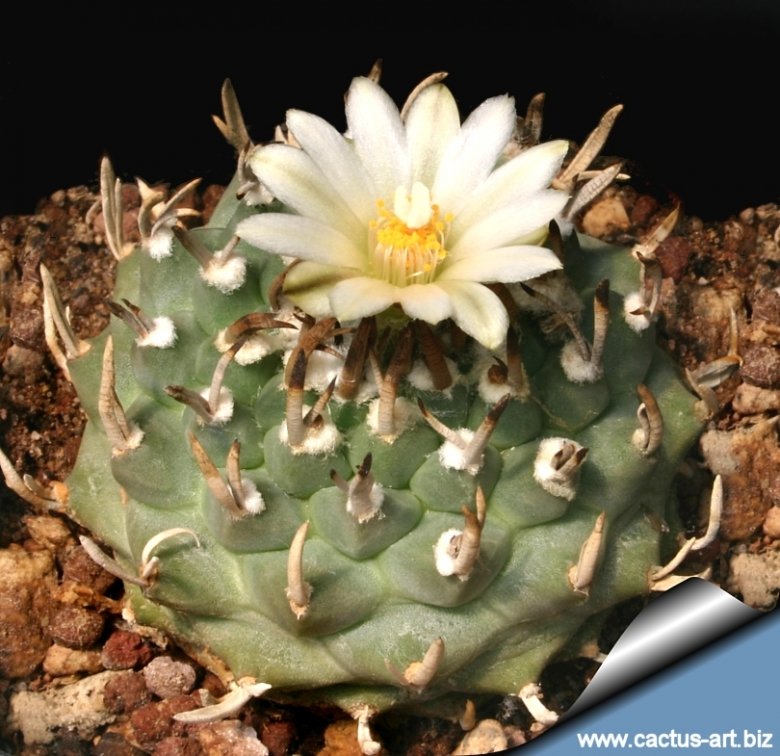
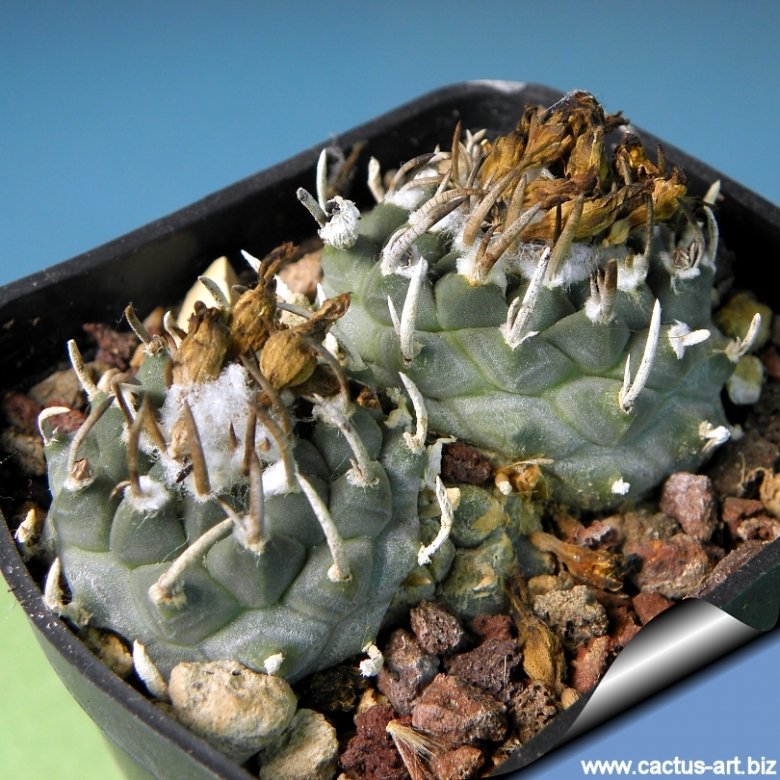
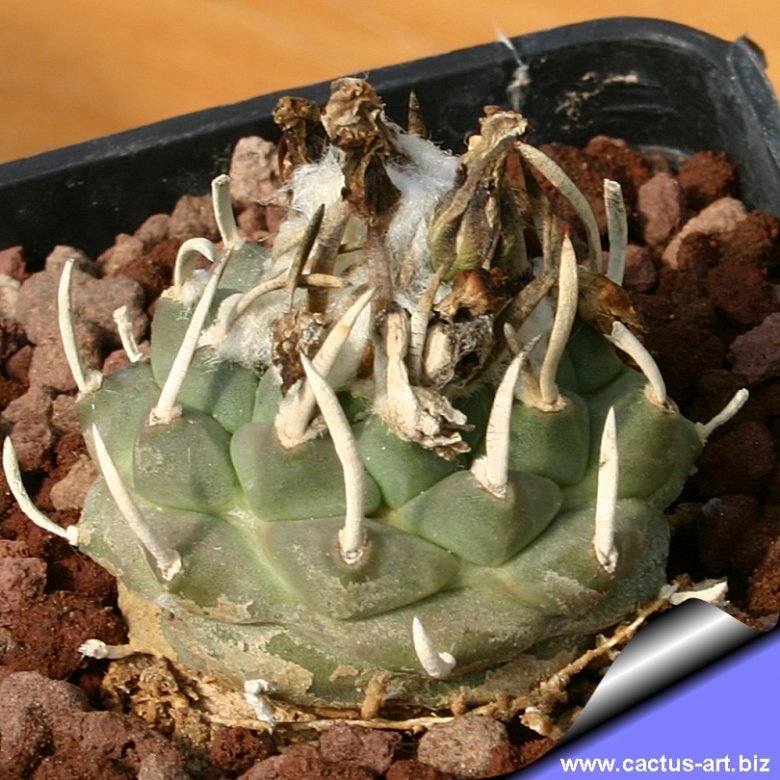
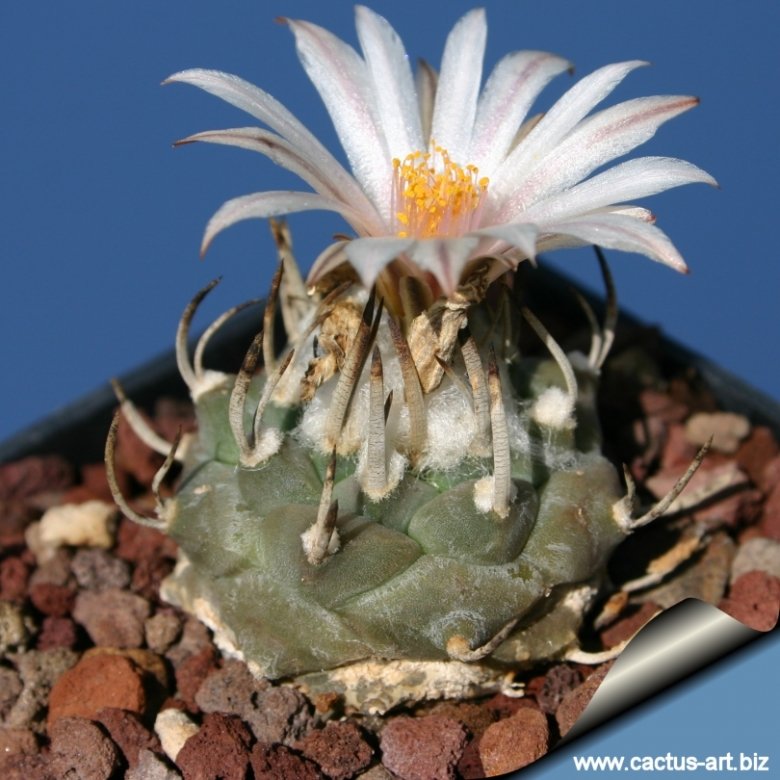
Turbinicarpus schmiedickeanus subs. klinkerianus best known as: Turbinicarpus klinkerianus is a one of the several local form of the very variable Turbinicarpus schmiedickeanus distinguished for having pyramidal tubercles and only 3 corky spines per areole, with only one persisting, and ivory white flowers with magenta midribs. This subspecies exhibits wide diversity in form.
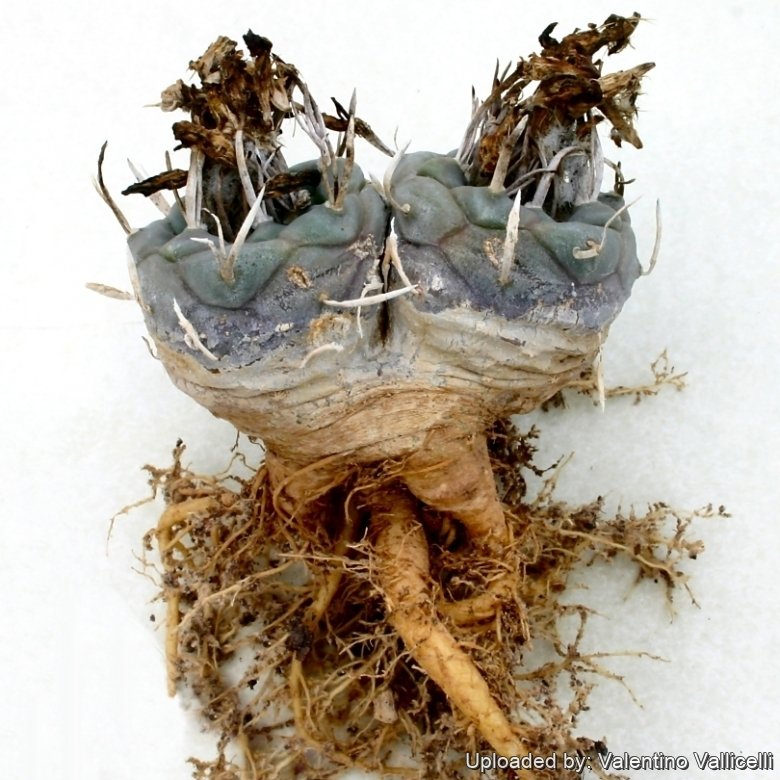
Habit: It is a small disk-shaped solitary or slowly clumping cactus, dichotomy also observed.
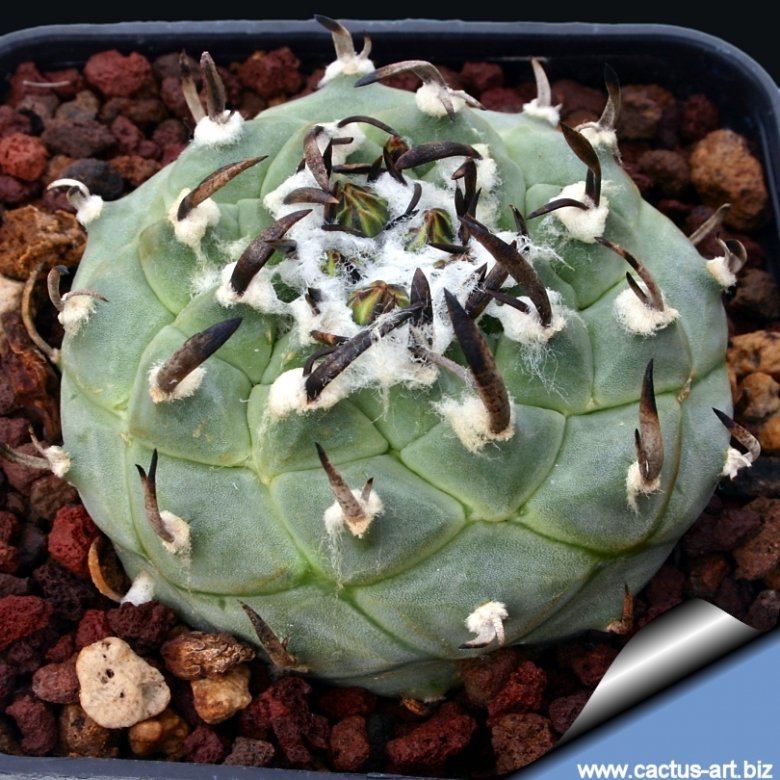
Stem: Globular depressed, 30-50 mm high, 35-40 mm wide, pale grey to greenish-brown, apex with some white wool.
Root: Taproot.
Tubercles: 1 cm broad and 6 mm high, pyramidal, rhomboid at the base, arranged in flat spirals.
Areoles: on the tip of the tubercle, with a little wool, soon becoming bare.
Spines: 2-3, the lower one longer, up to 1 cm, the 2 upper ones only on young areoles, flattened below, curved towards the apex, grey-brown with dark tip, newly emerged centrals blackish brown, corky, rather soft, with transverse fissures. Juvenile radial spines are feathery and very characteristic.
Flowers: Apical, funnel shaped, inside ivory, outside with darker brown (or magenta) midribs 14-25mm wide. This plant is capable of blooming when it is little larger than 1 cm in diameter.
Blooming season: Summer (May-October) flowering.
Fruits: Green-brown with a woolly top.
Origin and Habitat
Guadalcazar in the state of San Luis Potosi (Mexico)
Habitat: Grows in scattered colonies, mostly in mossy crevices on rooky slopes at altitudes around 1150-2250m.
Cultivation and Propagation
It’s a fairly easy species to cultivate. It needs a very well-drained soil, and requires strong sun to part sun to develop good spinal growth. Waterings should be rather infrequent to keep the plant compact and avoid it becoming excessively elongated and unnatural in appearance. Keep dry in winter, or when night temperatures remain below 10° C. It is hardy to -4°C for a short period. Assure a good ventilation.
Reproduction: From seed, since the plant rarely produces plantlets, or grafted.
Bibliography
Major references and further lectures
-
Edward Anderson “The Cactus family” Timber Press, Incorporated, 2001
-
James Cullen, Sabina G. Knees, H. Suzanne Cubey “The European Garden Flora Flowering Plants: A Manual for the Identification of Plants Cultivated in Europe, Both Out-of-Doors and Under Glass” Cambridge University Press, 11/Aug/2011
-
David R Hunt; Nigel P Taylor; Graham Charles; International Cactaceae Systematics Group. “The New Cactus Lexicon” dh books, 2006
-
Davide Donati, Carlo Zanovello “Conoscere, capire, coltivare i Turbinicarpus-Rapicactus” Cactus Trentino Sudtirol, 2004
Gallery