Publication: Rod Turbinicarpus (Genus Turbinicarpus) 47 (1996), basionym not validly publ.
Description
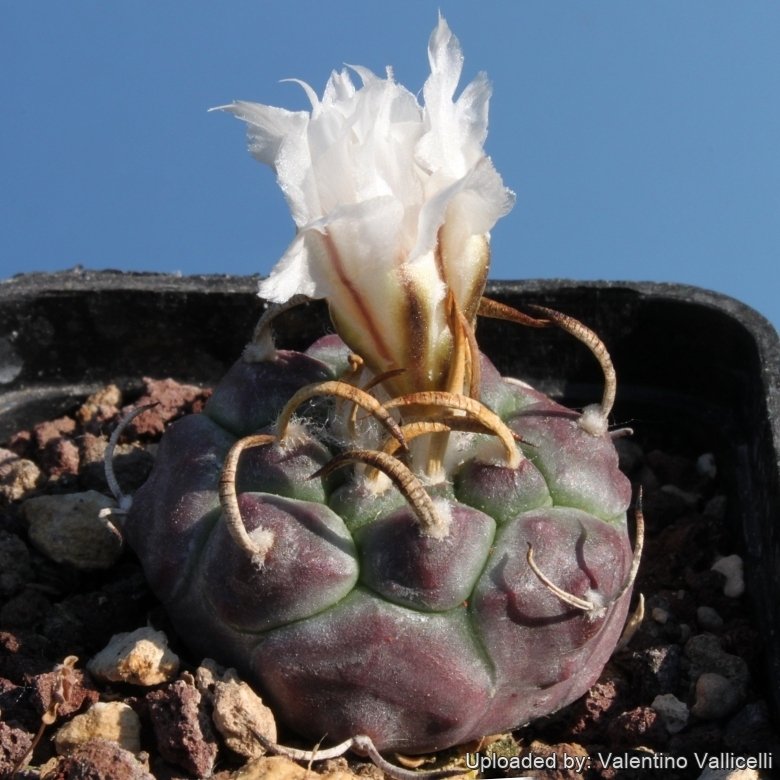
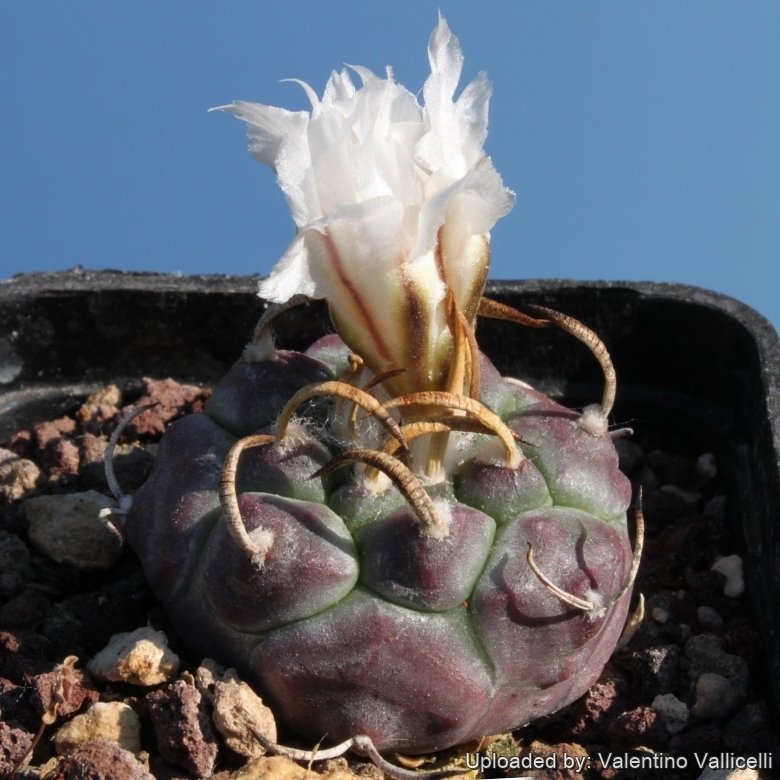
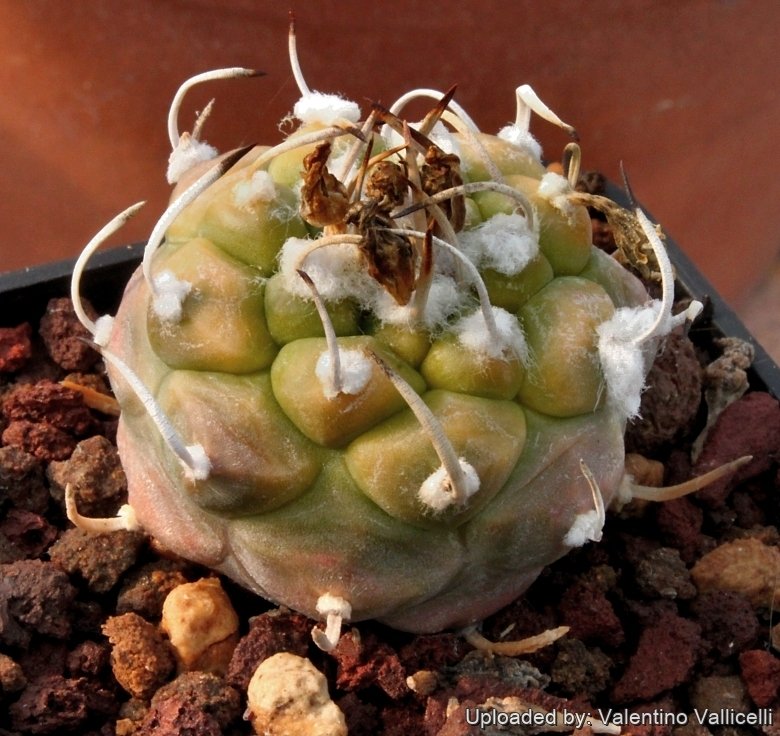
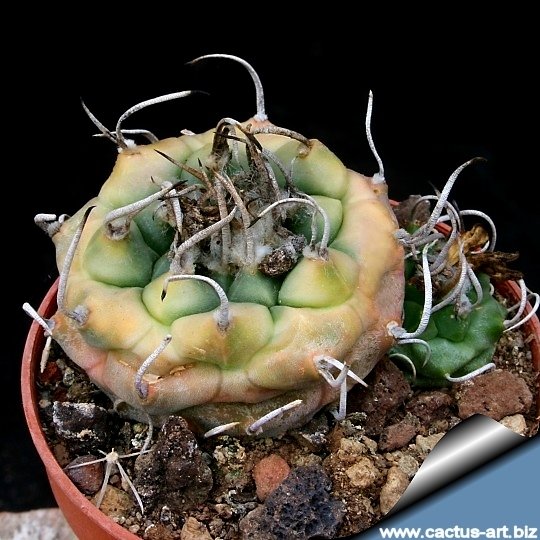
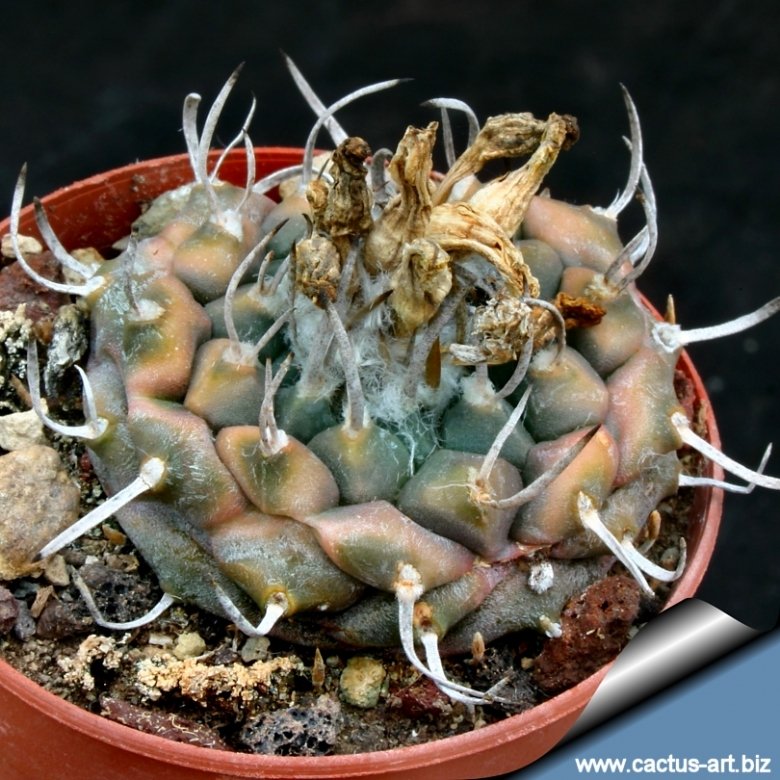
Turbinicarpus schmiedickeanus var. polaskii, more often known with its old name Turbinicarpus polaskii, is a tiny slow growing solitary cactus.
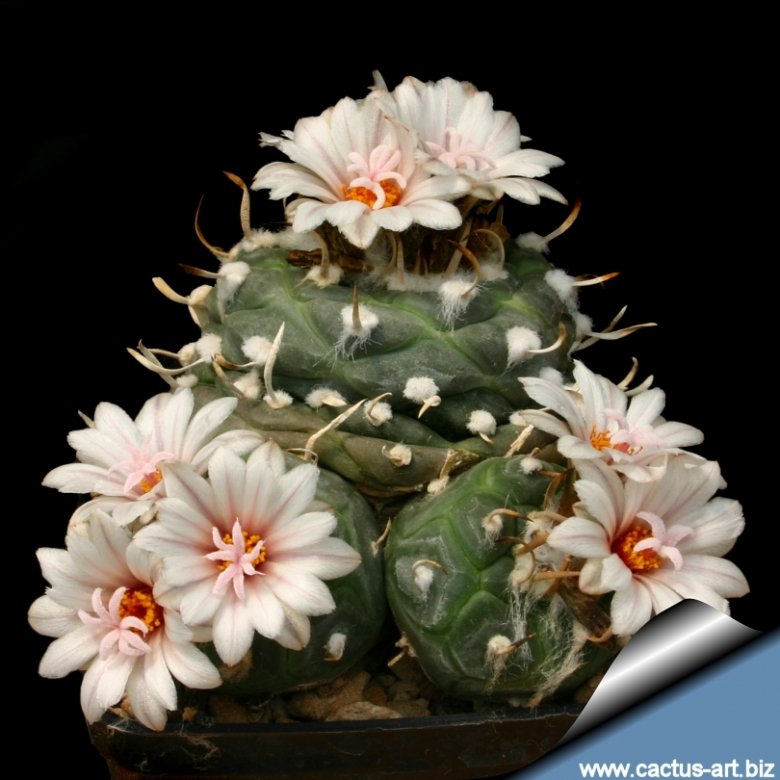
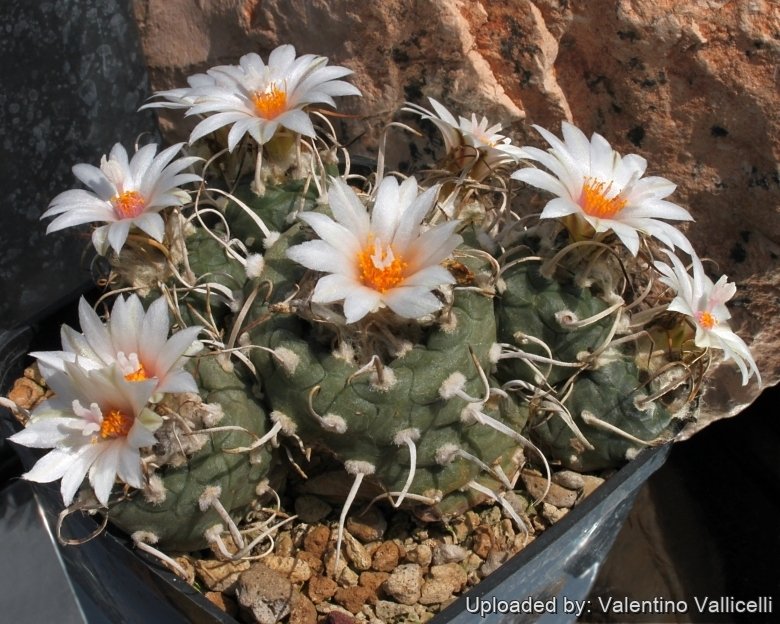
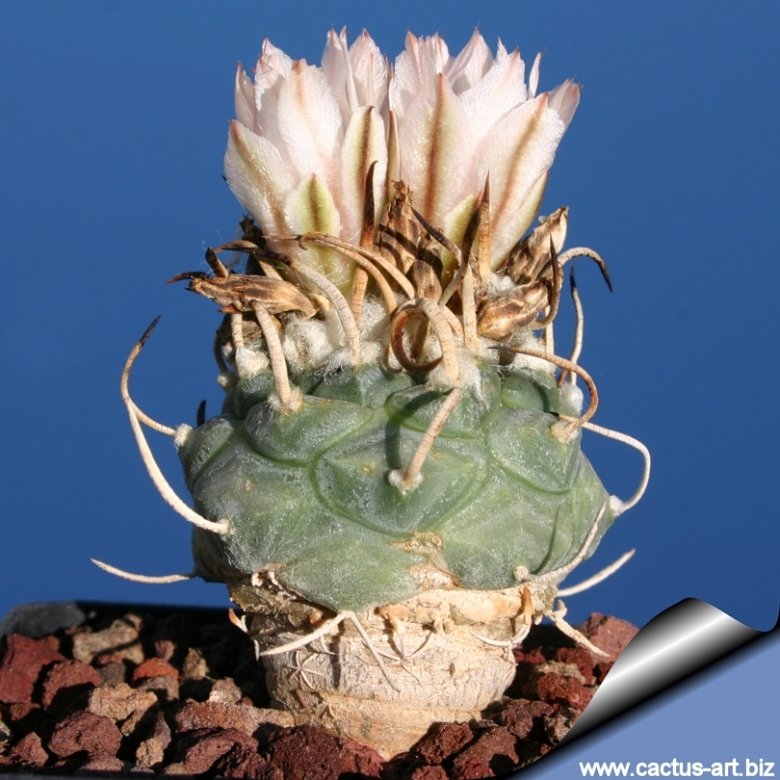
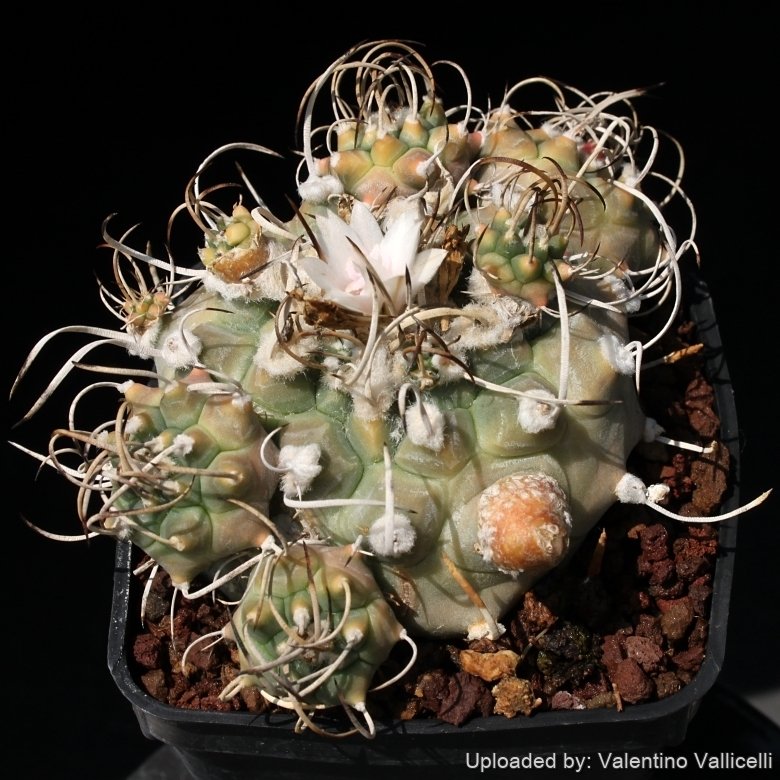
Stem: Flattened globose, pale grey-green, olive green or purplish-tan in full sun, 2 cm tall, 3.5-5 cm in diameter.
Root: Tap root
Tubercles: Broad, flattened, 4-angled.
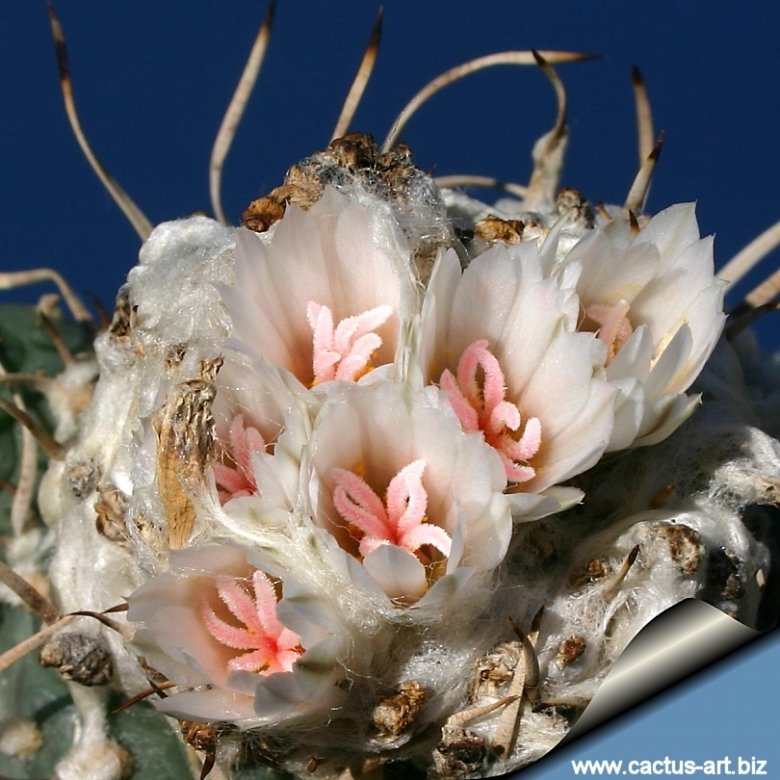
Areoles: White and woolly.
Spines: 1 to 3 spongy spines, one up to 2 cm
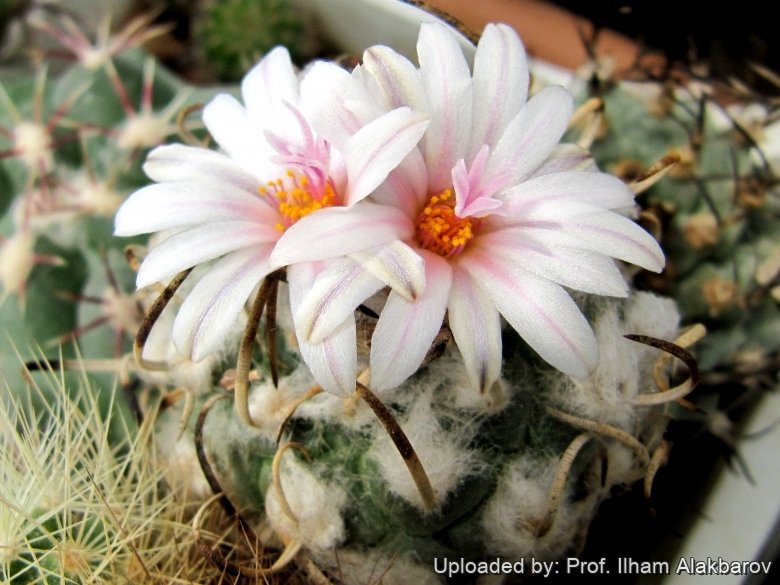
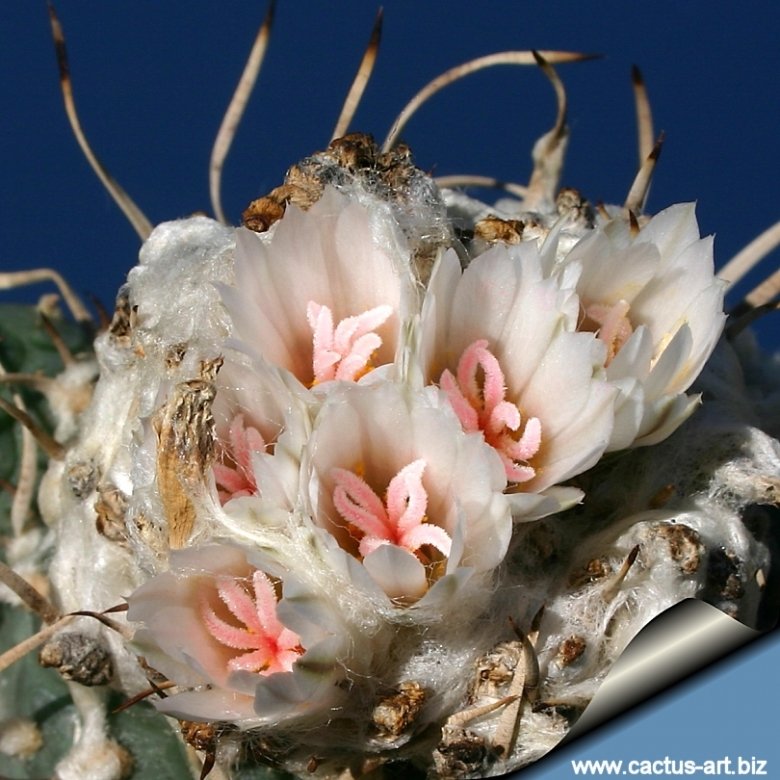
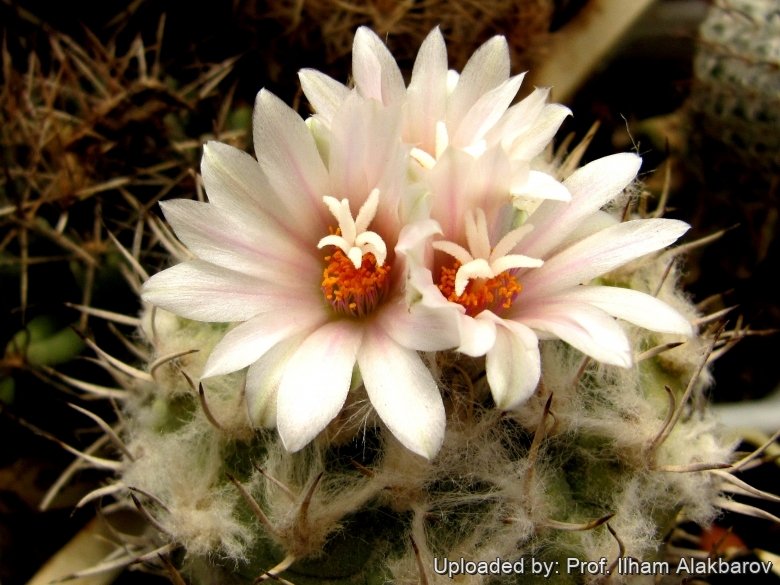
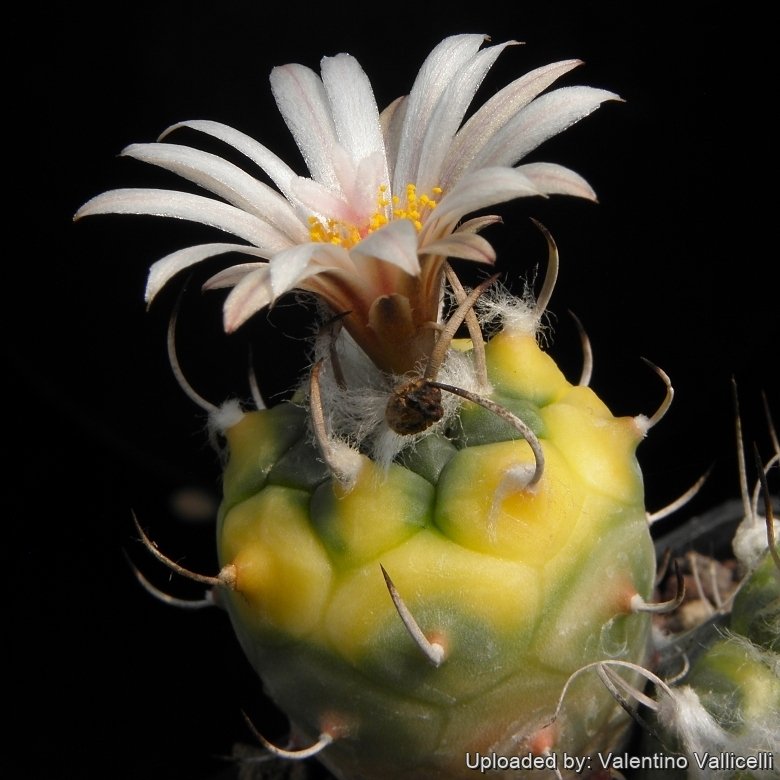
Flowers: White in summer (July to September in habitat), 2,5 cm long, 4 cm across, with white or pinkish stigmas.
Origin and Habitat
Mexico (Eastern San Luis Potosí: near La Bonita)
Cultivation and Propagation
It’s a fairly easy species to cultivate. It needs a very well-drained soil, and requires strong sun to part sun to keep the plant compact and low and to develop a good spinal growth. Waterings should be rather infrequent to keep the plant compact, and avoid its becoming excessively elongated and unnatural in appearance. Furthermore it has a tap root, and watering it properly is often difficult, because it tends to crack open or rot if over-watered. Keep dry in winter, or when night temperatures remain below 10° C. It is hardy to -4°C for a short period. Assure a good ventilation.
Reproduction: From seed, since the plant rarely produces plantlets, or occasionally grafted.
Bibliography
Major references and further lectures
-
Edward Anderson “The Cactus family” Timber Press, Incorporated, 2001
-
James Cullen, Sabina G. Knees, H. Suzanne Cubey “The European Garden Flora Flowering Plants: A Manual for the Identification of Plants Cultivated in Europe, Both Out-of-Doors and Under Glass” Cambridge University Press, 11/Aug/2011
-
David R Hunt; Nigel P Taylor; Graham Charles; International Cactaceae Systematics Group. “The New Cactus Lexicon” dh books, 2006
-
Davide Donati, Carlo Zanovello “Conoscere, capire, coltivare i Turbinicarpus-Rapicactus” Cactus Trentino Sudtirol, 2004
From llifle page Turbinicarpus polaskii f. variegatus
Description
Tiny solitary cactus.
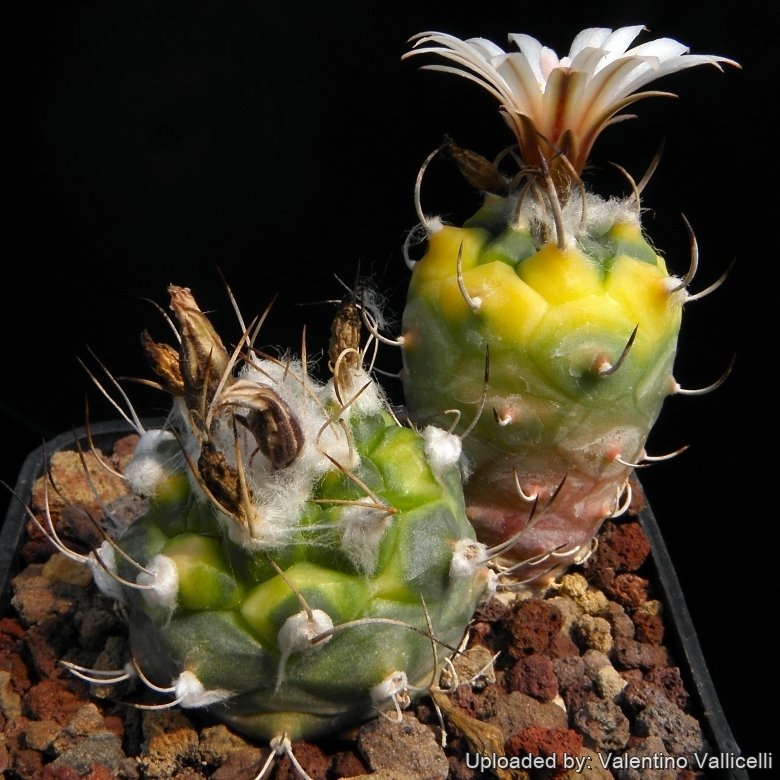
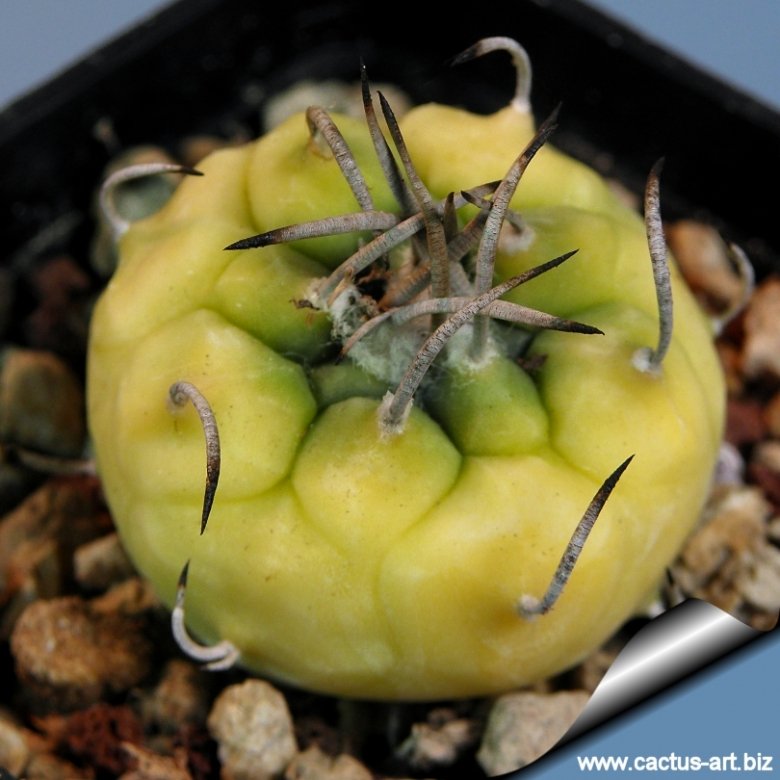
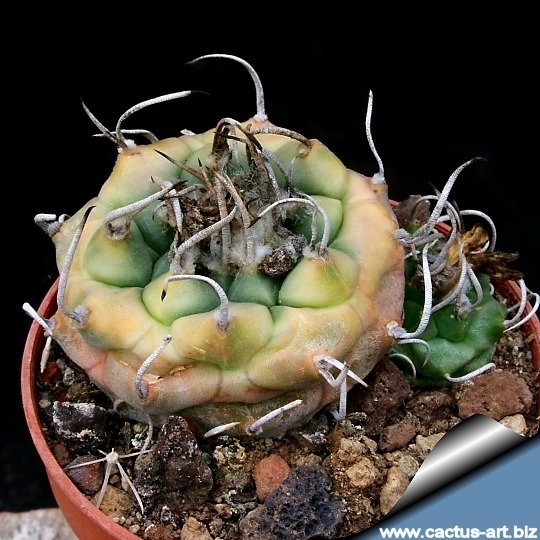
Stem: Flattened globose, pale grey-green, olive green or purplish-tan in full sun, 2 cm tall, 3.5-5 cm in diameter. The variegated forms show decoloured areas (lacking or with reduced chlorophyll content) that appears cream-yellow to pinkish.
Root: tap root
Tubercles: Broad, flattened, 4-angled.
Areoles: White and woolly.
Spines: 1 to 3 spongy spines, one up to 2 cm
Flowers: White in summer (July to September in habitat), 2.5 cm long, 4 cm across, white or pinkish stigmas.
Variegation: A variegated plant has sectors, patches or stripes with two or more different colours, even distinct shades of green. Plants with variegated stems or leaves are often attractive and highly prized. In most species the stems or leaves are normally green, and variegated epidermis is an uncommon mutation, termed a chimera. A chimeral variegation is due to losing the ability to produce chlorophyll in some of the plant’s tissue, so that this tissue is no longer green. Tissues lacking chlorophyll are usually white or pale yellow coloured (due to carotenoid pigments) or red (due to betalain or anthocyanin pigments) contrasting with the normal green tissue. There are several forms of variegation, depending on the tissues that have been affected. The variegation in some forms is unstable. The extent and nature of the variegation can vary, and sometimes the plant will return to the green form. In others it is stable and does not change under normal conditions. Because the variegation is due to the presence of two kinds of plant tissue, propagating the plant must be by a vegetative method of propagation that preserves both types of tissue in relation to each other.
Cultivation and Propagation
Variegated cacti are regarded as choice and difficult in cultivation, but despite that many of them are relatively easy to grow. But be aware that they cannot tolerate prolonged exposure to direct sun light (especially during the hottest summer days), so grow them in half-shade or under filtered sun. They are sometime seen as grafted plants, but many grow well on their own roots, too.
On the contrary, the albinos can survive only if grafted on a strong green base.
Use mineral well-permeable substratum with little organic matter (peat, humus). Water sparingly from March till October, and keep perfectly dry in winter, at temperatures from 5 to 15 degrees centigrade. (In general these plants are more tender and cannot endure freezing temperatures ). In the rest period no high atmospheric humidity!!
Propagation: Almost usually by seed. Plants are often grafted onto column-shaped cacti.
Source: Turbinicarpus polaskii f. variegatus, LLIFLE - Encyclopedia of living forms, CC-BY-SA, retrieved 2026-10-25.
Gallery