Publication: Gen. Turbinicarpus 79. 2004 [Mar 2004]
Description
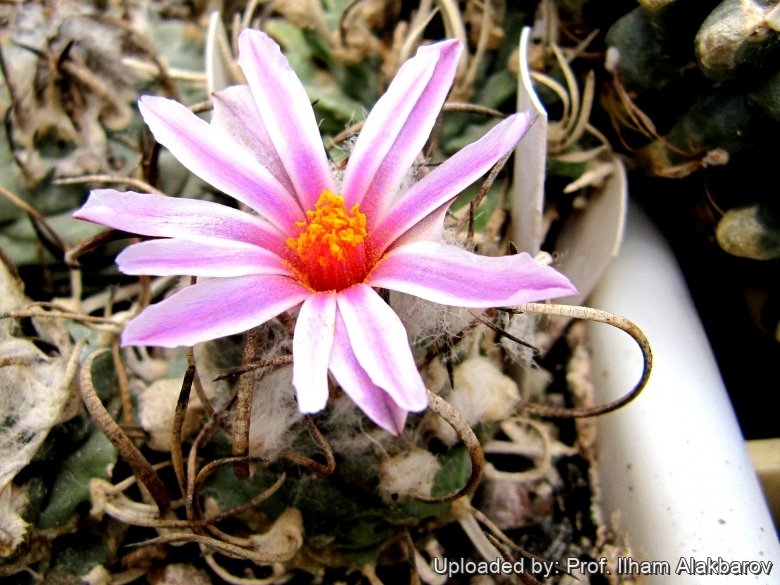
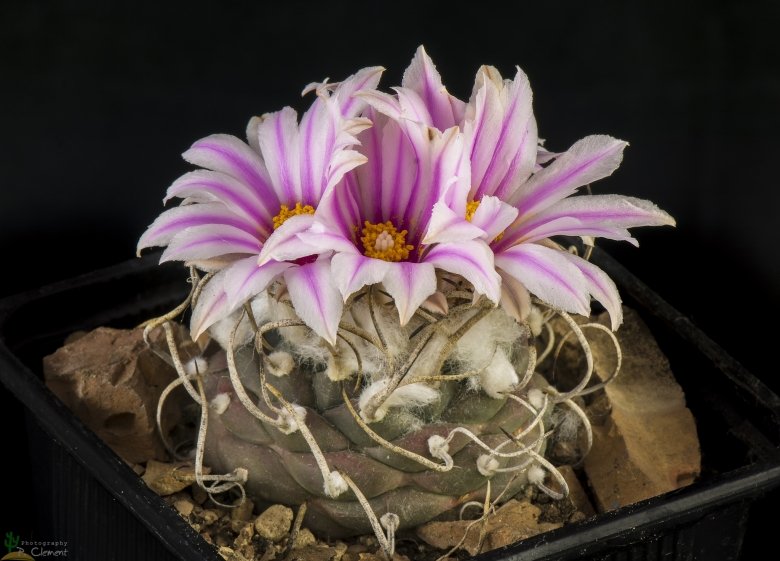
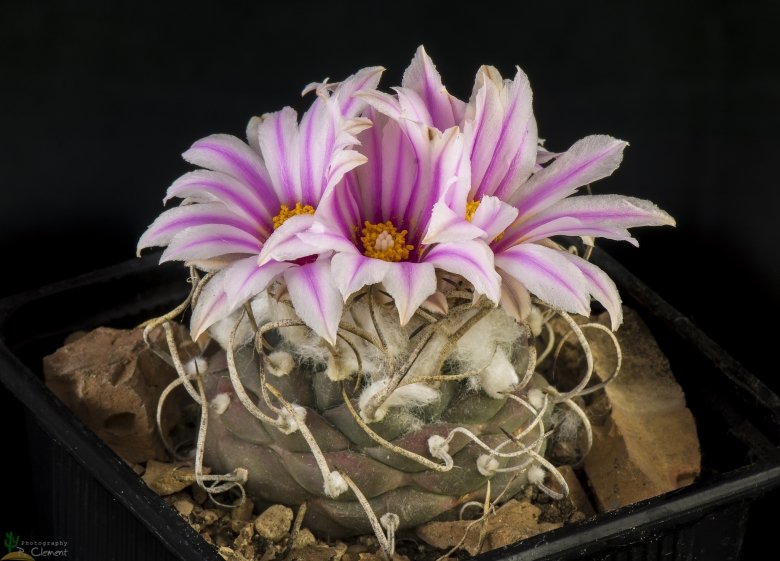
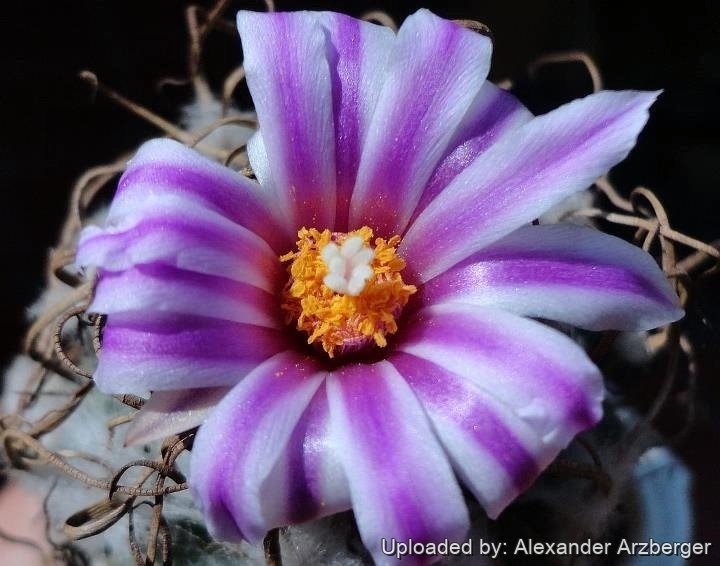
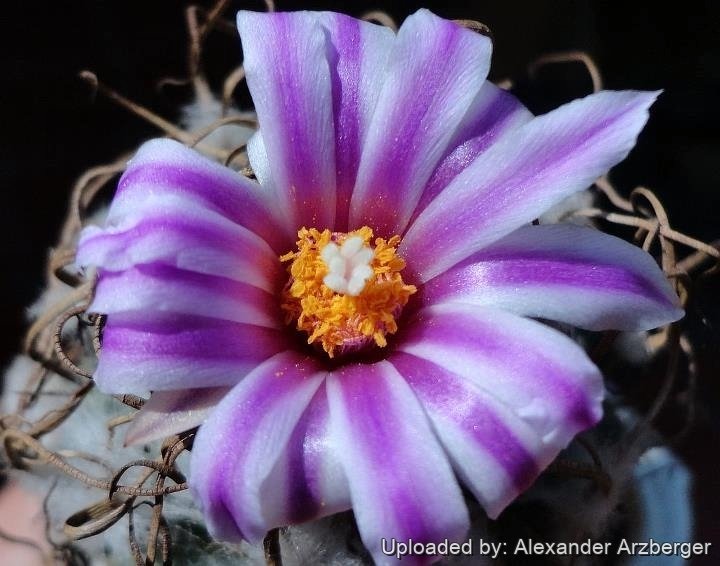
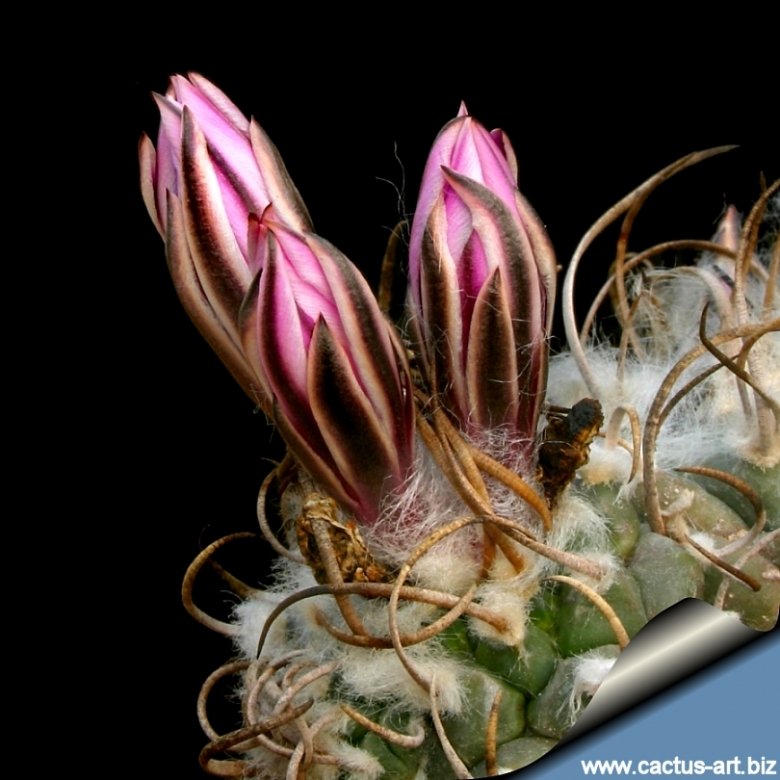
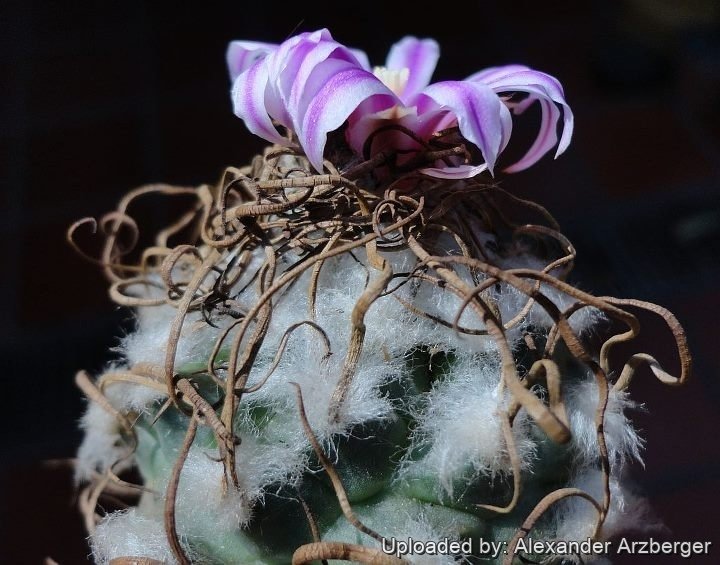
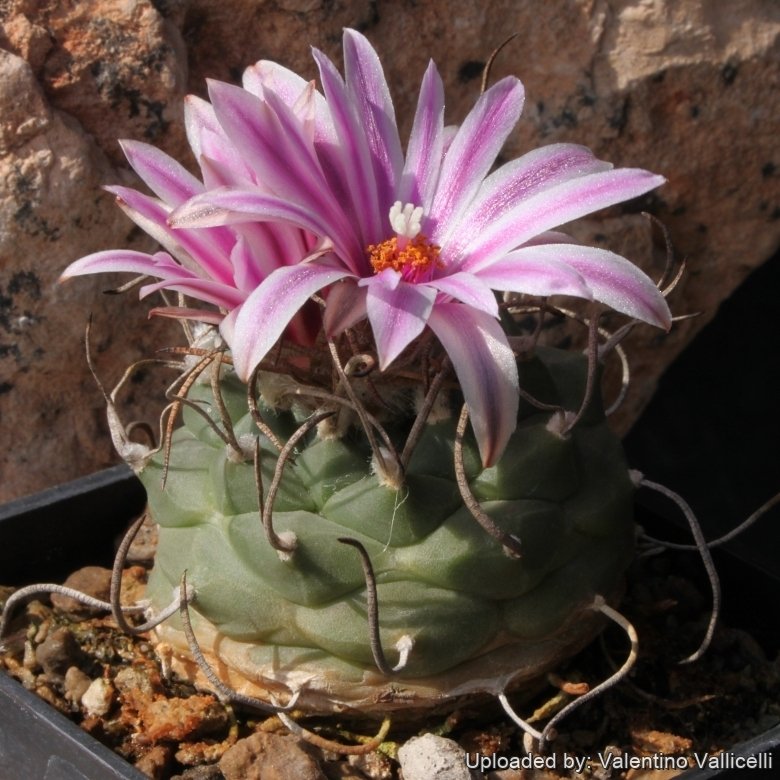
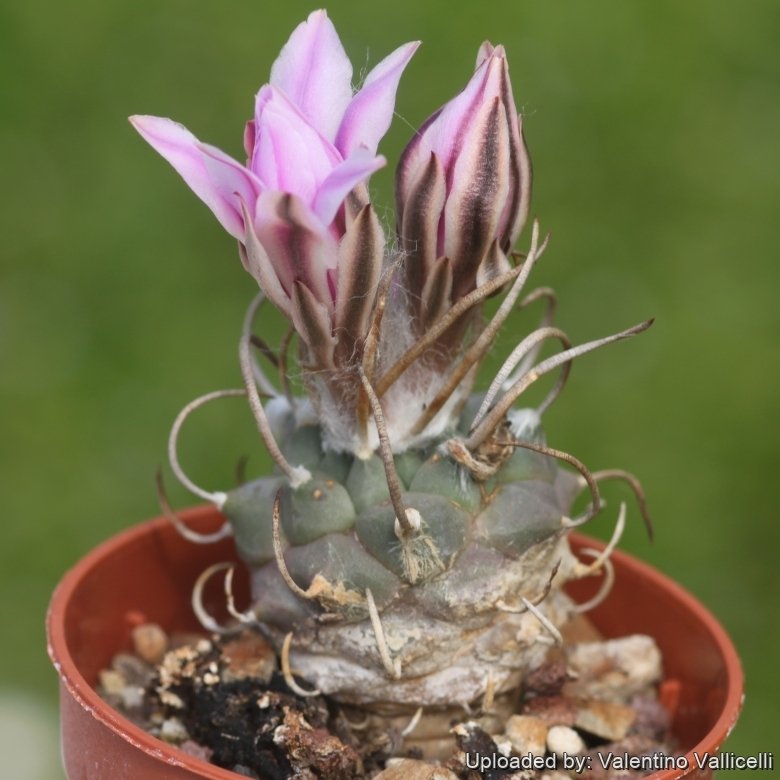
Turbinicarpus schmiedickeanus subs. rubriflorus is almost indistinguishable from the standard “Turbinicarpus schmiedickeanus subs. schwarzii”, but when the buds - well hidden in the plants’ woolly crown - appear, all its magnificent and unique flower colouring reveals the difference. The flowers are much more coloured than the standard subs. schwarzii. The petals have bright pink to dark magenta midribs.
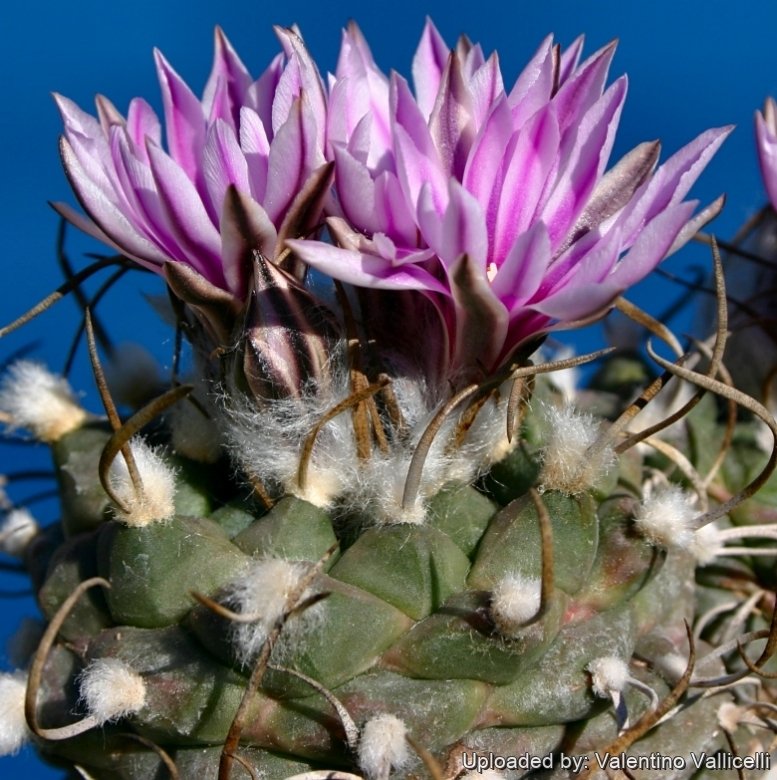
Stem: Solitary or slowly clumping (dichotomy also observed) flattened semi-globose; turbinate, pale greysh-green globose, with a further 30 mm underground, 2 cm tall, 3,5-5 cm in diameter (but often larger in cultivation).
Parastichy number: 5 and 8
Areoles: Oval, woolly, at top of plant, quickly disappear.
Tubercles: Flattened 4-angled (diamond shaped) broad and stumpy.
Spines: 1 to 3 spongy yellowish brown or whitish horn coloured, the lower one longer, up to 2 cm, the 2 side spine approximately 4-5 mm, often missing, still shorter, flattened below, curved towards the apex and often contorted grey, corky, rather soft, with transverse fissures. The spines are bunched at plant apex and persistent only on the upper body, below they fall off and the body and tubercles are corky and bare.
Root: Tap root, nearly shaped like a drawn molar tooth, with mass of fibrous roots.
Flowers: Apical short tubed, campanulate, 20-30 mm long, 30-40 mm wide, sepals lanceolate, margins entire white or pale pink with darker bright-pink or purplish midribs.
Flowering season: Spring to autumn.
Origin and Habitat
Mexico (San Luis Potosi: Cerros Blancos)
Habitat: Grows on flat or sloping crushed limestone surfaces, under sparse low to high bushes, hechtias and agaves.
Cultivation and Propagation
It’s a fairly easy species to cultivate. It needs a very well drained soil, and requires strong sun to part sun to develop good spinal growth. Waterings should be rather infrequent, to keep the plant compact and avoid it becoming excessively elongated and unnatural in appearance. Keep dry in winter or when night temperatures remain below 10° C; it is hardy to -4°C for a short period. Assure a good ventilation.
Bibliography
Major references and further lectures
-
Edward Anderson “The Cactus family” Timber Press, Incorporated, 2001
-
James Cullen, Sabina G. Knees, H. Suzanne Cubey “The European Garden Flora Flowering Plants: A Manual for the Identification of Plants Cultivated in Europe, Both Out-of-Doors and Under Glass” Cambridge University Press, 11/Aug/2011
-
David R Hunt; Nigel P Taylor; Graham Charles; International Cactaceae Systematics Group. “The New Cactus Lexicon” dh books, 2006
-
Davide Donati, Carlo Zanovello “Conoscere, capire, coltivare i Turbinicarpus-Rapicactus” Cactus Trentino Sudtirol, 2004
Gallery