Publication: Cactaceae (Britton & Rose) 3: 87, pl. 10. 1922 Remarks: Ritter (Kakteen Sudamarika 3: 1074. 1980) also made this combination
Description
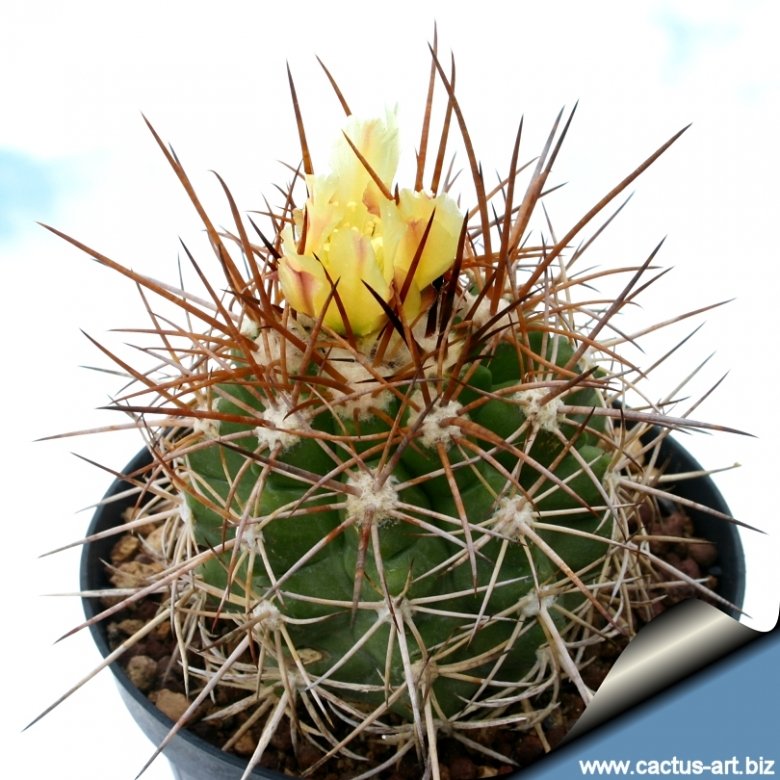
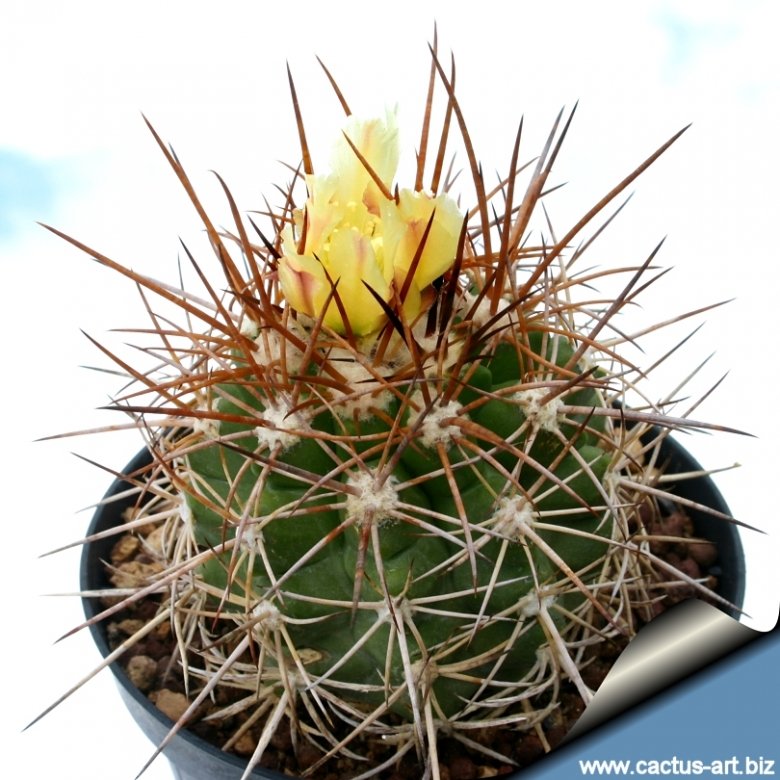
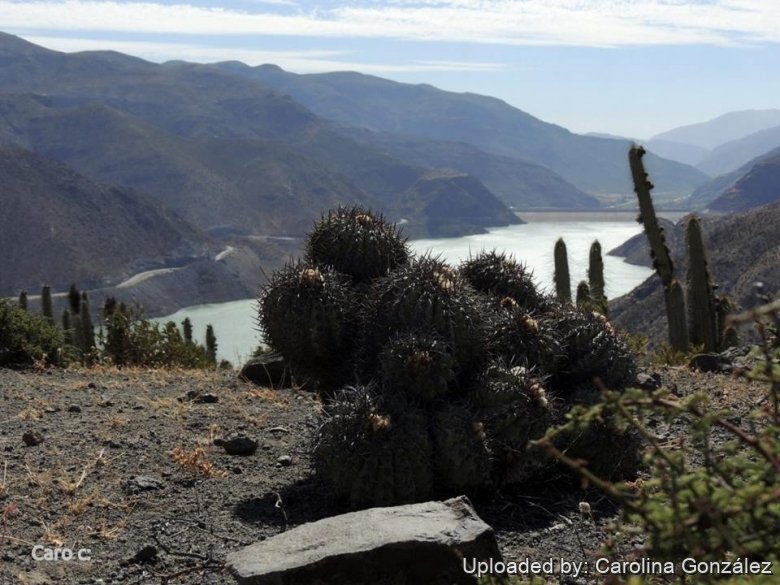
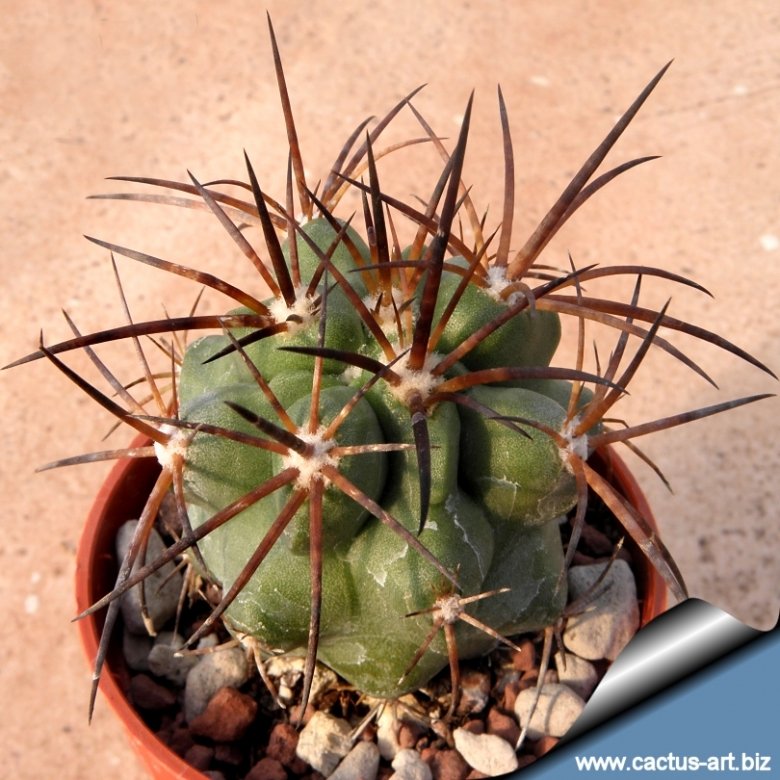
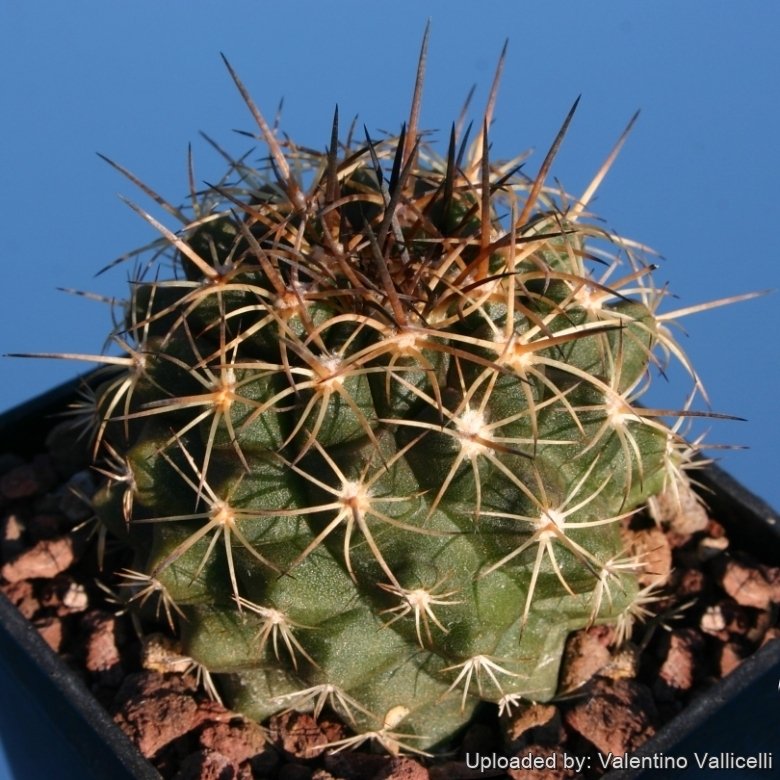
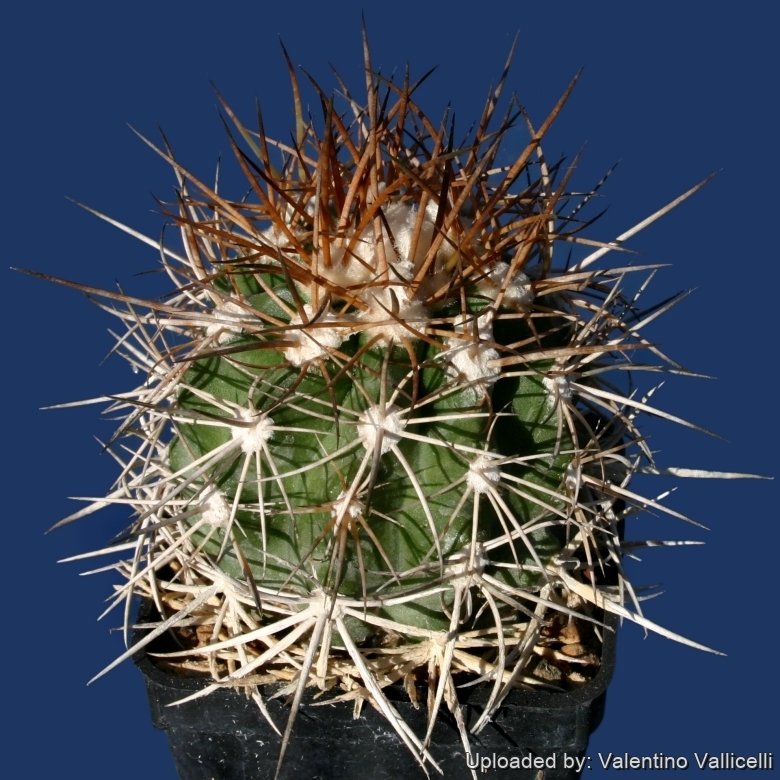
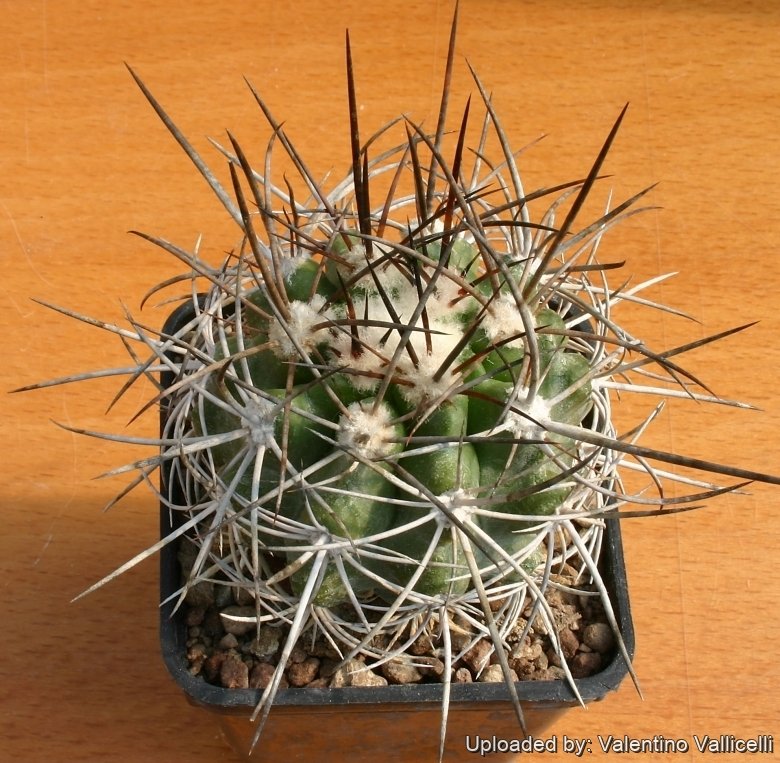
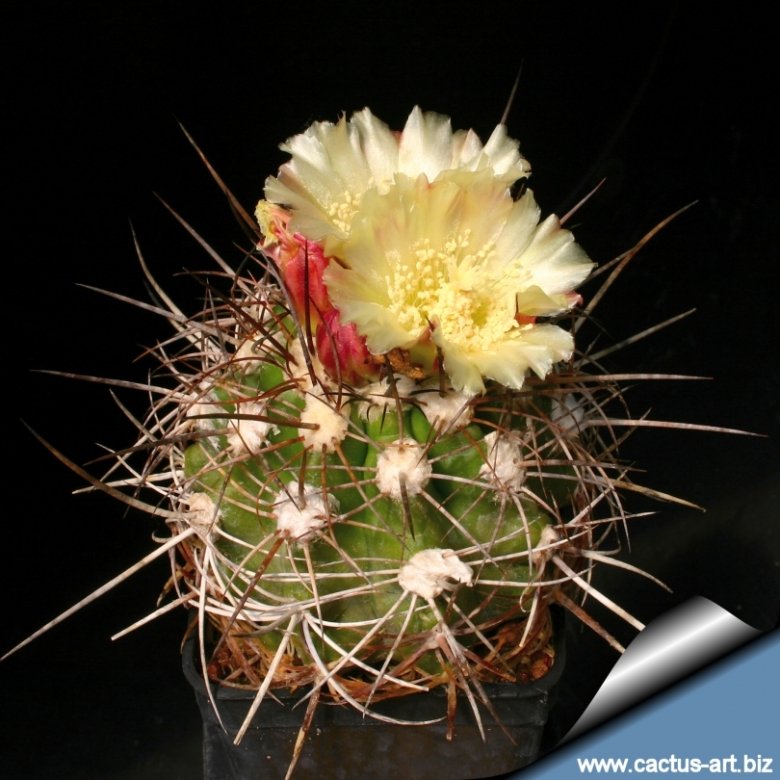
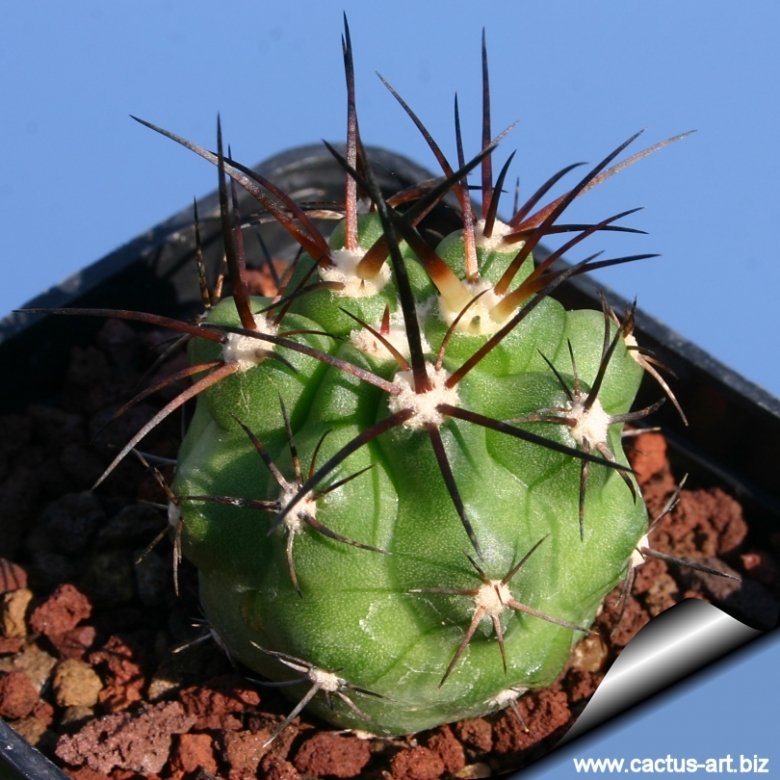
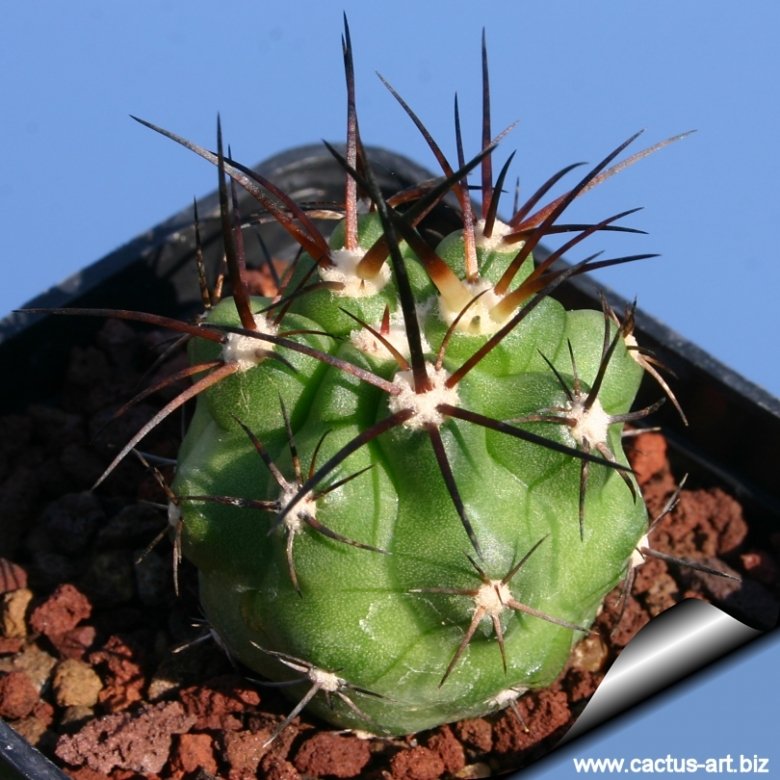
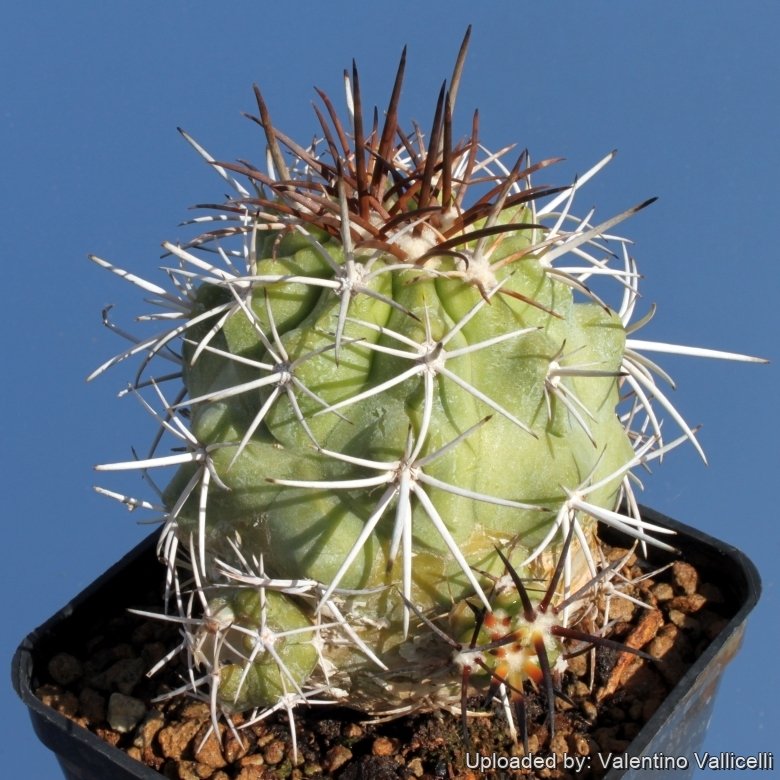
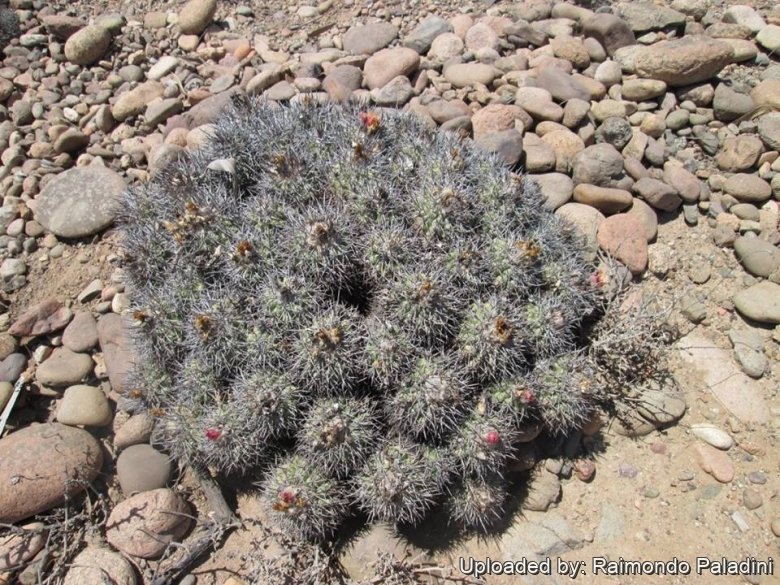
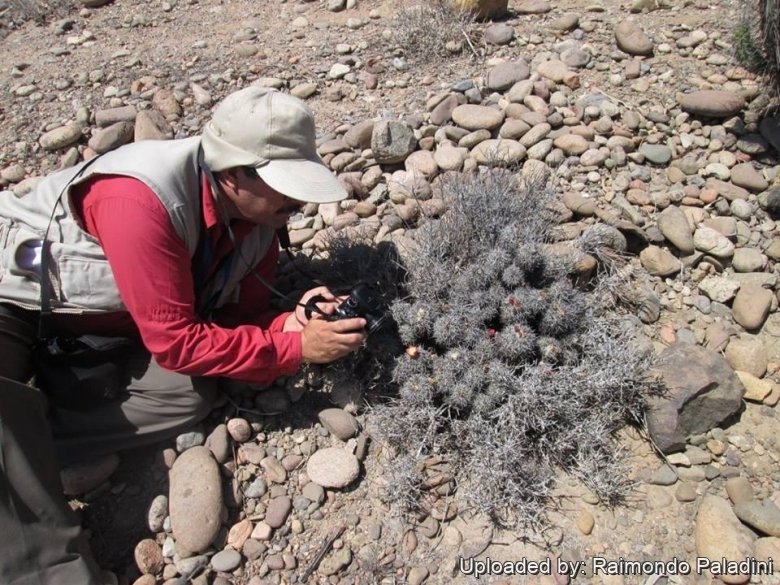
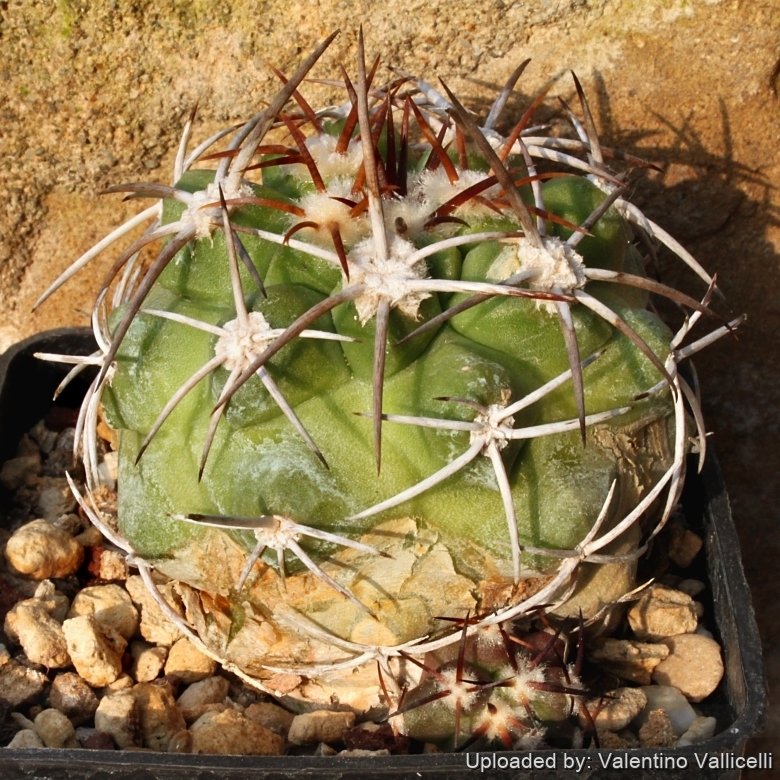
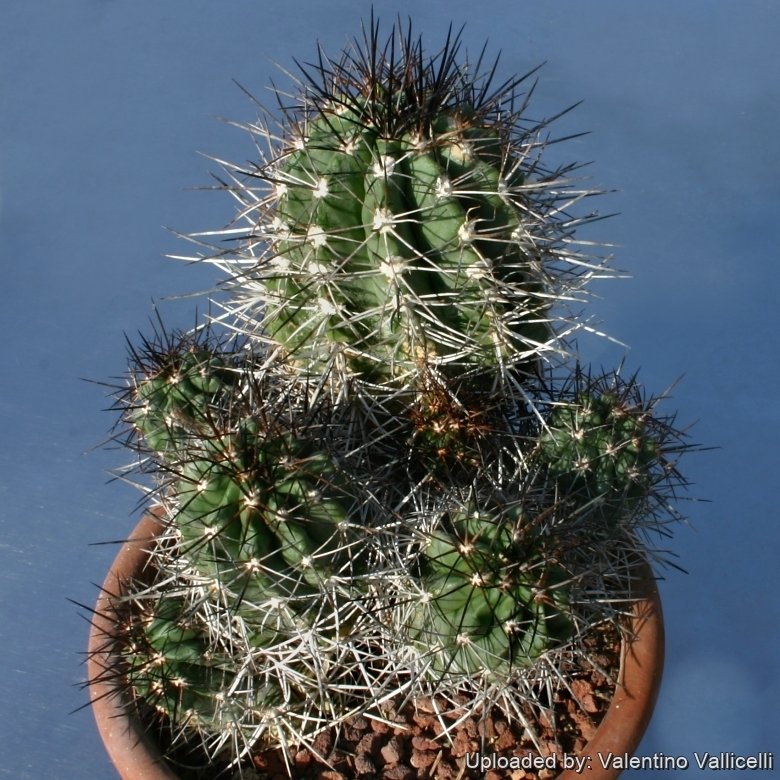
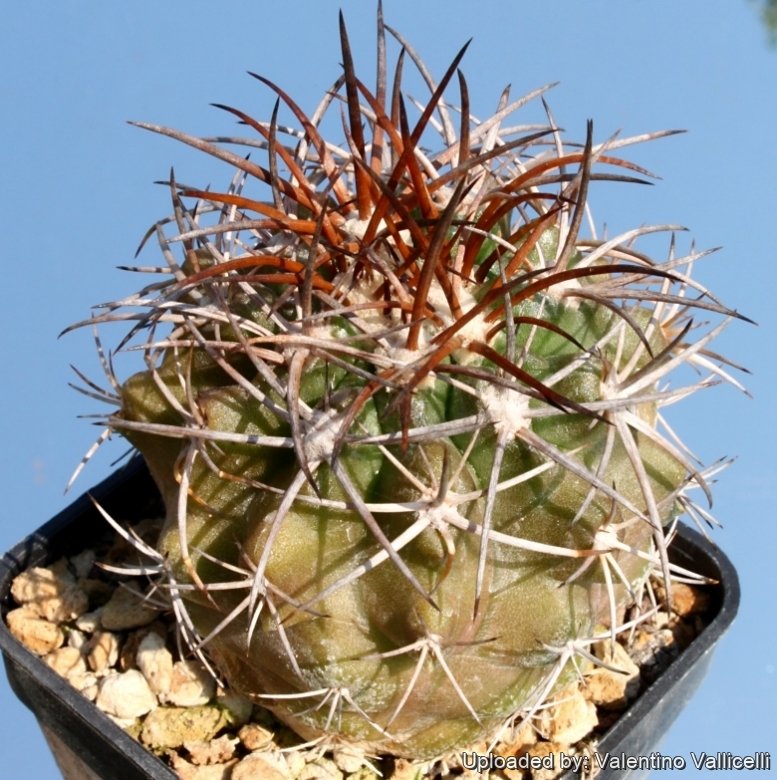
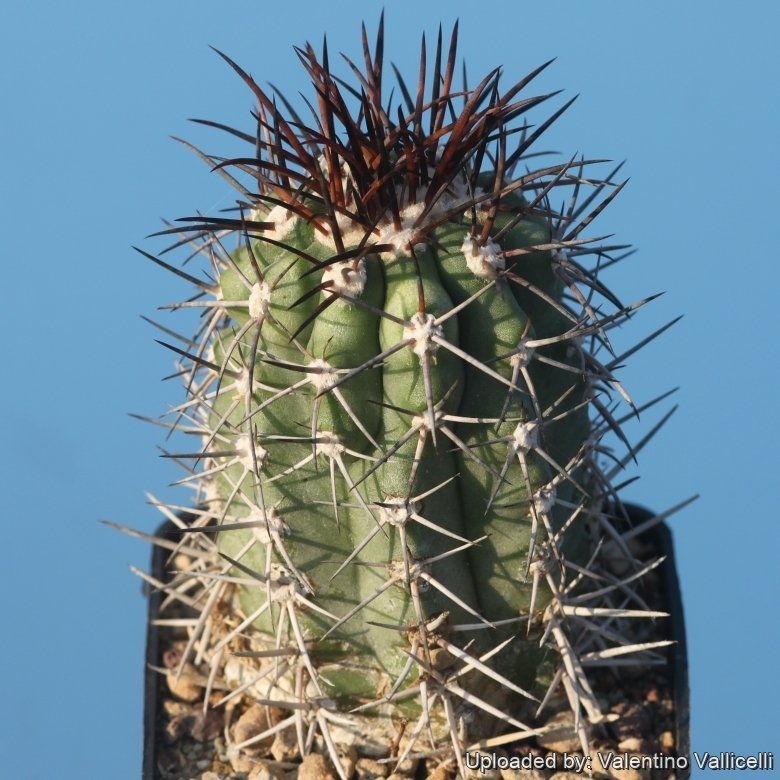
Copiapoa coquimbana is a strongly spined cactus that branches vigorously from the base, forming large clumps or cushions up 1 m wide and 60 cm high and composed of several hundred heads. It’s a highly variable taxon with several more or less similar forms that could be described as geographical varieties or, in some cases, critical species.
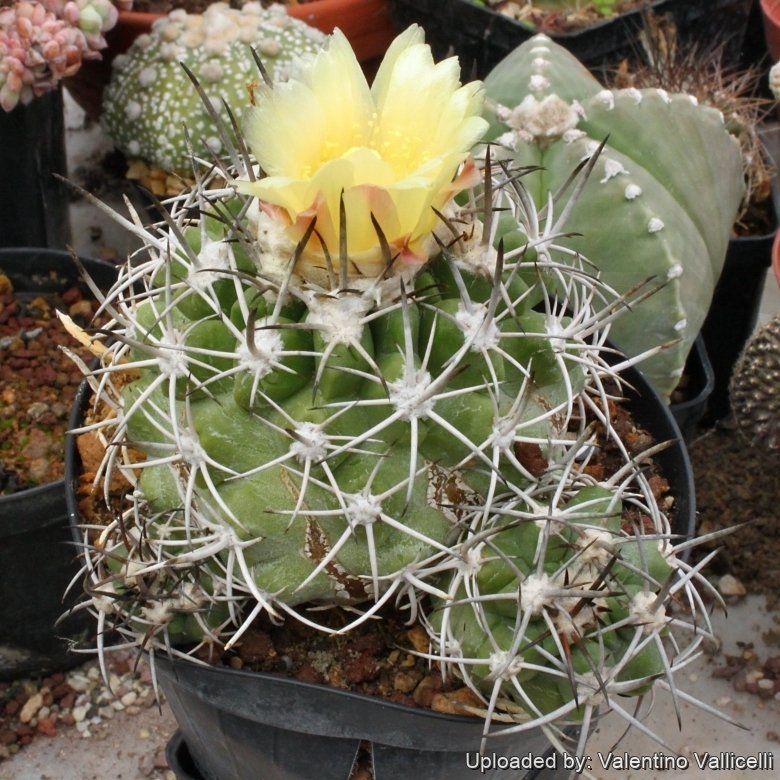
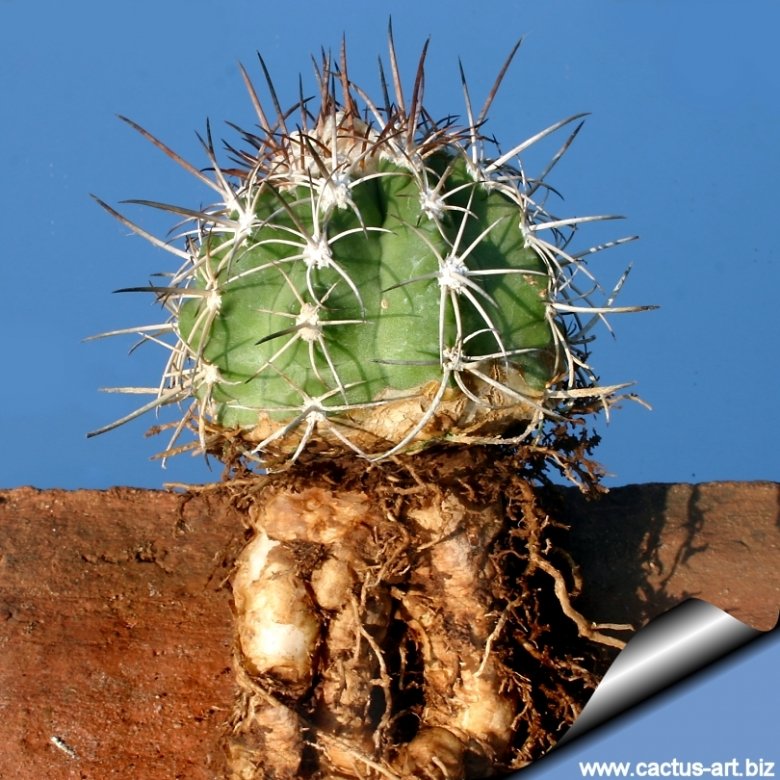
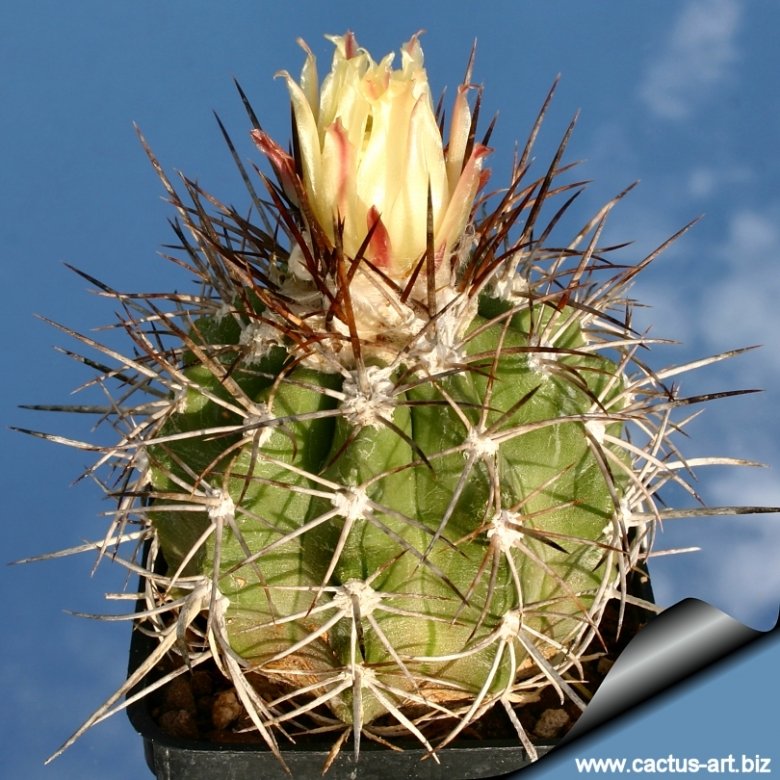
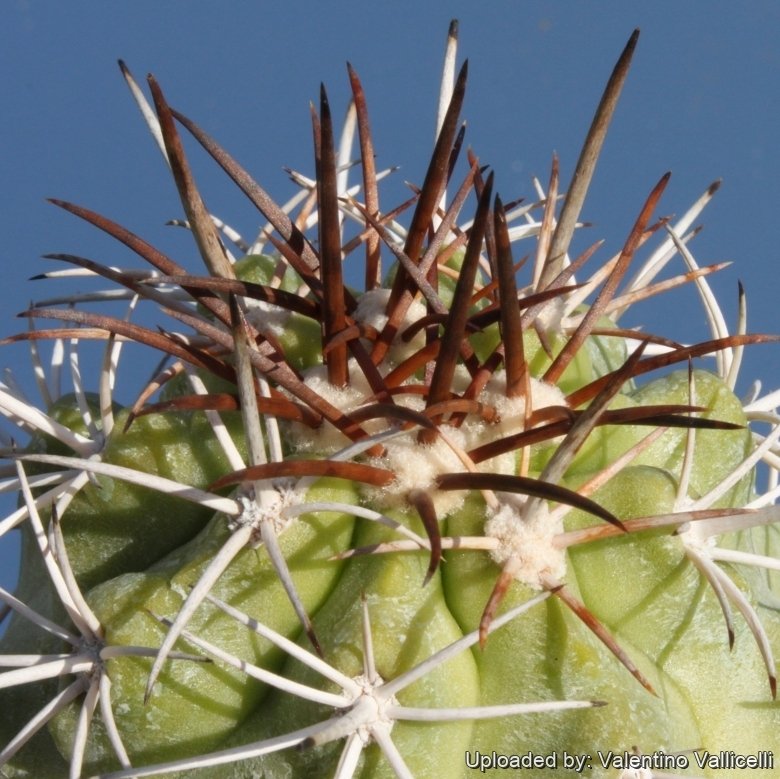
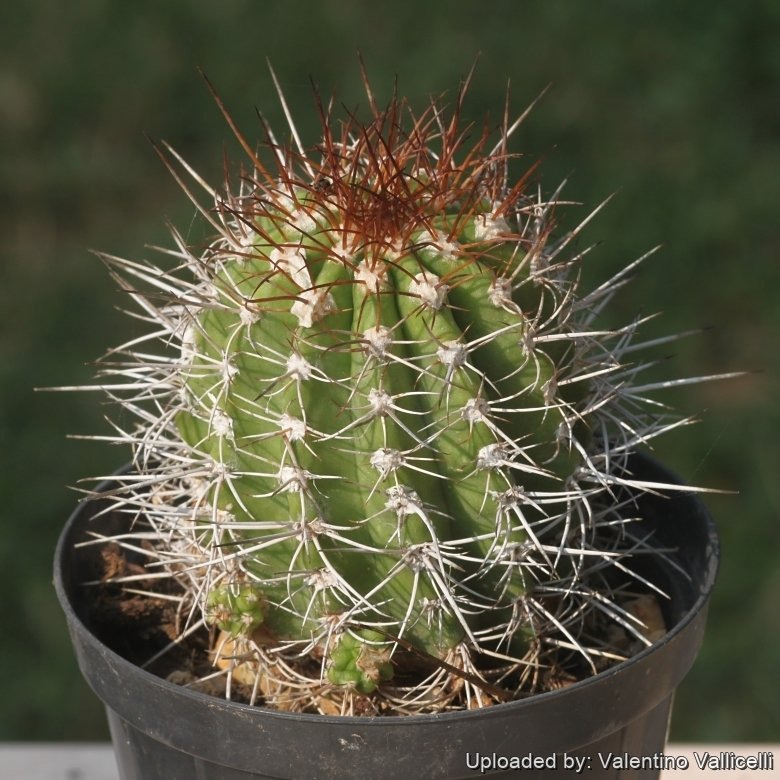
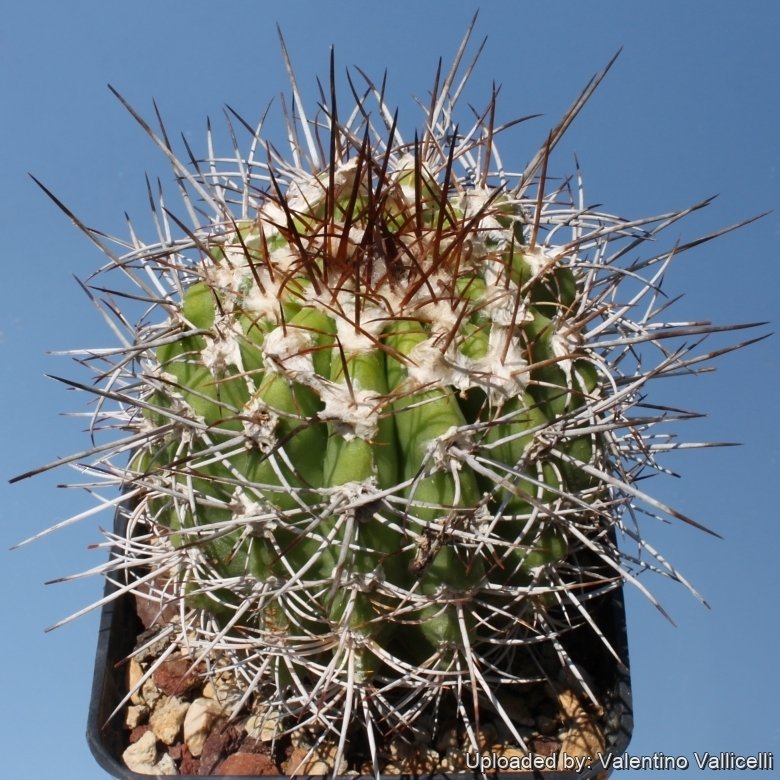
Stem: Elongated-globose, relatively soft, 7-15 cm in diameter, pale to bright green or bluish green, and crowned by a dense mass of long white wool, particularly at flowering time.
Ribs: There are 10 to 20 strongly tuberculate especially in young specimens
Tubercles: With a rounded, raised edge and a wide base.
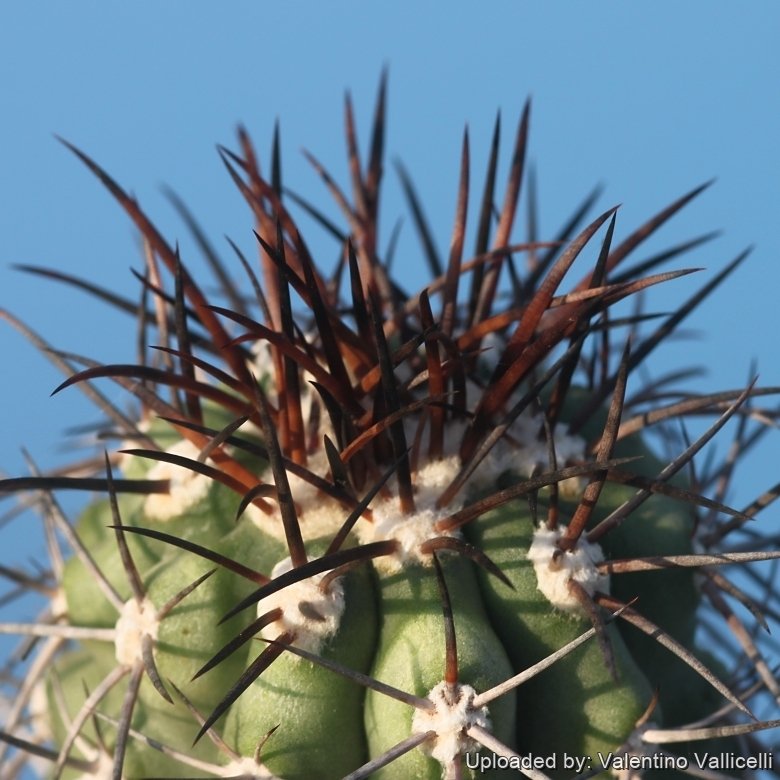
Areoles: Apical, convex, covered with short wool when young, later glabrous, about 5-10 mm in diameter and 0,5-2 cm apart.
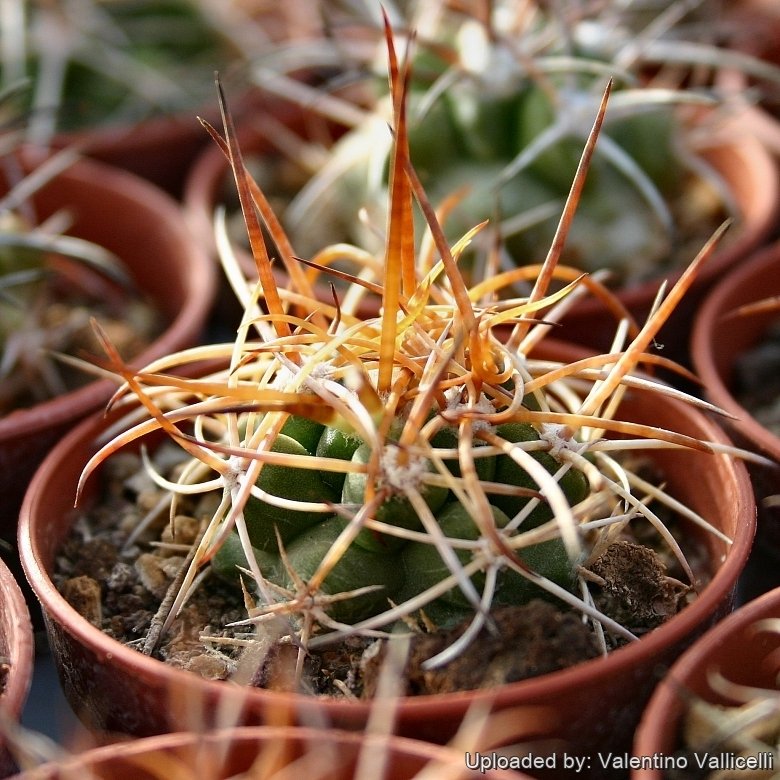
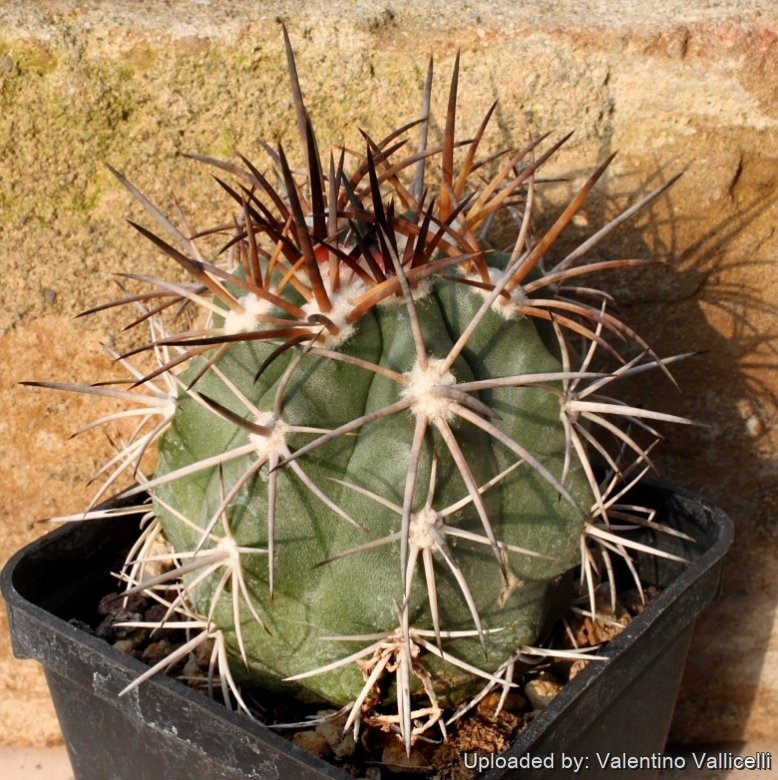
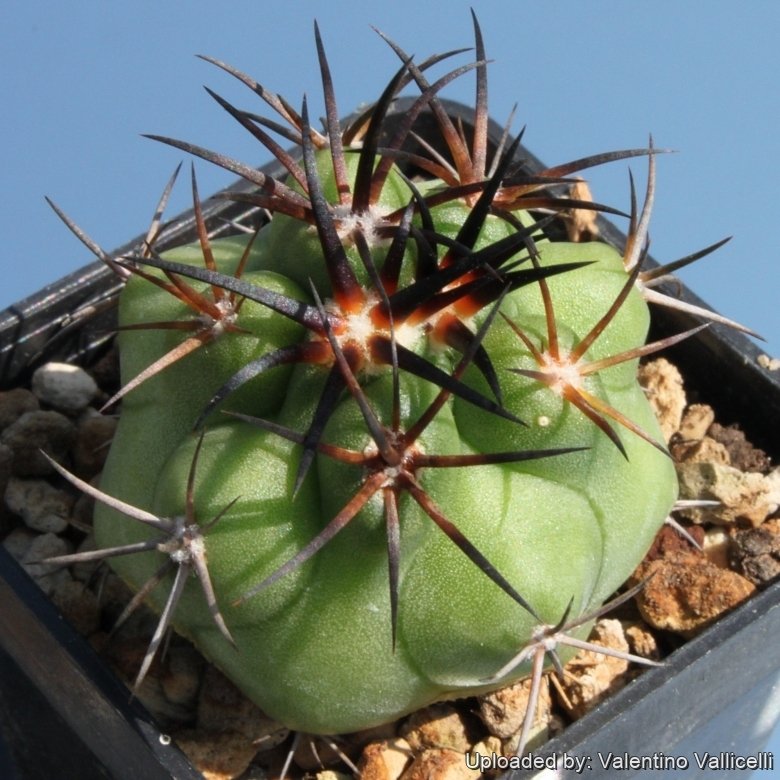
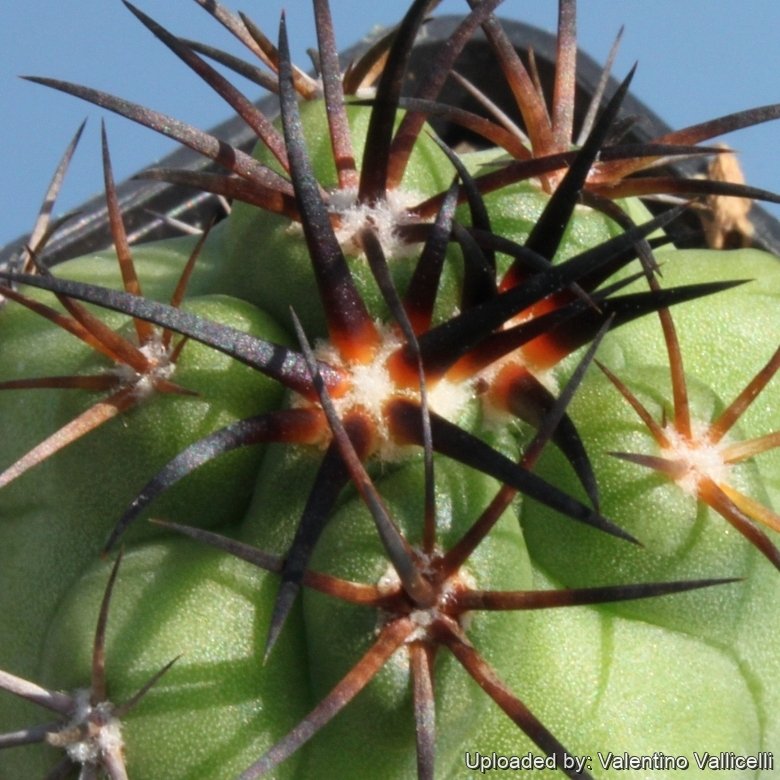
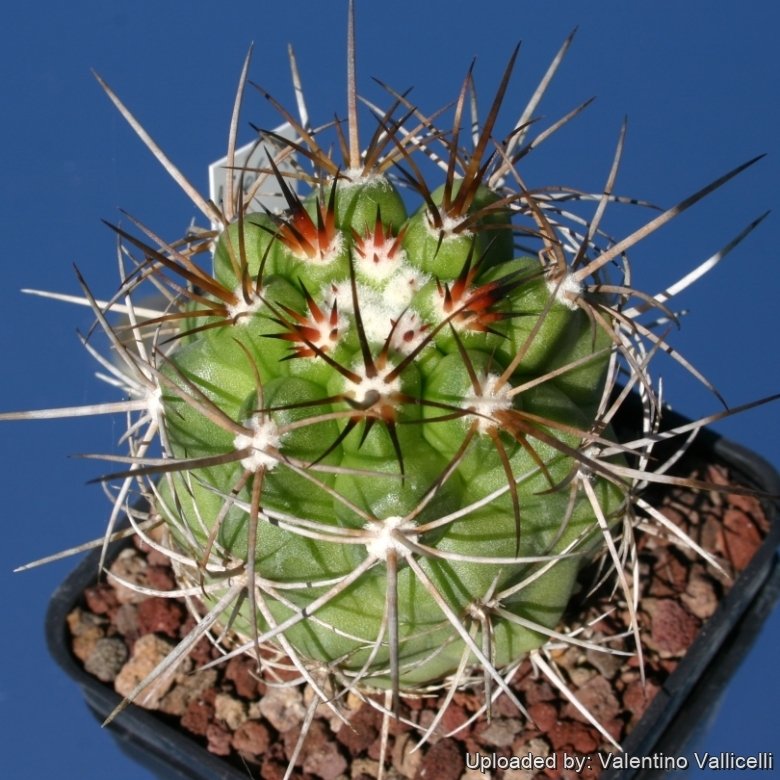
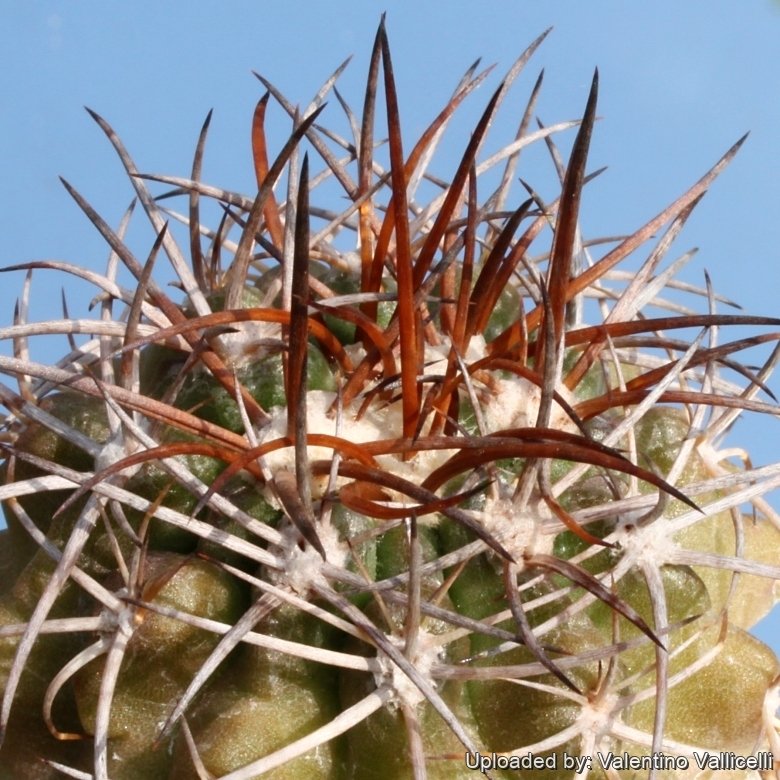
Radial spines: 5 to 10, stout, 1-5 cm long, fairly slender or slightly curved, horizontal, pointing outwards, narrowed angle to the central spine, honey-amber, brown or black, becoming grey with age.
Central spines: Absent or one or two thicker 3-6 cm long.
Roots: It has a shallow, diffuse root system or (less frequently) a short taproot.
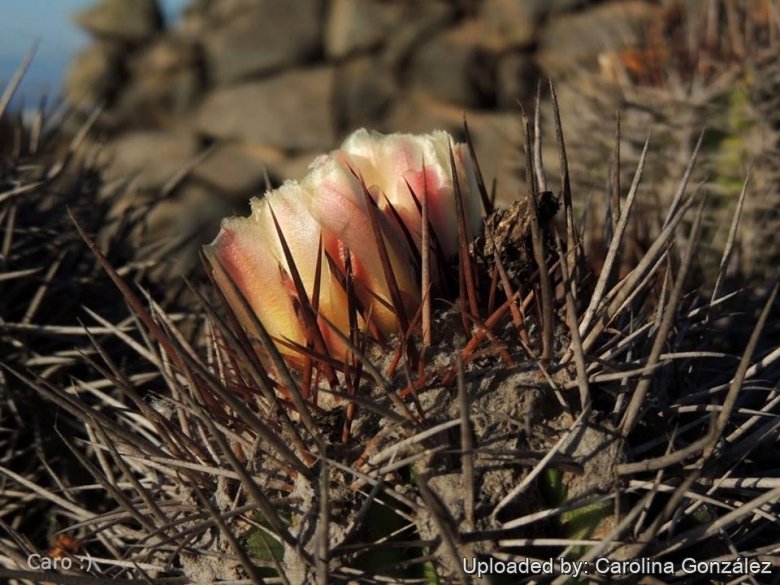
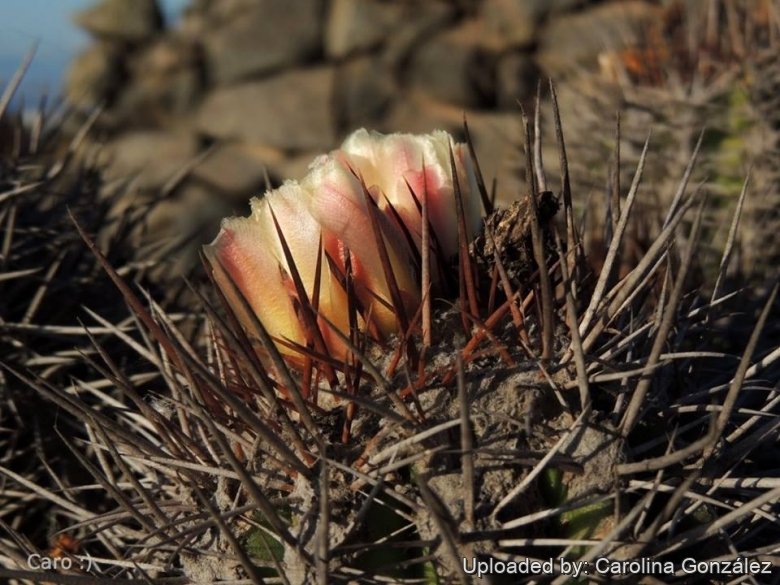
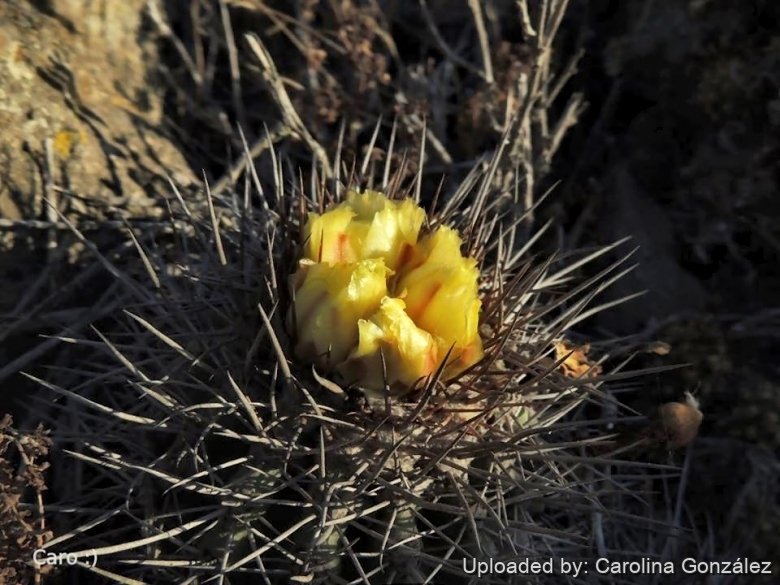
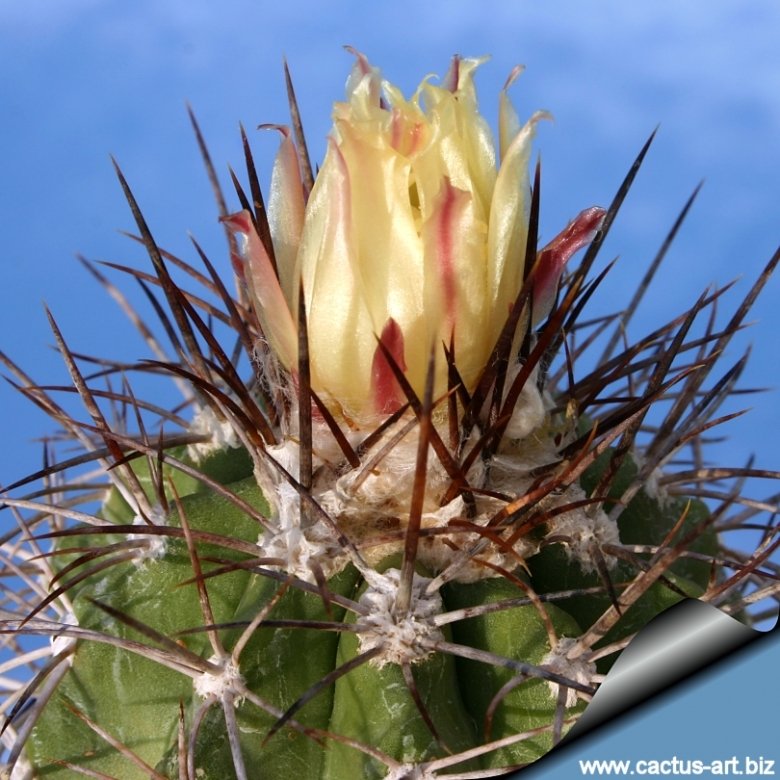
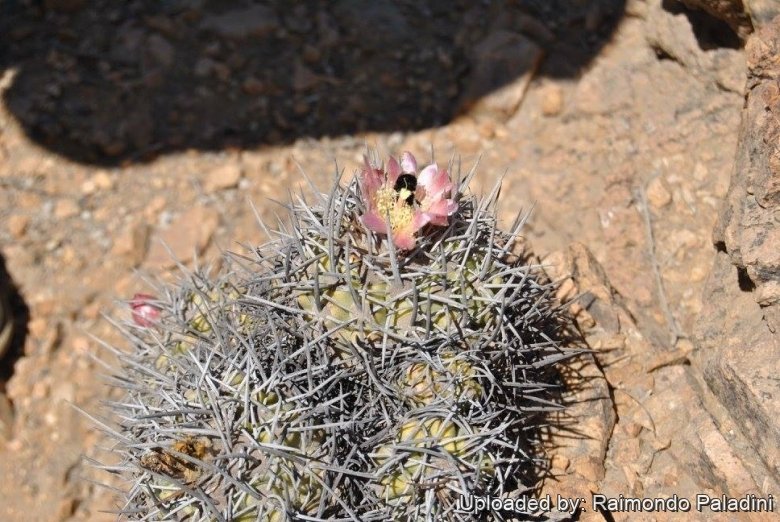
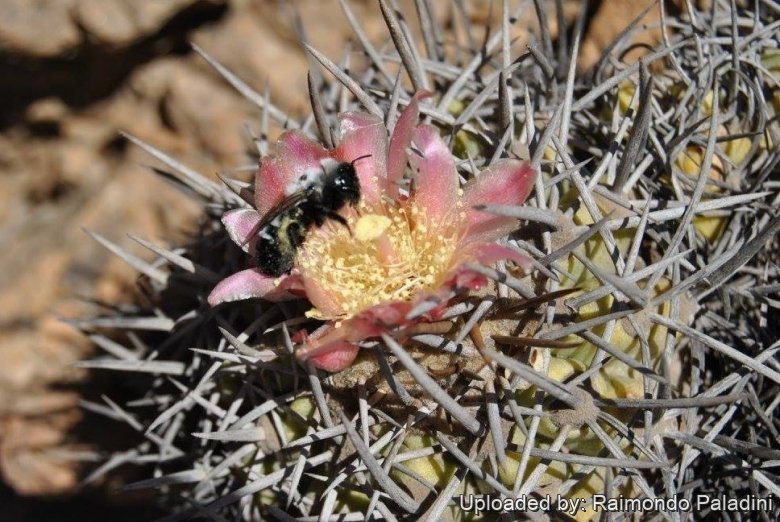
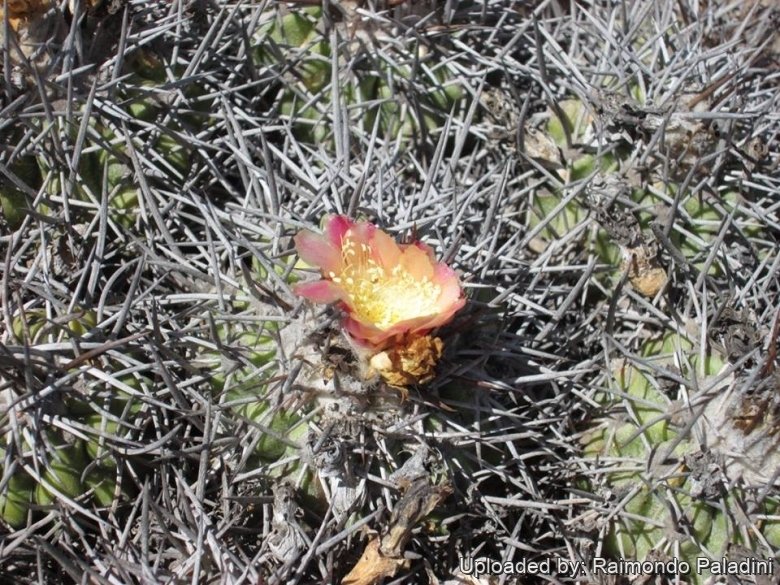
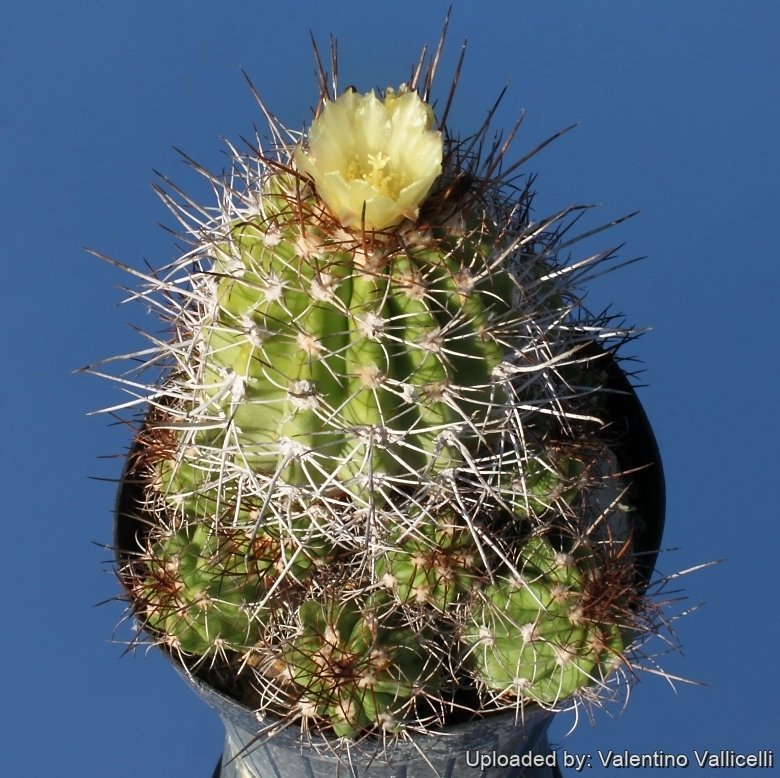
Flowers: At the apex, diurnal closing at night, fragrant, protracting the period of opening many days, campanulate, 2,5-5 cm long, and they grow from the centre of the white wool at the apex. The outer segments of the perianth are linear red-brown or greenish. The inner segments are wide, blunt and yellow with a subtle red mid-stripe.
Fruit: About 15 mm in diameter reddish-brown, flowers remnants separate early from the fruit.
Seeds: 2 x 1,5 mm not shiny, surface with low and rounded bumps.
Origin and Habitat
South of the Copiapoa genus range (from the hills around the coastal towns of Coquimbo and La Serena in the province of Coquimbo) Chile.
Habitat: It grows on sandy or gravelly soils in succulent vegetation and desert scrub such as Puya chilensis, Oxalis gigantea, Heliotropium stenophyllum, Eulychnia breviflora, Adesmia argentea, Colliguaja odorifera, Flourensia thurifera and Bulnesia chilensis. The main threats in the short term are the expansion of urban areas, construction of reservoirs and farm work. While the main threat in the long term is the desertification process.
Cultivation and Propagation
Considering that Copiapoa coquimbana comes from a habitat with an extremely arid climate, they are remarkably tolerant of pot culture. These plants have taproots and are susceptible to overwatering. They requires also an appropriate air circulation. Copiapoas are summer grower species easy to cultivate.
Growth rate: This is a slow growing cactus kept for the beauty of its form that will make clumps given the best conditions.
Soils: It likes very coarse mineral cactus mix soil, but can become too elongated if compost is too rich.
Repotting: Use pot with good drainage.
Watering: It requires light but regular waterings in summer, but let the soil mix dry between waterings, but do not overwater (Rot prone), it must be strictly kept dry throughout the winter quiescent period since it is very sensitive to any moisture excesses keep dry in winter.
Fertilization: Feed with a high potassium fertilizer in summer.
Hardiness: Not highly tolerant of a great deal of frost. They need to be kept in a cool place during winter rest and are resistant to light frost if kept on the dry side prior to, and during, cold weather ( they are hardy to -2 C ° C short periods). However some warmth throughout the year will increase the grower’s success (minimum 5° to 10°C during rest season).
Exposition: Requires full sun or light shade and careful watering to keep plant compact with strong coloured spines. Tends to bronze in strong light, which encourages flowering and heavy spine production. Light shadow my be useful in the hottest summer days.
Uses: It is an excellent plant for container growing. It always looks good and stays small. It look fine in a cold greenhouse and frame or outdoor in a rockery.
Pests & diseases: It may be attractive to a variety of insects, but plants in good condition should be nearly pest-free, particularly if they are grown in a mineral potting-mix, with good exposure and ventilation. Nonetheless, there are several pests to watch for:
- Red spiders: Red spiders may be effectively rubbed up by watering the infested plants from above.
- Mealy bugs: Mealy bugs occasionally develop aerial into the new growth among the wool with disfiguring results, but the worst types develop underground on the roots and are invisible except by their effects.
- Scales: Scales are rarely a problem. It is wise to treat your whole collection with a systemic insecticide twice a year in spring and autumn.
- Rot: Rot is only a minor problem with cacti if the plants are watered and “aired” correctly. If they are not, fungicides won’t help all that much. To prevent rottenness it is also advisable to surround its root neck by very rough sand or grit, this help a fast water drainage.
Propagation: Seeds (or offsets if available), Grafting is often used to speed growth rate and to create a back-up to plants in collection. Seeds germinate in 7-14 days at 21-27° C in spring, remove gradually the glass cover as soon the plants will be well rooted (ca 1-2 weeks) and keep ventilated, no full sun for young plants!
Notes
This is one of the oldest species, described in 1885 by Rümpler asEchinocactus coquimbanuss, and later transferred to the genusCopiapoa by Britton and Rose.
Bibliography
Major references and further lectures
-
N. L. Britton, J. N. Rose “The Cactaceae. Descriptions and Illustrations of Plants of the Cactus Family.” Volume 4, The Carnegie Institution of Washington, Washington 1923
-
Edward Anderson “The Cactus family” Timber Press, Incorporated, 2001
-
Riha & Subik. “The illustrated encyclopedia of cacti and other succulents” (edited by G. & K.A. Beckett) 1981
-
Brickell, Christopher “Gardener’s Encyclopedia of Plants & Flowers.” Colour Library Books. p. 443, 1996
-
James Cullen, Sabina G. Knees, H. Suzanne Cubey “The European Garden Flora Flowering Plants: A Manual for the Identification of Plants Cultivated in Europe, Both Out-of-Doors and Under Glass” Cambridge University Press, 11/ago/2011
-
David R Hunt; Nigel P Taylor; Graham Charles; International Cactaceae Systematics Group. “The New Cactus Lexicon” dh books, 2006
-
Graham Charles “Copiapoa” Cirio Pub. Services, 1999
-
Friedrich Ritter - Kakteen in Südamerika (Ergebnisse meiner 20jährigen Feldforschungen) 1980
-
Andrés Moreira-Muñoz: “Plant Geography of Chile” Springer, Heidelberg 2011
From llifle page Copiapoa alticostata
Description
Copiapoa alticostata (= Copiapoa coquimbana var. alticostata), which is now subsumed in Coquimbana coquimhana, is considered by many authors a natural hybrid between Copiapoa echinoides var. dura and Copiapoa coquimbana. It is part of the very variable Copiapoa coquimbana complex, but distinguishes from other forms for its tall ribs and very strong, dark brown to black spines, it would be a good idea to retain the old name as well. It varies considerably in cultivation from native habitat. In habitat, the bodies are much compact and very spiny. When grown in pots, this species tends to elongate and have darker spines on most of the body, with grey-white spines only appearing on the oldest areoles at the bottom of the plant.
Habit: It grows in clusters and may form splendid mounded clumps with time.
Stem: Young stems spherical green, later elongated 20-40 cm tall grey-green or dark silver, and crowned by a dense mass of white wool, particularly at flowering time. Apex in mature specimens up to 5 cm in diameter, often spineless and depressed.
Ribs: It has high ribs about 12 to 18 mm tall, visibly separated and strongly tuberculate especially in young specimens.
Areoles: Large, broad, almost round about 8-13 mm Ø. Young areoles filled with soft dull white felted wool quickly ageing to almost dark grey and often sunken into the ribs.
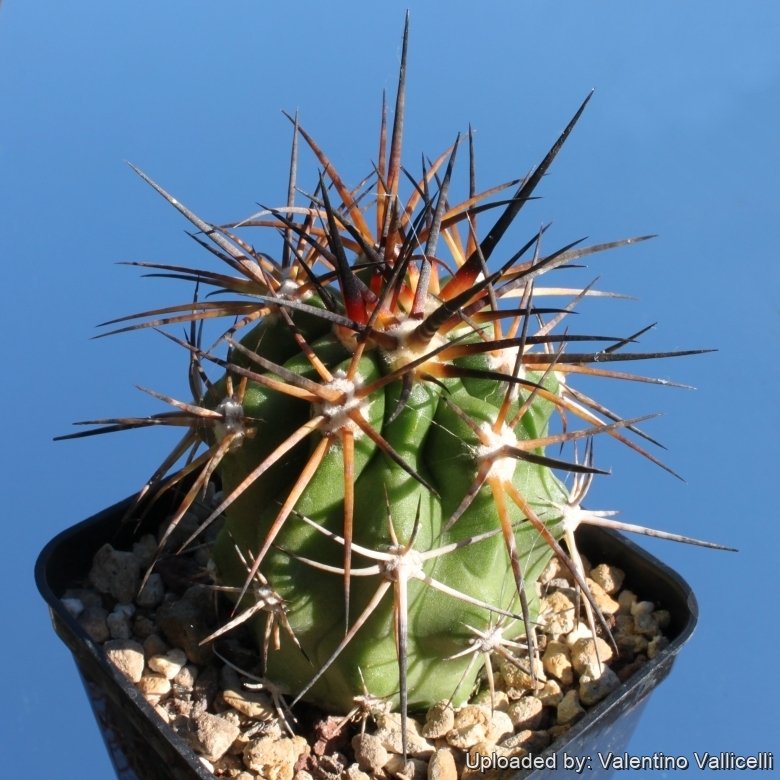
Spines: Strong, stoutly subulate, rigid, at first dark brown to black, afterwards becoming greyish.
Radial spines: Stout, fairly slender, evenly spreading outwards, more or less standing out in a radiating manner, slightly curved inward, with a wide lateral spine angle, round in cross-section.
Central spines: 1 to 4, thicker, upward pointing, round in cross-section.
Flowers: 1 to 3 at a time, diurnal closing at night, protracting the period of opening many days, funnel-shaped, yellow-pink.
Blooming season: Spring.
Fruit: Round to elongate green.
Origin and Habitat
Atacama/Coquimbo - Huasco to southern of Fray Jorge inland in the valleys of Elqui and Choros, Chile. It is possible to find an interesting colony in Freirina.
Altitude: 200-1200 metres above sea level.
Habitat: It grows on gentle slopes and almost flat areas on rocky soil along with scattered shrubs up to 1,5 m tall and other cacti such as Eriosyce napina, Eriosyce napina ssp. lembckei, Eriosyce crispa, Eriosyce villosa and Eulychnia breviflora.
Cultivation and Propagation
Considering that Copiapoa coquimbana var. alticostata comes from a habitat with an extremely arid climate, they are remarkably tolerant of pot culture. These plants have taproots and are susceptible to overwatering. They requires also an appropriate air circulation. Copiapoas are summer grower species easy to cultivate.
Growth rate: This is a slow growing cactus kept for the beauty of its form that will make clumps given the best conditions.
Soils: It likes very coarse mineral cactus mix soil, but can become too elongated if compost is too rich.
Repotting: Use pot with good drainage.
Watering: It requires light but regular waterings in summer, but let the soil mix dry between waterings, but do not overwater (Rot prone), it must be strictly kept dry throughout the winter quiescent period since it is very sensitive to any moisture excesses keep dry in winter.
Fertilization: Feed with a high potassium fertilizer in summer.
Hardiness: Not highly tolerant of a great deal of frost. They need to be kept in a cool place during winter rest and are resistant to light frost if kept on the dry side prior to, and during, cold weather ( they are hardy to -2 C ° C short periods). However some warmth throughout the year will increase the grower’s success (minimum 5° to 10°C during rest season).
Exposition: Requires full sun or light shade and careful watering to keep plant compact with strong coloured spines. Tends to bronze in strong light, which encourages flowering and heavy spine production. Light shadow my be useful in the hottest summer days.
Uses: It is an excellent plant for container growing. It always looks good and stays small. It look fine in a cold greenhouse and frame or outdoor in a rockery.
Pests & diseases: It may be attractive to a variety of insects, but plants in good condition should be nearly pest-free, particularly if they are grown in a mineral potting-mix, with good exposure and ventilation. Nonetheless, there are several pests to watch for:
- Red spiders: Red spiders may be effectively rubbed up by watering the infested plants from above.
- Mealy bugs: Mealy bugs occasionally develop aerial into the new growth among the wool with disfiguring results, but the worst types develop underground on the roots and are invisible except by their effects.
- Scales: Scales are rarely a problem. It is wise to treat your whole collection with a systemic insecticide twice a year in spring and autumn.
- Rot: Rot is only a minor problem with cacti if the plants are watered and “aired” correctly. If they are not, fungicides won’t help all that much. To prevent rottenness it is also advisable to surround its root neck by very rough sand or grit, this help a fast water drainage.
Propagation: Seeds (or offsets if available), Grafting is often used to speed growth rate and to create a back-up to plants in collection. Seeds germinate in 7-14 days at 21-27° C in spring, remove gradually the glass cover as soon the plants will be well rooted (ca 1-2 weeks) and keep ventilated, no full sun for young plants!
Bibliography
Major references and further lectures
-
Walther Haage “Kakteen von A bis Z” Anaconda ed. 2012 ISBN: 3866472609
-
Edward Anderson “The Cactus family” Timber Press, Incorporated, 2001
-
Friedrich Ritter - Kakteen in Südamerika (Ergebnisse meiner 20jährigen Feldforschungen) 1980
-
David R Hunt; Nigel P Taylor; Graham Charles; International Cactaceae Systematics Group. “The New Cactus Lexicon” dh books, 2006
Source: Copiapoa alticostata, LLIFLE - Encyclopedia of living forms, CC-BY-SA, retrieved 2026-10-25.
From llifle page Copiapoa domeykoensis
Description
The “domeykoensis” is a giant form of C. coquimbana that is found on the far North part of the habitat of this species. These plants are very large (they are among the biggest of all Copiapoas) with long curved (but variable) spines. It is solitary or sometime form little clumps with usually not more than 3-7 individual heads. Another peculiarity of this species is the long, strong tap root that is bigger than that of the Copiapoa vallenariensis.
Stem: Globose , 20-25 (or more) cm in diameter, that branch profusely, forming large clumps up 1 m wide and 60cm high. Pale to bright green, and crowned by a dense mass of long white wool, particularly at flowering time. There are 10 to 17 tuberculate ribs, with a rounded, raised edge and a wide base.
Areoles: apical, convex, covered with short wool when young, later glabrous, about 0,5-0,8 cm, 2 cm apart.
Radial spines: 8-10, fairly slender or slightly curved, horizontal, honey-amber, brown or black, becoming gray with age.
Central spines: Usually one or two thicker, 3 to 5 (or more) cm long.
Flowers: Campanulate, 3 cm long, and they grow from the center of the white wool at the apex. The outer segments of the perianth are linear and greenish. The inner segments are wide, blunt and yellow.
Origin and Habitat
This plant is restricted to a very small area at 18 km South-west of Domeyko (Northern range of the species)
Habitat: It grows in very dry stony environment on the side slope of the valley at an altitude of about 300 mt. It is often fund growing along with the very rare Eriosyce algarrobensis and Maihueniopsis domeykoensis .
Cultivation and Propagation
Considering that Copiapoa coquimbana var. vallenarensis comes from a habitat with an extremely arid climate, they are remarkably tolerant of pot culture. These plants have taproots and are susceptible to overwatering. They requires also an appropriate air circulation. Copiapoas are summer grower species easy to cultivate.
Growth rate: This is a slow growing cactus kept for the beauty of its form that will make clumps given the best conditions.
Soils: It likes very coarse mineral cactus mix soil, but can become too elongated if compost is too rich.
Repotting: Use pot with good drainage.
Watering: It requires light but regular waterings in summer, but let the soil mix dry between waterings, but do not overwater (Rot prone), it must be strictly kept dry throughout the winter quiescent period since it is very sensitive to any moisture excesses keep dry in winter.
Fertilization: Feed with a high potassium fertilizer in summer.
Hardiness: Not highly tolerant of a great deal of frost. They need to be kept in a cool place during winter rest and are resistant to light frost if kept on the dry side prior to, and during, cold weather ( they are hardy to -2 C ° C short periods). However some warmth throughout the year will increase the grower’s success (minimum 5° to 10°C during rest season).
Exposition: Requires full sun or light shade and careful watering to keep plant compact with strong coloured spines. Tends to bronze in strong light, which encourages flowering and heavy spine production. Light shadow my be useful in the hottest summer days.
Uses: It is an excellent plant for container growing. It always looks good and stays small. It look fine in a cold greenhouse and frame or outdoor in a rockery.
Pests & diseases: It may be attractive to a variety of insects, but plants in good condition should be nearly pest-free, particularly if they are grown in a mineral potting-mix, with good exposure and ventilation. Nonetheless, there are several pests to watch for:
- Red spiders: Red spiders may be effectively rubbed up by watering the infested plants from above.
- Mealy bugs: Mealy bugs occasionally develop aerial into the new growth among the wool with disfiguring results, but the worst types develop underground on the roots and are invisible except by their effects.
- Scales: Scales are rarely a problem. It is wise to treat your whole collection with a systemic insecticide twice a year in spring and autumn.
- Rot: Rot is only a minor problem with cacti if the plants are watered and “aired” correctly. If they are not, fungicides won’t help all that much. To prevent rottenness it is also advisable to surround its root neck by very rough sand or grit, this help a fast water drainage.
Propagation: Seeds (or offsets if available), Grafting is often used to speed growth rate and to create a back-up to plants in collection. Seeds germinate in 7-14 days at 21-27° C in spring, remove gradually the glass cover as soon the plants will be well rooted (ca 1-2 weeks) and keep ventilated, no full sun for young plants!
Source: Copiapoa domeykoensis, LLIFLE - Encyclopedia of living forms, CC-BY-SA, retrieved 2026-10-25.
From llifle page Copiapoa pendulina
Description
Copiapoa coquimbana var. pendulina is the southernmost species of the genus Copiapoa and can be referred to a local form within the variability of Copiapoa coquimbana .
Copiapoa coquimbana shows great variation and it is sometimes difficult to separate one local form from another. The “pendulina” is related to Copiapoa coquimbana var. pseudocoquimbana (if not the same).
Habit: It branches profusely, forming large clumps up 1 m large and 60 cm high.
Stems: Elongated-globose 20-30 cm high, 10-15 cm Ø, pale to bright green, covered with copious grey wool at the apex, particularly at flowering time. 10-15 cm in diameter that branches profusely, forming large clumps up 1 m large and 60 cm high.
Ribs: There are about 10-17 tuberculate ribs with a rounded, raised edge and a wide base.
Areoles: Apical, 5-8 mm diam, convex, covered with short wool when young, later glabrous about 0,5-0,8 cm, 2 cm apart.
Radial spines: 8-10 fairly slender, acicular, mostly straight and horizontal, usually pale brown, but also honey-amber, red-brown or black becoming grey with age.
Central spines: One or two thicker up to 3 cm long (or more).
Roots: Roots-strong, long, thick, narrower at top.
Flowers: Campanulate about 3-4,5 cm long , bright sulphur yellow and grow from the centre of the white wool at the apex. Outer segments of the perianth are linear and greenish or reddish; inner segments are yellow.
Fruits: Red brown.
Seeds: with large umbilicus.
Origin and Habitat
South of the Copiapoa genus range (from the hills around the coastal towns of Coquimbo and La Serena in the province of Coquimbo) Chile.
Cultivation and Propagation
Considering that Copiapoa coquimbana var. pendulina comes from a habitat with an extremely arid climate, they are remarkably tolerant of pot culture. These plants have taproots and are susceptible to overwatering. They requires also an appropriate air circulation. Copiapoas are summer grower species easy to cultivate.
Growth rate: This is a slow growing cactus kept for the beauty of its form that will make clumps given the best conditions.
Soils: It likes very coarse mineral cactus mix soil, but can become too elongated if compost is too rich.
Repotting: Use pot with good drainage.
Watering: It requires light but regular waterings in summer, but let the soil mix dry between waterings, but do not overwater (Rot prone), it must be strictly kept dry throughout the winter quiescent period since it is very sensitive to any moisture excesses keep dry in winter.
Fertilization: Feed with a high potassium fertilizer in summer.
Hardiness: Not highly tolerant of a great deal of frost. They need to be kept in a cool place during winter rest and are resistant to light frost if kept on the dry side prior to, and during, cold weather ( they are hardy to -2 C ° C short periods). However some warmth throughout the year will increase the grower’s success (minimum 5° to 10°C during rest season).
Exposition: Requires full sun or light shade and careful watering to keep plant compact with strong coloured spines. Tends to bronze in strong light, which encourages flowering and heavy spine production. Light shadow my be useful in the hottest summer days.
Uses: It is an excellent plant for container growing. It always looks good and stays small. It look fine in a cold greenhouse and frame or outdoor in a rockery.
Pests & diseases: It may be attractive to a variety of insects, but plants in good condition should be nearly pest-free, particularly if they are grown in a mineral potting-mix, with good exposure and ventilation. Nonetheless, there are several pests to watch for:
- Red spiders: Red spiders may be effectively rubbed up by watering the infested plants from above.
- Mealy bugs: Mealy bugs occasionally develop aerial into the new growth among the wool with disfiguring results, but the worst types develop underground on the roots and are invisible except by their effects.
- Scales: Scales are rarely a problem. It is wise to treat your whole collection with a systemic insecticide twice a year in spring and autumn.
- Rot: Rot is only a minor problem with cacti if the plants are watered and “aired” correctly. If they are not, fungicides won’t help all that much. To prevent rottenness it is also advisable to surround its root neck by very rough sand or grit, this help a fast water drainage.
Propagation: Seeds (or offsets if available), Grafting is often used to speed growth rate and to create a back-up to plants in collection. Seeds germinate in 7-14 days at 21-27° C in spring, remove gradually the glass cover as soon the plants will be well rooted (ca 1-2 weeks) and keep ventilated, no full sun for young plants!
Source: Copiapoa pendulina, LLIFLE - Encyclopedia of living forms, CC-BY-SA, retrieved 2026-10-25.
From llifle page Copiapoa vallenarensis
Description
Copiapoa vallenarensis is one of the several forms of the very variable Coquimbana coquimbana which form a complex of related taxon. It is still unclear whether this variable complex is one or several species. There is so much variation that most authors choose to lump them together. Copiapoa vallenarensis distingushes from the fewer strong spines. This species is considered by Ritter strictly related to Copiapoa fiedleriana.
Habit: It is a strongly spined cactus that branches vigorously from the base, forming large clumps or cushions. In habitat, the bodies are much compact and very spiny. When grown in pots, this species tends to elongate and have darker spines on most of the body, with grey-white spines only appearing on the oldest areoles at the bottom of the plant.
Stem: Elongated-globose, pale to bright green or bluish green up to 40 cm tall, but usually less than 30 cm, and crowned by a dense mass of long white wool, particularly at flowering time.
Ribs: There are 10 to 20 strongly tuberculate especially in young specimens
Tubercles: With a rounded, raised edge and a wide base.
Areoles: Apical, convex, covered with short wool when young, later glabrous.
Radial spines: Few stout, 1-5 cm long, fairly slender or slightly curved, horizontal, pointing outwards, narrowed angle to the central spine, honey-amber, brownish-red or dark brown, becoming grey with age.
Central spines: 1(-4) thicker 3-6 cm long.
Roots: It has a shallow, diffuse root system or (less frequently) a short taproot.
Flowers: At the apex, diurnal closing at night, fragrant, protracting the period of opening many days, campanulate, from the centre of the white wool at the apex. The outer segments of the perianth are linear red-brown or greenish. The inner segments are wide and yellow with a subtle red mid-stripe or occasionally pinkish.
Seeds: Rounded-oblong 1,4-1,6 mm long, 1-1,2 broad and 0,8 mm thick, without papillae and surface sculpturing.
Origin and Habitat
Huasco and Vallenar Valley - Chile.
Altitude: It inhabit along the coast line at low too high elevations up to 1150 m.
Habitat: It grows on gravel apparently with no soil among granite rocks together with Copiapoa carrizalensis. This is a quite different substrate from other localities characterized by high concentrations of nitrates and minerals such as copper and arsenic.
Bibliography
Major references and further lectures
-
Edward Anderson “The Cactus family” Timber Press, Incorporated, 2001
-
Friedrich Ritter - Kakteen in Südamerika (Ergebnisse meiner 20jährigen Feldforschungen) 1980
-
David R Hunt; Nigel P Taylor; Graham Charles; International Cactaceae Systematics Group. “The New Cactus Lexicon” dh books, 2006
-
F. Ritter, “Kakteen in Sudamerika.” Bd 3. Spangenberg, 1980. S. 1044-1107 [Copiapoa].
-
Taylor, N. P. “A commentary on Copiapoa II” Cact. Succ. Joum Grt. Brit. 1981. Vol. 43. N 2/3. P. 49-60.
Source: Copiapoa vallenarensis, LLIFLE - Encyclopedia of living forms, CC-BY-SA, retrieved 2026-10-25.
From llifle page Copiapoa pseudocoquimbana var. vulgata
Description
Copiapoa pseudocoquimbana var. vulgata is one of the several forms of the very variable Coquimbana coquimbana which form a complex of related taxon. It is still unclear whether this variable complex is one or several species. There is so much variation that most authors choose to lump them together. Copiapoa pseudocoquimbana var. vulgata distingushes from the longer spines.
Habit: It is a strongly spined cactus that branches vigorously from the base, forming large clumps or cushions. In habitat, the bodies are much compact and very spiny. When grown in pots, this species tends to elongate and have darker spines on most of the body, with grey-white spines only appearing on the oldest areoles at the bottom of the plant.
Stem: Elongated-globose, pale to bright green or bluish green up to 40 cm tall, but usually less than 30 cm, and crowned by a dense mass of long white wool, particularly at flowering time.
Ribs: There are 10 to 20 strongly tuberculate especially in young specimens
Tubercles: With a rounded, raised edge and a wide base.
Areoles: Apical, convex, covered with short wool when young, later glabrous.
Radial spines: LOng and stout, up to5 cm long, fairly slender or slightly curved, horizontal, pointing outwards, narrowed angle to the central spine, honey-amber, brownish-red or black, becoming grey with age.
Central spines: 1-4 thicker up to 6 cm long.
Roots: It has a shallow, diffuse root system or (less frequently) a short taproot.
Flowers: At the apex, diurnal closing at night, fragrant, protracting the period of opening many days, campanulate, from the centre of the white wool at the apex. The outer segments of the perianth are linear red-brown or greenish. The inner segments are wide and yellow with a subtle red mid-stripe or occasionally pinkish.
Seeds: Rounded-oblong 1,4-1,6 mm long, 1-1,2 broad and 0,8 mm thick, without papillae and surface sculpturing.
Origin and Habitat
Coquimbo to Frai Jorge and adjacent areas. Chile
Habitat: It grows close to the ocean below 200 metres altitude.
Source: Copiapoa pseudocoquimbana var. vulgata, LLIFLE - Encyclopedia of living forms, CC-BY-SA, retrieved 2026-10-25.
From llifle page Copiapoa pseudocoquimbana
Description
Copiapoa coquimbana var. pseudocoquimbana (false Copiapoa coquimbana) can be referred to a local form within the variability of Copiapoa coquimbana characterized by longer and thinner spines, moreover radial spines are straight whereas they tend to curve toward the plant’s body in the typical coquinbana. However there is a considerable variability in spine shape, size and colour and it is sometimes difficult to separate one local form from another and is also quite problematic to define a clearly distinction with other Copiapoa coquimbana forms.
Habit: Caespitose, with a turnip-like root.
Stems: Depressed-globose 20-30 cm high, 5-10 cm Ø, green, covered with copious grey wool at the apex, particularly at flowering time. 10-15 cm in diameter that branches profusely, forming large clumps up 1 m large and 60 cm high.
Ribs: There are about 10-18 scant crenate.
Areoles: Apical, 5-8 mm diam, depressed or convex, covered with short wool when young, later glabrous about 0,5-0,8 cm, 2 cm apart.
Radial spines: 8-10 fairly slender, mostly straight and acicular, usually pale brown, but also honey-amber, red-brown or black becoming grey with age.
Central spines: 3-4 thicker 3-4,5 cm long (or more).
Roots: Roots-strong, long, thick, narrower at top.
Flowers: Campanulate about 4,5 cm long , bright sulfur yellow and grow from the centre of the white wool at the apex. Outer segments of the perianth are linear and greenishor reddish; inner segments are wide, blunt and yellow. Ovary pale green. Pericarpel scales red.
Fruits: Red brown.
Seeds: with large umbilicus.
Origin and Habitat
The typical area goes from the mouth of the Rio Choros to La Serena but this plant occupies a far broader range, i.e. from Huasco until Fray Jorge National Park, Dept. La Serena, Province of Coquimbo, Nord-Chile.
Altitude: Below 300 metres
Habitat: It is found only in the coastal area and no more than 20 km inland.
Cultivation and Propagation
Considering that Copiapoa coquimbana var. pseudocoquimbana comes from a habitat with an extremely arid climate, they are remarkably tolerant of pot culture. These plants have taproots and are susceptible to overwatering. They requires also an appropriate air circulation. Copiapoas are summer grower species easy to cultivate.
Growth rate: This is a slow growing cactus kept for the beauty of its form that will make clumps given the best conditions.
Soils: It likes very coarse mineral cactus mix soil, but can become too elongated if compost is too rich.
Repotting: Use pot with good drainage.
Watering: It requires light but regular waterings in summer, but let the soil mix dry between waterings, but do not overwater (Rot prone), it must be strictly kept dry throughout the winter quiescent period since it is very sensitive to any moisture excesses keep dry in winter.
Fertilization: Feed with a high potassium fertilizer in summer.
Hardiness: Not highly tolerant of a great deal of frost. They need to be kept in a cool place during winter rest and are resistant to light frost if kept on the dry side prior to, and during, cold weather ( they are hardy to -2 C ° C short periods). However some warmth throughout the year will increase the grower’s success (minimum 5° to 10°C during rest season).
Exposition: Requires full sun or light shade and careful watering to keep plant compact with strong coloured spines. Tends to bronze in strong light, which encourages flowering and heavy spine production. Light shadow my be useful in the hottest summer days.
Uses: It is an excellent plant for container growing. It always looks good and stays small. It look fine in a cold greenhouse and frame or outdoor in a rockery.
Pests & diseases: It may be attractive to a variety of insects, but plants in good condition should be nearly pest-free, particularly if they are grown in a mineral potting-mix, with good exposure and ventilation. Nonetheless, there are several pests to watch for:
- Red spiders: Red spiders may be effectively rubbed up by watering the infested plants from above.
- Mealy bugs: Mealy bugs occasionally develop aerial into the new growth among the wool with disfiguring results, but the worst types develop underground on the roots and are invisible except by their effects.
- Scales: Scales are rarely a problem. It is wise to treat your whole collection with a systemic insecticide twice a year in spring and autumn.
- Rot: Rot is only a minor problem with cacti if the plants are watered and “aired” correctly. If they are not, fungicides won’t help all that much. To prevent rottenness it is also advisable to surround its root neck by very rough sand or grit, this help a fast water drainage.
Propagation: Seeds (or offsets if available), Grafting is often used to speed growth rate and to create a back-up to plants in collection. Seeds germinate in 7-14 days at 21-27° C in spring, remove gradually the glass cover as soon the plants will be well rooted (ca 1-2 weeks) and keep ventilated, no full sun for young plants!
Notes
This taxon taxon has never been described as a species in its own right. Related to this plant, and perhaps not distinct from it, is Copiaoa fiedleriana, but it grows farther north, not along the coast but in an interior valley.
Source: Copiapoa pseudocoquimbana, LLIFLE - Encyclopedia of living forms, CC-BY-SA, retrieved 2026-10-25.
From llifle page Copiapoa imbricata KK102 El Molle
Description
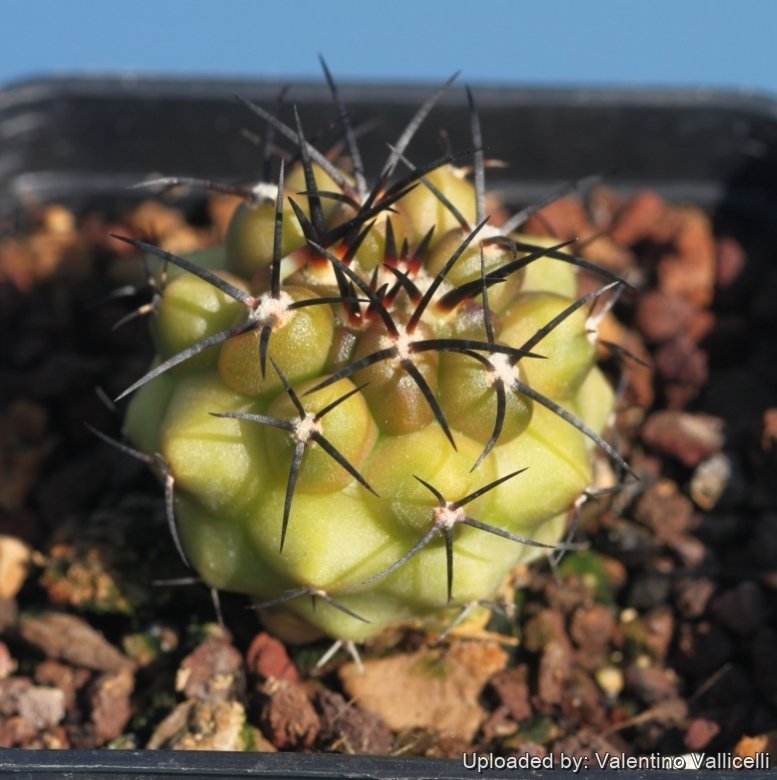
The name Copiapoa imbricata supplied under an unpublished name by the cactus merchant Karel Knize (KK102) can be referred to forms within the variability of Copiapoa coquimbana this species shows great variation and it is sometimes difficult to separate one local form from another. It distinguishes for its strong, chocolate-brown to almost black young spines.
Origin and Habitat
Chile, El Molle, Rio Elavi and adjacent areas.
Altitude: 50-700 metres above sea level.
Cultivation and Propagation
Considering that Copiapoa coquimbana var. imbricata comes from a habitat with an extremely arid climate, they are remarkably tolerant of pot culture. These plants have taproots and are susceptible to overwatering. They requires also an appropriate air circulation. Copiapoas are summer grower species easy to cultivate.
Growth rate: This is a slow growing cactus kept for the beauty of its form that will make clumps given the best conditions.
Soils: It likes very coarse mineral cactus mix soil, but can become too elongated if compost is too rich.
Repotting: Use pot with good drainage.
Watering: It requires light but regular waterings in summer, but let the soil mix dry between waterings, but do not overwater (Rot prone), it must be strictly kept dry throughout the winter quiescent period since it is very sensitive to any moisture excesses keep dry in winter.
Fertilization: Feed with a high potassium fertilizer in summer.
Hardiness: Not highly tolerant of a great deal of frost. They need to be kept in a cool place during winter rest and are resistant to light frost if kept on the dry side prior to, and during, cold weather ( they are hardy to -2 C ° C short periods). However some warmth throughout the year will increase the grower’s success (minimum 5° to 10°C during rest season).
Exposition: Requires full sun or light shade and careful watering to keep plant compact with strong coloured spines. Tends to bronze in strong light, which encourages flowering and heavy spine production. Light shadow my be useful in the hottest summer days.
Uses: It is an excellent plant for container growing. It always looks good and stays small. It look fine in a cold greenhouse and frame or outdoor in a rockery.
Pests & diseases: It may be attractive to a variety of insects, but plants in good condition should be nearly pest-free, particularly if they are grown in a mineral potting-mix, with good exposure and ventilation. Nonetheless, there are several pests to watch for:
- Red spiders: Red spiders may be effectively rubbed up by watering the infested plants from above.
- Mealy bugs: Mealy bugs occasionally develop aerial into the new growth among the wool with disfiguring results, but the worst types develop underground on the roots and are invisible except by their effects.
- Scales: Scales are rarely a problem. It is wise to treat your whole collection with a systemic insecticide twice a year in spring and autumn.
- Rot: Rot is only a minor problem with cacti if the plants are watered and “aired” correctly. If they are not, fungicides won’t help all that much. To prevent rottenness it is also advisable to surround its root neck by very rough sand or grit, this help a fast water drainage.
Propagation: Seeds (or offsets if available), Grafting is often used to speed growth rate and to create a back-up to plants in collection. Seeds germinate in 7-14 days at 21-27° C in spring, remove gradually the glass cover as soon the plants will be well rooted (ca 1-2 weeks) and keep ventilated, no full sun for young plants!
Source: Copiapoa imbricata KK102 El Molle, LLIFLE - Encyclopedia of living forms, CC-BY-SA, retrieved 2026-10-25.
From llifle page Copiapoa pseudocoquimbana f. variegata
Description
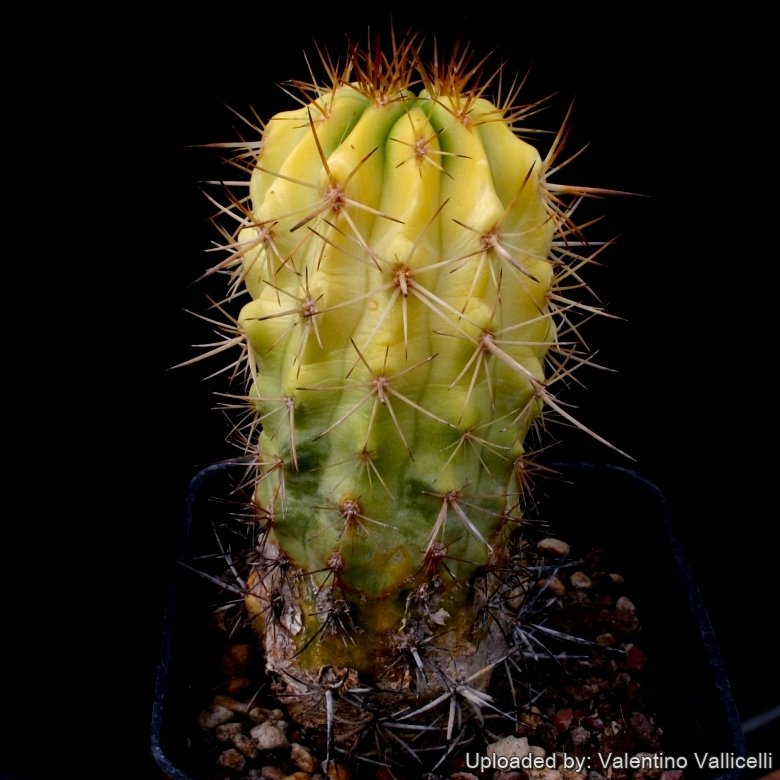
Variegated Copiapoa are very rare in cultivation and some of these variegated plants are very priced by collectors. All variegates are mutants. Something has gone wrong with the cellular structure of the growth tip (apical meristem) of the plant. As a result of this mutation, chlorophyll is missing from some or all layers of the plant epidermis. The odd variegate appears in many seedling batches in a small percentage (especially among hybrid seeds) and are generally separated from normal plants. Variegated plants grow slower and are generally smaller than non-variegates of the same species. Coloured areas are also generally weaker, and more susceptible to fungus, sunburn and other defects. A large well grown variegate Copiapoa is truly an achievement. These are harder to grow well than they appear.
Habit: Caespitose that branches profusely, forming large clumps.
Root: Turnip-like root.
Stems: Depressed-globose 20-30 cm high, 5-10 cm across covered with copious wool at the apex, particularly at flowering time. 10-15 cm in diameter
Ribs: There about 13 tuberculate ribs with a rounded, raised edge and a wide base.
Areoles: Apical, 5-8 mm diam, depressed or convex, covered with short wool when young, later glabrous about 0,5-0,8 cm, 2 cm apart.
Radial spines: 8-10 fairly slender or slightly curved horizontal, honey-amber, brown or black becoming gray with age.
Central spines: Absent or one or two thicker up to 3cm long.
Roots: Roots-strong, long, thick, narrower at top.
Flowers: Campanulate 3 cm long and grow from the center of the white wool at the apex. Outer segments of the perianth are linear and greenish; inner segments are wide, blunt and yellow.
Origin and Habitat
Garden origin (Nursery produced cultivar)
Cultivation and Propagation
Variegated cacti are regarded as choice and difficult in cultivation, but despite that many of them are relatively easy to grow. But be aware that they cannot tolerate prolonged exposure to direct sun light (especially during the hottest summer days), so grow them in half-shade or under filtered sun. They are sometime seen as grafted plants, but some of this colourful plants (those with some chlorophyll) are able to grow on their own roots and are priced by collectors.
Soil: Use mineral well-permeable substratum with little organic matter (peat, humus).
Watering: Water sparingly from March till October, and keep perfectly dry in winter, at temperatures from 5 to 15 degrees centigrade. (In general these plants are more tender and cannot endure freezing temperatures). In the rest period no high atmospheric humidity!!
Propagation: By seeds, grafting or cutting. Because the variegation is due to the presence of two kinds of plant tissue, propagating the plant must be by a vegetative method of propagation that preserves both types of tissue in relation to each other. A most common way way to cultivate this partially de-coloured cultivars is to graft them onto another cactus which has chlorophyll and which will provide sugar to the mutant scion. The chlorophyll containing bottom part of the graft, called the stock, can be any number of different columnar cactus species.
Remarks: Seeds from variegated parents often give raise to some variegated seedlings too.
Source: Copiapoa pseudocoquimbana f. variegata, LLIFLE - Encyclopedia of living forms, CC-BY-SA, retrieved 2026-10-25.
From llifle page Copiapoa militaris
Description
Copiapoa militaris is particularly strong spined form referable to Copiapoa coquimbana var. pseudocoquimbana (or Copiapoa coquimbana var. pendulina).
Habit: Caespitose, with a turnip-like root.
Stems: Elongated-globose 20-30 cm high, 5-15 cm across, pale to bright green and covered with copious white wool at the apex, particularly at flowering time.
Ribs: There about 11-13 tuberculate ribs with a rounded, raised edge and a wide base.
Areoles: Apical, 5-8 mm in diameter, depressed or convex, covered with short wool when young, later glabrous about 0,5-0,8 cm, 2 cm apart.
Radial spines: 8-10 fairly slender or slightly curved horizontal, dark amber, brown or black becoming grey with age.
Central spines: Absent or one or two thicker up to 3 cm long.
Roots: Roots-strong, long, thick, narrower at top.
Flowers: Campanulate 3 cm long and grow from the centre of the white wool at the apex. Outer segments of the perianth are linear and greenish; inner segments are wide, blunt and yellow suffused in red.
Origin and Habitat
Chanaralillo, Chile
Altitude: 400-500m (200 m)
Cultivation and Propagation
In cultivation it is relatively easy but very slow growing. Sometimes it is grafted to avoid root rot problems. Suited for airy exposures.
Soil: It needs a particularly well-draining soil mix (rot prone).
Exposure: It need full sun but should be protected from excessive heat and sun in summer.
Water: Water sparingly as it is susceptible to over-watering. Keep dry in winter.
Frost Tolerance: Keep warm and dry in winter to avoid rot. It needs mild heat in winter, avoid any frost. But a plant kept perfectly dry can survive at winter night-time temperatures below 0° C for short periods.
Pests & diseases: Copiapoa militaris is especially prone to rot, therefore, underpot in a smaller container filled with very porous compost.
Propagation: Seeds, offsets or graft. Seeds can be sown in the spring or summer. The seedlings should not be disturbed until they are well rooted, after which they can be planted separately in small pots. Grafting is often used to speed growth rate and to create a back-up to plants in collection.
Bibliography
Major references and further lectures
-
Schulz R., (2006). “Copiapoa 2006” Schulz Publishing.
-
Edward Anderson “The Cactus family” Timber Press, Incorporated, 2001
-
Friedrich Ritter - Kakteen in Südamerika (Ergebnisse meiner 20jährigen Feldforschungen) 1980
-
David R Hunt; Nigel P Taylor; Graham Charles; International Cactaceae Systematics Group. “The New Cactus Lexicon” dh books, 2006
Source: Copiapoa militaris, LLIFLE - Encyclopedia of living forms, CC-BY-SA, retrieved 2026-10-25.
Cultivars and forms (9)
Subspecies (4)
Varieties (4)
Other names (1)
Gallery