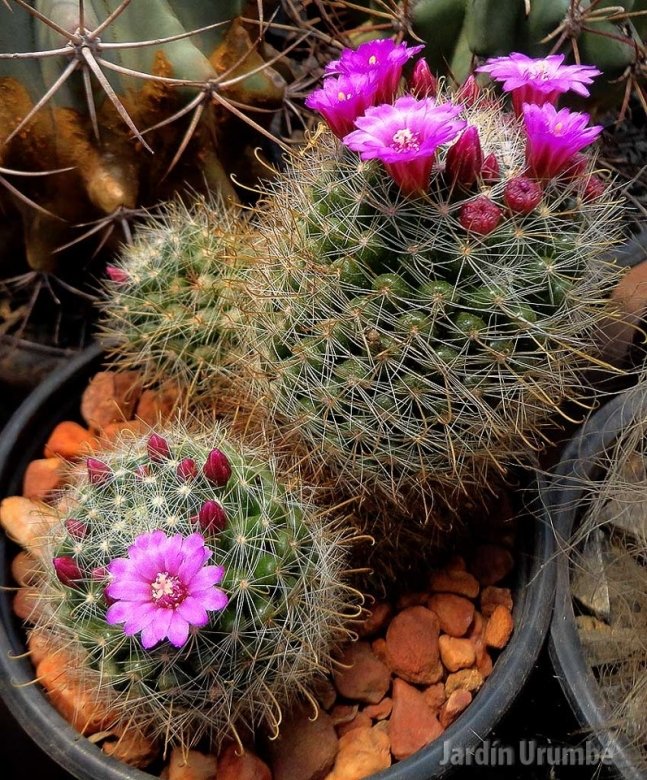
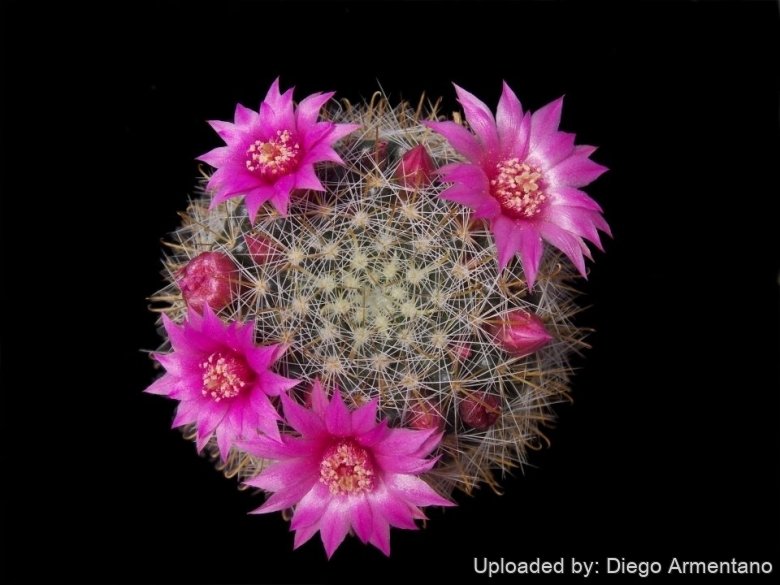
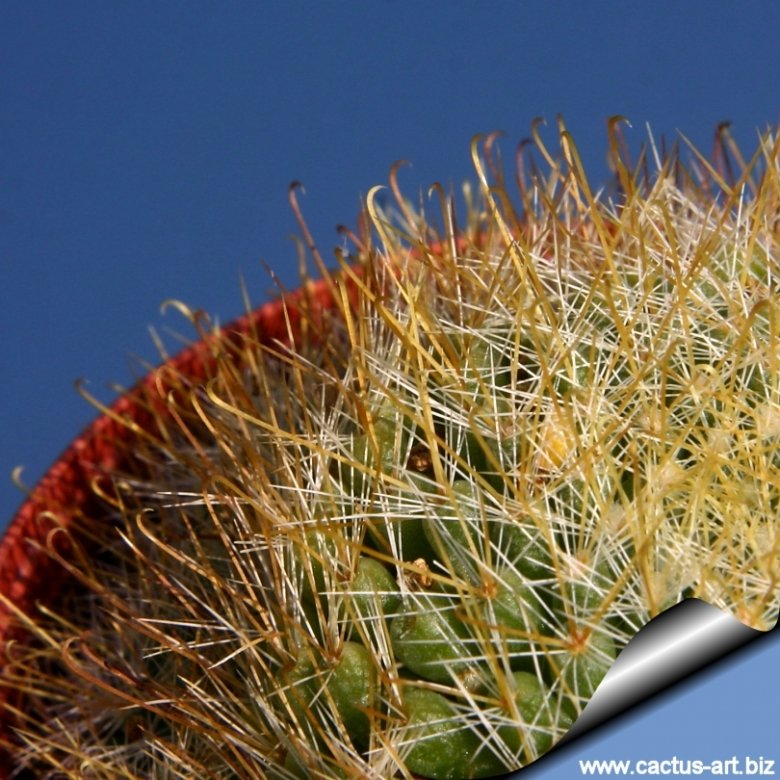
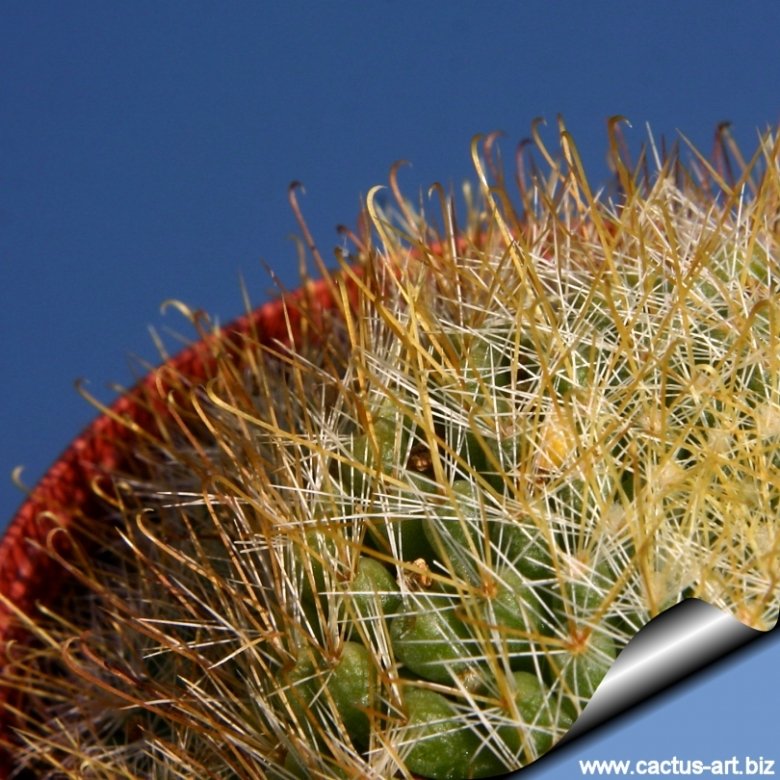
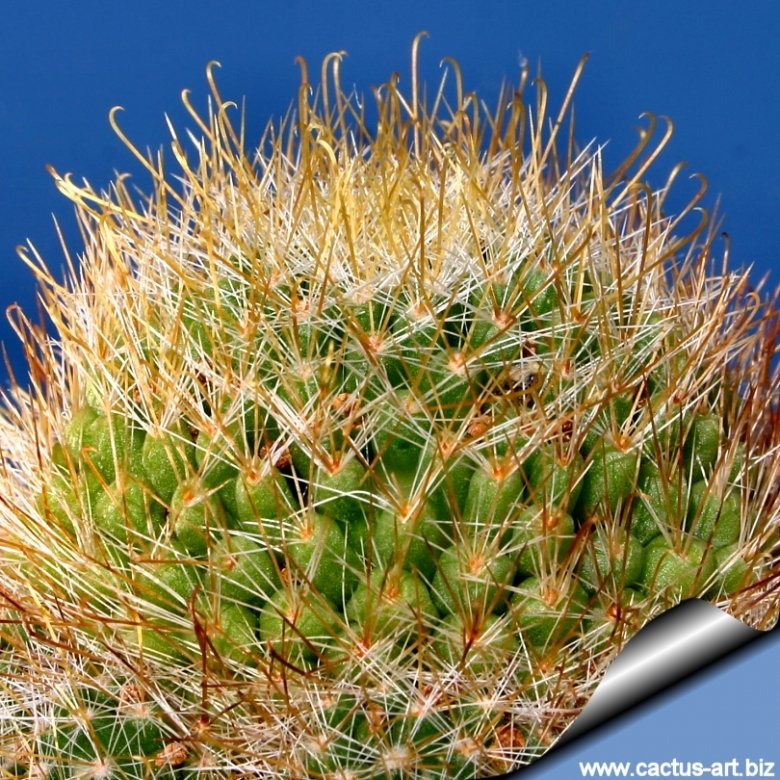
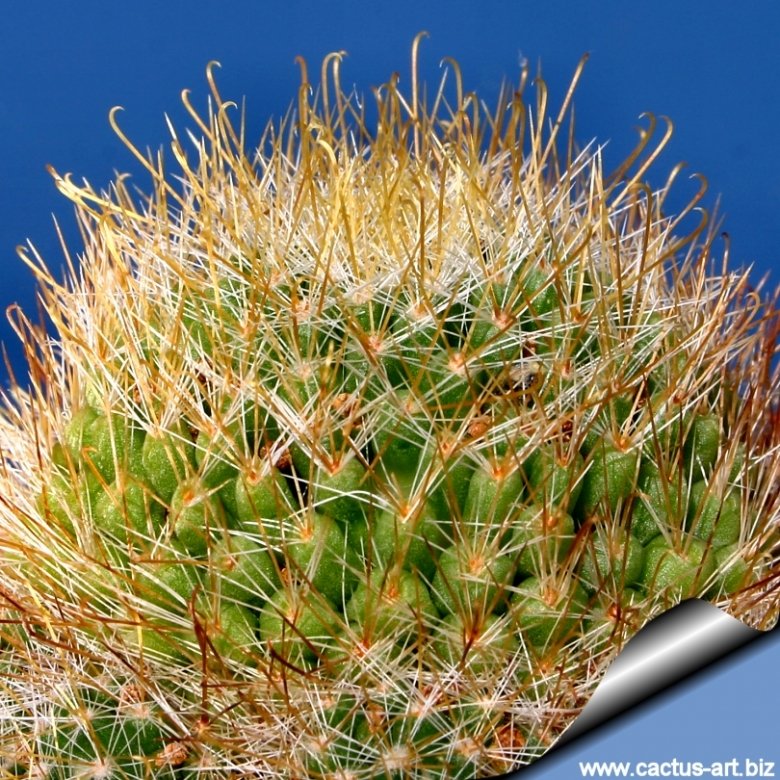
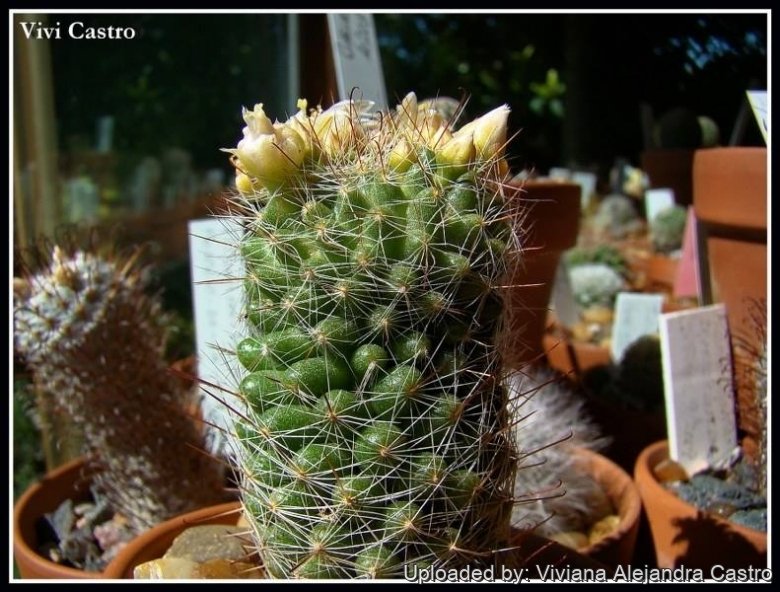
Basionym: Mammillaria duwei Rogoz. & P.J.Braun 1985
Publication: Mém. Mus. Hist. Nat. 17: 112. 1828
Cultivation and Propagation
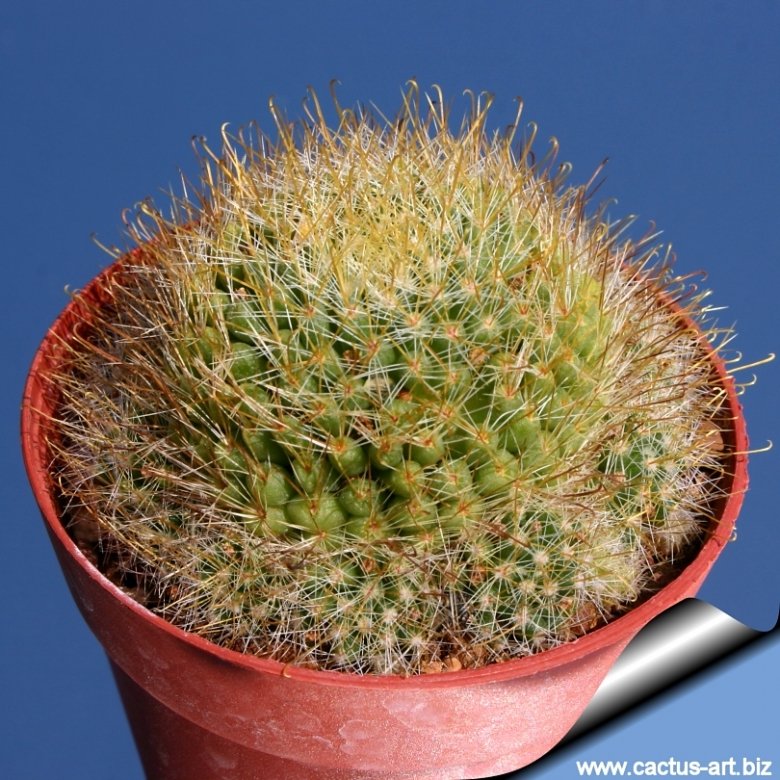
Mammillaria crinita is an easy species in cultivation, recommended for any collection that needs lots of light with ample airflow.
Growth rate: It is a small growing, but easily flowering species. It takes several years to offset, but once it starts it can fill a 25 cm pot in just a few years given the best conditions.
Soils: It likes very porous standard cactus mix soil with little organic matter (peat, humus).
Repotting: Repotting every 2-3 years. It will need a pot with sufficient depth to allow the tap root. As it is especially prone to rot under-pot in a smaller container filled with very porous compost. Use pot with good drainage.
Watering: Water regularly in summer, but do not overwater (very wet-sensitively, especially in light of its succulent root system). Its roots are easily lost in pots that stay damp for any length of time. Keep dry with ample airflow in winter. In the rest period no high atmospheric humidity!! Care must be taken with watering as they tends to become swollen and untidy in growth habit if given too much water and shade.
Fertilization: During the growing season enrich the soil using a fertilizer rich in potassium and phosphorous, but poor in nitrogen, because this chemical element doesn’t help the development of succulent plants, making them too soft and full of water.
Hardiness: Reputedly sensitive to frost , but less so if kept on the dry side prior to, and during, cold weather (hardy to -5° C for short periods, but some reports give it hardy to -12°C). However some warmth throughout the year will increase the grower’s success (minimum 5° to 8°C during rest season).
Exposition: Outside bright sun, filtered sunlight or afternoon shade, inside it needs bright light, and some direct sun. Subject to sunburn if exposed to direct sun for too long. Tends to bronze in strong light, which encourages flowering and heavy wool and spine production.
Uses: It is an excellent plant for container growing. It always looks good and stays small. It look fine in a cold greenhouse and frame.
Pests & diseases: It may be attractive to a variety of insects, but plants in good condition should be nearly pest-free, particularly if they are grown in a mineral potting-mix, with good exposure and ventilation. Nonetheless, there are several pests to watch for:
- Red spiders: Sensitive to red spider mite. Overhead watering is helpful in controlling mites.
- Mealy bugs: Easily they develop aerial into the new growth among the wool with disfiguring results, but the worst types develop underground on the roots and are invisible except by their effects.
- Scales: they are rarely a problem.
It is wise to treat your whole collection with a systemic insecticide twice a year in spring and autumn.
- Rot: it is only a minor problem with mammillaria if the plants are watered and “aired” correctly. If they are not, fungicides won’t help all that much.
Propagation: Direct sow after last frost or (rarely) cuttings. Seeds germinate in 7-14 days at 21-27° C in spring, remove the glass cover gradually as the plants develops and keep ventilated, no full sun for young plants! The seedlings should not be disturbed until they are well rooted, after which they can be planted separately in small pots. Cuttings: wait until the offsets that appear at the base of old clustered specimens are 1/3 the size of the parent and then detach and plant. Cuttings will take root in a minimum temperature of 20° C (but better in hot weather). Cuttings of healthy shoots can be taken in the spring and summer. Cut the stem with a sharp, sterile knife, leave the cutting in a warm, dry place for a week or weeks (depending on how thick the cutting is) until a callus forms over the wound. Once the callus forms, the cutting may be inserted in a container filled with firmed cactus potting mix topped with a surface layer of coarse grit. They should be placed in the coarse grit only; this prevents the cut end from becoming too wet and allows the roots to penetrate the rich compost underneath. The cuttings should root in 2 to 6 weeks.
From llifle page Chilita gilensis
Origin and Habitat
N of Santa Maria, 2000-3000 m, Tucumán (Argentina)
Source: Chilita gilensis, LLIFLE - Encyclopedia of living forms, CC-BY-SA, retrieved 2026-10-25.
From llifle page Chilita zeilmanniana
Description
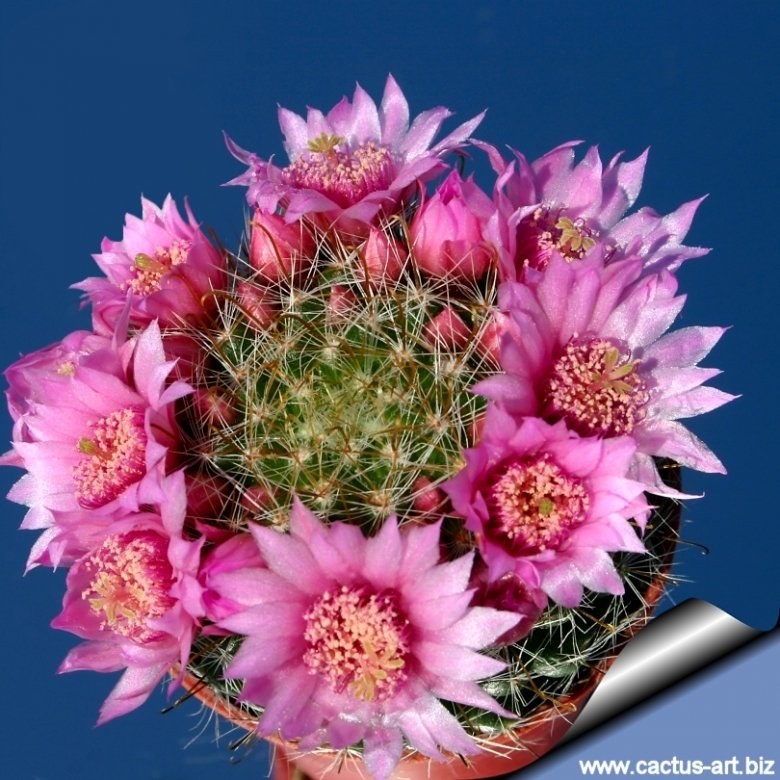
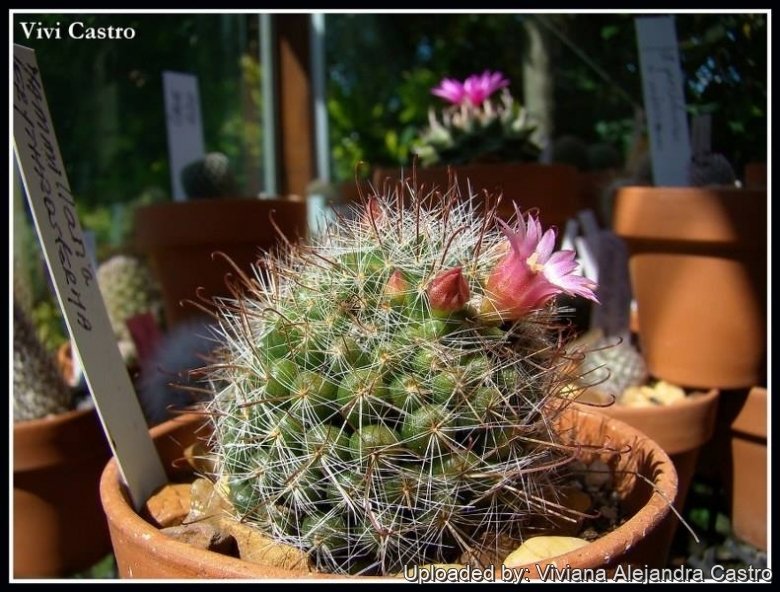
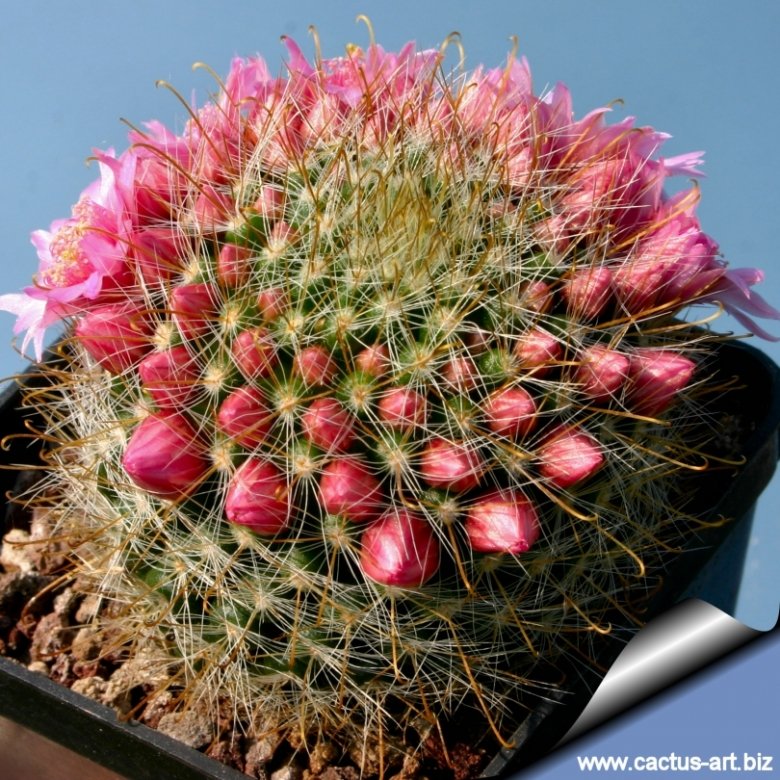
Mammillaria zeilmanniana (Mammillaria crinita f. zeilmanniana) is a popular cactus species with flowers typically carmine violet to purple-pink in color, seldom white. In cultivation it is heavily clustering. (while in its natural environment it is often simple and rarely branching).
Taxonomic notes: Considered a synonym of Mammillaria crinita by Anderson (2001) and the assessors. Accepted as a species by Hunt (1999) and Pilbeam (1999). The claimed distinguishing characters of this taxon, fruit color, appear in other populations of M. crinita while the intensity of the flower color is unique. It appears to be no more than a form albeit a very popular one.
Stems: Glossy green, spherical or oval to short cylindrical, 6-12 cm high, 4.5-8 cm in diameter.
Tubercles: Oval (Tubercle arrangement: 13-21).
Areoles: Woolly when young. The axil is naked.
Radial spines: About 15-18, radiating, finely bristly or hairlike white, pubescent.
Central spines: 4, the upper 3 straight, the lowest hooked, slightly longer than the radials, reddish brown.
Flowers: Up to 2 cm, pale pinkish violet or purple, stigmas yellowish. (The white flowered sport of M. zeilmanniana is produced in cultivation and not known to occur in the wild)
Blooming season: The flowers can come at any time of the year.
Fruits: Whitish green to pale pink.
Seeds: Black.
Origin and Habitat
Mammillaria zeilmanniana, is found at a single location, at San Miguel de Allende in Cañada Virgen, Guanajuato state, central Mexico (extent of occurrence and area of occupancy less than 1 km2).
(Until 1988 Mammillaria zeilmanniana had never been found in its natural habitat by anyone else since its original discovery in the late 1920’s by Erich Georgi of Saltillo, a collector and exporter of exotic plants. It was then re-discovered after a long search in a canyon complex west of San Miguel de Allende in Mexico thriving in an isolated microenvironment.)
Altitude range: It grows at around 1700-1950 metres above sea level
Habitat: Grows in a very restricted area in a narrow passage with sheer volcanic rock (igneous), large deciduous trees and flowing water offered shade and humidity in an otherwise very dry environment. It roots grow in the thin layer of moss and fern growth that covered the lower, shaded vertical rock that formed the canyon side. It is listed as Critically Endangered because it has a very small population size (less than 250 mature individuals)and an extremely restricted range. The number of mature individuals is declining because of illegal collection. This species is collected by cactus enthusiasts for use as an ornamental. It is cultivated commercially for the international trade.
Cultivation and Propagation
Mammillaria zeilmanniana is an easy species in cultivation. Most plants will offset readily, and clumps can be produced in a very few years given the best conditions.
Growth rate: It is a small growing, but easily flowering species.
Soils: It likes very porous standard cactus mix soil.
Repotting: Repotting every 2-3 years. It will need a pot with sufficient depth to allow the tap root. Use pot with good drainage.
Watering: Water regularly in summer, but do not overwater (Rot prone), keep dry in winter. In winter keep the Mammillaria in a very dry place with ample airflow, no humid atmosphere!
Fertilization: During the growing season enrich the soil using a fertilizer rich in potassium and phosphorous, but poor in nitrogen, because this chemical element doesn’t help the development of succulent plants, making them too soft and full of water.
Hardiness: Reputedly sensitive to frost , but less so if kept on the dry side prior to, and during, cold weather (hardy to -5° C for short periods, but some reports give it hardy to -12°C). However some warmth throughout the year will increase the grower’s success (minimum 5° to 8°C during rest season).
Exposition: Outside bright sun, filtered sunlight or afternoon shade, inside it needs bright light, and some direct sun. Subject to sunburn if exposed to direct sun for too long. Tends to bronze in strong light, which encourages flowering and heavy wool and spine production.
Uses: It is an excellent plant for container growing. It always looks good and stays small. It look fine in a cold greenhouse and frame.
Pests & diseases: It may be attractive to a variety of insects, but plants in good condition should be nearly pest-free, particularly if they are grown in a mineral potting-mix, with good exposure and ventilation. Nonetheless, there are several pests to watch for:
- Red spiders: they may be effectively rubbed up by misting the vulnerable plants every day
- Mealy bugs: Easily they develop aerial into the new growth among the wool with disfiguring results, but the worst types develop underground on the roots and are invisible except by their effects.
- Sciara Flies: they are one of the major problems for seedlings. It is a good practice to mulch your seedlings with a layer of grit, which will strongly discourage the flies.
- Scales: they are rarely a problem.
It is wise to treat your whole collection with a systemic insecticide twice a year in spring and autumn.
- Rot: it is only a minor problem with mammillaria if the plants are watered and “aired” correctly. If they are not, fungicides won’t help all that much.
Propagation: Direct sow after last frost or (rarely) cuttings. Seeds germinate in 7-14 days at 21-27° C in spring, remove the glass cover gradually as the plants develops and keep ventilated, no full sun for young plants! To make a cutting twist off a branch and permit it to dry out a couple of weeks, lay it on the soil and insert the stem end partially into the soil. Try to keep the cutting somewhat upright so that the roots are able to grow downward.
Bibliography
Major references and further lectures.
-
Fitz Maurice, B, Fitz Maurice, W.A. & Bárcenas Luna, R. 2013. Mammillaria zeilmanniana. The IUCN Red List of Threatened Species. Version 2014.2. <www.iucnredlist.org>. Downloaded on 02 November 2014.
-
Wikipedia contributors. “Mammillaria zeilmanniana.” Wikipedia, The Free Encyclopedia. Wikipedia, The Free Encyclopedia, 23 Sep. 2014. Web. 2 Nov. 2014.
-
Robert T. Craig “The Mammillaria handbook: with descriptions, illustrations, and key to the species of the genus Mammillaria of the Cactaceae” E P Publishing, 1945
-
John Pilbeam “Mammillaria The Cactus File Handbook” Cirio Pub. Services, 01/Dec/1999Edward Anderson “The Cactus family” Timber Press, Incorporated, 2001
-
James Cullen, Sabina G. Knees, H. Suzanne Cubey “The European Garden Flora Flowering Plants: A Manual for the Identification of Plants Cultivated in Europe, Both Out-of-Doors and Under Glass” Cambridge University Press, 11/Aug/2011
-
David R Hunt; Nigel P Taylor; Graham Charles; International Cactaceae Systematics Group. “The New Cactus Lexicon” dh books, 2006
Source: Chilita zeilmanniana, LLIFLE - Encyclopedia of living forms, CC-BY-SA, retrieved 2026-10-25.
From llifle page Mammillaria brevicrinita
Description
Plants solitary or clustering.
Stems: Globose, dark green, 1 - 8 cm high and in diameter. Without latex.
Tubercles: Tubercles not compact, conical to cylindrical. Axil with some with bristles, sparsely woolly.
Radial spines: 10 - 29, flattened against the stem surface, white, finely pubescent, 6 - 9 mm long.
Central spines: 0 - 7, awl-shaped, yellowish to red to dark brown, 8-16 mm long, one or two hooked.
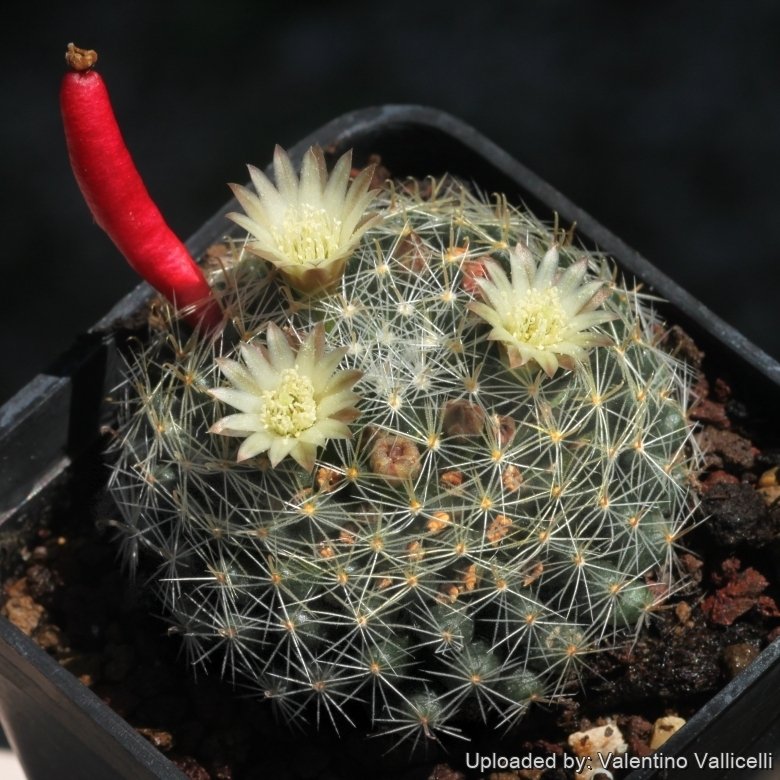
Flowers: Funnel-form, less deeply set, yellowish white, 10 - 20 mm long and in diameter.
Fruits: Globose to ovate, green to bright red.
Seeds: Brownish black, coarsely pitted.
Origin and Habitat
San Luis Potosi, Mexico. Altitude about 1200-1400 m
Cultivation and Propagation
Mammillaria brevicrinita is an easy species in cultivation, with offsets formed at irregular intervals.
Growth rate: It is a small growing, but easily flowering, species that will make clumps given the best conditions.
Soils: It likes very porous standard cactus mix soil.
Repotting: It will need a pot with sufficient depth to allow the tap root. Use pot with good drainage.
Watering: Water regularly in summer, but do not overwater (Rot prone), keep dry in winter. Keep Mammillaria duwei in very dry and ventilated place especially in winter.
Fertilization: Feed with a high potassium fertilizer in summer.
Hardiness: Reputedly sensitive to frost , but less so if kept on the dry side prior to, and during, cold weather (hardy to -5° C for short periods, but some reports give it hardy to -12°C). However some warmth throughout the year will increase the grower’s success (minimum 5° to 8°C during rest season).
Exposition: Outside bright sun, filtered sunlight or afternoon shade, inside it needs bright light, and some direct sun. Subject to sunburn if exposed to direct sun for too long. Tends to bronze in strong light, which encourages flowering and heavy wool and spine production.
Uses: It is an excellent plant for container growing. It always looks good and stays small. It look fine in a cold greenhouse and frame.
Pests & diseases: It may be attractive to a variety of insects, but plants in good condition should be nearly pest-free, particularly if they are grown in a mineral potting-mix, with good exposure and ventilation. Nonetheless, there are several pests to watch for:
- Red spiders: they may be effectively rubbed up by misting the vulnerable plants every day
- Mealy bugs: Easily they develop aerial into the new growth among the wool with disfiguring results, but the worst types develop underground on the roots and are invisible except by their effects.
- Sciara Flies: they are one of the major problems for seedlings. It is a good practice to mulch your seedlings with a layer of grit, which will strongly discourage the flies.
- Scales: they are rarely a problem.
It is wise to treat your whole collection with a systemic insecticide twice a year in spring and autumn.
- Rot: it is only a minor problem with mammillaria if the plants are watered and “aired” correctly. If they are not, fungicides won’t help all that much.
Propagation: Direct sow after last frost or (rarely) cuttings. Seeds germinate in 7-14 days at 21-27° C in spring, remove the glass cover gradually as the plants develops and keep ventilated, no full sun for young plants! To make a cutting twist off a branch and permit it to dry out a couple of weeks, lay it on the soil and insert the stem end partially into the soil. Try to keep the cutting somewhat upright so that the roots are able to grow downward.
Source: Mammillaria brevicrinita, LLIFLE - Encyclopedia of living forms, CC-BY-SA, retrieved 2026-10-25.
From llifle page Mammillaria scheinvariana
Description
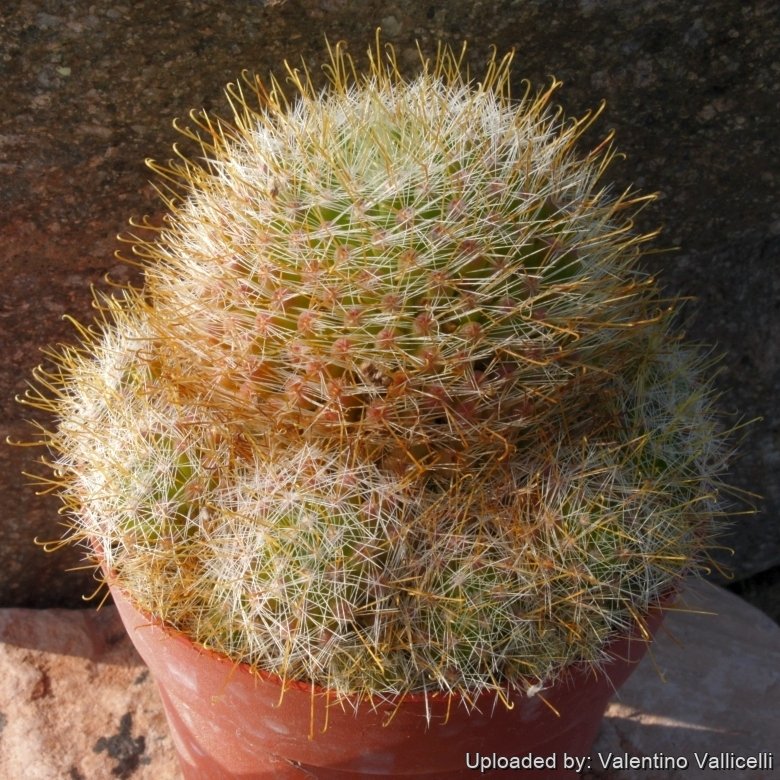
Mammillaria scheinvariana is a small plant that forms irregular clumps.
Stem: About 5 cm diameter and 2–3.5cm high. This plant is a member of the Mammillaria crinita complex (Stylothele Series). Only some authors consider M. sheinvariana to be a good species; the others classify it as M. crinita (e.g. Fritz Maurice accepts the individuality of the new plant but considers it a subspecies of M. crinita.)
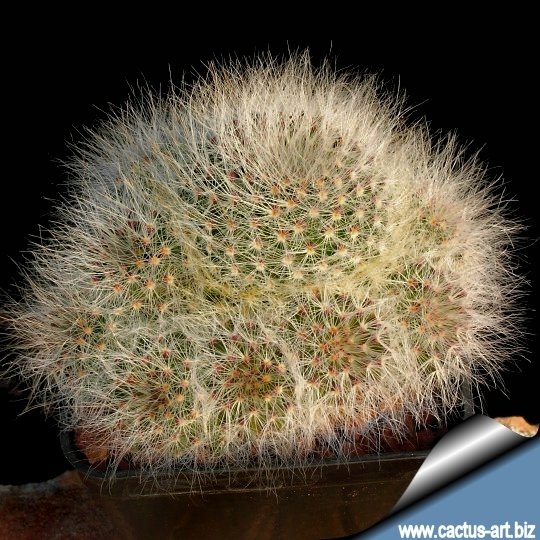
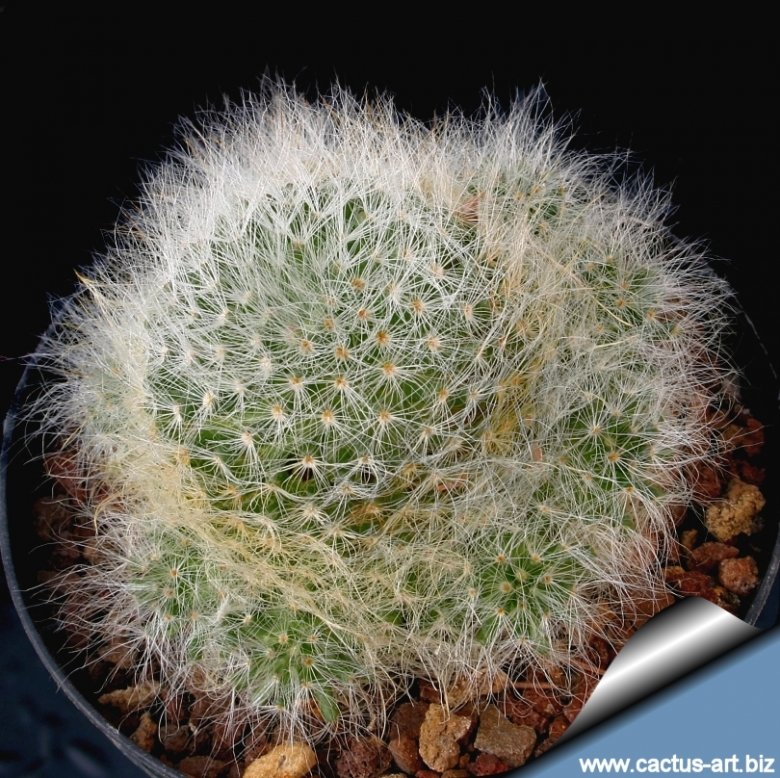
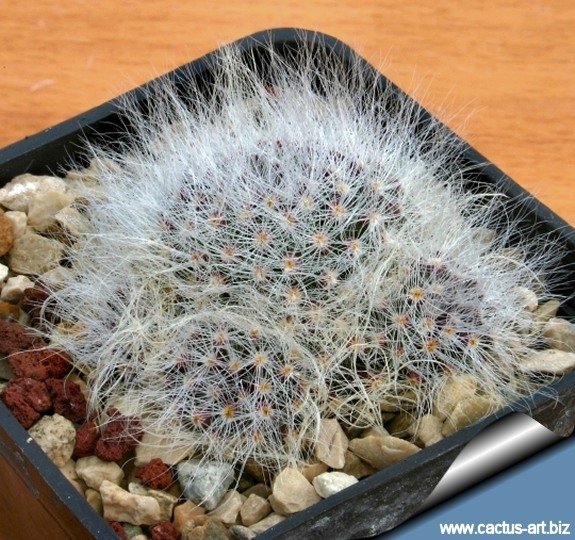
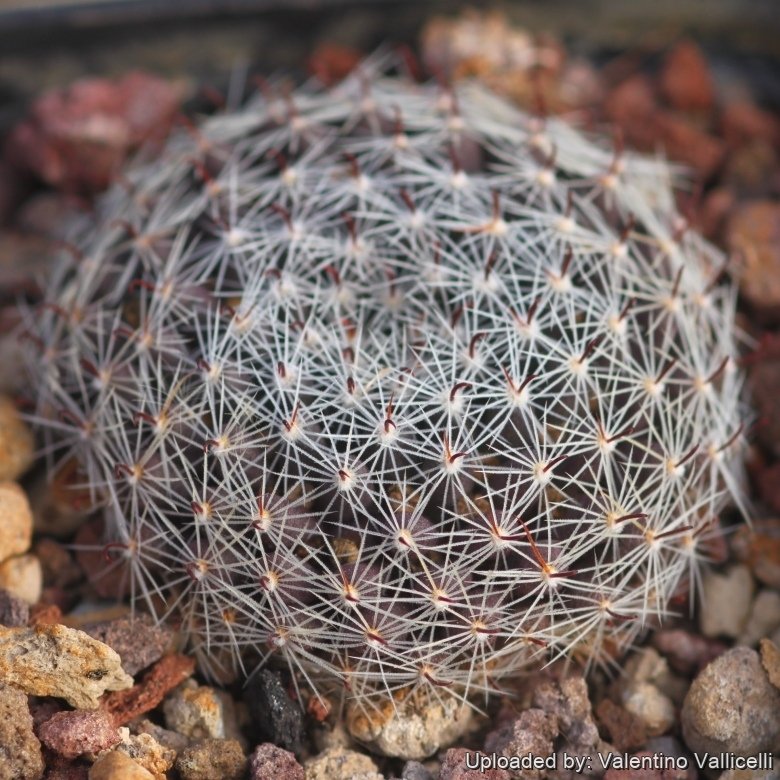
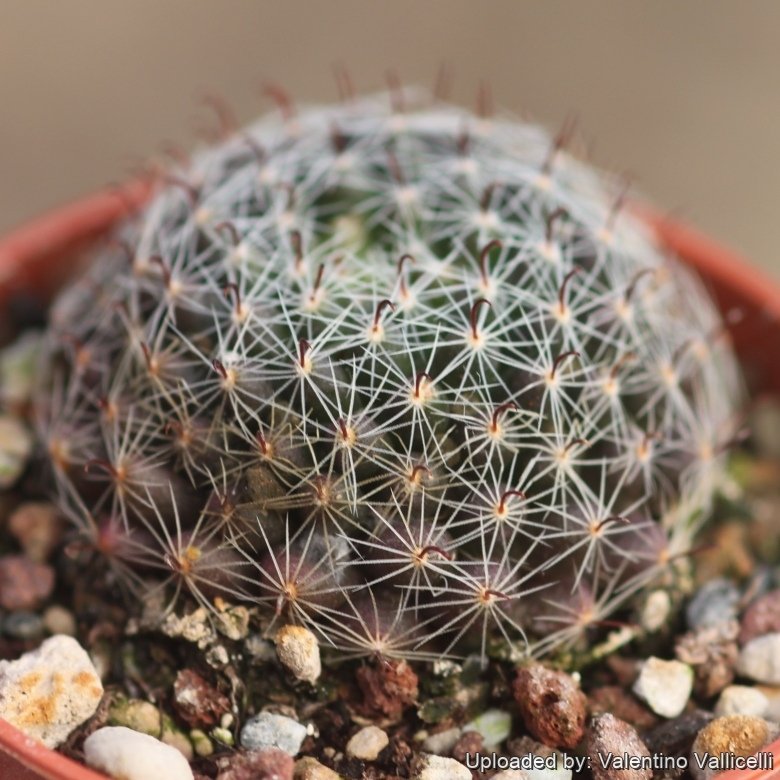
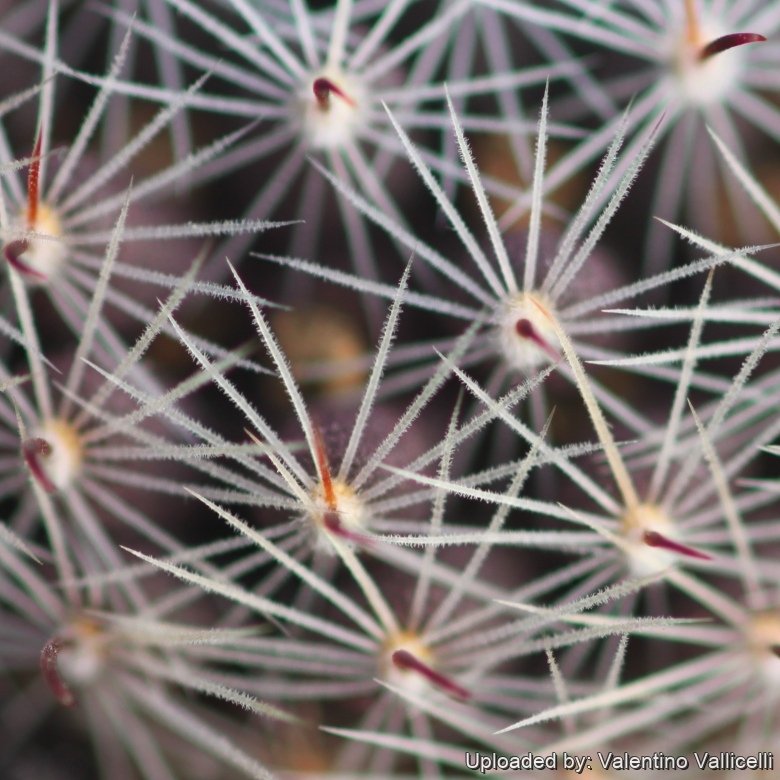
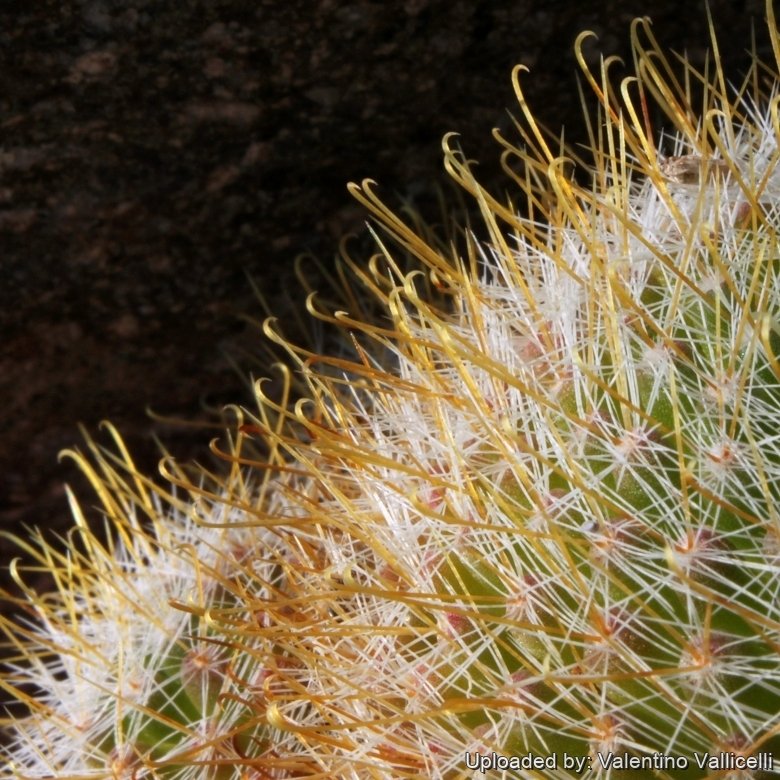
Radial spines: Numerous hair-like spines give the plant a shaggy appearance.
Central spines: Not usually present, but, if so, they are 9–16 mm long and straight, never hooked. (At first glance the plant has quite a strong resemblance to M. bocasana, but a closer inspection reveals the absence of hooked centrals)
Roots: It has a thick tuberous root system
Flowers: Salmon pink.
Blooming season (Europe): May-June
Origin and Habitat
Zimapan, Queretaro, Mexico
Habitat: The whole habitat of this plant (discovered only in 1997) disappeared under the water of a man-made dam. It is extinct in nature.
Cultivation and Propagation
Mammillaria scheinvariana is an easy species in cultivation.
Growth rate: It is a small growing, but easily flowering species. It takes several years to offset, but once it starts it can fill a 25 cm pot in just a few years given the best conditions.
Soils: It likes very porous standard cactus mix soil with little organic matter (peat, humus).
Repotting: Repotting every 2-3 years. It will need a pot with sufficient depth to allow the tap root. As it is especially prone to rot under-pot in a smaller container filled with very porous compost. Use pot with good drainage.
Watering: Water regularly in summer, but do not overwater (Rot prone), its roots are easily lost in pots that stay damp for any length of time. Keep dry with ample airflow in winter. In the rest period no high atmospheric humidity!!
Fertilization: During the growing season enrich the soil using a fertilizer rich in potassium and phosphorous, but poor in nitrogen, because this chemical element doesn’t help the development of succulent plants, making them too soft and full of water.
Hardiness: Reputedly sensitive to frost , but less so if kept on the dry side prior to, and during, cold weather (hardy to -5° C for short periods, but some reports give it hardy to -12°C). However some warmth throughout the year will increase the grower’s success (minimum 5° to 8°C during rest season).
Exposition: Outside bright sun, filtered sunlight or afternoon shade, inside it needs bright light, and some direct sun. Subject to sunburn if exposed to direct sun for too long. Tends to bronze in strong light, which encourages flowering and heavy wool and spine production.
Uses: It is an excellent plant for container growing. It always looks good and stays small. It look fine in a cold greenhouse and frame.
Pests & diseases: It may be attractive to a variety of insects, but plants in good condition should be nearly pest-free, particularly if they are grown in a mineral potting-mix, with good exposure and ventilation. Nonetheless, there are several pests to watch for:
- Red spiders: they may be effectively rubbed up by misting the vulnerable plants every day
- Mealy bugs: Easily they develop aerial into the new growth among the wool with disfiguring results, but the worst types develop underground on the roots and are invisible except by their effects.
- Sciara Flies: they are one of the major problems for seedlings. It is a good practice to mulch your seedlings with a layer of grit, which will strongly discourage the flies.
- Scales: they are rarely a problem.
It is wise to treat your whole collection with a systemic insecticide twice a year in spring and autumn.
- Rot: it is only a minor problem with mammillaria if the plants are watered and “aired” correctly. If they are not, fungicides won’t help all that much.
Propagation: Direct sow after last frost or (rarely) cuttings. Seeds germinate in 7-14 days at 21-27° C in spring, remove the glass cover gradually as the plants develops and keep ventilated, no full sun for young plants! The seedlings should not be disturbed until they are well rooted, after which they can be planted separately in small pots. Cuttings will take root in a minimum temperature of 20° C (but better in hot weather). Cuttings of healthy shoots can be taken in the spring and summer. Cut the stem with a sharp, sterile knife, leave the cutting in a warm, dry place for a week or weeks (depending on how thick the cutting is) until a callus forms over the wound. Once the callus forms, the cutting may be inserted in a container filled with firmed cactus potting mix topped with a surface layer of coarse grit. They should be placed in the coarse grit only; this prevents the cut end from becoming too wet and allows the roots to penetrate the rich compost underneath. The cuttings should root in 2 to 6 weeks.
Bibliography
Major references and further lectures
-
Bill Weightman “Mammillaria sceinvariana submerged” British Cactus and Succulent Journal” Vol 21 (1) 45-48
-
ORTEGA-VARELA, R. & GLASS, C. “Guia para la Identificacion de Cactaceas Amenazadas de Mexico. (Identification Guide to theThreatened Cacti of Mexico).” CANTE, A.C., Guanajuato, Mexico.1997
-
PILBEAM, J. “Mammillaria” The Cactus File Handbook No. 6. p.260. Cirio Publishing, Southampton, UK. 1999
-
FITZ MAURICE, W.A. & B. Cact. Succ. J. (US)70(2): 88-94. 1998
Source: Mammillaria scheinvariana, LLIFLE - Encyclopedia of living forms, CC-BY-SA, retrieved 2026-10-25.
From llifle page Mammillaria tezontle
Description
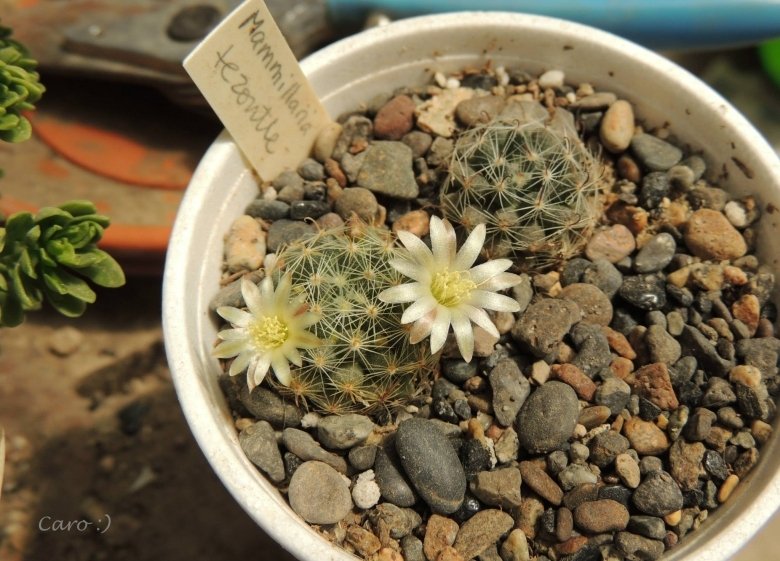
Mammillaria tezontle is a minuscule cactus with delicate near harmless feathery spines densely wrapped against the body of the plant. Hunt has been subsumed it into the broader definition of Mammillaria crinita, but is nevertheless a distinctive taxon with its rather neat, short, yellow central spination and relatively large flowers.
Habit: Usually solitary barely rising above ground level.
Stems: Flattened- globose, depressed apically, soft, dark green,10 mm high, 15-20 mm in diameterand it has clear sap.
Roots: Thick fibrous.
Axil: With wool and occasionally bristles.
Radial spine: 14 to 20, yellowish white, slightly pubescent, 3-5 mm long spreading and interlacing.
Central spine: 1 to 4, of which one or more hooked, 3-4 mm long, yellowish white, thin, acicular and slightly pubescent.
Flower: Funnel-form, yellowish white often with a darker brownish midrib toward the tips , 10 mm long, 15 mm across. Filaments and anthers pale cream-yellowish, style and stigma lobes greenish.
Blooming season: Flowers readily, and for a long period from spring to the early summer.
Fruit: Green, elongated.
Seed: Blackish brown.
Remarks: The dense covering of spines reduces the interception of solar radiation by the stem surface lowering the risks of overheating the apex during a summer day and of freezing during a winter night.
Origin and Habitat
San Luis Potosi, Mexico.
Type locality: North of the city of San Luis Potosi.
Habitat: It was found on volcanic rocks where the population became extinct after destruction of the habitat.
Cultivation and Propagation
Is one of the dwarf feathery Mammillaria, somewhat difficult to cultivate and like many such species, offers a challenge to the grower. During the summer it is best to keep the plants outside where the temperature can rise to over 30° C with no harm to the plant, recommended for any collection that needs lots of light with ample airflow.
Growth rate: It is a small growing, but easily flowering species.
Soils: Use a an open and free draining mineral compost with little organic matter (peat, humus) that allows therefore roots to breath (as it is rot prone).
Repotting: Repotting every 2-3 years. Use a small pot with good drainage.
Watering: It likes a winter’s rest and should be kept almost completely dry during the winter months, If the soil is allowed to be dry for too long root loss could follow but equally the same result would occur if the plants are both wet and cold. From March onwards the plant will begin to grow and watering should be increased gradually until late May when the plant should be in full growth. Water regularly during the summer so long as the plant pot is allowed to drain and not sit in a tray of water. During hot weather you may need to water the plants more frequently so long as the plant is actively growing. From late September watering should be reduced to force the plant to go in to a state of semi dormancy, by October you should be back in to the winter watering regime. Keep dry with ample airflow in winter. In the rest period no high atmospheric humidity!! Care must be taken with watering as they tends to become swollen and untidy in growth habit if given too much water and shade.
Fertilization: Feeding may not be necessary at all if the compost is fresh then, feed in summer only if the plant hasn’t been repotted recently. Do not feed the plants from September onwards as this can cause lush growth which can be fatal during the darker cold months. .
Hardiness: Grown specimens resist to -4°C for a short time, but it is best to keep above 5° C to avoid ugly spots on the plant epidermis. Some warmth throughout the year will increase the grower’s success.
Exposition: Need full sun avoiding only the harshest summer sun, if kept too dark they may become overly lush and greener and could be prone to rotting due to over watering. Tends to bronze in strong light, which encourages flowering and heavy wool and spine production.
Uses: It is an excellent plant for container growing. It always looks good and stays small. It look fine in a cold greenhouse and frame.
Pests & diseases: It may be attractive to a variety of insects, but plants in good condition should be nearly pest-free, particularly if they are grown in a mineral potting-mix, with good exposure and ventilation. Nonetheless, there are several pests to watch for:
- Red spiders: Sensitive to red spider mite. Overhead watering is helpful in controlling mites.
- Mealy bugs: Occasionally mealy bugs they develop aerial into the new growth among the wool with disfiguring results, but the worst types develop underground on the roots and are invisible except by their effects.
- Scales: Scales are rarely a problem.
- Rot: Rot it is only a minor problem with cacti if the plants are watered and “aired” correctly. If they are not, fungicides won’t help all that much.
Propagation: Propagation: Direct sow after last frost. (seldom produces offsets). Seeds germinate in 7-14 days at 21-27° C in spring, remove the glass cover gradually as the plants develops and keep ventilated, no full sun for young plants! The seedlings should not be disturbed until they are well rooted, after which they can be planted separately in small pots.
Bibliography
Major references and further lectures.
-
Robert T. Craig “The Mammillaria handbook: with descriptions, illustrations, and key to the species of the genus Mammillaria of the Cactaceae” E P Publishing, 1945
-
John Pilbeam “Mammillaria The Cactus File Handbook” Cirio Pub. Services, 01/Dec/1999
-
Edward Anderson “The Cactus family” Timber Press, Incorporated, 2001
-
James Cullen, Sabina G. Knees, H. Suzanne Cubey “The European Garden Flora Flowering Plants: A Manual for the Identification of Plants Cultivated in Europe, Both Out-of-Doors and Under Glass” Cambridge University Press, 11/Aug/2011
-
David R Hunt; Nigel P Taylor; Graham Charles; International Cactaceae Systematics Group. “The New Cactus Lexicon” dh books, 2006
Source: Mammillaria tezontle, LLIFLE - Encyclopedia of living forms, CC-BY-SA, retrieved 2026-10-25.
From llifle page Mammillaria glochidiata var. xiloensis
Description
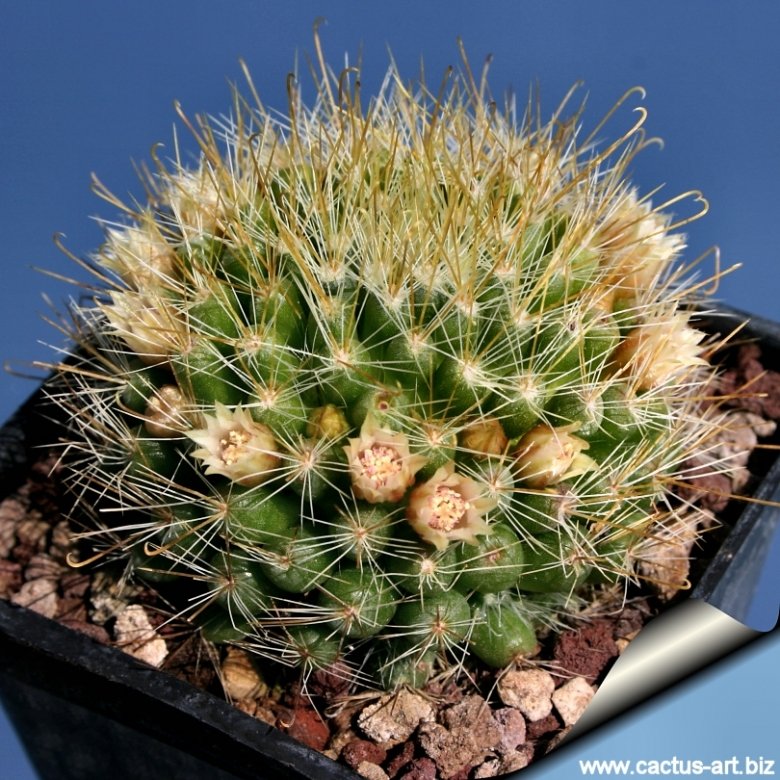
Plants irregularly forming tightly packed cluster of egg-shaped balls, up to 5 cm tall (in cultivation it can grow up to15 cm), 6 cm in diameter.
Stems: Cylindrical, glossy bright green, rounded apically, 2 - 3.5 cm in diameter. Without latex.
Tubercles: Flabby, widely separated, cylindrical to conical, 12 - 16 mm long.
Radial spines: 9 - 11, threadlike, flexible, smooth, white, horizontal, to 12 mm long.
Central spines: 1 - 4, needle-like, lower one hooked, dark yellow, 6 - 12 mm long.
Flowers: Bell shaped, pale cream-pink, to 10-15 mm long and 8-10 mm in diameter.
Bloom season: Mid Spring through Mid Summer
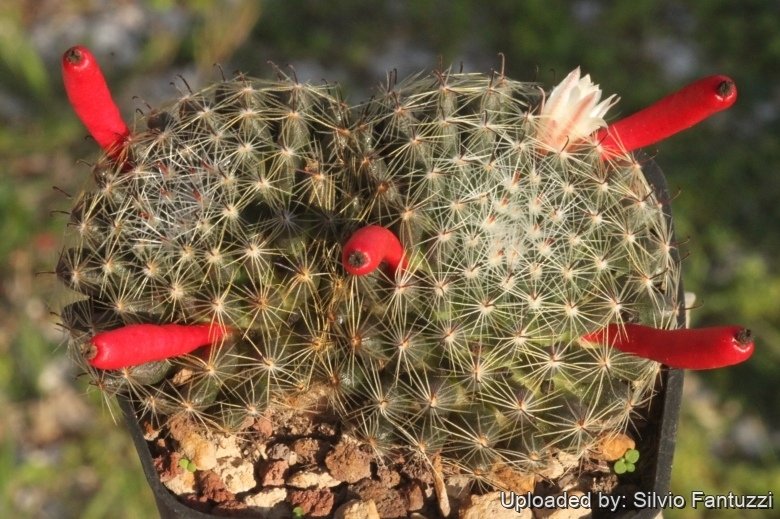
Fruits: Club shaped, scarlet, to 16 mm long.
Origin and Habitat
Hidalgo, Mexico. Altitude about 1.300 m.
Cultivation and Propagation
Mammillaria glochidiata var. xiloensis is an easy species in cultivation, recommended for any collection that needs lots of light with ample airflow.
Growth rate: It is a small growing, but easily flowering species. It takes several years to offset, but once it starts it can fill a 25 cm pot in just a few years given the best conditions.
Soils: It likes very porous standard cactus mix soil with little organic matter (peat, humus).
Repotting: Repotting every 2-3 years. It will need a pot with sufficient depth to allow the tap root. As it is especially prone to rot under-pot in a smaller container filled with very porous compost. Use pot with good drainage.
Watering: Water regularly in summer, but do not overwater (very wet-sensitively, especially in light of its succulent root system). Its roots are easily lost in pots that stay damp for any length of time. Keep dry with ample airflow in winter. In the rest period no high atmospheric humidity!! Care must be taken with watering as they tends to become swollen and untidy in growth habit if given too much water and shade.
Fertilization: During the growing season enrich the soil using a fertilizer rich in potassium and phosphorous, but poor in nitrogen, because this chemical element doesn’t help the development of succulent plants, making them too soft and full of water.
Hardiness: Reputedly sensitive to frost , but less so if kept on the dry side prior to, and during, cold weather (hardy to -5° C for short periods, but some reports give it hardy to -12°C). However some warmth throughout the year will increase the grower’s success (minimum 5° to 8°C during rest season).
Exposition: Outside bright sun, filtered sunlight or afternoon shade, inside it needs bright light, and some direct sun. Subject to sunburn if exposed to direct sun for too long. Tends to bronze in strong light, which encourages flowering and heavy wool and spine production.
Uses: It is an excellent plant for container growing. It always looks good and stays small. It look fine in a cold greenhouse and frame.
Pests & diseases: It may be attractive to a variety of insects, but plants in good condition should be nearly pest-free, particularly if they are grown in a mineral potting-mix, with good exposure and ventilation. Nonetheless, there are several pests to watch for:
- Red spiders: Sensitive to red spider mite. Overhead watering is helpful in controlling mites.
- Mealy bugs: Easily they develop aerial into the new growth among the wool with disfiguring results, but the worst types develop underground on the roots and are invisible except by their effects.
- Sciara Flies: they are one of the major problems for seedlings. It is a good practice to mulch your seedlings with a layer of grit, which will strongly discourage the flies.
- Scales: they are rarely a problem.
It is wise to treat your whole collection with a systemic insecticide twice a year in spring and autumn.
- Rot: it is only a minor problem with mammillaria if the plants are watered and “aired” correctly. If they are not, fungicides won’t help all that much.
Propagation: Direct sow after last frost or (rarely) cuttings. Seeds germinate in 7-14 days at 21-27° C in spring, remove the glass cover gradually as the plants develops and keep ventilated, no full sun for young plants! The seedlings should not be disturbed until they are well rooted, after which they can be planted separately in small pots. Cuttings: wait until the offsets that appear at the base of old clustered specimens are 1/3 the size of the parent and then detach and plant. Cuttings will take root in a minimum temperature of 20° C (but better in hot weather). Cuttings of healthy shoots can be taken in the spring and summer. Cut the stem with a sharp, sterile knife, leave the cutting in a warm, dry place for a week or weeks (depending on how thick the cutting is) until a callus forms over the wound. Once the callus forms, the cutting may be inserted in a container filled with firmed cactus potting mix topped with a surface layer of coarse grit. They should be placed in the coarse grit only; this prevents the cut end from becoming too wet and allows the roots to penetrate the rich compost underneath. The cuttings should root in 2 to 6 weeks.
Source: Mammillaria glochidiata var. xiloensis, LLIFLE - Encyclopedia of living forms, CC-BY-SA, retrieved 2026-10-25.
From llifle page Mammillaria zeilmanniana f. albiflora
Description
Mammillaria zeilmanniana (Mammillaria crinita f. zeilmanniana) is a popular cactus species with flowers typically carmine violet to purple-pink in colour.
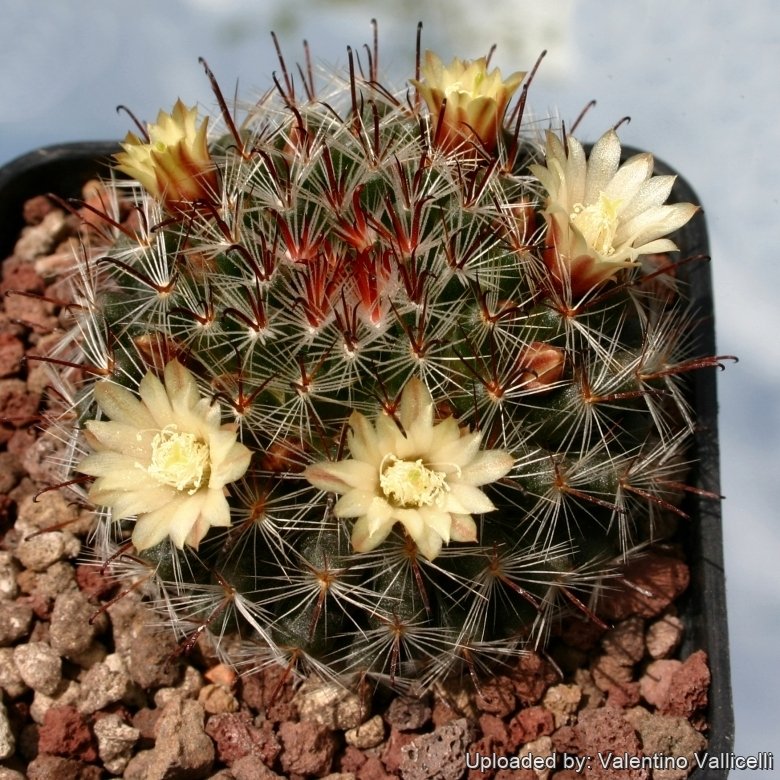
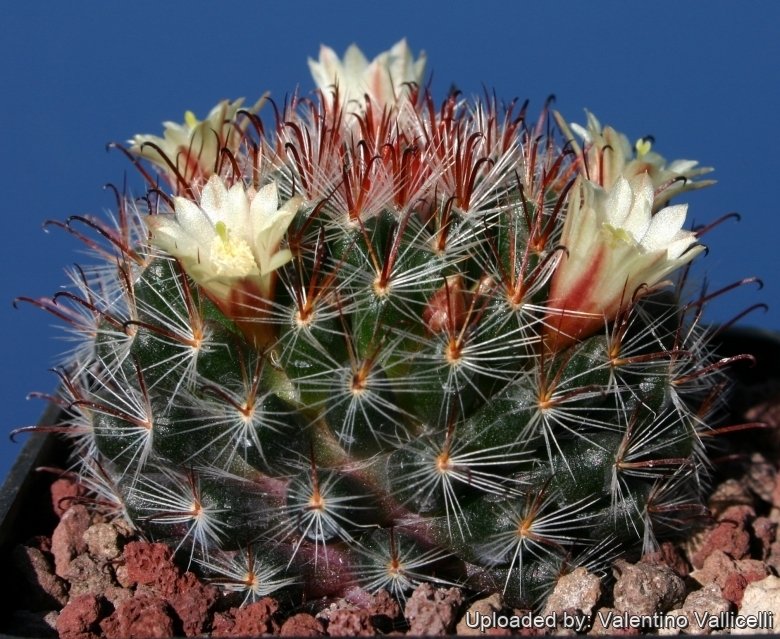
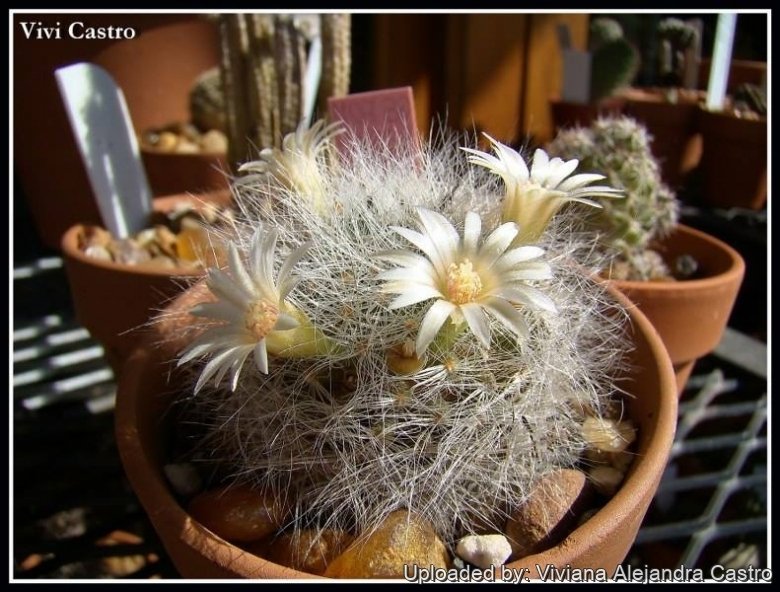
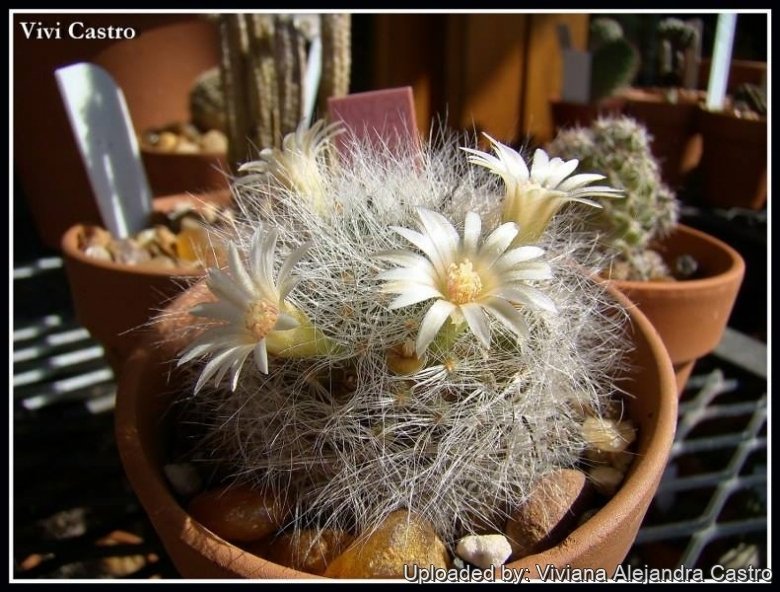
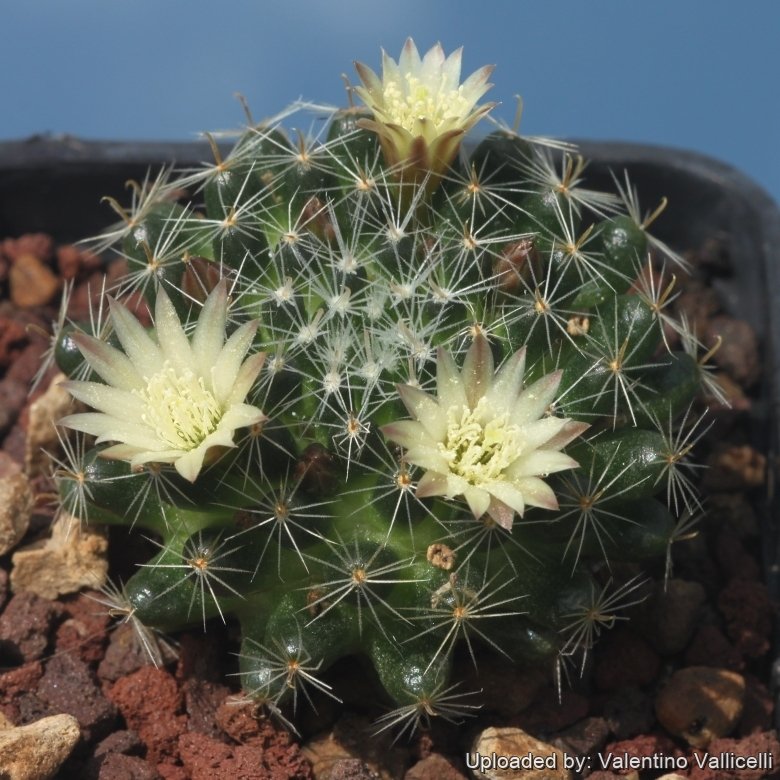
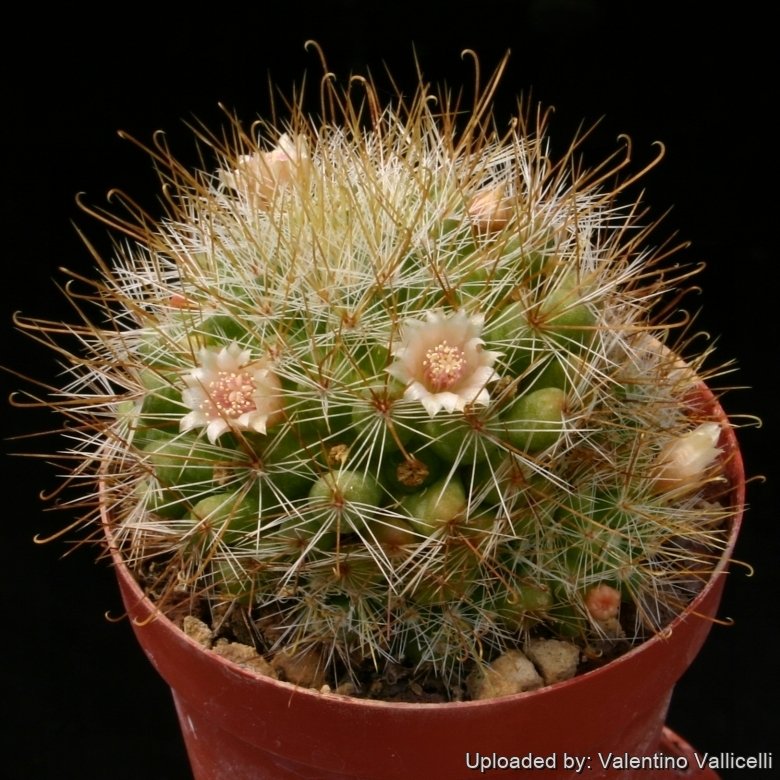
White flowering form: The white flowered sport (Mammillaria zeilmanniana f. albiflora) was produced in cultivation and not known to occur in the wild)
Habit: In cultivation it is heavily clustering. (while in its natural environment it is often simple and rarely branching).
Stems: Glossy green, spherical or oval to short cylindrical, 6-12 cm high, 4.5-8 cm in diameter.
Tubercles: Oval (Tubercle arrangement: 13-21).
Areoles: Woolly when young. The axil is naked.
Radial spines: About 15-18, radiating, finely bristly or hairlike white, pubescent.
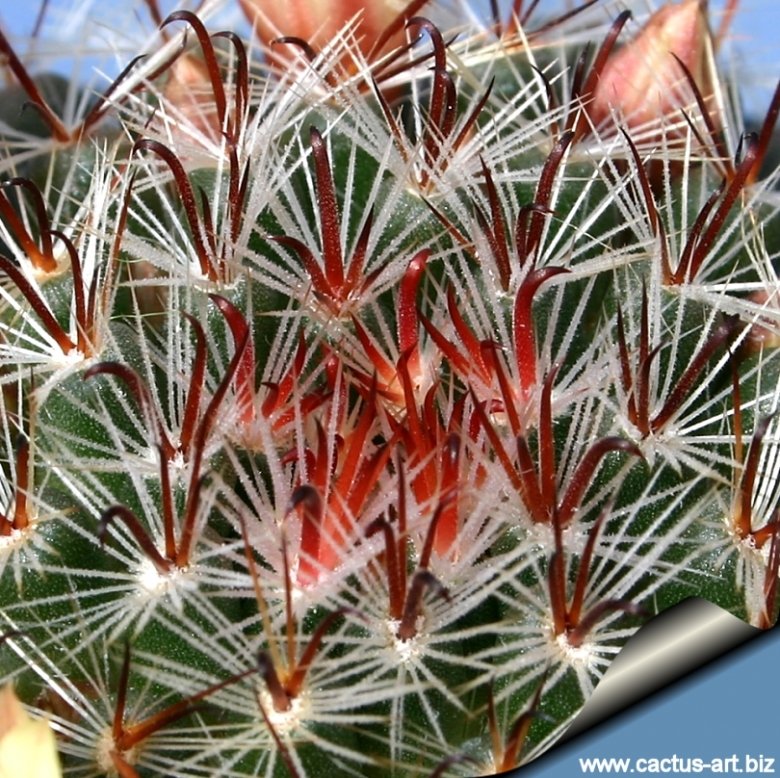
Central spines: 4, the upper 3 straight, the lowest hooked, slightly longer than the radials, reddish brown.
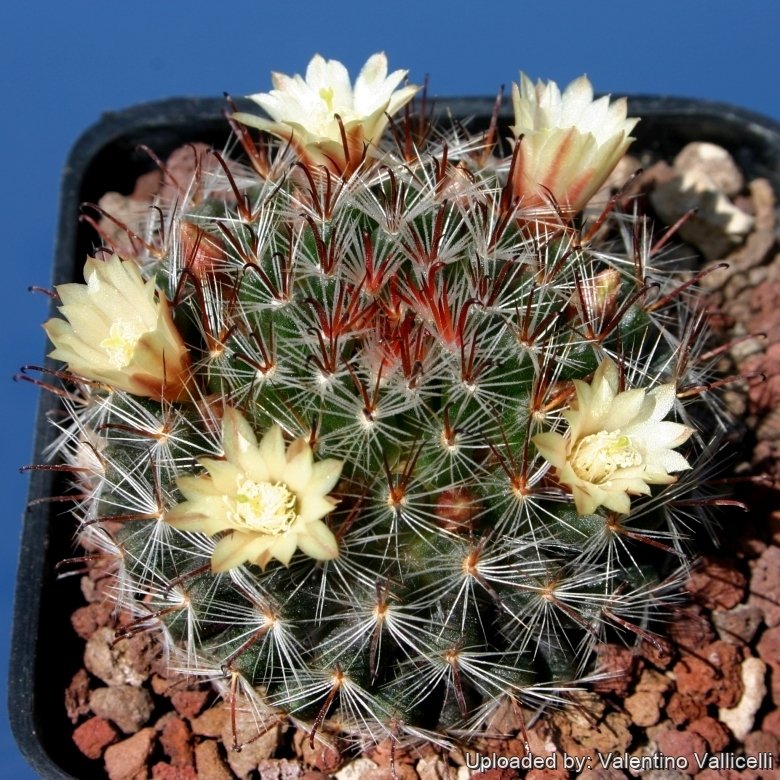
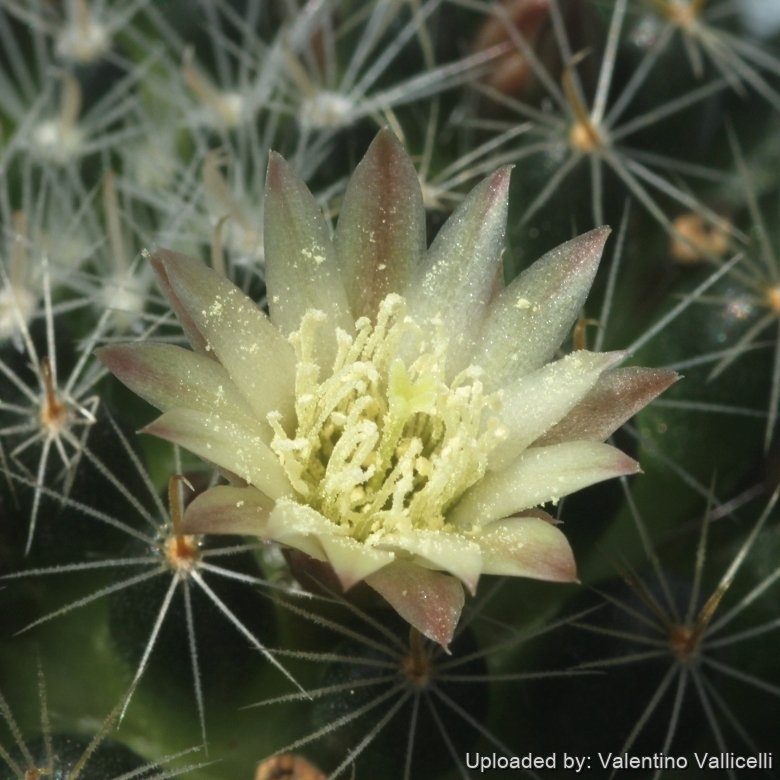
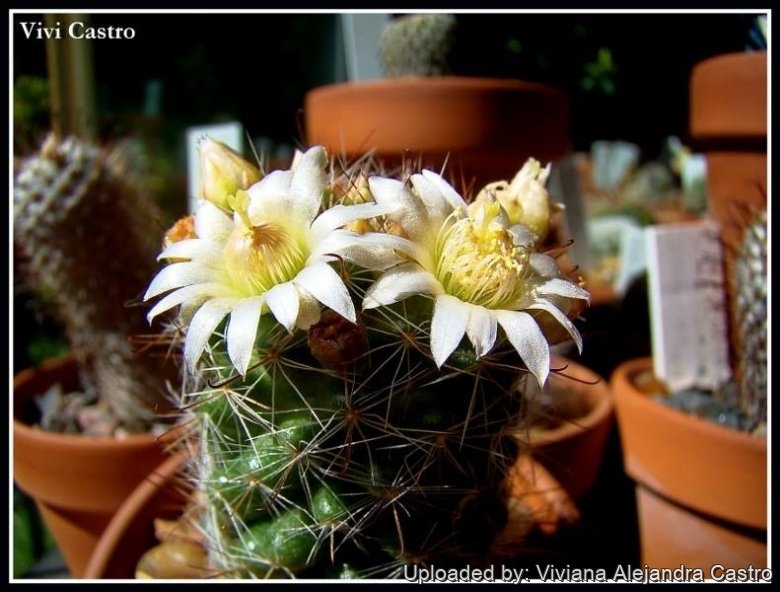
Flowers: Up to 2 cm, creamy white, stigmas yellowish.
Blooming season: The flowers can come at any time of the year.
Fruits: Whitish green to pale pink.
Seeds: Black.
Origin and Habitat
Garden origin.
Source: Mammillaria zeilmanniana f. albiflora, LLIFLE - Encyclopedia of living forms, CC-BY-SA, retrieved 2026-10-25.
Cultivars and forms (11)
Subspecies (4)
Forms (7)
Gallery